English
 Türkçe

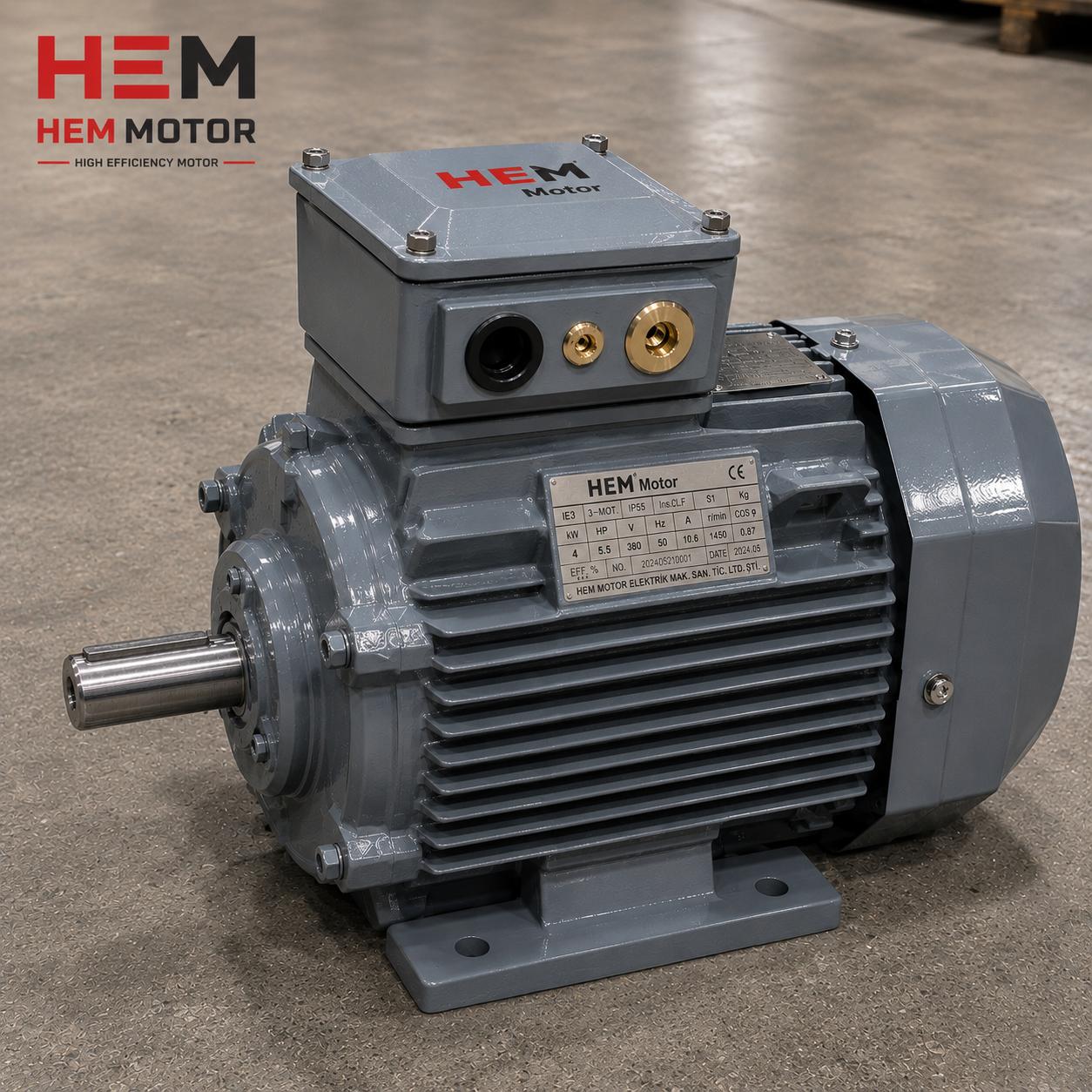

There is one single location that determines the lifespan of an electric motor working in dusty and wet environments: the point where the shaft exits the housing. Dust, water, mud or chemical mist that enters through this point rapidly wears out the bearing, the grease and the winding. That is exactly why, when choosing a cast iron motor, you should look not only at the body material but also at the shaft sealing system. In this article we examine the labyrinth seal — the most reliable solution for heavy-duty applications — its difference from the classic radial lip seal, and what to consider for correct motor selection from an engineering point of view.
As HEM Motor, we supply motors for many demanding applications, from crushing plants and cement mills to wastewater blowers and outdoor conveyors. These sites share one thing in common: a standard sealing solution is not enough. Below you will find both the technical background and the practical knowledge that clarifies the purchasing decision.
Why the Shaft Seal Is the Most Critical Zone of a Motor
In an induction motor the shaft exits through the drive-end bearing shield. This exit point is the only mechanical opening between the inside of the motor and the outside environment. No matter how strong the cast iron body is, if the shaft exit point is not protected, dust and moisture reach the bearing directly. Every particle entering the bearing disrupts the lubrication film; the grease becomes contaminated, friction increases, temperature rises, and bearing life drops far below expectation.
Our field experience shows that in harsh environments most early failures originate not from burnt windings but from sealing-related bearing damage. Therefore the correct sealing choice directly affects the total cost of ownership of the motor. Our guide on oil seals and sealing on cast iron motors also supports your purchasing decision.
What Is a Labyrinth Seal and How Does It Work?
A labyrinth seal is a sealing system made of interlocking narrow passages and chambers that form a non-contact barrier around the shaft. As the name suggests, dust or water trying to get in is forced to travel through a labyrinth. This winding path breaks the kinetic energy of the particle; even if moisture condenses, channels and a fling effect designed to throw it back out come into play.
The basic principle is this: the centrifugal force generated as the shaft rotates flings the particle outward. The geometry of the labyrinth is designed so that this thrown-out dirt cannot return inside. In this way the seal is actively maintained while the motor runs.
The Advantage of the Non-Contact Design
A classic radial oil seal (lip seal) touches the shaft with a lip. This contact provides sealing but also creates friction, heat and wear. In motors running at high speed or in continuous (S1) duty, the seal lip wears over time, cuts a groove on the shaft and the sealing weakens. Because the labyrinth seal does not make contact:
- It creates no friction loss — it does not harm efficiency, which matters in IE3/IE4 efficient motors.
- It does not wear — with no mechanical contact, its life is theoretically equal to the motor.
- It withstands high temperature — it keeps working at temperatures where a lip seal hardens and cracks.
- It is safe at high speed — there is no risk of lip burning in 3000 rpm applications.
The Limit of the Labyrinth: Liquid Pressure
The labyrinth seal is excellent against dust and splashing water, but on its own it may not be enough against a pressurized water jet or submerged applications. In such cases a labyrinth + V-ring combination or dual-barrier solutions are preferred. To choose the right combination you can review our guide on shaft oil seal and V-ring seal types.
Labyrinth Seal vs. Radial Oil Seal Comparison
Which sealing is correct depends on the environmental conditions. We can summarize the strengths and weaknesses of the two systems as follows:
- Radial (lip) seal: Low cost, compact, good against splashing water and dust. However, because it is contact-based, it wears, creates friction and its life shortens at high temperature. Ideal for clean, dry, medium-speed applications.
- Labyrinth seal: Non-contact, wear-free, friendly to high temperature and speed. Preferred for dusty, abrasive, continuously running heavy-duty environments. Its cost is slightly higher but it more than pays this back with long life.
- Combined solution (labyrinth + lip/V-ring): The safest choice in the harshest environments where both dust and splashing/condensing water are present.
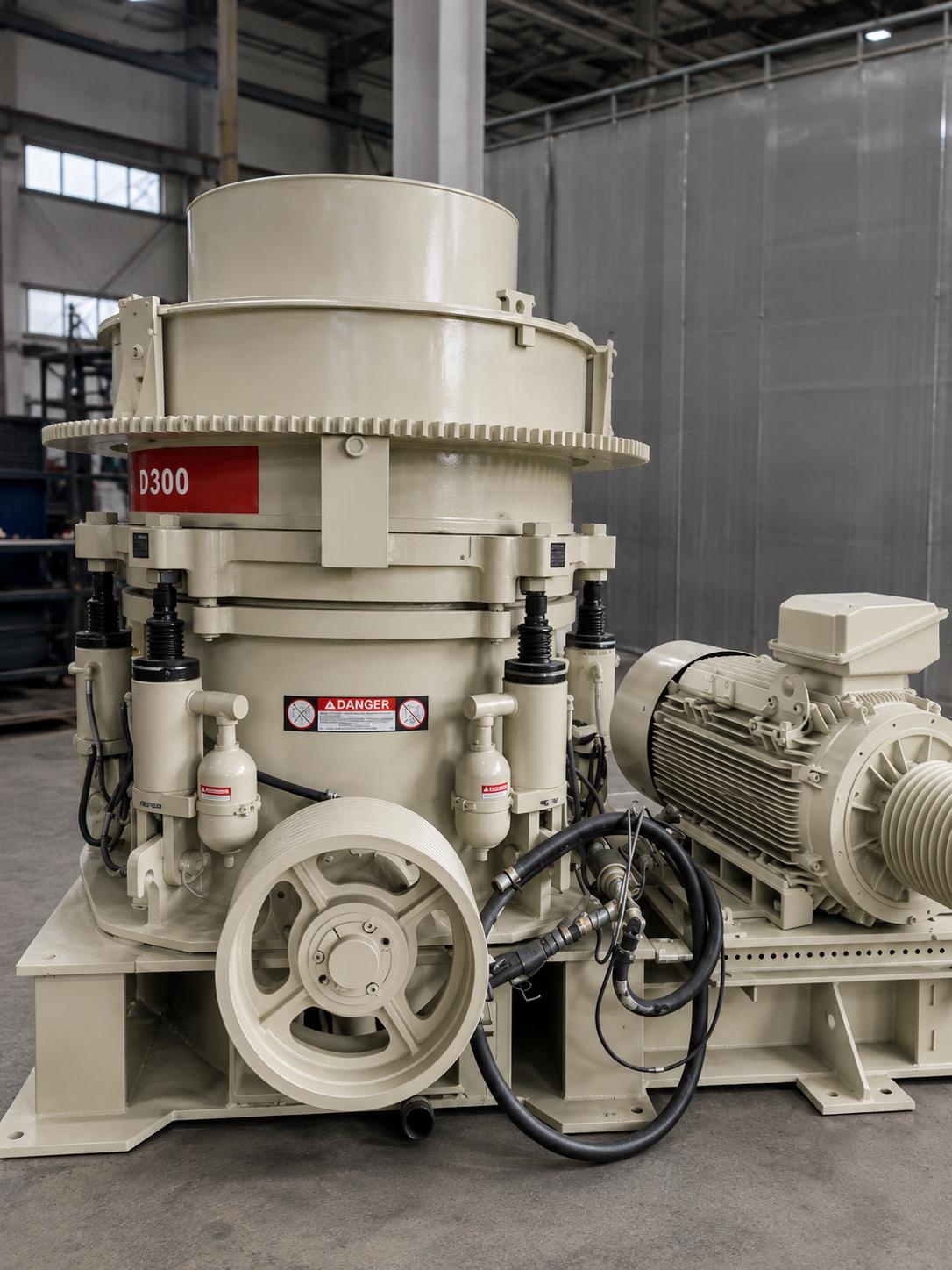
In crushing and stone-breaking sites where the dust is abrasive, a labyrinth structure is almost mandatory. For these sites our article on dust sealing and IP65/IP66 protection on crusher motors is a complementary resource.
Choosing the Right Seal in Dusty Environments
The type of dust changes the sealing decision. Fine and abrasive dust (stone, cement, mineral) behaves like an abrasive paste when it enters the bearing and tears apart the grease film. In these environments:
- A non-contact labyrinth seal is the first choice; it leaves no worn lip.
- On the body side, IP55 minimum, preferably IP65/IP66 protection class is recommended.
- If the shaft exit is mounted facing downward, the bearing shield geometry is important to reduce condensation and dust accumulation.
- Under high dust load, the periodic regreasing interval should be shortened and automatic lubrication should be considered.
The advantage of the cast iron body stands out here as well: high mechanical strength ensures the bearing housings do not deform against shock and vibration, which guarantees that the labyrinth geometry is not disturbed.
Sealing in Wet and Condensing Environments
In wastewater plants, washdown lines, outdoor sites or environments experiencing cold-hot cycles, the real threat is condensation. When the motor stops, the internal air cools, moisture condenses, and water can seep in through the weakest point. In these environments:
- The labyrinth seal is very effective against splashing and dripping water.
- The condensation drain hole must be in the correct position to expel condensation.
- In motors that may stand idle for long periods, a space heater inside the body helps moisture control.
- The body paint (DFT/corrosion class) should be selected to match the environmental class against corrosion.
For those who want to raise the protection class in wet and dusty environments, our article on IP65/IP66 protection upgrade clarifies the supply decision.
The Relationship Between Bearing Protection and Motor Life
Sealing and bearing life are directly connected. Clean grease + clean bearing = long life. The system that protects this equation is the labyrinth. According to our field data, in motors with the correct sealing the bearing replacement period extends significantly and unplanned downtime decreases. We detailed the quality markers and correct selection criteria on the bearing side in our article on bearing and journal life in cast iron motors.
In short, the real durability of a motor is only as good as its weakest link, and this link is often the shaft seal. The small investment made in correct sealing prevents a whole line from stopping unexpectedly.
Engineering Details of Labyrinth Geometry
The performance of a labyrinth seal depends on the accuracy of its geometry. The system usually consists of two parts: a rotating part attached to the shaft and a stationary part fixed to the bearing shield. The narrow clearance between these two parts and the number of interlocking rings determine the sealing effectiveness. The narrower the clearance and the more multi-stage the labyrinth, the greater the obstacle in front of a particle trying to enter.
The outward fling channels on the rotating part use the rotation energy of the shaft to throw the particle out. The collecting groove and drain path on the stationary part discharge the small amount of dirt and moisture that does reach inside, by gravity. In a well-designed labyrinth the system continuously cleans itself while the motor runs, which reduces maintenance needs. The dimensional stability of the cast iron body plays a critical role here: because it maintains the bearing shield dimension even under heating and vibration, the labyrinth clearance is not disturbed and the sealing stays reliable for the entire life.
Labyrinth Sealing in Sectoral Applications
Sealing priorities differ across sectors. In stone crushing and mining sites, abrasive dust is the primary threat; here the labyrinth seal multiplies bearing life. In cement and aggregate plants both dust and vibration are high, so the cast iron body and labyrinth combination has become standard. In wastewater and water treatment plants, blower and mixer motors run continuously in humid air; here condensation management and labyrinth sealing must be planned together. On outdoor conveyors and fans, rain, snow and daily temperature differences create condensation; the labyrinth geometry throws water out while the condensation drain empties what accumulates inside.
Pre-Purchase Checklist
When ordering a motor for a dusty or wet application, defining a few headings that clarify the sealing decision up front prevents incorrect delivery:
- Environment type: Dust, water, or both? Is the dust abrasive or chemical?
- Duty type: Continuous (S1) or start-stop? In continuous duty, non-contact labyrinth stands out.
- Speed: At high speed such as 3000 rpm, the lip-burning risk of a lip seal makes the labyrinth advantageous.
- Mounting orientation: Is the shaft exit up, down or horizontal? Orientation affects condensation and dust accumulation.
- IP protection target: Is IP55 enough, or is IP65/IP66 required?
- Lubrication plan: Regreasing interval and the need for an automatic lubricator.
When you share these headings, we deliver the motor ready for the field with the correct sealing and body combination. A wrong motor going to the field and coming back is a loss of both time and cost; with correct information we eliminate this risk from the start.
HEM Motor for the Right Supply
As HEM Motor, we determine the correct sealing and body combination together according to the environmental conditions of your application. In dusty, wet or abrasive environments, we deliver your motor ready for the demanding site with a cast iron body, suitable IP class and labyrinth/combined seal options. To select the right motor for your needs and for current electric motor prices you can contact us. When you share your application details, we clarify together the most suitable motor for the environmental class.
Frequently Asked Questions
Is a labyrinth seal necessary for every motor?
No. In clean, dry and medium-speed indoor applications a standard radial oil seal is sufficient. The labyrinth seal mainly stands out in dusty, abrasive, wet or high temperature/speed heavy-duty environments. The right choice depends on environmental conditions; if you share your application we determine the most suitable solution together.
Does a labyrinth seal reduce motor efficiency?
On the contrary, because it is non-contact it creates no friction loss and is more advantageous in terms of efficiency than a lip seal. This feature is especially meaningful in continuously running IE3 and IE4 efficient motors, because reducing mechanical losses directly affects total energy consumption.
Which seal should I choose in a very dusty and at the same time wet environment?
In environments where both dust and water are present, a combined solution (labyrinth + V-ring or lip seal) and an elevated IP protection class are recommended. In addition, condensation drainage and, if needed, a body heater are added against condensation. In this case the cast iron body provides the safest foundation thanks to its mechanical strength.