English
 Türkçe

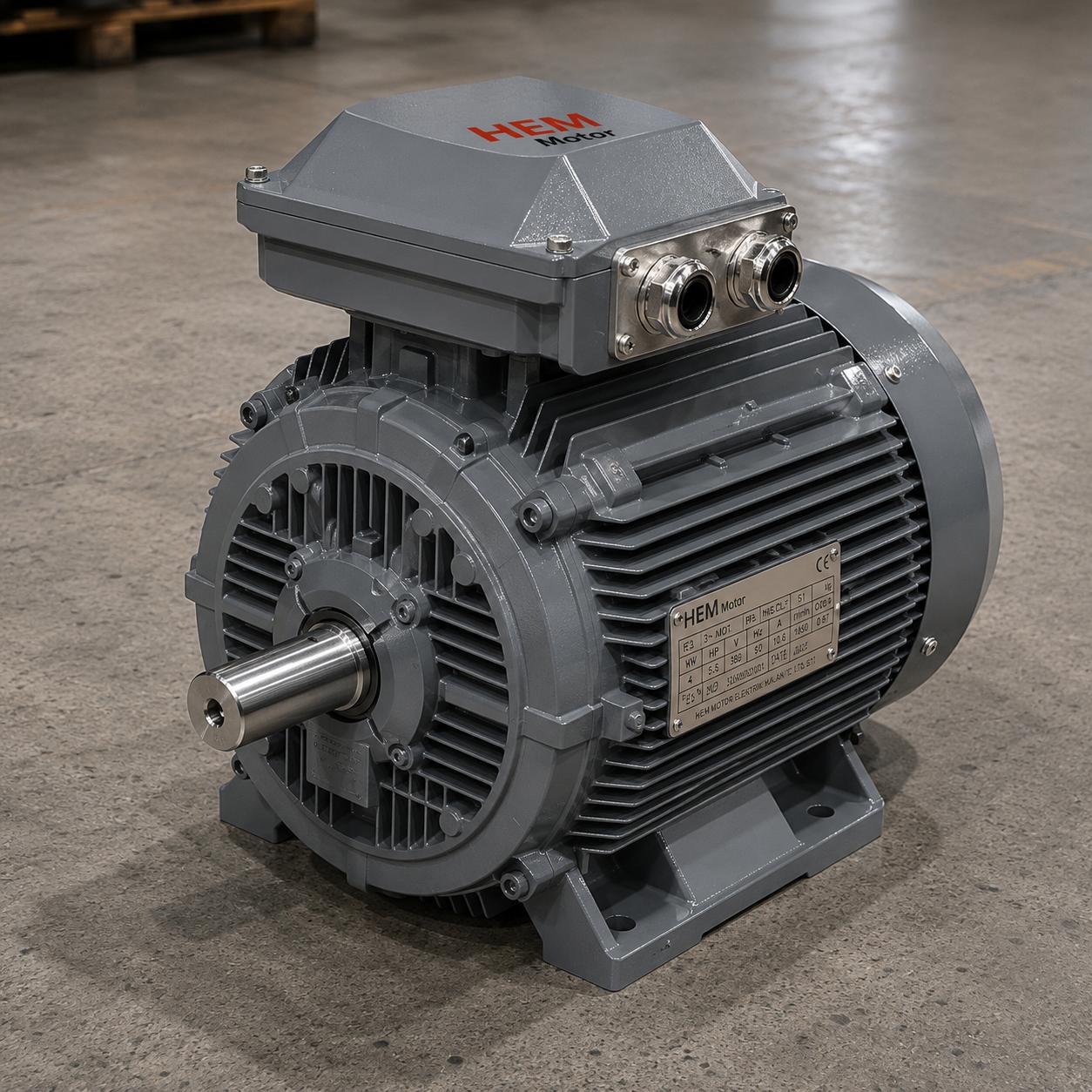

In cast iron framed induction motors, one of the decisive factors for performance and service life is how the motor is cooled. The cooling method affects not only temperature but also insulation life, the power that can be delivered continuously, the speed range, and especially the motor's behavior under a variable frequency drive (VFD). In international standards this cooling arrangement is expressed by the IC code (International Cooling) defined in IEC 60034-6. Correctly understanding the difference between the three most common arrangements in the field, IC411, IC416 and IC418, determines both the motor's suitability for the application and how quickly it can be supplied from stock or production. In this article we explain in detail how to read the IC code, the concept of TEFC, the contribution of the cast iron frame to cooling, and which IC-coded motor you should select for which application.
What Is the IC Code and How Is IEC 60034-6 Read?
The IC code is a sequence of letters and numbers that defines a motor's cooling method in a standardized way. IEC 60034-6 specifies the type of coolant, the circulation arrangement and the drive source that moves the coolant. The most widely used simplified notation consists of the letters IC followed by three digits, each with a specific meaning.
- First digit (circulation arrangement): Describes how the coolant circulates inside and around the motor. For example, the digit "4" indicates a surface-cooled arrangement where heat is dissipated from the outer frame surface to the ambient.
- Second digit (primary coolant): Usually omitted in the short notation because it is air; in the full notation it is shown as "A" (air).
- Last digit (drive type that moves the coolant): "1" means a fan mounted on the motor's own shaft (self-fan), "6" means a separately driven (forced) fan, and "8" means an independent drive or no fan at all (natural/ambient flow).
Read this way, IC411, IC416 and IC418 all begin with "4"; in all three, heat is dissipated from the frame surface. The only difference is how the fan that blows air over the frame surface is driven. This small difference leads to large performance differences in the field.
The TEFC Concept: Totally Enclosed Fan Cooled
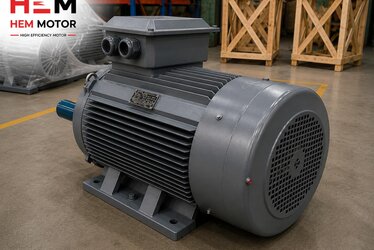
TEFC (Totally Enclosed Fan Cooled) is the most common frame-cooling combination in the industry and corresponds to the standard IC411 arrangement. Here "totally enclosed" means there is no free air exchange between the motor's interior and the external environment; the internal and external air do not mix. Cooling is achieved by a fan mounted on the shaft end blowing air over the cooling fins on the frame. This structure is highly preferred in industry because it protects the winding in dusty, humid and dirty environments, and it is usually offered together with IP55 protection class.
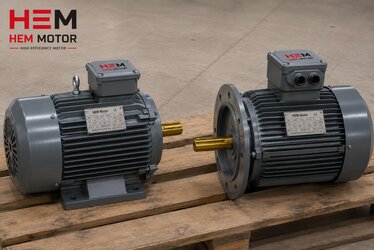
In the HEM Motor range, standard IE3 Premium and IE4 Super Premium induction motors are designed in the TEFC / IC411 arrangement by default, with a cast iron frame, F class insulation, 100% copper winding and IP55 protection. This combination is the most economical and quickly available solution for most continuously running industrial applications. For a broader technical comparison of cooling methods, see our article on motor cooling methods IC411 and IC416.
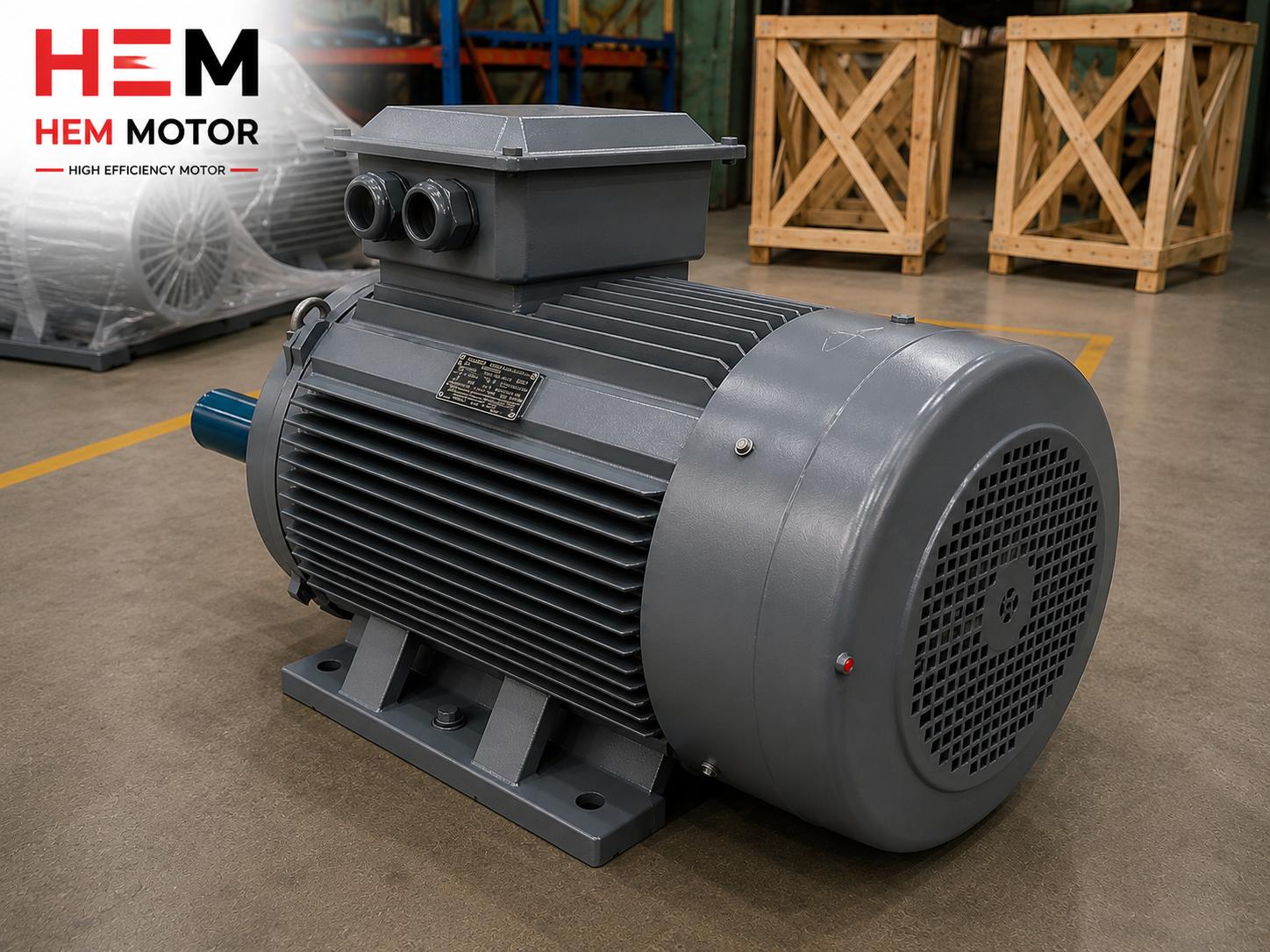
IC411: Surface Cooling with a Self-Fan on the Shaft End
IC411 is the classic arrangement where the motor is cooled by a fan attached to its own shaft. The fan turns as the motor turns; therefore the amount of air blown depends directly on the motor speed. When the motor runs at rated speed, the fan blows air at full capacity and efficiently dissipates heat from the frame surface. For this reason, IC411 is highly suitable for applications running at constant speed under rated load in the S1 continuous duty type.
- Advantages: Requires no additional supply, is inexpensive, easy to maintain, and has the widest stock availability.
- Limitation: Since the fan slows down with the shaft, cooling capacity drops rapidly at low speeds. If the motor is run at low speed for long periods with a VFD, the fan cannot push enough air and the winding may overheat.
This limitation must be evaluated carefully especially in VFD applications. A conveyor or extruder drive requiring high torque continuously at low speed can be thermally stressed with IC411. In this case derating or a different IC arrangement is needed.
IC416: Cooling with a Separately Driven Forced Fan
In the IC416 arrangement the frame surface is again cooled by a fan; however, this fan is connected not to the motor's own shaft but to a separate small motor that usually runs at constant speed. Thus, regardless of the main motor's speed, the cooling fan always blows air at full capacity. This method, also called forced cooling, is indispensable especially in applications requiring continuous torque over a wide speed range and at low speed with a VFD.
Imagine a crane drive, a positioning application, or a mixer running continuously at low speed; while the main motor turns at 10 Hz its own fan blows almost no air, but the independent fan of IC416 continuously cools the winding, allowing the motor to deliver full torque without derating. For the details of forced cooling selection in the context of low speed and VFD, our content on external forced cooling fan low speed VFD is a comprehensive resource. For those curious about the effect of fan design on efficiency, our article on IE4 motor cooling and fan design is complementary.
- Advantage: Speed-independent constant cooling; continuous full torque over a wide speed range.
- Requirement: A separate supply line for the cooling fan; often an additional cowl and air flow direction compatibility.
- Application: VFD-driven extruders, conveyors, cranes, mixers, continuous low-speed process drives.
IC418: No Fan / Ambient Air Cooling (Air-Over)
IC418 is the arrangement where the frame surface is cooled by the ambient air flow without any fan belonging to the motor. Here the last digit "8" indicates that the flow providing cooling is independent of the motor. In practice this is used in applications where the motor is already inside a strong air flow; for example, the airstream created by the fan or blower the motor drives also cools the motor frame. This approach is seen in air-over (TEAO-like) applications such as air handling units, air curtains and large ventilation fans.
The biggest advantage of IC418 is that the absence of a fan cowl shortens the motor's axial length and eliminates fan losses. However, the critical condition is that the air flow passing over the motor must be sufficient under all conditions; if the flow is interrupted, the motor overheats quickly. Therefore IC418 motors are planned on a project basis for special applications where air flow is guaranteed, and ambient conditions are carefully evaluated during selection.
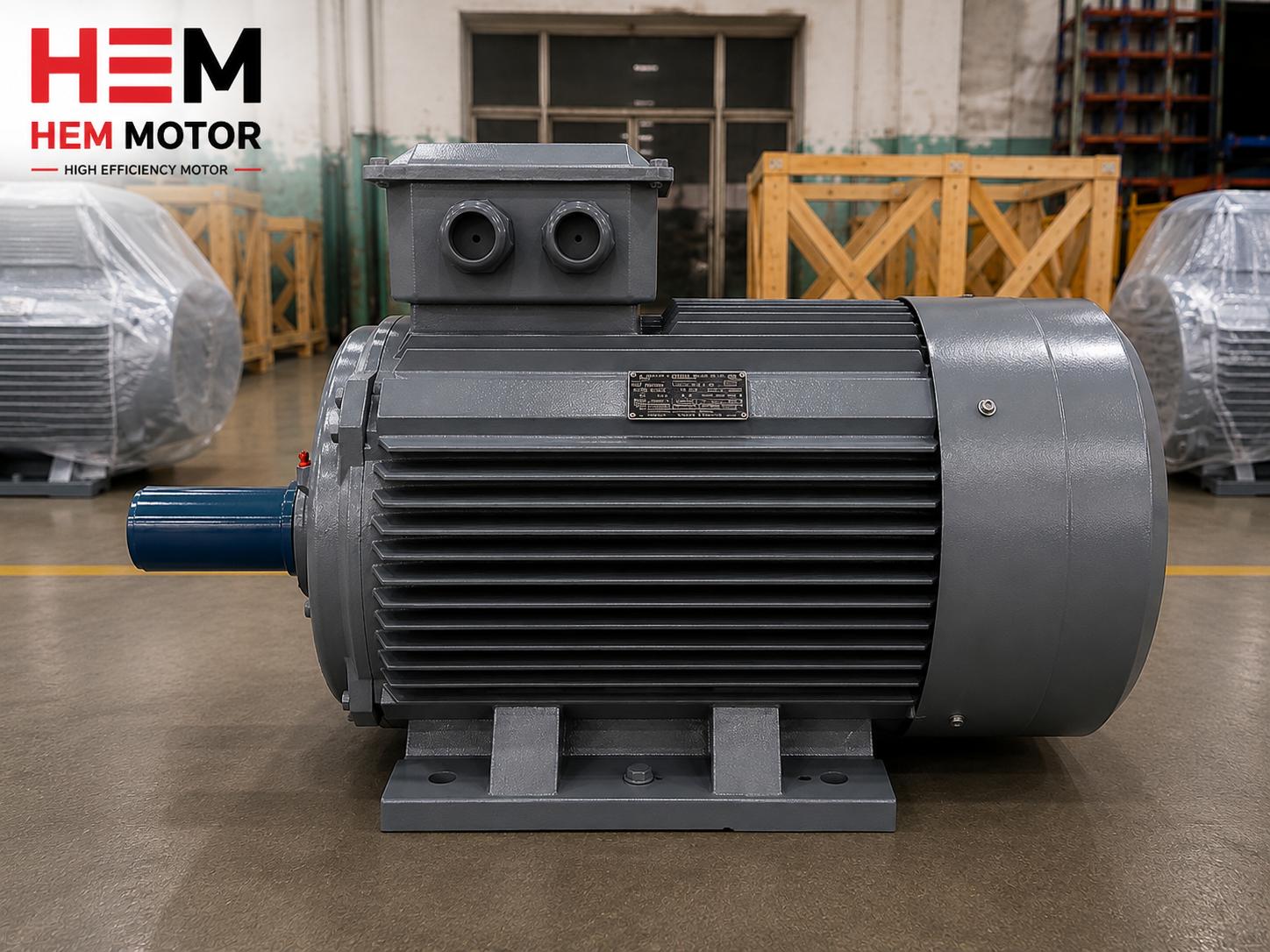
Contribution of the Cast Iron Frame to Cooling
Regardless of the IC arrangement, the frame material also directly affects cooling performance. The cast iron frame provides both high mechanical strength and increases the heat dissipation surface thanks to wide and thick cooling fins. Cast iron has high thermal mass; this smooths out the temperature rise during short overloads and helps protect the winding from sudden thermal shocks. Although aluminum frames offer a lightness advantage at small powers, the mechanical and thermal durability of the cast iron frame is preferred at large powers and in harsh environments.
HEM Motor's cast iron framed IE3 and IE4 motors, with optimized fin geometry and IP55 protection, can be offered in both IC411 and, upon request, IC416 configuration. In harsh conditions such as hot ambient and VFD, the bearing selection should also be considered together with cooling; our article on C3 bearing clearance selection in hot ambient is an important complement on this subject.
The Relationship Between IP55 and the IC Code
Protection class (IP) and cooling code (IC), two frequently confused concepts, are independent of each other but must be evaluated together. IP55 defines protection against dust and low-pressure water jets; it shows how enclosed the motor is. The IC code, on the other hand, describes how heat is dissipated within this enclosed structure. A TEFC motor is by nature totally enclosed and can therefore be offered with IP55 (IP65/IP66 upon request). In other words, a higher protection class increases dependence on external cooling because internal air cannot escape. This means the IC code becomes more critical as the protection class rises.
How to Select the Motor with the Correct IC Code?
For the correct cooling selection, the following criteria must be evaluated together:
- Duty type and load: IC411 is generally sufficient for continuous (S1) and constant-speed loads.
- Speed range: A wide speed range with a VFD, especially long-term low speed, requires IC416 forced cooling.
- Ambient temperature: High ambient temperature reduces the cooling margin and may require derating or stronger cooling.
- Air flow: IC418 can be considered in air-over applications where the motor is already inside a strong airstream.
- Protection class: In high protection such as IP55/IP65, the adequacy of external cooling must be calculated carefully.
With manufacturer assurance, HEM Motor offers IC411 motors suitable for your application within a wide stock range with fast delivery; IC416 forced-cooled and special IC418 configurations are planned on a project basis and produced with short lead times. When you share your technical requirement including power, speed, frame and cooling code, we provide a quote to clarify the most suitable motor and fast supply option for your application. To get information about current electric motor prices and stock status, you can contact us.
Frequently Asked Questions
Are IC411 and TEFC the same thing?
In practice, essentially yes. TEFC (Totally Enclosed Fan Cooled) is a general definition expressing a totally enclosed, fan-cooled motor; the cooling arrangement of a standard TEFC motor is shown by the IC411 code according to IEC 60034-6. So TEFC is the conceptual definition and IC411 is its standard coding.
Which IC code should I choose if I will run continuously at low speed with a VFD?
If the motor will deliver full torque at low speed for long periods, IC411 may be thermally insufficient because its own fan cannot push enough air. In this case the IC416 forced (separately driven) fan arrangement, which provides speed-independent constant cooling, is the correct choice. This allows the motor to deliver continuous full torque without derating.
Can I get an IC416 motor quickly from stock?
Standard IC411 motors are ready within a wide stock range with fast delivery. IC416 forced-cooled and special IC418 configurations are usually application-specific, so they are planned on a project basis; however, with manufacturer assurance they are produced with short lead times. When you share your power, speed and mounting information, we provide a quote including the exact delivery time.