English
 Türkçe

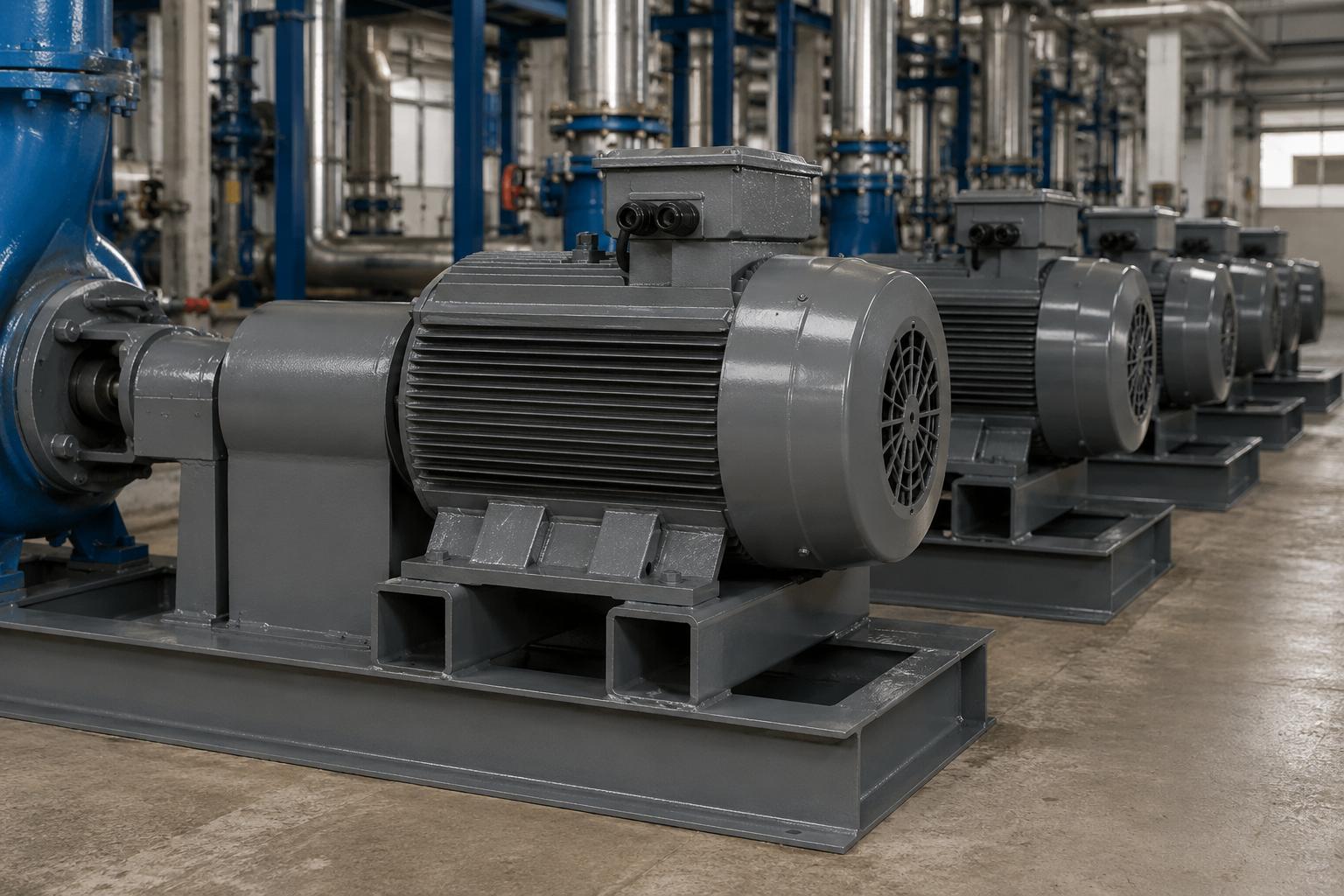

Battery and cell manufacturing plants are among the fastest-growing industrial sectors of recent years, and every stage of these plants relies on electric motors. From mixing raw material to electrode coating, from drying to the assembly line, dozens of different drive points demand motors that run continuously and precisely. In this environment a wrongly selected motor means not only wasted energy but line stoppage, quality deviation and lost production. In battery manufacturing the process mostly requires 24/7 continuous duty (S1); moreover, in some sections dust, chemical vapour and heat stress the motor. In this article we examine the correct electric motor selection for mixers, coating, drying and assembly lines in battery and cell plants, the continuous-duty requirements, and what to consider for correct supply.
The Main Sections Where Motors Run in Battery Production
In battery and cell manufacturing the process chain consists of stages, each demanding a different motor characteristic. Mixers demand high and variable torque; coating lines demand very precise and stable speed; drying ovens demand fan motors that withstand high temperature; assembly and conveying lines demand low-vibration, continuously running motors. This diversity shows that a single type of motor does not fit everywhere; each section must be evaluated according to its own load profile.
At all these points the common denominator is that the vast majority of motors run continuously (S1) and downtime is expensive. So motor selection in battery plants is not just a power calculation; it is a supply decision in which efficiency class, protection class and redundancy planning are addressed together. Our article on IE3 vs IE4 electric motor investment clarifies the investment logic of lowering energy cost with high-efficiency motors in terms of payback.
Motor Needs Section by Section
- Mixer: High starting torque, variable load; a strong cast iron body is preferred.
- Coating / calendering: Precise and stable speed; a drive-controlled efficient motor suits.
- Drying oven fans: Continuous-duty fan motors that withstand high ambient temperature.
- Assembly and conveying: Low-vibration, quiet, continuously running conveyor motors.
- Vacuum and ventilation: Efficient motors for blower and fan applications.
Motor Selection on Mixing and Coating Lines
Mixers are used to prepare battery paste and electrode slurry. This application demands high and fluctuating torque; the power the motor draws rises particularly as the mix thickens. The right choice here is a motor with sufficient starting torque, sized for continuous duty and with a sturdy body. In applications with high load fluctuation, the load-profile-based motor selection approach also applies to mixer drives.
Coating and calendering lines, on the contrary, demand stability. Electrode coating thickness depends on the line's speed stability; a small speed deviation spoils product quality. So coating lines prefer motors controlled by a variable frequency drive that hold their efficiency even at partial load. High efficiency class motors (IE4/IE5) provide an advantage here in terms of both energy and quality.
Critical Features for Mixer/Coating
- Starting torque: A torque margin able to turn a thickening mix in the mixer.
- Speed stability: Constant and precise speed under drive control in coating.
- Duty type S1: Continuous-duty sizing for continuous production.
- Protection class: IP55 and suitable insulation in environments with chemical vapour and dust.
Drying, Continuous Duty and Ambient Conditions
Drying ovens are among the harshest motor environments in battery production. Motors driving oven fans are exposed to high ambient temperature and run continuously. There are two critical points here: the insulation class that determines winding endurance at high temperature, and the correct sizing (derating) that compensates for the power drop in heat. As ambient temperature rises, the power the motor can deliver falls; so in hot oven zones the motor must be selected larger than its nameplate power. Our article on hot environment motor selection and derating explains the power-drop calculation step by step.
Continuous duty (S1) applies in almost all sections of battery plants. On a 24/7 line, even a momentary stop of the motor can jeopardise an entire production batch. So in battery plants a spare motor plan is as important as motor selection. Our article on the critical spare motor list and stock planning helps you safeguard production continuity.
Points to Watch for Continuous Duty and Environment
- Insulation class: Class F or H if needed in hot oven zones.
- Power derating: Select the motor one frame larger at high ambient temperature.
- IP55 protection: Protect the winding against dust and chemical vapour ingress.
- Spare motor stock: Keep a like-for-like spare ready for critical lines.
Correct Supply and Motor Selection
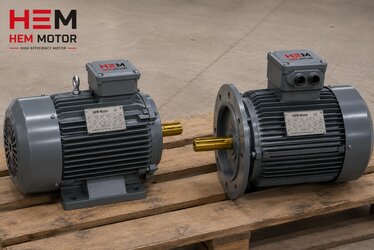
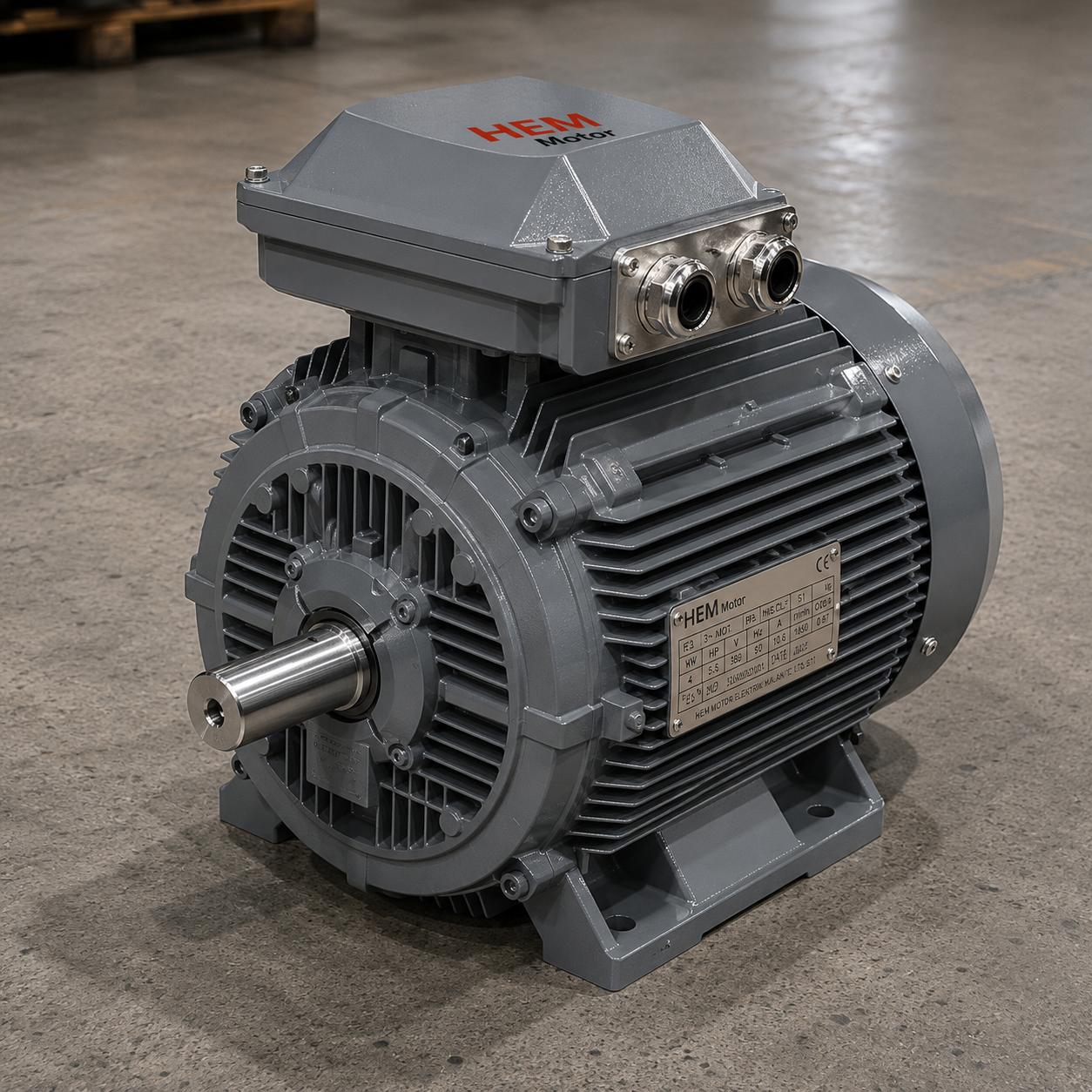
Motor supply in a battery and cell plant is more a fleet management task than buying one by one. Dozens of motors of different powers and speeds must be planned in terms of stock, lead time and redundancy. The HEM Motor range offers IE3, IE4 and IE5 class motors from 0.25 kW to 355 kW with cast iron bodies, IP55 protection and class F insulation. For every section from mixing to coating, drying to conveying, there are suitable power, speed and mounting type (B3/B5/B35) options. To request a quote with current electric motor prices and stock status, providing a section-based requirement list ensures the right motors arrive at the right time.
In projects where many motors are bought at once, our article on cost reduction in wholesale electric motor purchasing helps you optimise stock and delivery planning for cost and delivery advantage. A well-planned supply both lowers the investment cost and safeguards line continuity.
Information to State in the Quote
- Section and application: The separate need of each point such as mixer, coating, drying, conveying.
- Power, speed, mounting: Each motor's power, speed and B3/B5/B35 mounting.
- Ambient conditions: Temperature, dust, chemical vapour; defines protection and insulation class.
- Redundancy: The number of spare motors to keep in stock for critical lines.
Mounting Type and Mechanical Connection Selection
In a battery plant, how the motor is mounted varies with the equipment it will drive. Mixers usually work with vertical or horizontal shaft reducers, so a flanged (B5 or B35) connection is preferred; this lets the motor be bolted directly to the reducer body. On conveyor and conveying lines, foot-mounted (B3) or combined (B35) mounting is common; the motor sits on a base and connects to the load via belt-pulley or coupling. The wrong mounting type means mismatch and delay in the field.
Mounting type selection is not limited to connection compatibility; vibration and alignment are also affected. A flanged connection fixes the motor firmly to the equipment, minimising alignment error; this matters on precise coating lines. Foot mounting, on the other hand, provides ease of access and maintenance. To select the right mounting type, the connection interface and frame size of the equipment the motor will attach to must be known from the start. When this information is given at order stage, a motor that fits the field exactly arrives and mounting is completed smoothly.
Frame size is evaluated together with mounting. Motors of the same power can be in different frame sizes; shaft diameter, foot dimensions and flange hole pattern vary with frame size. When renewing existing equipment, the old motor's frame size and mounting type must be matched exactly; otherwise the motor physically does not fit. This matching is done with nameplate and dimension information before the order.
Efficiency Class and Energy Cost
Battery plants are energy-intensive operations; because the motors run at all hours, the efficiency class directly reflects on production cost. Of two motors doing the same job, the one with the higher efficiency class consumes noticeably less energy over its life. On a continuously running line this difference quickly covers the difference in purchase price and then turns into a permanent saving. So motor selection in battery plants should be made not only with the question "will it run" but with "how much will it consume over its life".
Efficiency class selection varies by application. On precise, continuously running lines such as coating, IE4 or IE5 motors provide an advantage in both energy and stability; at simpler, intermittently running points IE3 may be enough. The key is to select the efficiency class according to each section's real running time and load profile. A too-low efficiency class means permanent energy waste, while a needlessly high class means idle investment.
Efficiency Class Selection Logic
- Continuous, intensive lines: Lifetime energy savings with IE4/IE5.
- Intermittently running points: IE3 is often a balanced choice.
- Running time: As annual running hours rise, the return of high efficiency grows.
- Load profile: Motors that hold efficiency at partial load stand out in fans and pumps.
Vibration, Precision and Product Quality
In battery production the motor is not just a drive source; it is also one of the determinants of product quality. Especially on coating and assembly lines the motor's vibration level reflects directly on the product. High vibration creates irregularity in electrode coating, alignment error in assembly and, over the long term, equipment wear. So these lines prefer low-vibration motors with balanced rotors and quality bearings.
Precision also means speed control. Motors controlled by a variable frequency drive allow the line speed to be set precisely to production need; this improves both quality and energy efficiency. In a high-value-added product such as a battery, where small quality deviations lead to large costs, vibration and speed stability are as important as power in motor selection.
Frequently Asked Questions
Can the same motor be used for every section in a battery plant?
No. A mixer demands high starting torque, coating demands precise speed stability, a drying fan demands high temperature endurance, and a conveying line demands low vibration. Each section must be evaluated by its own load profile and ambient condition. A single type of motor would be insufficient in some sections and needlessly oversized in others.
How should I select the motor near the drying oven?
High ambient temperature lowers the power the motor can deliver, so the motor is usually selected one frame larger (derating). The insulation class should be F or H if needed, and protection class IP55 should guard against dust and vapour ingress. Stating the ambient temperature at the quote stage ensures correct sizing.
Is a spare motor essential on a 24/7 battery line?
It is strongly recommended for critical lines. In continuous production, a motor stopping jeopardises the ongoing production batch and the line. Keeping a like-for-like spare of critical powers in stock minimises downtime through rapid replacement in a fault and safeguards production continuity.