English
 Türkçe

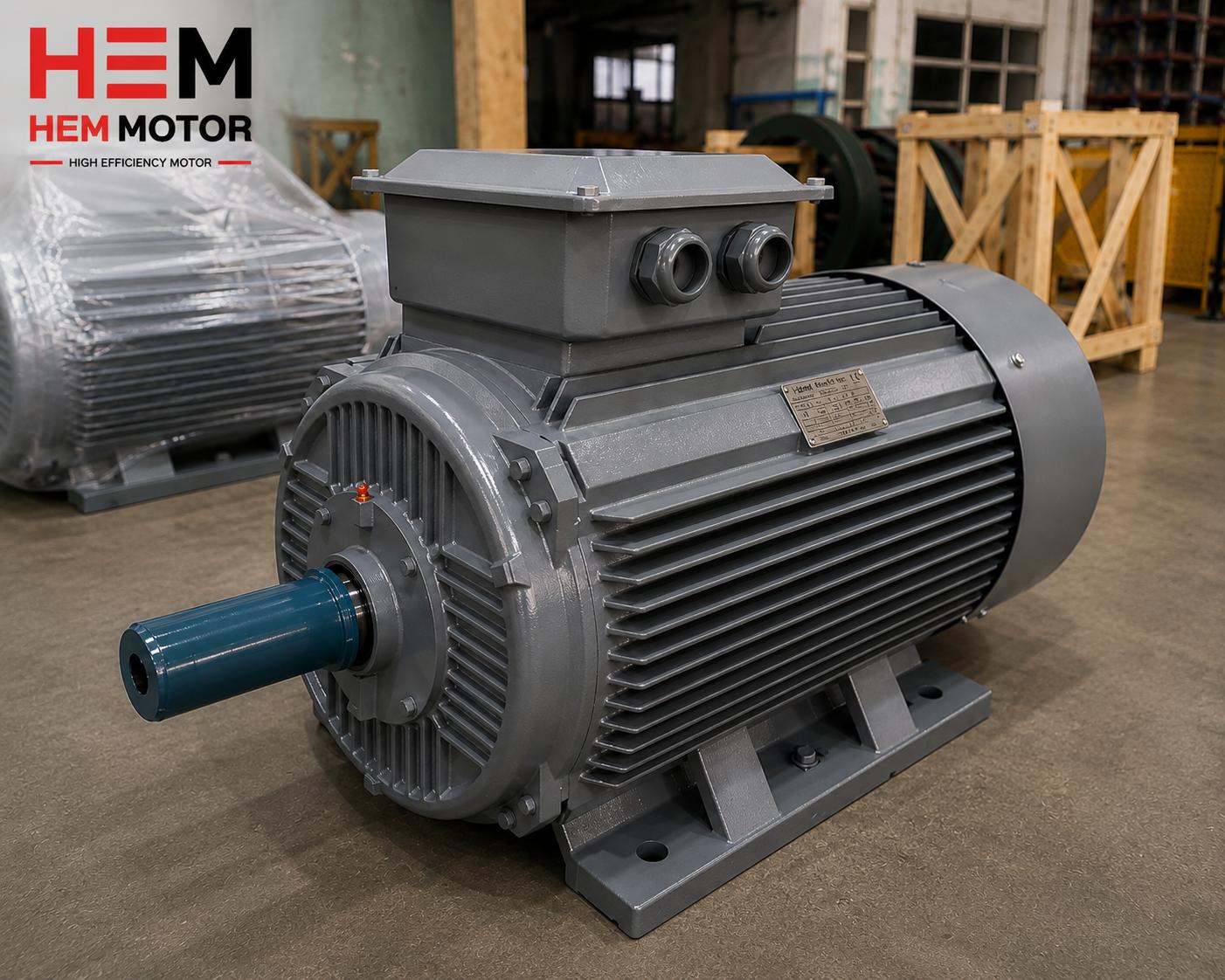

Protecting an electric motor correctly determines its life and the continuity of the operation just as much as buying it does. Among the most common causes of failure in asynchronous motors are sustained overload, phase loss and phase imbalance. The most basic and widely used protection element against these adverse conditions is the thermal overload relay. A correctly selected and correctly set thermal overload relay runs the motor safely for years; a wrongly selected or wrongly set relay either leaves the motor unprotected or constantly trips unnecessarily and disrupts production.
In this article we address the selection and setting of the thermal relay in asynchronous motors through rated current, trip class, phase sensitivity and additional temperature protection, from a technical and purchasing perspective. The goal is to help you choose the relay that will correctly protect your motor against both overload and phase problems, and to set it according to the motor's nameplate value. You can review our full range of efficient motors and protection-ready stock on our homepage.
The thermal relay is an element that works on a simple bimetal principle but is the cornerstone of motor protection. When set up correctly, it senses overcurrents lasting long enough to burn the motor's winding and breaks the circuit. Below we explain step by step how this element works, how it is selected and how it is set.
How Does a Thermal Relay Work? The Bimetal Principle
At the heart of the thermal overload relay are bimetal strips. A bimetal is formed by welding together two metals with different expansion coefficients. When the motor's current passes through these strips or through heater coils beside them, the strips heat up as the current increases and bend because they expand differently. When this bending exceeds a certain limit, the relay mechanism is triggered and breaks the contactor's coil circuit, stopping the motor.
The most important feature of this principle is that it imitates the motor's real thermal behaviour. The bimetal, like the motor winding, heats up with current and cools over time. So short high currents (such as starting current) do not trip the relay, while sustained overloads break the circuit to protect the motor. In other words, the thermal relay evaluates current not only instantaneously but spread over time.
The Difference Between Thermal Relay and Magnetic Protection
The thermal relay protects against sustained, slowly developing overloads. Against sudden, very high currents such as a short circuit, magnetic protection (a fuse or the magnetic part of a motor protection breaker) comes into play. For complete motor protection, these two protections are used together: the thermal relay handles overload, the magnetic element handles the short circuit. Therefore, in correct motor protection, neither protection should be neglected.
The Relay Is Always Set to the Motor's Rated Current
The most critical rule of thermal relay selection and setting is this: the relay is always set to the rated current (In or FLA) printed on the motor's nameplate. The motor's nameplate shows the rated current corresponding to the operating voltage. The relay adjustment range should be chosen so that it centres on this In value; that is, the In value should fall near the middle of the relay's adjustment range.
For example, for a motor with a nameplate current of 18 A, a relay with an adjustment range of about 13-21 A is suitable, because 18 A is near the middle of this range. A setting at the extreme end of the range can lead to either unprotected operation or constant tripping. For this reason, when selecting a relay, look not only at the motor's power but at the real rated current on the nameplate. Supplying a correctly labelled motor is a precondition for correct relay selection; you can review the product family on the IE4 electric motor page.
Relay Position in Star-Delta Starting
In motors started with star-delta, the relay is set not to the line current but to the phase current (winding current); in this case the relay is placed in the delta arm and the set value is about 0.58 times the rated current. This detail is often overlooked and leads to wrong settings. Placing the relay in the right position and setting it to the right value according to the connection type is essential for the protection to work.
Trip Class: Class 10, 20, 30
Another important feature of thermal relays is the trip class. This class states how long the relay takes to trip at a current 7.2 times the rated current. Class 10 trips in 10 seconds at this current; Class 20 in 20 seconds; Class 30 in 30 seconds. The trip class is chosen according to the motor's starting time.
In applications such as pumps and fans with a normal starting time, Class 10 is sufficient. But high-inertia loads (large fans, centrifuges, crushers) require a long starting time; in this case a Class 10 relay may trip unnecessarily during starting. For such applications, a Class 20 or Class 30 relay should be chosen, so that the relay does not trip while the motor draws starting current but does act on a real overload.
- Class 10: Pumps, fans and general-purpose applications with normal starting
- Class 20: Moderate-inertia loads with somewhat longer starting
- Class 30: High-inertia heavy loads with long starting times
A wrong trip class selection either brings protection in too late or causes constant tripping at start. Therefore the class selection should be made according to the starting character of the motor and the load.
Phase Sensitivity and Single-Phasing Protection
Modern thermal relays are designed as phase-failure sensitive. In a three-phase motor, when one of the phases is lost, the remaining two phases draw overcurrent and the motor heats up quickly. A phase-sensitive relay detects the imbalance between phases and trips much faster on a phase loss than on a normal overload. This is a critical feature that saves the motor winding from burning.
Phase loss can occur due to a blown fuse, a loose connection or a grid fault, and if not noticed it burns the motor in a short time. For this reason, a phase-sensitive relay should be preferred in three-phase motor protection. For more information about pole count and motor character, our asynchronous motor pole selection content will be useful.
Additional Temperature Protection with PTC and PT100
The thermal relay estimates motor temperature indirectly by measuring current. But in some cases (for example, insufficient cooling, high ambient temperature or a blocked fan), the motor can overheat even though the current is normal. The safest protection against such situations is a PTC thermistor or PT100 temperature sensor embedded in the winding. These sensors measure the winding temperature directly and stop the motor at a critical temperature. In critical and valuable motors, embedded temperature protection in addition to the thermal relay provides strong assurance.
Thermal Relay versus Motor Protection Breaker
There are two common solutions for overload protection: a separate thermal overload relay combined with a contactor, or a motor protection circuit breaker (MPCB) that combines thermal and magnetic protection in one body. The thermal relay is usually mounted under the contactor and is an economical solution at high powers and in applications that are switched on and off frequently. The motor protection breaker handles both overload and short circuit in one element and saves space in compact panels.
Which solution to choose depends on the motor's power, the panel structure and the switching frequency. In applications with a high switching frequency, the contactor + thermal relay combination is more suitable, because the contactor is more resistant to mechanical wear. In both solutions, the basic rule does not change: the protection element is set to the motor's rated current, and a trip class suited to the starting character is chosen.
Testing and Commissioning After Setting
After the relay is set, it is important to monitor the current at the first start of the motor. The current of all three phases is measured with a clamp meter and compared with the nameplate value. If the currents are balanced and close to the nameplate value, the setting is correct. A phase being noticeably high or low indicates a connection error or phase imbalance. This simple check during commissioning prevents many failures that could occur later.
The Damage Overload Causes to the Motor
To understand why the thermal relay is so important, you need to know the damage overload causes to the motor. When a motor runs continuously in overload, the current through the winding rises above the rated value and the winding temperature increases. The life of the winding insulation is directly related to temperature: roughly every 10 °C rise in temperature halves the insulation life. So sustained overload, even if it does not burn the motor immediately, quietly shortens its life.
The thermal relay prevents this quiet wear. When the overcurrent continues for a certain time, it breaks the circuit and prevents the winding from reaching critical temperature. So the motor is protected from both sudden failures and long-term wear. This protection means protecting the investment, especially in critical motors that run continuously and are hard to replace.
The Effect of Ambient Temperature on Relay Behaviour
Because thermal relays work on the bimetal principle, they are affected by the temperature of their surroundings. In a very hot panel the relay may trip earlier; in a very cold environment the trip time may lengthen. Quality relays reduce this effect by performing temperature compensation within a certain range. Still, this should be taken into account when selecting and setting a relay in panels with very high ambient temperatures.
Panel ventilation is important for the relay to work correctly. An overheating panel shortens the life of both the relay and the other elements and can cause false trips. Therefore motor protection design covers not only relay selection but also the thermal management of the panel. A correctly designed panel allows the relay to protect the motor safely.
Reset Type: Manual and Automatic
Thermal relays can be set to reset manually or automatically after tripping. Manual reset requires operator intervention after a trip; this prevents the motor from being restarted without investigating the fault and is usually safer. Automatic reset re-establishes the circuit by itself after the relay cools; this can be preferred at remote stations where human intervention is difficult, but it carries the risk of repeated on-off cycling. The right reset type should be chosen according to the structure of the application.
Frequently Asked Questions
To which current should I set the thermal relay?
The relay is always set to the rated current (In/FLA) printed on the motor's nameplate. The relay's adjustment range should centre on this value. If the relay is in the delta arm in a star-delta connection, the set value is about 0.58 times the rated current. Instead of estimating the setting from the motor's power, always set it according to the real current on the nameplate.
What is the difference between Class 10 and Class 20?
The trip class states how long the relay takes to trip at overcurrent. Class 10 trips faster and is suitable for applications with normal starting; Class 20 and Class 30 allow a longer starting time and are used with high-inertia loads. A wrong class selection leads to unnecessary tripping at start or late protection.
Does the thermal relay protect against phase loss?
Phase-failure sensitive thermal relays protect the motor by tripping quickly when one of the three phases is lost. In standard relays without phase sensitivity, this protection is limited. A phase-sensitive relay should always be preferred in three-phase motors; in critical motors, additional temperature protection with PTC or PT100 should be added. This way, multi-layered protection is provided against both current-related and cooling-related overheating.