English
 Türkçe

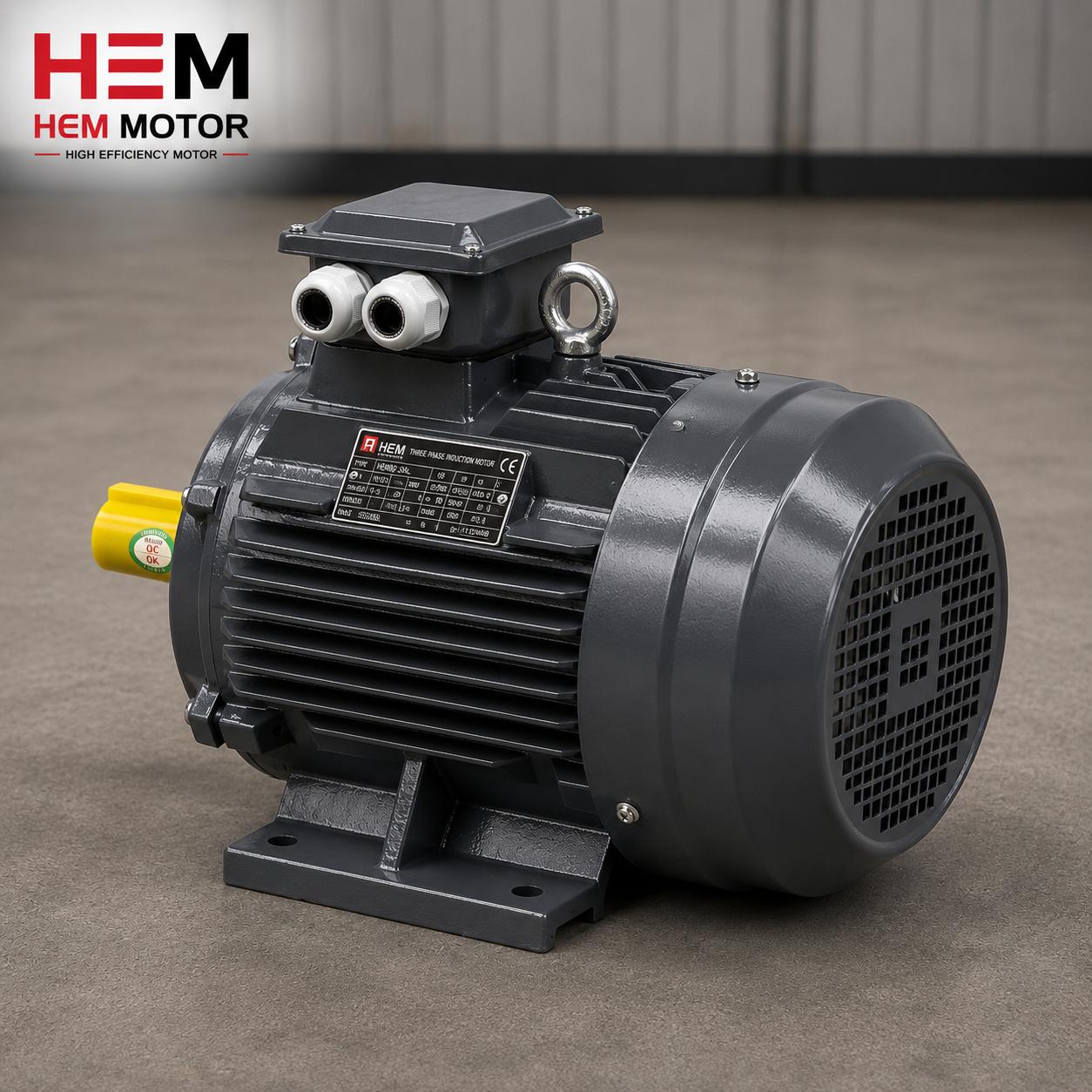

When an asynchronous motor starts directly from the grid, it draws, for a brief moment, a starting current several times the rated current. As this high current flows through cables and the transformer, it causes a voltage drop across the line impedance; as a result both the voltage at the motor's own terminals and the supply of other devices connected to the same busbar drop momentarily. This phenomenon is a problem frequently encountered in industry but often underestimated: voltage drop at starting in asynchronous motors. If the voltage drop is large enough, the motor starts with difficulty, the starting time lengthens, lights flicker, sensitive devices reset and other motors on the same line are affected. In this guide, as an electric motor manufacturer and supplier, we explain in detail why starting voltage drop occurs, how it is calculated, by which methods it is reduced and how the right motor selection prevents this problem from the outset.
Why Is the Starting Current High?
Because the rotor of a stationary asynchronous motor is not yet turning, the relative speed between the rotating field created by the stator and the rotor is at maximum. In this state the motor behaves like the short-circuited secondary winding of a transformer and shows very low impedance. As a result, the motor draws a starting current typically 5 to 8 times the rated current. As the motor accelerates, the relative speed decreases, the rotor impedance rises and the current drops rapidly towards the rated value. The duration of this high current is usually on the order of seconds; however, in high-power loads with high inertia, the starting time lengthens and the high current lasts longer.
The locked-rotor code letter on the nameplate indicates the apparent power (kVA/HP) the motor will draw at start and is used to estimate the starting current. To see how this code is read and why it is important when ordering, our content on the locked-rotor code letter in electric motors is a practical resource. On the starting current itself, its causes and reduction methods, our guide on starting current (LRA) in asynchronous motors completes the subject.
How Does the Voltage Drop Occur?
Every electrical line, transformer and cable has an internal impedance (resistance and reactance). When current flows through this impedance, a voltage drop equal to the product of current and impedance appears. In normal operation the current is low, so the voltage drop is negligible; however, at start the current increases several times, so the voltage drop grows proportionally. Therefore, the higher the motor's starting current and the greater the impedance of the supply line (long cable, small transformer), the more severe the voltage drop at start. As a result, the voltage at the motor terminals falls below the rated value.
Effects of Voltage Drop on the Motor and the Plant
The voltage drop at start affects both the starting motor and other consumers connected to the same busbar. The starting torque of an asynchronous motor is proportional to the square of the terminal voltage; that is, if the voltage drops 10 percent, the starting torque decreases by about 19 percent. This means the motor struggles to lift the load, the starting time lengthens and in some cases it cannot start at all. Because the high current continues during the lengthened starting time, the winding heats up more and the motor thermal device may trip.
- Loss of starting torque: When voltage drops the torque decreases rapidly; under loaded start the motor may stall.
- Lengthening of starting time: Insufficient torque slows acceleration; high current flows longer and the winding heats up.
- Light flicker: A visible brief dimming in lighting on the same line.
- Sensitive device impact: Contactor drop-out, PLC or computer reset, undervoltage fault in frequency inverters.
- Impact on other motors: The torque of running motors on the same busbar drops and their currents rise.
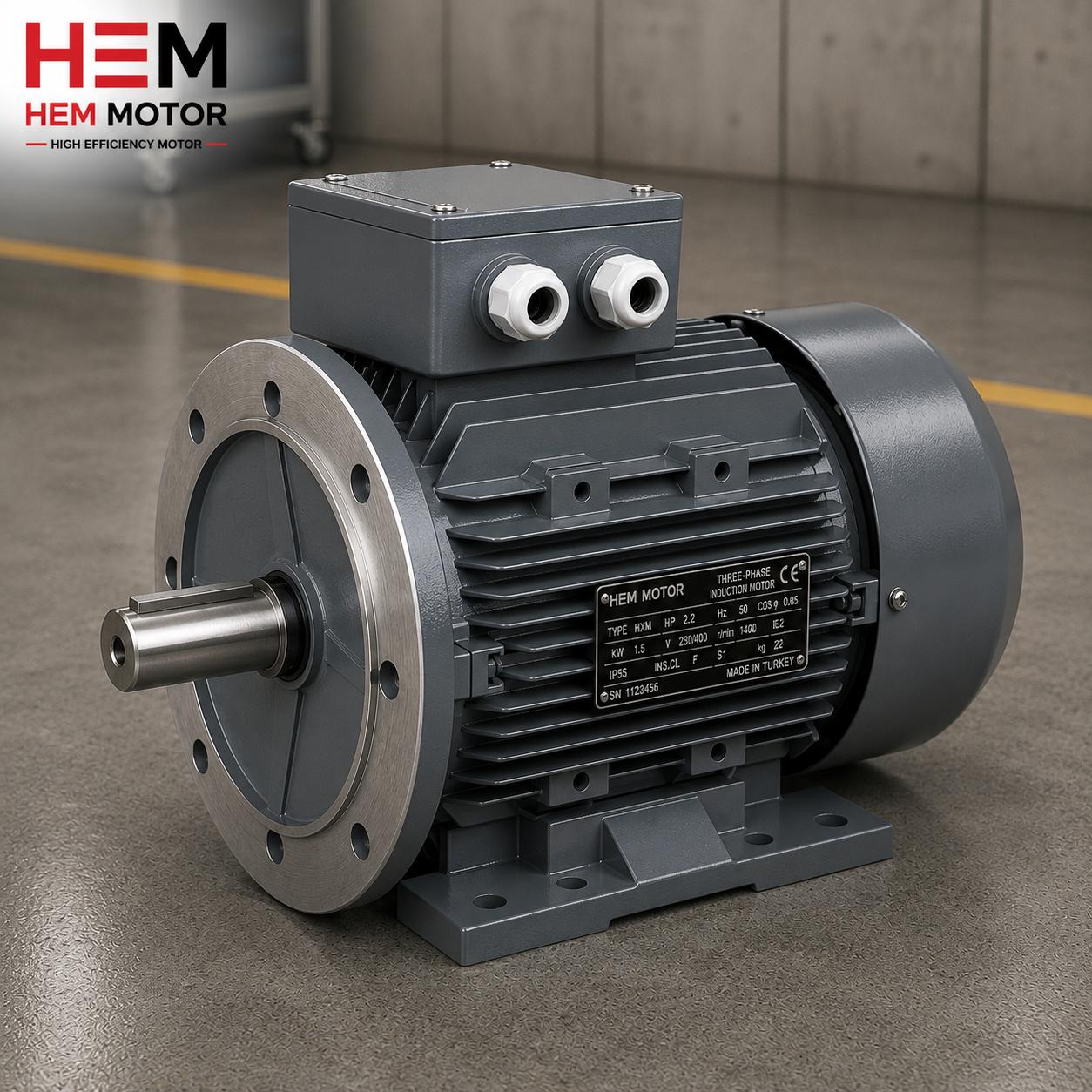
Starting Time and the Role of Frequent Starting
The effect of the voltage drop is related not only to its magnitude but also to how long it lasts. High-inertia loads (large fans, mills, flywheel crushers) draw high current for a long time during starting; this means both the voltage drop and the winding heating last longer. As the starting time lengthens, the motor's thermal capacity is strained and the permitted number of starts per hour decreases. Therefore, in high-inertia applications the motor should be selected generously in terms of both starting torque and thermal capacity.
The situation is even more critical in applications requiring frequent start-stop. Because high current is drawn and voltage drops at every start, frequent starting continuously stresses both the motor and the plant. In such applications, using a soft starter or frequency inverter extends motor life by reducing both the voltage drop and mechanical shocks. Ensuring that the number of starts per hour does not exceed the motor's limit is a basic rule to observe for both heating and electrical stability.
Factors Determining the Voltage Drop
The magnitude of the starting voltage drop depends not on a single cause but on a combination of several factors. Understanding these factors is the key to preventing the problem both at the design and the motor-selection stage.
Transformer Power and Short-Circuit Capacity
If the power of the supply transformer is small relative to the motor power, the starting current remains large compared with the transformer's capacity and the voltage drops significantly. As a general rule, the power of the largest motor to be started direct-on-line should not exceed a certain ratio of the transformer power. The higher the short-circuit capacity of the transformer (how strong the supply point is), the smaller the voltage drop the same starting current will create.
Cable Cross-Section and Length
If the cross-section of the supply cable to the motor is small and its length is long, the cable resistance is high and the starting current creates a large voltage drop across this resistance. Therefore, in long-distance motor supplies the cable cross-section must be selected not only to carry the continuous current but also to limit the voltage drop at start. To calculate the correct cable, fuse and contactor according to the rated current, our guide on rated current in IE3 motors: cable, fuse and contactor selection provides step-by-step guidance.
The Motor's Starting Current Characteristic
Even motors of the same power can have different starting-current ratios. The motor's design, winding structure and torque class affect the starting current. Selecting a motor with low starting current reduces the voltage drop from the outset. Therefore, motor selection is the most fundamental and often the cheapest step in solving the voltage-drop problem.
Methods to Reduce the Voltage Drop
To keep the starting voltage drop under control, starting methods that reduce the starting current are used. The advantage and suitable application of each method differ:
- Star-delta starting: At start the windings are connected in star, reducing the current and thus the voltage drop; then it switches to delta. It is an economical solution for applications with low starting load.
- Soft starter: By gradually raising the voltage, it smoothly limits the starting current and voltage drop; widely preferred in pumps, fans and conveyors.
- Frequency inverter (VFD): By starting the frequency from zero, it keeps the starting current close to the rated value; it minimises the voltage drop and also provides speed control.
- Part-winding starting: By starting with part of the winding, it reduces the current; it requires a specially wound motor.
- Transformer and cable improvement: A stronger transformer and appropriate cable cross-section reduce the voltage drop at the source.
To evaluate the choice between star-delta and soft starter according to load, our guide on starting AC asynchronous motors: star-delta or soft starter clarifies the decision process.
Which Method in Which Situation?
The choice of method depends on the motor power, the load's starting-torque requirement and the acceptable limit of the voltage drop. In applications that start at no load or low load (empty conveyor, fan) star-delta may be sufficient. In applications requiring loaded start and smooth acceleration, the soft starter stands out. If speed control is also needed or the voltage drop is very critical, the frequency inverter is the most comprehensive solution. However, it must not be forgotten that the starting method also reduces the starting torque in some cases; in star-delta the torque drops to about one third. Therefore the load's starting-torque requirement and the goal of limiting the voltage drop must be evaluated together.
Preventing the Problem from the Outset with Correct Motor Selection
The most robust solution to the voltage-drop problem is to select the right motor from the start. A motor that meets the starting torque required by the application, has a suitable torque class and a reasonable starting-current ratio both simplifies the starting method and relieves the plant's electrical infrastructure. The points to consider on the manufacturer and supplier side are:
- Starting-torque compatibility: A motor of the torque class suitable for the load's starting-torque requirement must be selected.
- Starting-current information: The motor's locked-rotor current and code letter must be known before ordering and compared with the line capacity.
- Starting-method compatibility: If it will run with a soft starter or inverter, the motor's suitability for these methods must be confirmed.
- Fast supply from stock: Keeping the motor of correct specification in stock saves time in project and failure processes.
- Manufacturer assurance: Documented test values and warranty coverage guarantee the field consistency of the starting behaviour.
To determine the motor with correct starting behaviour suitable for your application and to obtain a current quotation, you can contact us together with stock status via our elektrik motoru fiyatları page. The right motor and the right starting method keep the starting voltage drop within acceptable limits.
Frequently Asked Questions
How much voltage drop at start becomes a problem?
The general acceptance is that the voltage drop on the busbar during motor starting should remain below a reasonable limit (typically 10-15 percent). If this limit is exceeded, the torque of the starting motor may be insufficient, visible flicker occurs in lighting and sensitive devices on the same line may be affected. The exact limit varies according to the plant structure and the sensitivity of connected devices; therefore, in critical plants the starting voltage drop should be calculated at the design stage.
How does voltage drop affect the starting torque?
The starting torque of an asynchronous motor is proportional to the square of the terminal voltage. Therefore, if the voltage drops 10 percent, the starting torque decreases by about 19 percent. As the voltage drop grows, the motor struggles to lift the load, the starting time lengthens and at sufficiently low voltage the motor may not start at all. Hence the voltage drop directly affects not only the electrical but also the mechanical starting performance.
What is the most effective way to reduce the voltage drop?
The most effective approach is to combine a starting method that reduces the starting current (star-delta, soft starter or frequency inverter) with correct sizing of the supply infrastructure (transformer power, cable cross-section). In addition, selecting the right motor with a suitable starting-current characteristic from the outset is the step that reduces the problem at the source and is often the most economical.