English
 Türkçe

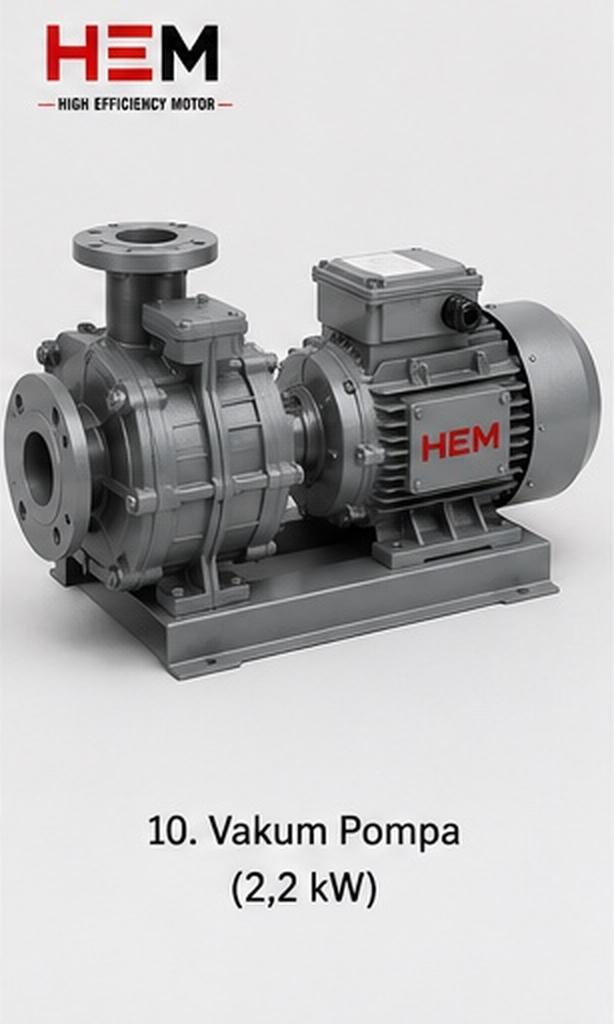

In electric motor selection, the mechanical load is not the only factor that determines power; how long and with what cycle the motor will carry this load, that is, the duty type, is at least as decisive as power. A motor running continuously at the same load and a motor that engages only briefly and then stops until it cools completely can deliver very different powers from the same frame. The standard governing this difference is the duty types defined by IEC, and one of the most practical examples of these is S2 short-time duty. In this article, HEM Motor examines the thermal logic of the S2 duty type, the importance of the time definition, typical applications such as cranes and gates, and how correct S2 selection avoids an unnecessarily large motor, with a fully technical perspective.
What Is Duty Type and Why Does It Matter?
When an asynchronous motor runs, losses in its windings and rotor turn into heat and the motor heats up over time. If the motor runs at constant load long enough, the heat it generates and the heat it dissipates to the environment balance out and the motor reaches a thermal equilibrium. This steady temperature is the limit that determines the motor's rated power. The continuous duty type, S1, defines the case where the motor runs long enough to reach this thermal equilibrium.
However, many industrial applications are not continuous. The motor runs briefly, stops, cools and runs again. In these cases the motor never reaches full thermal equilibrium. The duty types (S1 through S10) standardize exactly these different operating profiles. When the duty type is wrongly assessed, the motor either overheats and burns out, or is selected unnecessarily large and raises cost.
- S1: Continuous duty — the motor reaches thermal equilibrium.
- S2: Short-time duty — the motor runs briefly, then cools completely.
- S3: Intermittent periodic duty — running and stopping cycles repeat.
To examine the broad family of duty types and variable load profiles in more depth, our motor duty type S7/S8/S9 braked variable load article is a comprehensive resource.
The Thermal Logic of S2 Short-Time Duty
In S2 short-time duty, the motor runs at constant load for a defined and limited time; this time is shorter than needed for the motor to reach thermal equilibrium. When the running time ends, the motor stops and waits until it returns to ambient temperature, that is, until it cools completely. A new run begins only after the motor has cooled.
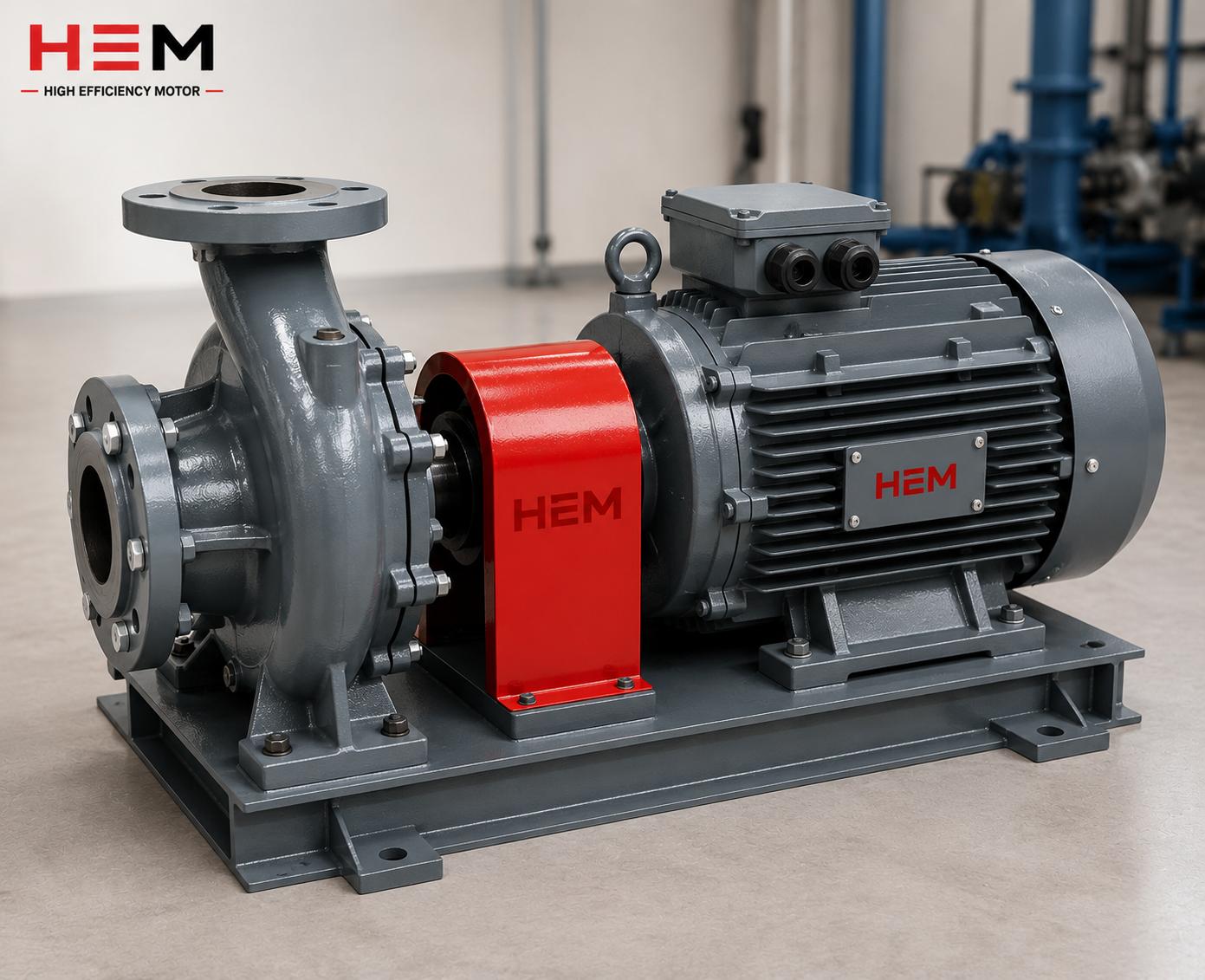
The practical result of this thermal logic is highly advantageous: because the motor does not reach thermal equilibrium, that is, the insulation does not reach its limit temperature, higher power can be taken from the same frame than in S1. During the running time the winding temperature does not reach the steady value it would reach in S1 before the run ends. Thus the motor can safely carry a mechanical power above the rated S1 power for a short time.
This provides a significant cost and space advantage in the right application. An application that would require a larger frame if run continuously can be met with a smaller, more economical frame using the S2 duty type. But to benefit from this advantage, the time definition must be made correctly.
S2 Is Always Stated With a Time
The most critical rule of the S2 duty type is this: S2 is always stated together with a time. Saying just "S2" is meaningless; the running time must always be added. Standard times are usually S2 10 minutes, S2 30 minutes and S2 60 minutes.
There is a fundamental inverse relationship here: the shorter the time, the higher the power that can be taken from the same frame. In an S2 10-minute duty, since the motor runs very briefly, the winding heats up very little and the frame can carry a power markedly higher than in S1. In an S2 60-minute duty, since the running time is longer, the temperature approaches S1 and the power increase is limited.
- S2 10 min: Shortest time, highest power increase; for drives that engage very briefly.
- S2 30 min: Medium time, balanced power increase; for medium-duration duties.
- S2 60 min: Long time, limited power increase; behavior close to S1.
Therefore, when selecting a motor for an application, you must clarify not only the mechanical power but also how long the motor runs in each cycle and whether it cools completely in between. If the motor runs again before cooling, this is no longer S2 but S3 intermittent periodic duty and is evaluated differently.
Typical Applications of the S2 Duty Type
S2 short-time duty appears in many industrial and infrastructure applications whose operating profile is "run briefly, stop long":
- Crane and hoisting: Lifting and lowering a load takes a short time; then the crane waits for a long time. Crane hoist motors are a typical S2 application.
- Gate and door mechanisms: Industrial gates, dam sluices and large doors run the motor only while opening and closing, then stop for a long time.
- Barrier and access systems: Parking barriers and access gates operate with very short movements.
- Short-time drives: Some positioning, adjustment and commissioning drives engage only for short-time duty.
In crane and hoisting applications, the braked and shock-load characteristic must also be considered; on this our cast-iron motor crane hoist S4 brake shock load article offers additional selection criteria.
Correct S2 Selection Avoids an Oversized Motor
The most concrete benefit of the S2 duty type to the facility is avoiding oversizing. If a short-time crane drive is mistakenly selected with S1 continuous duty logic, an unnecessarily large, heavy and expensive motor is purchased. Yet correct S2 assessment makes it possible to do the same work with a smaller-frame, more economical and mechanically more compact motor.
For correct selection, the application's running time, stopping time and mechanical load must be clearly determined; then an S2 value suited to this profile must be chosen. HEM Motor analyzes your application's duty profile together with you and offers the motor that exactly fits your need, from stock or project-specific. You can reach all our motor solutions from our homepage, and we can determine together the most suitable duty type and power selection for your application. To understand the motor's mechanical load limits, our electric motor shaft radial axial load bearing limit article is also useful.
Inertia and Starting Frequency in S2 Selection
In the S2 duty type, the running time is not the only thing determining power; the application's inertia (moment of inertia) and starting frequency are also critically important. In applications such as cranes, gates and barriers, the motor starts from zero in each cycle, accelerates the driven mass and then stops. Each start creates high starting current and additional heating in the motor.
If the inertia of the driven mass is large, the energy the motor spends at each start and the heat generated are also large. In this case, when making an S2 assessment, one must look not only at the running time but also at the number of starts and the inertia. An application that starts and stops frequently and carries high inertia no longer approaches pure S2 in terms of duty type but a more complex profile involving start-brake cycles (for example, S4).
- Low inertia, infrequent starting: Classic S2; the power increase by time is fully exploited.
- High inertia, frequent starting: Starting heating dominates; a cyclic duty type such as S4 should be evaluated.
- Braked stopping: Mechanical or electrical braking requires additional heat and assessment.
Therefore, not only "how long" the application runs but also "how often and with what inertia it starts" affects motor selection. In cyclic applications such as cranes and hoisting, correctly deriving the duty profile prevents both oversizing and undersizing.
Insulation and Thermal Protection in S2 Motors
Because in the S2 duty type the motor carries a load above the S1 rated power for a short time, the winding insulation must safely handle this thermal stress. The insulation class directly determines service life in S2 motors too. Standard F-class insulation provides the motor with thermal reserve and enables safe operation under short-time high load.
In addition, thermal protection elements are very important in S2 motors. A PTC thermistor or thermal protector placed in the winding cuts the circuit before overheating if the motor is mistakenly run longer than its time, protecting the insulation. Especially in crane and gate applications with a risk of operator error or control failure, this protection is a critical safety layer.
- F-class insulation: Provides thermal reserve for short-time high load.
- PTC/thermal protection: Protects the motor by preventing overheating on time overrun.
- Proper cooling: Complete cooling between cycles is the precondition of the S2 power advantage.
To examine the relationship between insulation thermal class and temperature rise in more depth, our IE4 motor insulation thermal class F/H temperature rise article is a useful reference.
Reading the Duty Type on the Nameplate
The duty type a motor is designed for is stated on the nameplate (label). The nameplate contains the duty type, rated power, speed, voltage, current and insulation class. In the S2 duty type, the time is always written on the plate as well: for example, the expression "S2 30 min" indicates that the motor is rated for 30-minute short-time duty.
In field application, when replacing an existing motor, correctly reading the duty type and time information on the old motor's plate is of great importance. Placing an S2 motor in place of a motor whose plate reads only "S1", or vice versa, can lead to serious selection errors. If the duty type is not stated, the motor is usually assumed to be designed for S1 continuous duty. To correctly read nameplate information and perform field verification, our motor nameplate efficiency value IE code reading article is a comprehensive guide.
Frequently Asked Questions
What happens if I run an S2 motor continuously?
A motor selected according to the S2 duty type has been assessed to carry a power higher than needed for S1 continuous duty. If you run this motor continuously, the winding temperature exceeds the insulation limit, the motor overheats, and the insulation is soon damaged, causing failure. An S2 motor must be run only for the stated time and then left to cool completely.
What is the difference between S2 and S3?
In S2 the motor runs briefly and then stops until it cools completely; each cycle starts from a cold start. In S3 intermittent periodic duty, the motor repeats running and stopping cycles, but the stopping times are not enough for the motor to cool completely. Therefore in S3 the temperature accumulates over successive cycles and the assessment is made differently. Whether your application cools completely in between determines this distinction.
Is there a practical difference between S2 60 minutes and S1?
As the time lengthens, the power increase S2 provides decreases; in an S2 60-minute duty the motor nearly approaches thermal equilibrium, so the behavior is quite close to S1. Still, theoretically some power advantage remains. For very long-duration duties, selecting with S1 continuous duty logic is often safer and more practical.