English
 Türkçe

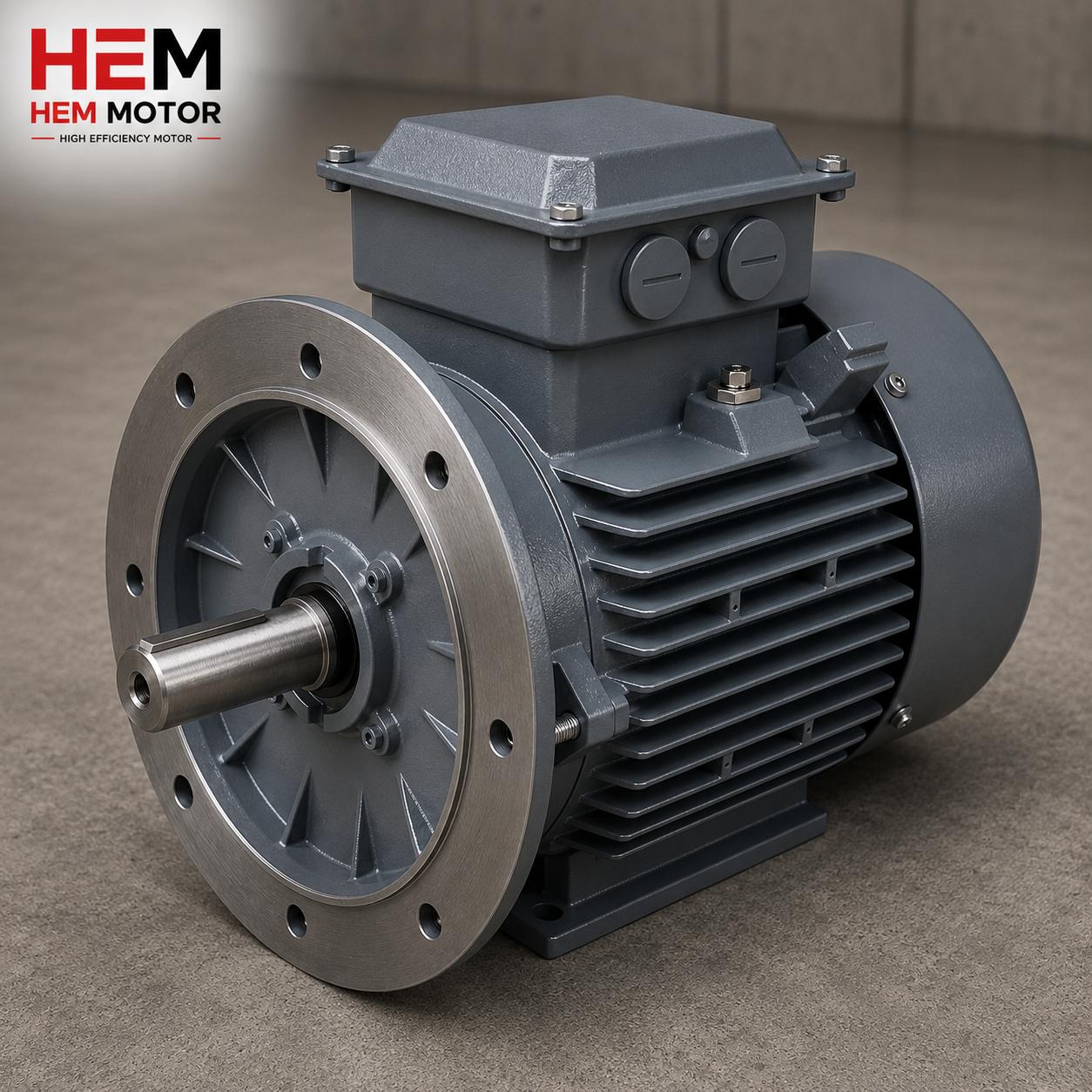

At the heart of every asynchronous motor lies a component that is often overlooked yet underpins all torque production: the rotor cage and the rotor end ring at each of its two ends. Together, the rotor bars and the end rings form a closed electrical circuit; the stator's rotating magnetic field induces a current in this circuit, and the torque that turns the motor is born exactly here. Consequently, the efficiency, starting torque, heating and lifespan of an asynchronous motor depend directly on the cage and end-ring design.
In this article we examine, in technical terms, the aluminum and copper die-casting methods, the cross-sectional design of the end ring, and their effects on torque and efficiency. We explain why cage quality matters in the motors we build at our own facility, and we encourage you to define the motor suited to your application and request a quotation.
How Do the Rotor Cage and End Ring Work?
In a squirrel-cage asynchronous motor, the rotor consists of axially placed conductive bars and rings that short-circuit these bars at both ends. The three-phase voltage applied to the stator windings creates a rotating magnetic field in the air gap. As this field cuts the rotor bars, it induces a voltage in them; because the bars are short-circuited by the end rings, a current flows. The interaction of the induced current with the magnetic field produces the torque that turns the rotor.
The cross-sectional area of the end ring is one of the most important factors determining the total resistance of the cage. If the ring cross-section is insufficient, resistance rises, losses increase and efficiency falls. An excessively large cross-section, on the other hand, can weaken the starting torque. The end-ring design is therefore carefully optimized for the targeted torque-speed curve.
Aluminum Die-Cast Cage
The most common production method is pressure aluminum die-casting. Molten aluminum is forced under high pressure in a single shot into the slots of the rotor lamination stack and into the end-ring molds. Thus the bars and the end rings are obtained as a single-piece, pore-free casting. The advantages of the aluminum cage are:
- Low cost: Aluminum is far more economical than copper and suited to mass production.
- Light weight: Low density reduces rotor inertia and provides fast response.
- Tunable starting torque: The resistance of aluminum, combined with a deep-slot design, gives good breakaway torque.
The quality of aluminum casting depends on being free of porosity. A porous casting raises cage resistance and causes heating. On our production line we produce pore-free, balanced cages with vacuum and pressure control.
Copper Die-Casting and the Efficiency Advantage
The conductivity of copper is roughly 60 percent higher than that of aluminum. A copper rotor cage therefore has lower resistance at the same cross-section and consequently lower rotor losses. Copper die-cast rotor technology raises total efficiency by reducing rotor copper losses, especially in high-efficiency-class motors (IE3, IE4). However, since copper's melting temperature is very high, the casting process is more demanding and costly. For critical applications targeting high efficiency, the copper cage offers a significant advantage.
The Effect of End-Ring Design on Torque and Efficiency
The cross-sectional area, material and geometry of the end ring directly shape the motor's characteristic:
Starting Torque
At start-up the rotor frequency is high; due to the skin effect, current crowds toward the outer part of the bar. A deep-slot and an appropriate end-ring design provide strong starting torque with high resistance at start-up, while delivering high efficiency with low resistance at normal running.
Slip and Efficiency
A low-resistance cage runs with lower slip at normal operation, which reduces rotor losses and makes the motor more efficient. Enlarging the end-ring cross-section lowers resistance, but the design requires a balance between starting torque and efficiency.
Mechanical Strength and Balance
The end rings are also subjected to large centrifugal forces at high speed. With insufficient strength, ring deformation and cracking can occur. A balanced cage with a flawless casting ensures vibration-free, long-life operation.
The Role of Cage Quality in Correct Motor Selection
When selecting an asynchronous motor, most users look only at power and speed; yet rotor cage quality is the hidden factor that determines the motor's real performance. A quality cage means low heating, high efficiency, stable torque and a long life. In applications with heavy starting, frequent switching or high driven inertia, cage design becomes critical. In shock loads such as coal crushers, mills or crushers, rotor strength directly affects motor life.
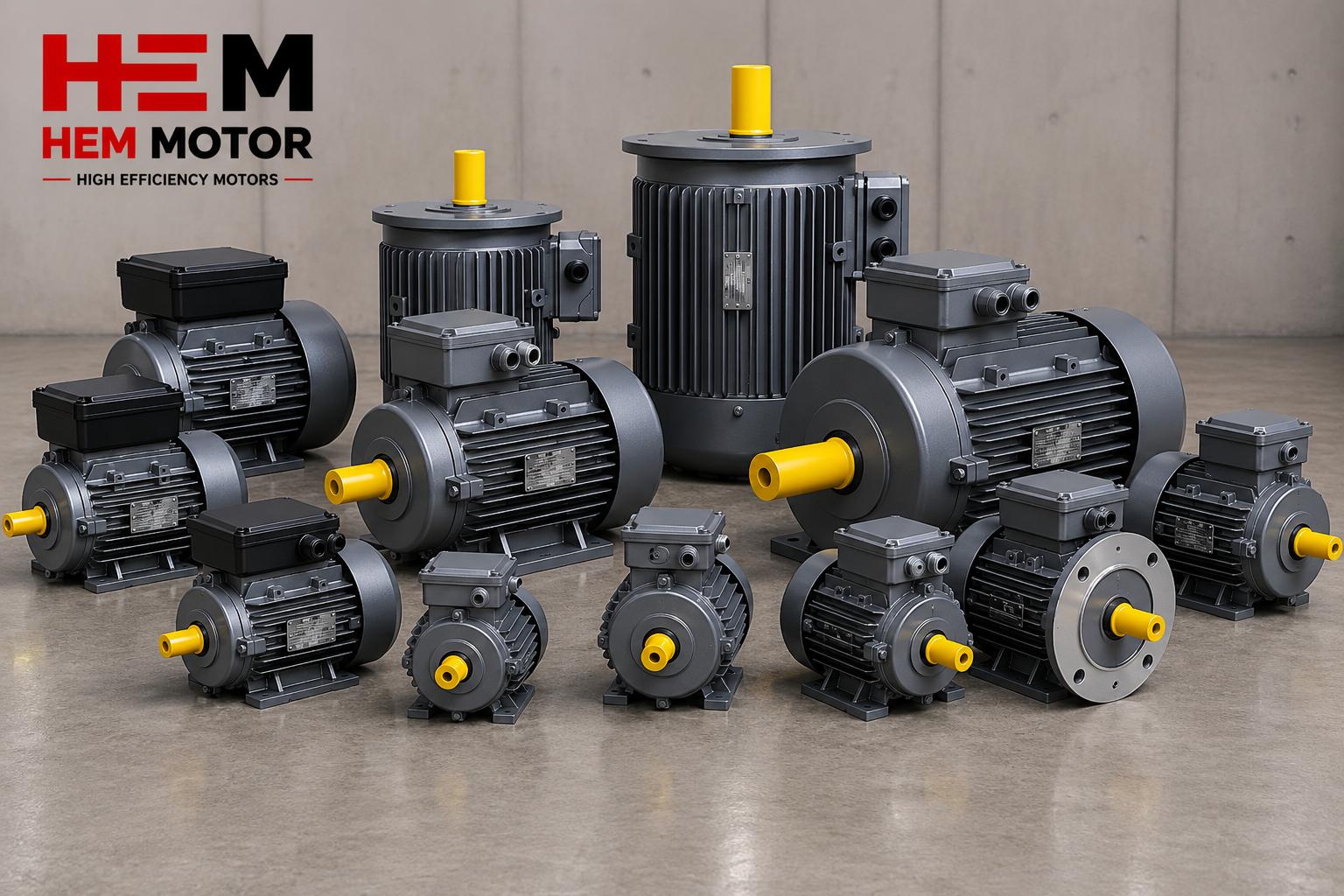
When you share your application's load profile with us, we recommend the motor with the correct cage and efficiency class and offer fast delivery from stock or according to the production plan. Among our related technical content, you may review the selection of a coal crusher and pulverizer mill motor, the IE3 stock motor options for high efficiency, and the method of staged autotransformer starting in asynchronous motors.
Frequently Asked Questions
Which is better, a copper cage or an aluminum cage?
Both have their place. Aluminum die-casting offers an economical, light and adequate performance for most standard applications. The copper cage, providing lower rotor loss and higher efficiency, is advantageous in applications with high running hours where efficiency is critical. The right choice depends on the application's load and efficiency targets.
What causes the end ring to crack?
Porous casting, an unbalanced cage, excessive thermal expansion, or fatigue caused by frequent heavy starting usually lead to end-ring cracking. A quality, pore-free and balanced cage largely eliminates this risk.
Can I judge rotor cage quality from the outside?
It is hard to tell directly by eye; however, the motor's efficiency class, heating behavior, starting characteristic and the manufacturer's casting quality control give clues. When you tell us your application, we recommend the motor suited in terms of cage and efficiency. For more information you may visit our homepage.