English
 Türkçe

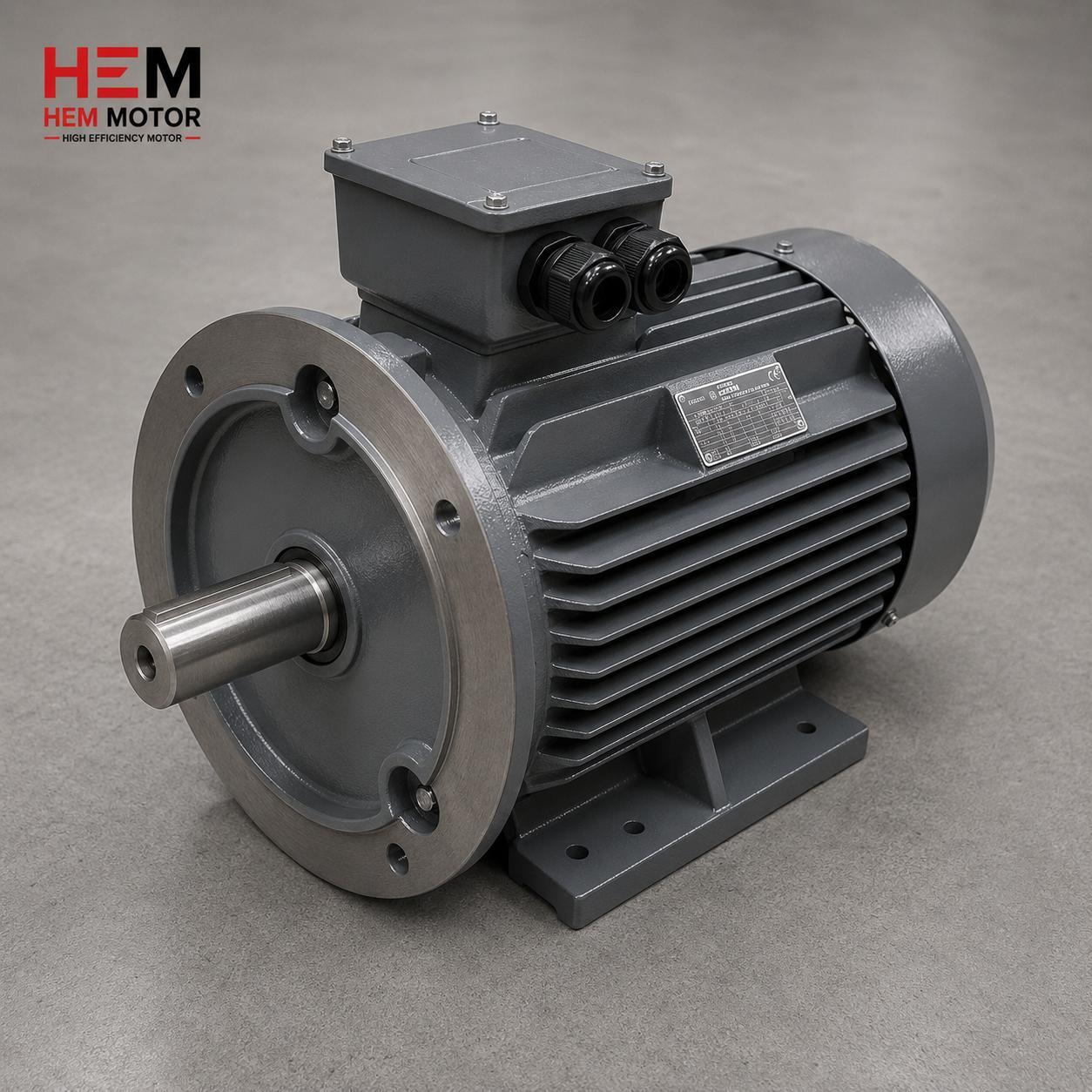

Knowing an asynchronous motor's power and speed is often assumed to be enough for correct selection; yet what really determines whether the motor will stay stable under a load and not stall during sudden load changes is the load angle and the breakdown (pull-out) torque. A wrongly selected motor, even if it meets its nominal power on paper, can stall and stop under a pulsating, variable load; this means production loss and mechanical stress. In this article we examine load angle, the stability limit, breakdown torque and correct motor selection under sudden load changes in asynchronous motors, from the perspective of an electric motor manufacturer and seller. To select the right motor, you can review our current electric motor prices and product range.
Slip, Torque and Load Angle in an Asynchronous Motor
An asynchronous motor produces torque from the difference between the speed of the rotating magnetic field (synchronous speed) and the rotor speed, that is, from slip. As the load increases, the rotor slows down a little more, slip rises and the motor produces more torque. This is the motor's stable region, where it automatically meets the load. However, this balance does not last forever.
- Slip: Increases with load; at full load it is a small percentage value.
- Torque-slip curve: Up to a certain point, torque increases as load increases; this point is the breakdown (pull-out) torque.
- Breakdown torque: The maximum torque the motor can produce; if the load increases beyond this, motor torque drops and the motor heads toward stalling.
Similar to the "load angle" concept in synchronous machines, in an asynchronous motor too, as the load increases the motor gradually approaches the stability limit. The interval from full load to breakdown torque is the safety margin showing how much sudden load increase the motor can withstand.
Breakdown (Pull-Out) Torque and the Stability Limit
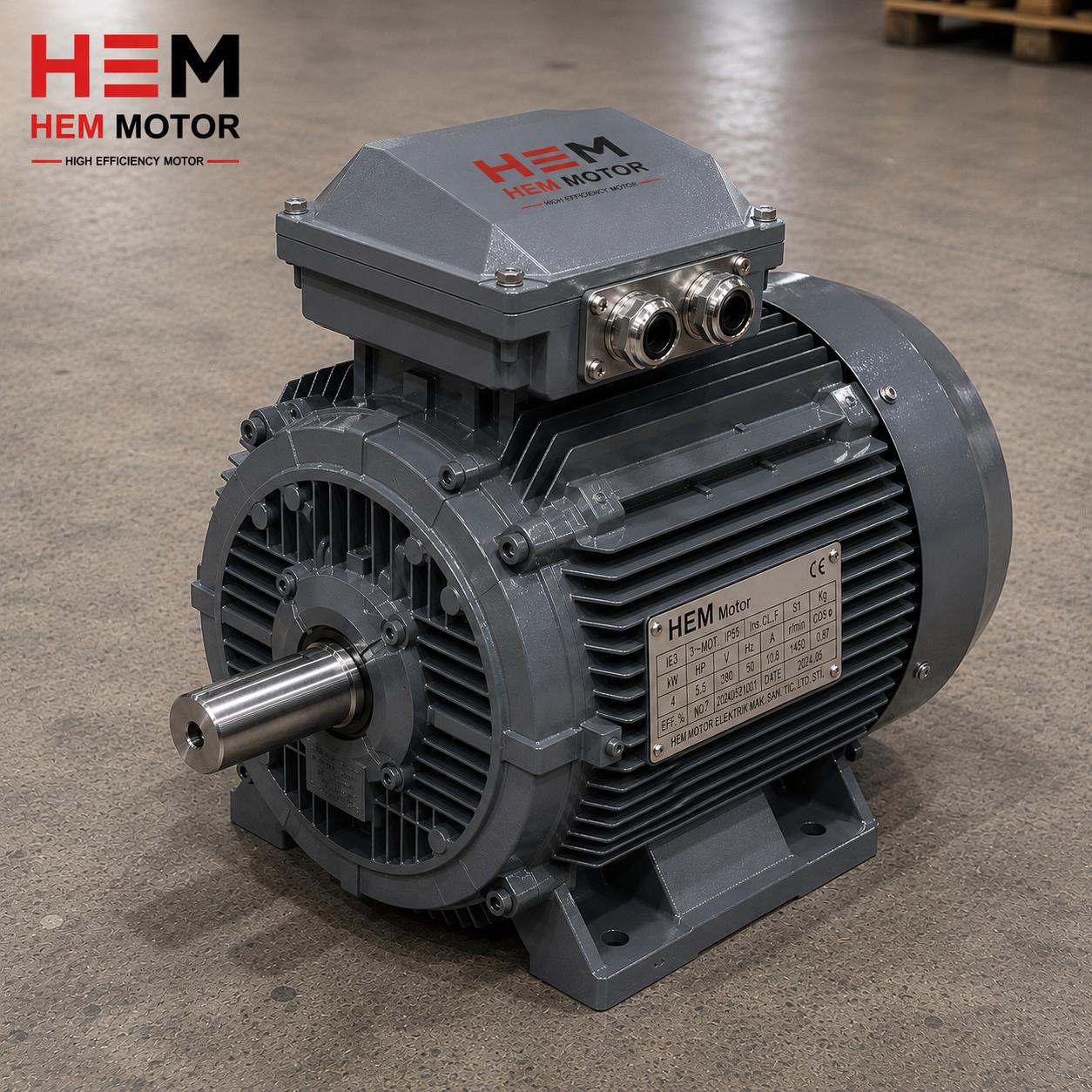
The most critical stability parameter of an asynchronous motor is breakdown torque. The motor should have a breakdown torque significantly above its full-load torque; this margin lets the motor keep running without stalling during sudden load increases, voltage dips and transient stress.
Why Is Breakdown Torque Important?
- Sudden load increase: When a large piece enters a crusher or dense material reaches a mixer, the load spikes instantly; if breakdown torque is insufficient, the motor stalls and stops.
- Voltage dip: Breakdown torque varies with the square of the supply voltage; when voltage drops, breakdown torque falls rapidly and the motor stalls easily on a weak grid.
- Transient stress: When the load peaks, a high breakdown torque carries the motor through without "swallowing" it.
Therefore, with pulsating and variable loads it is dangerous to select a motor by average power alone; load peak values and the breakdown torque margin must be evaluated together.
Stable and Unstable Regions
On the torque-slip curve, the region up to breakdown torque is stable: when load increases, motor torque increases and re-establishes equilibrium. Beyond breakdown torque it is unstable: when load increases, motor torque drops and the motor heads quickly to stall. A correctly selected motor always keeps its operating point inside the stable region, at a safe distance from breakdown torque.
Motor Behavior Under Sudden Load Change
An asynchronous motor's response to a sudden load change depends on both its electrical and mechanical (inertia) characteristics. When the load suddenly rises, the motor slows down, slip increases, and the motor produces more torque to reach a new equilibrium; during this process the motor's inertia and breakdown torque act as a buffer.
- Flywheel effect (inertia): In pulsating loads such as crushers, the system inertia smooths out peak loads.
- Breakdown margin: A high breakdown torque meets sudden load peaks without stalling.
- Heating: Frequent and large load changes can raise the motor's average current and heating; the thermal model must be considered.
We covered speed stability and torque response under pulsating and variable loads, from the perspective of drive-based solutions, in our article on torque response and speed stability under sudden load change. For thermal behavior and the overload model, our guide on thermal time constant and overload model in asynchronous motors is complementary.
Starting Torque, Starting Current and Stability
A motor's stability matters not only at the operating point but also at start-up. In high-inertia loads or those needing high initial torque, if the motor's starting (locked-rotor) torque is insufficient to accelerate the load, the motor cannot start and the winding heats up.
- Starting torque: Must be enough to accelerate the load from standstill; heavy-starting loads need a high-starting-torque motor.
- Starting current (LRA): Several times the full-load current; the panel and protection must be selected accordingly.
- Acceleration time: If it lengthens, the motor and protective devices are thermally stressed.
For the source of starting current and methods to reduce it, you can review our article on starting current (LRA) and starting methods in asynchronous motors.
Load Types and Their Effect on Stability
Whether a motor runs stably is tightly bound to the character of the load it drives. The same motor that runs perfectly under a steady load can be continuously stressed at the breakdown limit under a pulsating load. The main load types encountered in industry and their effect on stability are as follows:
- Constant torque loads: Loads such as conveyors, screw conveyors, cranes and extruders require approximately constant torque regardless of speed. For these loads it is important that the motor can produce sufficient torque at every speed and has a solid breakdown margin.
- Variable torque loads: Loads such as pumps and fans increase torque with the square of speed. These loads are generally more "gentle" and do not stall the motor suddenly.
- Pulsating loads: Crushers, breakers, presses and some mills produce sudden, large torque peaks. These loads are the type that most stresses the motor's stability.
- High-inertia loads: Large fans, centrifuges and mills draw high current for a long time while accelerating from standstill; start-up stability becomes critical.
Correctly identifying the load type is the first step of motor selection. A motor of the same kW that runs comfortably under a steady load can continuously stall under a wrongly assessed pulsating load. Therefore one must look not at catalog power but at the real load profile.
Grid Quality, Voltage and Phase Balance
A motor's stability depends not only on the characteristics of the motor and the load but also on the quality of the grid feeding it. A weak, long-cable or unbalanced grid can bring even a soundly selected motor close to the breakdown limit.
- Voltage drop: Because breakdown torque varies with the square of voltage, low voltage seriously reduces the motor's capacity to carry sudden loads.
- Phase imbalance: A voltage difference between phases causes extra heating and torque oscillation in the motor; it impairs stability.
- Long feeder cable: Voltage drop increases at start-up and the motor is stressed.
You can review our related content on the effect of phase current imbalance on winding heating and performance; we covered start-up voltage drop on long feeder lines in our article on start-up voltage drop on asynchronous motors. For a healthy initial movement and stable operation, correct cable cross-section and grid quality are essential.
Correct Motor Selection: Safety Margin by Load Type
As an electric motor manufacturer and seller, the selection logic we recommend changes according to the character of the load:
- Steady and smooth loads (pump, fan): Selection close to average power with a reasonable breakdown margin is sufficient.
- Pulsating and variable loads (crusher, mixer, screw conveyor): Load peak values should be the basis, and a motor with high breakdown torque and a robust build should be preferred.
- High-inertia loads (large fan, mill): Starting torque and acceleration time must be checked.
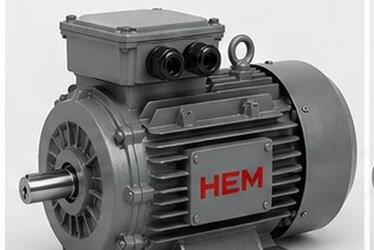
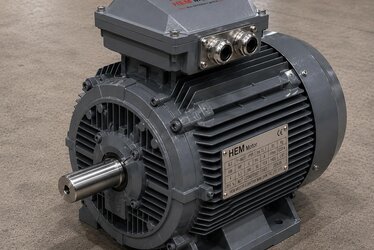
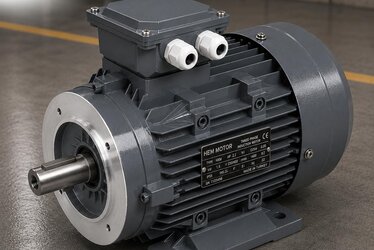
When calculating the power required for an application, our article on motor power calculation for pump, fan and conveyor is a good starting point. You can find our cast iron frame, high-breakdown-torque, heavy-duty motor options in the HEM Motor product catalog.
The Contribution of Motor Design to Stability
Two asynchronous motors of the same power and speed can show very different stability characteristics depending on design and manufacturing quality. When selecting a motor that will run safely under load, the motor's structural features must also be evaluated. The design elements that directly affect stability are:
- Rotor design and breakdown torque: The rotor slot geometry and winding design determine the motor's torque-slip curve and therefore the breakdown torque. Motors designed for heavy duty offer a higher breakdown torque margin.
- Winding quality and insulation: 100% copper winding and Class F insulation give the motor a wider thermal operating margin; this means resilience under sudden loads and transient stress.
- Cast iron frame: A mechanically robust cast iron frame that dissipates heat well contributes to vibration and heat management under pulsating loads.
- Bearing and shaft structure: Reinforced bearings and an appropriate shaft diameter preserve mechanical stability under high torque and pulsating load.
Therefore, when selecting a motor for pulsating and variable loads, not only the catalog kW and speed but also the motor's suitability for heavy duty and its structural robustness must be considered. Cast iron frame, high-breakdown-torque motor options stand out in applications requiring stability.
Frequently Asked Questions
If my motor meets the nominal power, why does it stall?
Nominal power is an average value; in pulsating and variable loads, instantaneous load peaks can far exceed the nominal. If the motor's breakdown torque is not high enough to meet these peaks, the motor passes the breakdown point and stalls. In that case selection should be based not on average power but on load peak values and the breakdown torque margin.
Why does breakdown torque decrease when voltage drops?
An asynchronous motor's breakdown torque is proportional to the square of the supply voltage. So when voltage drops a little, breakdown torque decreases much more. On weak or long-cable grids, voltage drop increases the motor's risk of stalling under sudden loads; therefore voltage drop and the breakdown margin must be evaluated together.
How should I select a motor for a pulsating load?
For pulsating and variable loads (crusher, screw conveyor, mixer), the basis should be load peak values, not average power. A motor with high breakdown torque, a robust build, and supported if necessary by system inertia (flywheel effect) should be selected. The thermal model should also be considered for the heating effect of frequent and large load changes.