English
 Türkçe

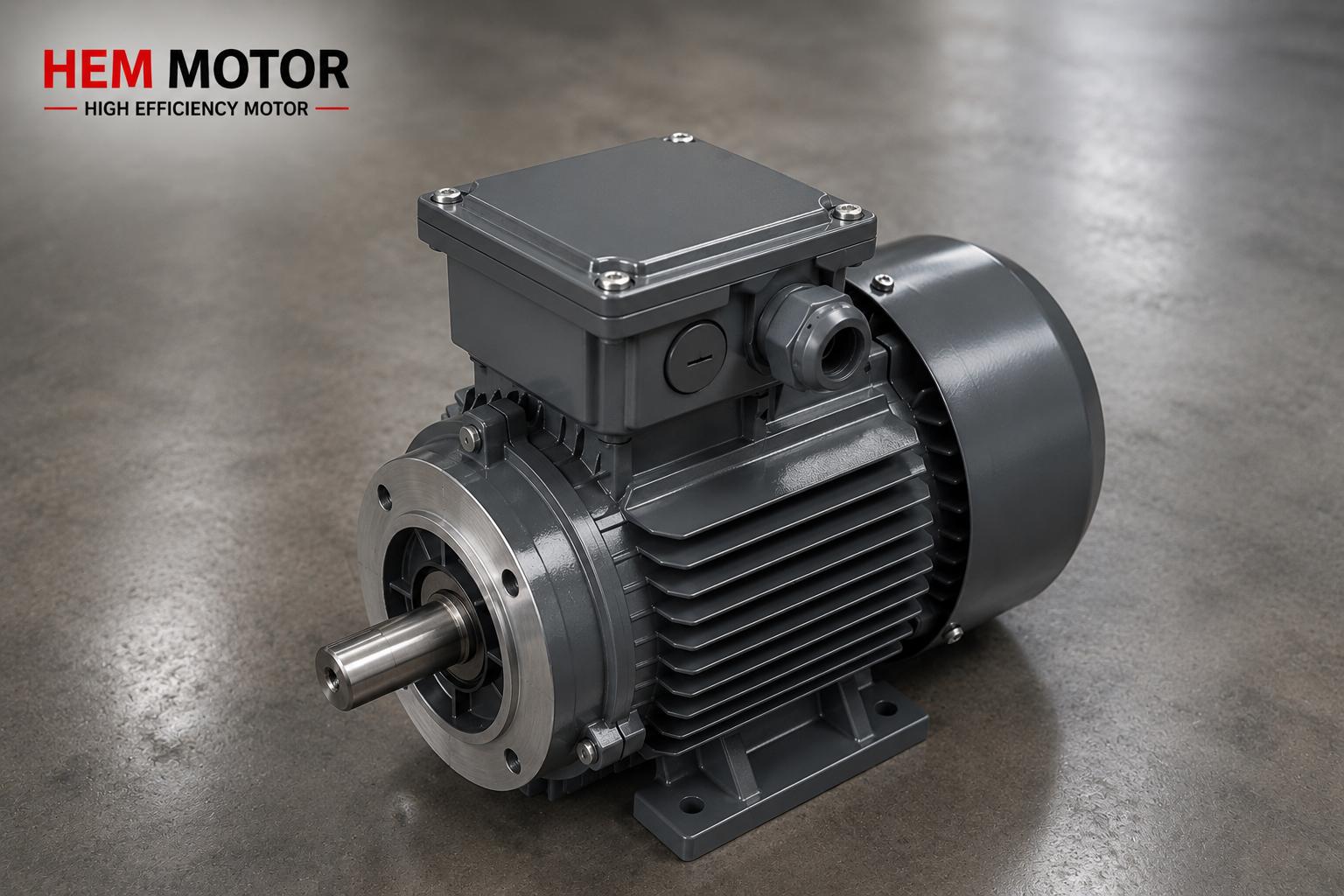

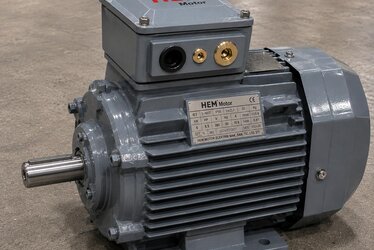
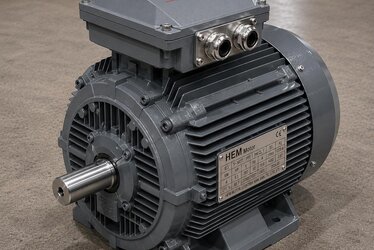
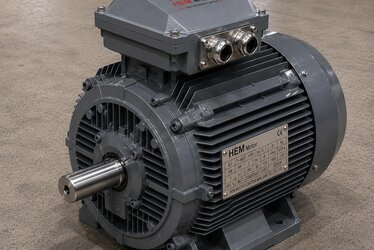
The nameplate of an electric motor is its technical identity. Among the dozens of data points printed on the label, the two that most directly shape purchasing and operating decisions are the IE efficiency class and the nominal efficiency value written as a percentage. These two pieces of information complement each other: the IE code tells you which efficiency class the motor belongs to, while the percent efficiency value gives the concrete numerical figure within that class. Together they form the motor's true efficiency identity, and when they are misread, they can lead to misleading conclusions for both the investment and the energy bill.
The most common field misconception is to assume that the percent efficiency printed on the label applies at every operating point. In reality, the nominal efficiency on the label is measured at full load (rated power). In industry, most motors operate not at full load but in a band roughly between 50% and 75% of their rated power. As a result, the real field efficiency varies with the operating load and drops noticeably, especially at low loads. Ignoring this fact when selecting an IE efficient electric motor causes the expected savings to fall short.
In this article we explain step by step how to read the IE code and the percent efficiency value on the nameplate, how to interpret these values at operating points other than full load, and how to verify the label efficiency in the field using a power analyzer. Our goal is to help you achieve the highest efficiency both during procurement and over the long operating life by selecting the correct motor.
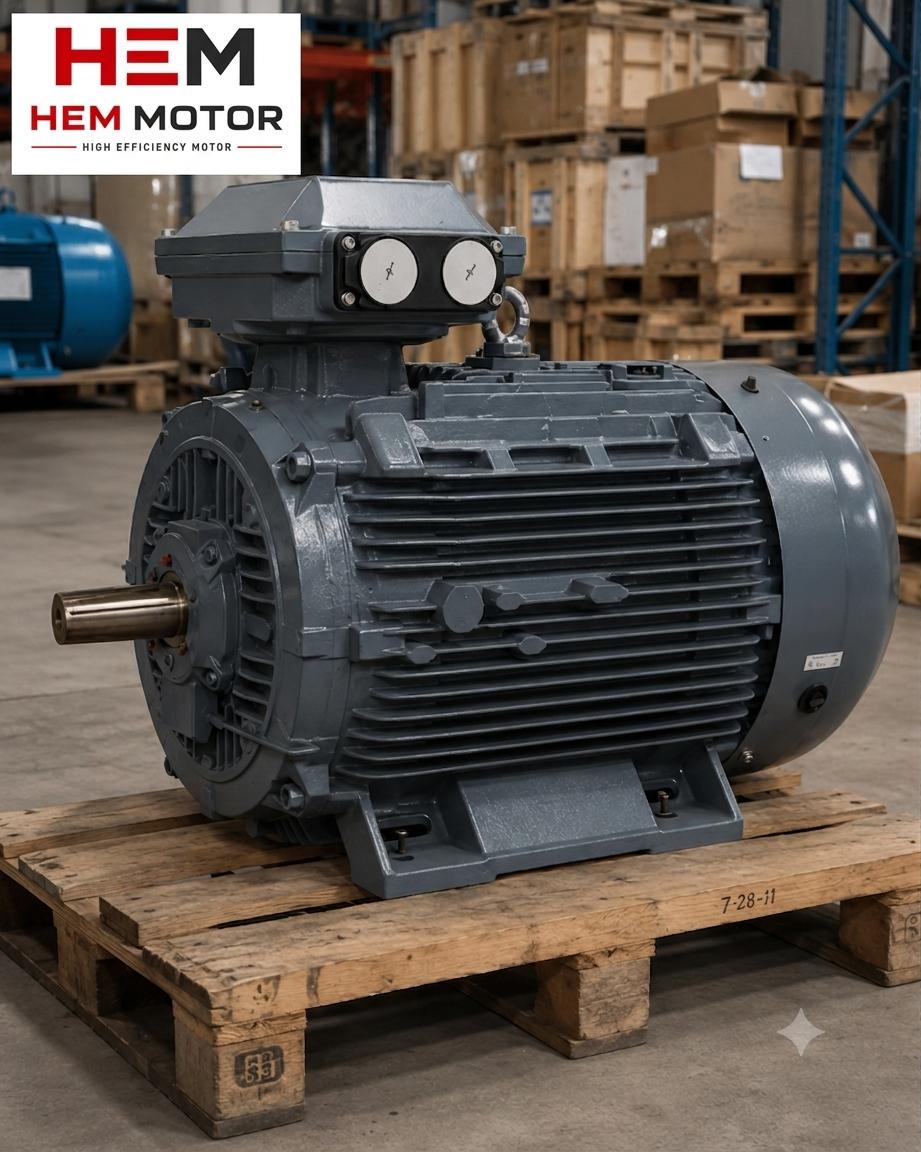
What Is the IE Code on the Nameplate and How Is It Read?
The IE (International Efficiency) code is an international efficiency classification defined by the IEC 60034-30-1 standard. It usually appears on the plate as IE1, IE2, IE3, IE4 or IE5. As the class number increases, the motor's losses decrease and its efficiency rises. IE1 means standard efficiency, IE2 high efficiency, IE3 premium efficiency, IE4 super premium efficiency and IE5 ultra premium efficiency. Today, European Union regulations make at least the IE3 class mandatory across many power ranges.
Right next to the IE code, or on a separate line, you will find the efficiency value written as a percentage. For example, the expression "IE3 - 89.5%" tells you that the motor is in the premium efficiency class and that its nominal full-load efficiency is 89.5%. This percentage varies with the motor's power, number of poles and frequency. In the same IE3 class, the percent efficiency of a 0.75 kW motor and a 90 kW motor are quite different; efficiency is naturally higher at larger powers.
Why Do Different Percentages Appear in the Same IE Class?
The efficiency class defines a separate minimum efficiency threshold for each power and pole combination. Therefore, two motors carrying the IE3 label will not have equal percent efficiency if their powers and speeds differ. A motor meeting the IE3 class means it exceeds the minimum percentage set for that power-pole combination. When comparing an efficient electric motor, you must therefore look not only at the IE class but also at the actual percentage on the plate.
Under Which Condition Is the Plate Efficiency Valid?
The percent efficiency on the plate is determined at rated voltage, rated frequency and full load, in a laboratory environment using the IEC 60034-2-1 measurement method. So the plate value is the reference value under ideal conditions. Field factors such as grid voltage imbalance, harmonics, temperature and low load pull this value down. For this reason, the number on the plate should be thought of not as a floor but as an ideal ceiling.
How the Percent Efficiency Changes with the Load Point
The efficiency curve of an asynchronous motor is not constant. Efficiency reaches its highest value around 75% load, stays very close to it at full load, but begins to drop rapidly as the load falls below 50%. At very low loads (for example 25% load), efficiency can fall well below the plate value. This is because iron losses and friction-and-windage losses remain almost constant regardless of load, and therefore grow proportionally larger within the total power at low load.
This behavior clearly shows why oversizing is detrimental in motor selection. Driving a 30 kW load with a 55 kW motor keeps the motor permanently in the low-load band and means the high efficiency value on the plate is never achieved in the field. A correctly sized IE4 electric motor delivers the real efficiency closest to its plate value when it operates in the 75-100% band of its load.
- 100% load: Efficiency is very close to the plate value; this is the nominal condition.
- 75% load: In most motors, efficiency is at its peak, equal or very close to the plate value.
- 50% load: Efficiency is somewhat below the plate value but still in an acceptable band.
- 25% load: Efficiency drops markedly; this is the band where the oversizing risk appears.
- Oversizing: It widens the label-vs-real efficiency gap and also worsens the power factor.
Verifying Label Efficiency with Field Measurement
The only reliable way to understand whether the plate value reflects reality is to measure in the field. A power analyzer is used for this. The power analyzer simultaneously measures the active power (kW), apparent power (kVA), power factor (cosφ) and current drawn by the motor. To measure the mechanical output power directly, torque measurement on the shaft or calculation of the driven load is required.
First Determine the Load Factor in the Measurement
The first step of field verification is to determine at what load factor the motor is currently operating. Comparing the drawn current to the rated current gives a first idea about the load factor. Efficiency measured without knowing the load factor cannot be interpreted; because a low efficiency measured at 40% load does not mean the motor is faulty, it only shows that it is at the wrong operating point. For this reason, the load factor is always the first item in efficient motor verification.
Then Evaluate the Grid Conditions
The second step is grid quality. Voltage imbalance, phase shift, harmonic distortion (THD) and deviation of voltage from nominal directly affect the motor's efficiency. Even a 1% voltage imbalance causes additional losses and a temperature rise. Therefore, the efficiency obtained in field measurement is the combined result of both the load point and the grid conditions. For a proper assessment, these two factors must be recorded together.
Closing the Label-vs-Real Gap with Correct Motor Selection
The way to minimize the difference between the plate value and the field value is to choose the correct power and the correct efficiency class. Calculating the load correctly, avoiding oversizing and determining the right number of poles for the application keep the motor operating at the point closest to its plate efficiency. Selecting a high-efficiency motor in the wrong size largely cancels the advantage that class offers.
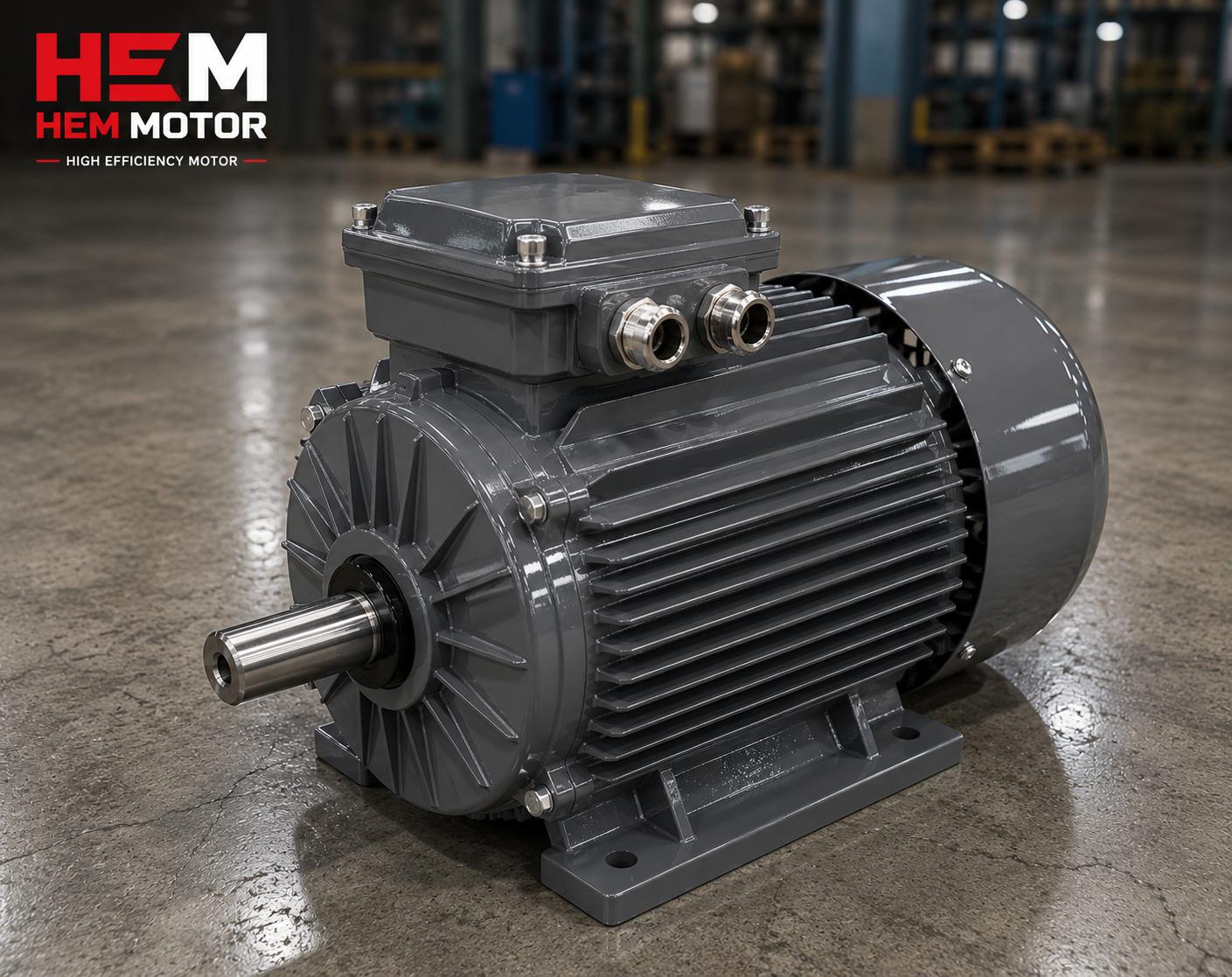
The IE4 electric motor and other high-efficiency-class motors we supply are available from stock across a wide range of powers and poles. To select the correct motor, it is enough to share the real load, operating hours and operating band of your application; we then recommend the configuration that minimizes the difference between the plate value and the field value. For more information on efficiency classes and supply conditions, you can review our IE4 electric motor product page, and for pole and speed selection, see our pole selection guide.
To make the right decision during power calculation and ordering, our kW and HP power understanding guide will be a helpful reference. You can reach all our products and services through the homepage and determine the most suitable motor for your needs together with us.
Other Data to Watch When Reading the Plate
Besides the IE code and percent efficiency, the other data on the plate also support the efficiency interpretation. The rated power (kW), rated speed (rpm), rated current (A), power factor (cosφ), voltage and frequency information must be evaluated together to understand the motor's operating point. In particular, the power factor is important for reactive energy as well, since it worsens together with efficiency at low load. All of these data are inputs for a correct field verification.
The insulation class and temperature rise class on the plate (for example F class insulation, B class temperature rise) show the motor's thermal reserve. A motor with a wide thermal reserve provides an advantage in efficiency and life even in hot environments. For this reason, reading the plate involves understanding not only the efficiency figure but the motor's holistic quality identity.
The Operational Impact of Efficiency Verification
Reading the label efficiency correctly and verifying it in the field is not just a technical curiosity; it is a decision that directly affects operating cost. In a continuously running motor, even a one-point efficiency difference turns into a significant cost item in annual energy consumption. Because the purchase price of the motor is very small next to the energy it consumes over its life; in a typical industrial motor, the initial investment is only a small portion of the total cost of ownership, and the large remainder is the energy cost. For this reason, the efficiency value on the plate should be at the center of the purchasing decision.
When a plant documents the load factor and real efficiency for each unit in its motor fleet, it clearly sees which motors are mis-sized and which need to be replaced. A motor running at low load and delivering efficiency well below the plate value, when replaced with a correctly sized IE4 electric motor, provides gains in both energy and power factor. This approach turns plate reading into a maintenance and energy management tool.
Frequently Asked Questions
Does the percent efficiency on the plate mean the motor always runs at this efficiency?
No. The percent efficiency on the plate is the nominal value measured at full load and under ideal grid conditions in a laboratory environment. Since the motor usually operates in the 50-75% band of its rated power in the field, the real efficiency varies with the load point and falls below the plate value at low loads. So the plate value is an ideal reference, not a fixed value guaranteed in the field.
Why can IE3 and IE4 motors be in the same class even though their percent efficiencies differ?
The IE class defines a separate minimum efficiency threshold for each power and pole combination. If two motors carrying the same IE3 label have different powers or pole counts, their percent efficiencies will also differ; each stays in the same class as long as it meets the minimum set for its own combination. When comparing, you must look at both the IE class and the actual percentage on the plate.
How can I verify the label efficiency in the field?
A power analyzer is used for field verification. First you determine the load factor by comparing the current drawn to the rated current, then you evaluate the grid conditions (voltage imbalance, harmonics, voltage deviation). You calculate the real efficiency by comparing the measured active power to the mechanical output power. Efficiency measured without recording the load factor and grid condition together cannot be interpreted correctly.