English
 Türkçe

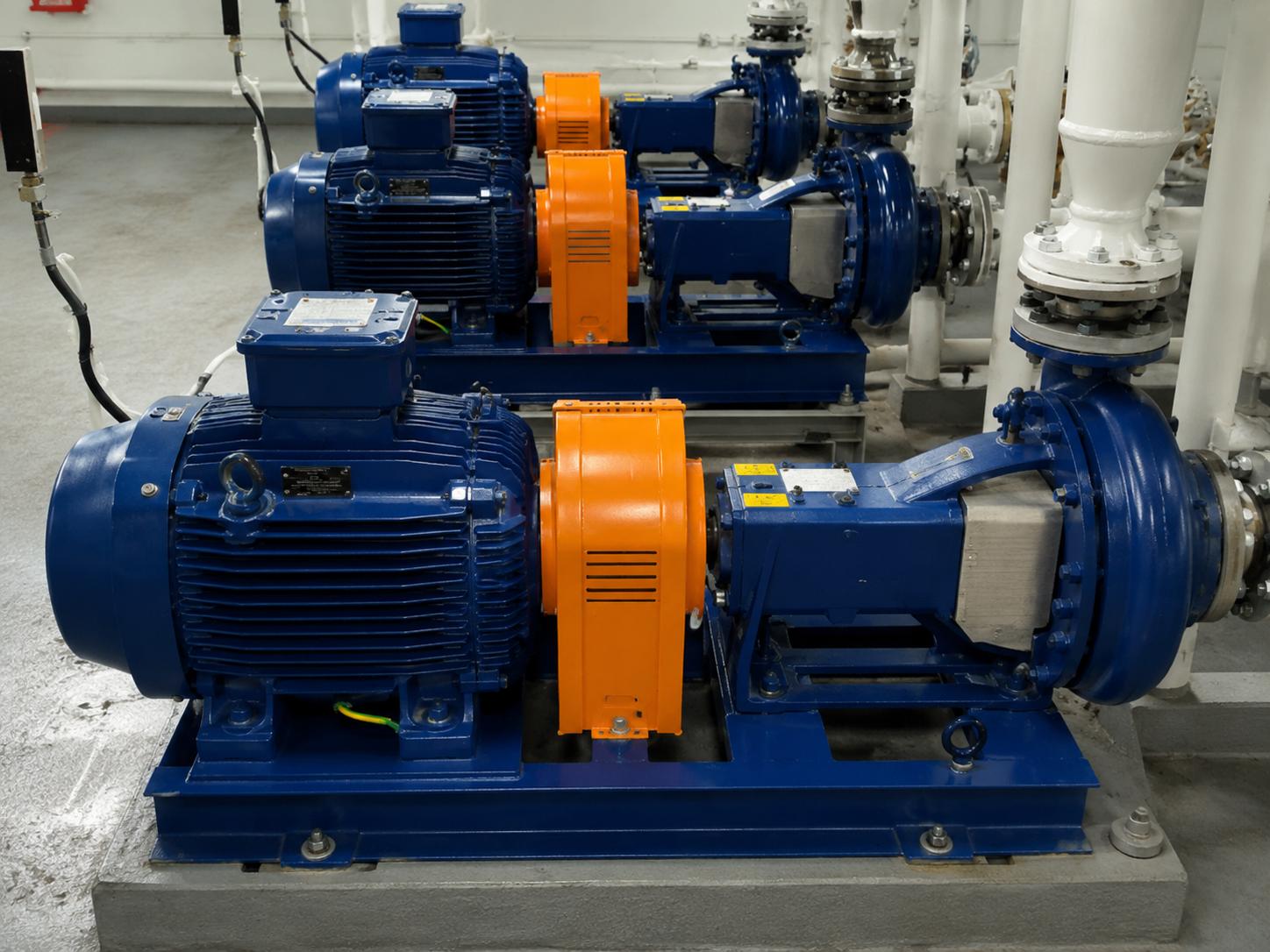

Wastewater transfer is one of the most demanding pumping duties in domestic and industrial sewage networks. Liquids carrying rags, wet wipes, plastics, hair and long fibrous waste quickly clog conventional closed impellers, and when that happens the real load is transferred to the motor driving the pump. For this reason, when selecting a submersible pump motor you must look beyond flow and head; the impeller geometry, the torque reserve the motor produces, its continuous-duty capacity and its sealing class all matter. In this guide we explain step by step how to determine the correct power in non-clog impeller systems (vortex and channel types), what features the motor must carry to cope with fibrous waste, and what to watch for to secure a reliable supply in continuous service.
As HEM Motor operates on both the manufacturing and sales sides, you can source the right motor for wastewater applications quickly. We offer a wide power range from 0.55 kW up to 355 kW in IE3 and IE4 efficiency classes, with cast iron bodies and 100% copper windings, available from stock or on short lead times; this means that during a failure at your wastewater lifting station you can reach a replacement motor before operations stop.
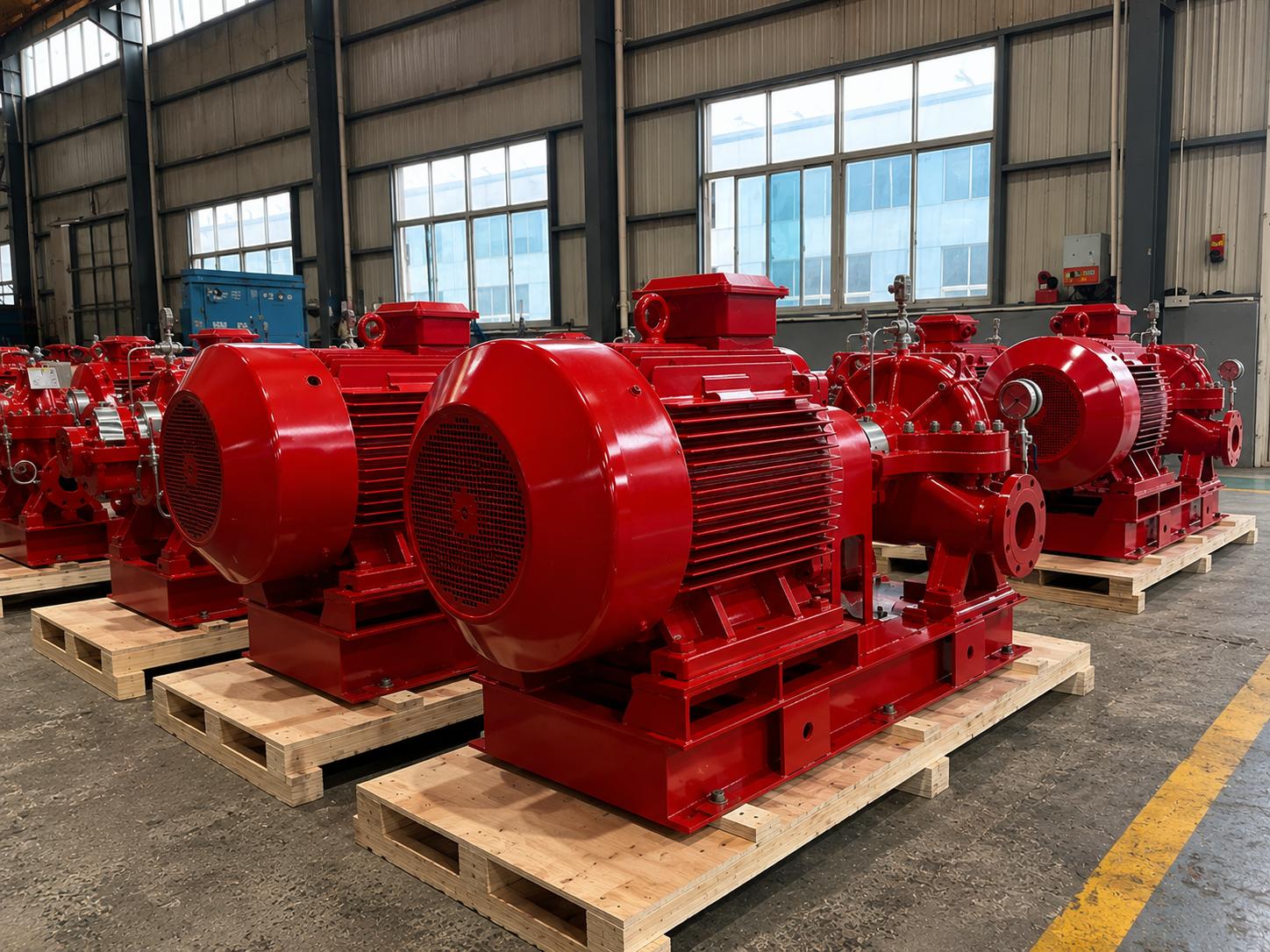
Non-Clog Impeller Types: Vortex vs. Channel Impeller
In wastewater pumps, impeller geometry directly determines the load the motor will see. Two main non-clog impeller families stand out, and each affects the motor's power requirement differently.
Vortex (Free-Flow) Impeller
A vortex impeller moves most of the liquid through the swirl (vortex) it creates without bringing it into contact with the impeller itself. Solids and fibrous waste pass through the pump casing without catching on the vanes. It offers the lowest clogging risk; however, due to vortex losses its hydraulic efficiency is lower than a channel impeller. This means slightly more power is drawn from the motor for the same flow and head. In lifting stations with dense fibrous waste, coarse solids and zero clog tolerance, a vortex impeller is preferred, and this extra power margin must be accounted for in motor selection.
Channel Impeller
A channel impeller allows a defined spherical solids passage through single, two or three channel paths. Its hydraulic efficiency is high, meaning it does the same work with less motor power. On the other hand, long fibrous waste can occasionally build up at the vane edge; this build-up moment raises the motor's instantaneous torque demand. That is why, in channel-impeller pumps, the motor must have a high starting torque and a torque reserve able to cut and clear fibre as it engages.
- Vortex impeller: highest non-clog capability, lower efficiency, extra power margin needed for the motor.
- Channel impeller: high efficiency, lower operating cost, but a torque reserve against fibrous build-up is essential.
- Grinder impeller: cuts and reduces fibrous waste; a separate solution for low-power lines requiring high pressure.
The Fibrous Waste and Torque Relationship: Why a High Torque Reserve Matters
In wastewater, the biggest problem is not the flow but the sudden rise in torque. An impeller that spins freely when the pump is empty sees an instantaneous extra resistance when a rag or fibre clump reaches its mouth. If the motor lacks sufficient torque reserve at that moment, the speed drops, current rises, the winding heats up and finally thermal protection stops the motor. A lifting station that keeps stopping means both an overflow risk and maintenance cost.
Therefore, in wastewater applications the motor must be selected to respond to transient torque demand above its rated load. In practice the following criteria stand out:
- Choose a 100% copper-wound motor that produces high starting torque on engagement; copper windings deliver more stable current behaviour under sudden loads.
- Leave a defined power margin at rated power (usually one standard kW step up) so that the sudden resistance at the impeller mouth does not stall the motor.
- Keep the ratio of the motor's breakdown torque to rated torque high; this prevents speed collapse during fibre build-up.
Readers who want to deepen the torque and speed calculation can also review the cutting-torque approach in our grinder submersible sewage pump motor selection guide for grinder applications.
From Flow and Head to the Correct kW
The correct motor power is found by starting from the hydraulic power at the pump's operating point. After determining the flow (Q) and the total manometric head (H), the required shaft power is calculated by also factoring in the pump efficiency at that point. In wastewater, a safety margin must always be added to this calculation, because the operating point shifts depending on sludge density and fibre content.
- Flow (Q): Consider the peak flow of the lifting station and the number of pumps; when one pump is out of service, the remaining pumps must cover the peak flow.
- Head (H): Add pipe friction losses to the static height; in long rising mains this loss becomes decisive.
- Liquid density: Sludgy wastewater is denser than clean water, which increases the power the motor draws.
- Safety margin: Adding one standard kW step above the calculated power eases the motor in continuous service.
For those who want to see a similar flow-pressure-power matching on the clean-water side, our electric motors for booster systems product group helps select the right power for pressurised water systems.
IP68 Sealing and Cooling in Submersible Motors
In wastewater submersible pumps the motor runs continuously immersed in liquid. Therefore sealing is the most critical factor determining motor life. The IP68 protection class indicates that the motor is suitable for continuous operation submerged at a defined depth. Sealing is provided by a double mechanical seal and an oil chamber; a leakage sensor in the intermediate oil chamber gives early warning of lower-seal wear.
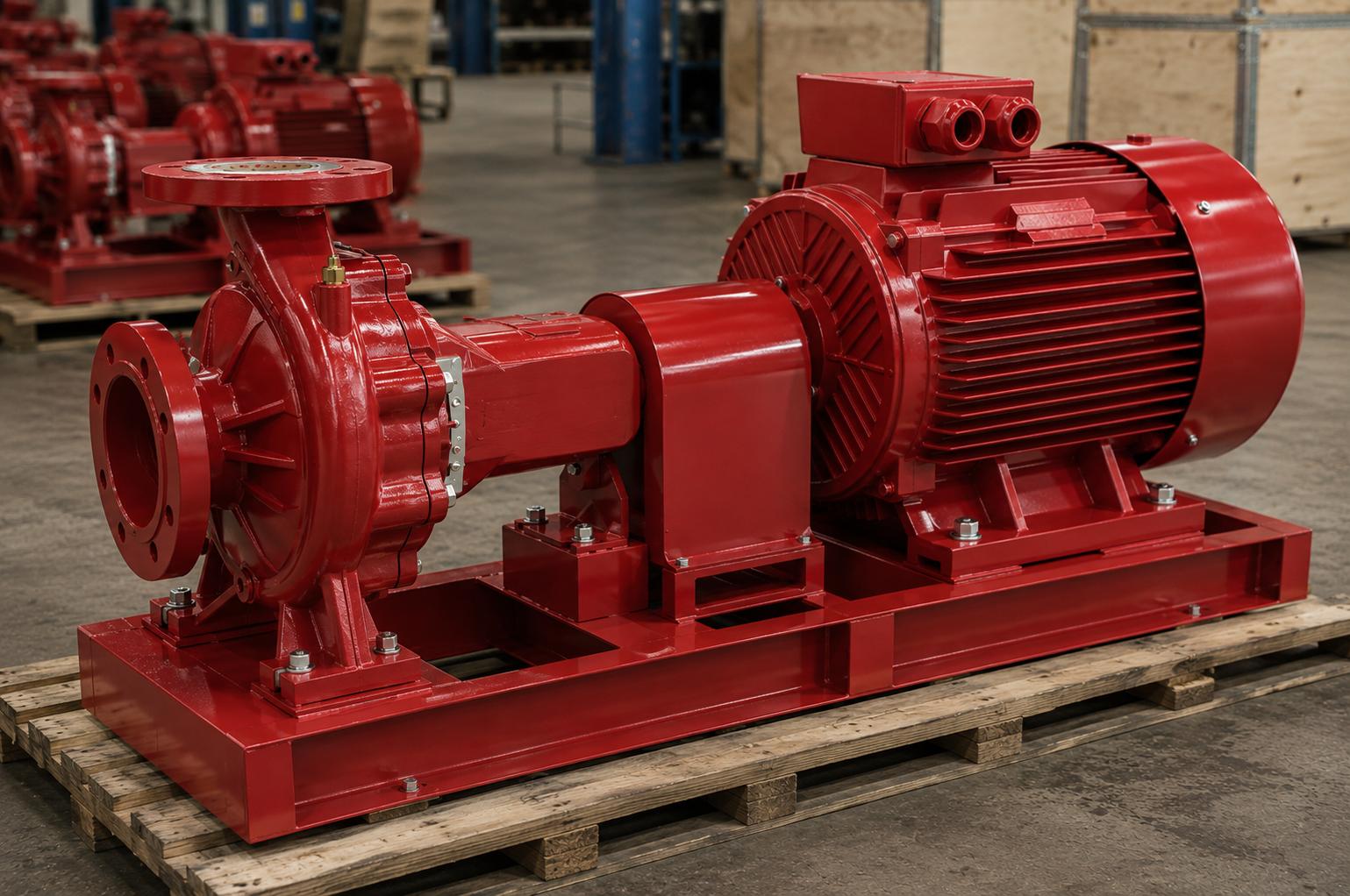
In dry-installed wastewater pumps mounted above the surface, the motor runs in ambient air rather than in the liquid. For such applications, HEM Motor's cast iron, IP55-protected dry-rotor motors stay at a safe temperature in continuous service thanks to their cooling fins and external fan. In submersible types, however, cooling of the motor body by the pumped liquid is essential; a sump that falls below the minimum liquid level drives the motor into overheating.
- Mechanical seal: A material resistant to the wastewater environment (such as silicon carbide) should be chosen.
- Oil chamber and leakage sensor: Warns of seal failure before it reaches the winding.
- Cooling jacket: Jacketed models that provide continuous cooling even when the liquid level drops are an advantage in shallow sumps.
- Thermal protection: A PTC thermistor or PT100 embedded in the winding protects the motor against overheating.
Continuous Duty (S1) and Duty-Type Selection
Wastewater lifting stations are mostly managed by level switches; the pump starts when full and stops when empty. Although this looks like intermittent duty, during rainy periods of high flow the pump can run for hours without interruption. For this reason the motor must be selected to suit continuous duty S1. An S1-class motor is designed to run indefinitely at rated load and reach thermal equilibrium.
In stations that start frequently, the number of starts per hour becomes important. Many consecutive starts cause the motor to heat up; in that case the duty type and starting frequency must be evaluated together. F-class insulation and a wide thermal reserve provide a safe buffer in frequent-start wastewater applications. Those planning motors for an entire facility can benefit from the integrated blower, mixer and pump motor approach in our water treatment and wastewater plant motors article.
Spare Motor and Supply Assurance
In wastewater infrastructure, a stopped lifting station carries the risk of environmental overflow and serious penalties. For this reason, spare pump and spare motor planning must be done at critical stations. With manufacturer assurance, HEM Motor keeps frequently used power and speed combinations in stock, and produces on short lead times for special requests. We match the replacement motor suitable for your existing pump according to the frame, mounting type and shaft diameter on the nameplate.
- Stock advantage: Fast delivery in common kW and speed steps.
- Manufacturer assurance: Standard continuity in winding, bearing and body quality.
- Quotation support: Equivalent selection and lead-time planning in project-based bulk purchases.
For those who want to see the motor selection criteria on the drainage and septic side in detail, our submersible drainage and sewage pump motor selection guide is a complementary resource. For current electric motor prices and stock status, please get in touch with us.
The Role of Motor Speed and Pole Count in Wastewater Pumps
In wastewater pumps, speed selection directly affects both the impeller's clogging behaviour and the pressure the pump produces. High-speed (2-pole, 3000 rpm) motors provide higher head but increase the risk of fibrous waste wrapping around the impeller and accelerate wear. Low-speed (4-pole, 1500 rpm) motors, on the other hand, allow larger solids passage, run more quietly and offer longer life in the impeller and the seal. In the vast majority of wastewater applications, 4-pole, 1500 rpm motors are preferred; the reason is that low speed copes better with fibrous waste and reduces hydraulic shock.
- 2-pole (3000 rpm): For relatively clean wastewater lines requiring high pressure; higher wear and clogging risk.
- 4-pole (1500 rpm): The most common choice for wastewater; large solids passage, low wear, long seal life.
- 6-pole (1000 rpm): For very high-flow, low-pressure transfer lines; minimum wear and maximum non-clogging.
The right speed becomes meaningful when you match the torque the motor produces with the torque the impeller demands. At the same power, a lower-speed motor produces higher torque, which is an advantage in meeting the sudden resistance created by fibrous waste. Therefore, in a borderline application you can increase both the torque reserve and the non-clogging capability by lowering the speed while keeping the power.
Efficiency Class (IE3/IE4) and Operating Cost
Wastewater lifting stations run for most of the year, which makes the motor's energy consumption the leading item of operating cost. A high-efficiency-class motor does the same work with less electricity, providing significant savings over the years. IE3 and IE4 class motors reduce losses thanks to 100% copper windings and an optimised core pack, heat up less and therefore run longer. In a continuously operating pump, the efficiency difference quickly pays back the difference in purchase cost.
- IE3 Premium: Regulation-compliant, stocked in common powers, balanced cost-efficiency.
- IE4 Super Premium: Lowest energy cost in continuous and long operation; short payback period.
- Lower heating: High efficiency lowers winding temperature and extends insulation life.
The choice of efficiency class determines not only the energy bill but also the motor's compliance with regulations. Turkish and EU regulations have introduced a minimum efficiency-class requirement in certain power and pole ranges; therefore, choosing an IE3 or IE4 motor in a new wastewater investment is the right choice both legally and economically.
Commissioning and Field Checklist
Selecting the right motor is important, but commissioning it correctly in the field also determines its life. There are a few basic steps to follow during installation and first start-up of wastewater submersible pumps:
- Rotation-direction check: Wrong direction lowers flow and unnecessarily strains the impeller; phase sequence must be checked at first start.
- Insulation measurement (megger): The submersible cable and winding insulation must be measured before commissioning.
- Minimum liquid level: Level switches must be set so that the motor does not run dry.
- Thermal and leakage sensor connection: The PTC/PT100 and oil-chamber sensor must be correctly wired to the panel and alarm thresholds tested.
- Drawn current: Full-load current must be compared with the nameplate value to verify the motor is not overloaded.
These checks both protect warranty coverage and prevent early failures. HEM Motor provides technical support with nameplate and connection details during the commissioning of the motors it sells, so that your field team gets the installation right the first time.
Frequently Asked Questions
Should I choose a vortex impeller or a channel impeller?
The decision depends on the fibre and solids content of the wastewater. In lines with very dense fibrous waste, rags and long fibres, non-clogging is the priority and a vortex impeller is safer; however, because its efficiency is lower the motor should be sized a little more powerfully. In cleaner wastewater that still contains solids, a channel impeller provides energy savings with its high efficiency. In both cases, the motor having a high torque reserve prevents speed collapse during fibre build-up.
Which protection class is needed for a submersible wastewater pump motor?
In submersible motors running continuously under water, the IP68 class is essential and is supported by a double mechanical seal and oil chamber. In dry-installed wastewater pumps that are not immersed, cast iron, IP55-protected dry-rotor motors are preferred. In both cases, thermal protection (PTC/PT100) embedded in the winding keeps the motor safe against overheating.
How do I determine the correct motor power?
First clarify the flow and head at the pump's operating point, then calculate the required shaft power using the pump efficiency at that point. In wastewater, add one standard kW step as a safety margin above this value because of sludge density and fibre content. Choosing a motor suitable for continuous duty S1 with manufacturer assurance keeps you safe during long runs in rainy periods. To match correctly, simply share the pump nameplate details with us.