English
 Türkçe

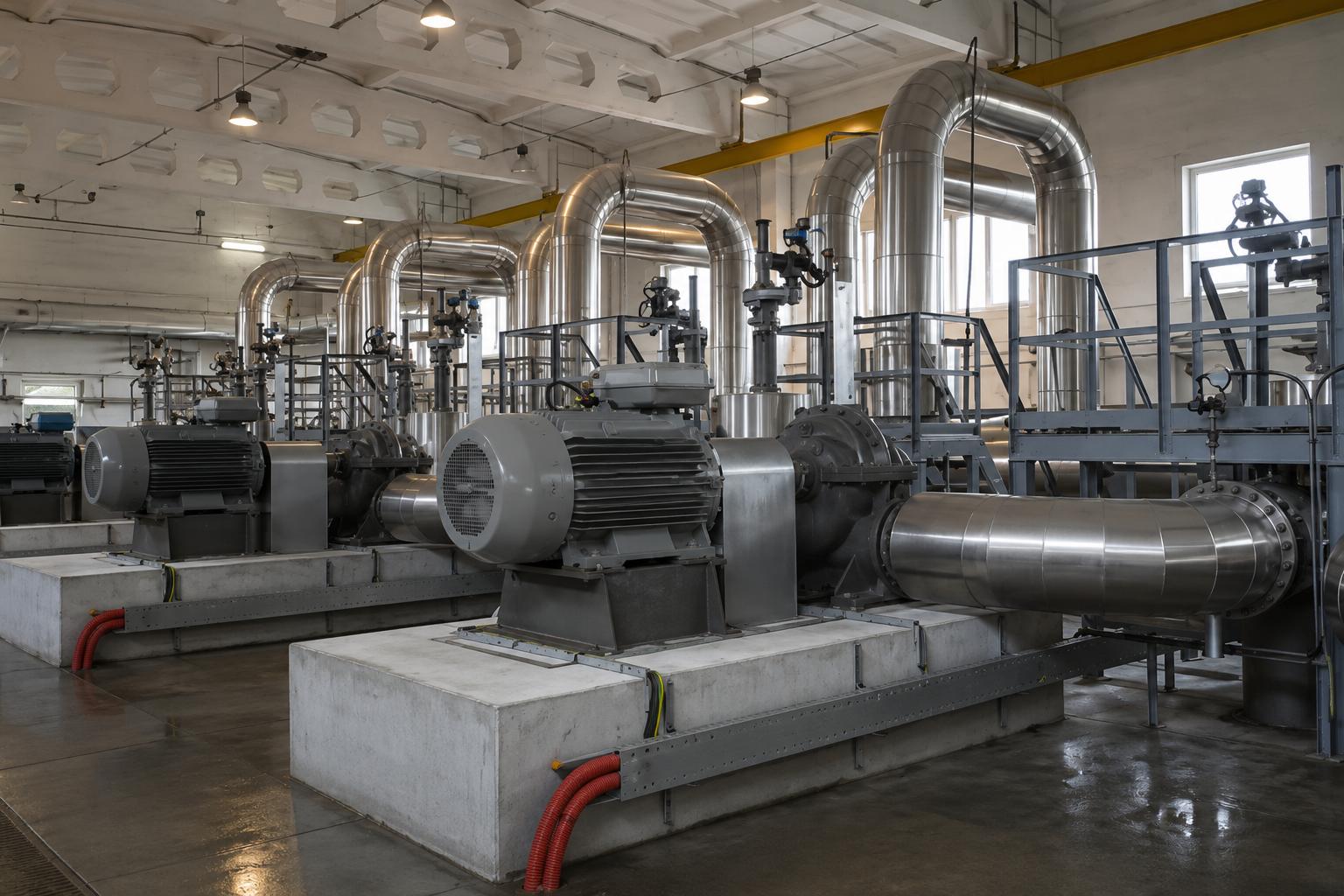

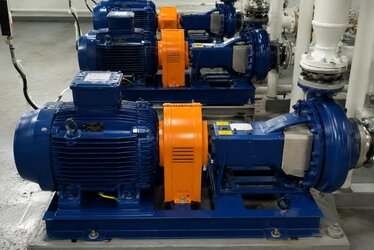
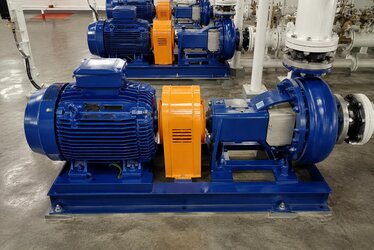
Shelters and NBC (Nuclear, Biological, Chemical) protective structures are designed around a ventilation philosophy that is entirely different from ordinary buildings. In these structures the heart of the ventilation system is a bidirectional axial jet fan motor capable of reversing between supply and exhaust. A motor that delivers clean air to the shelter in an emergency, holds an overpressure inside during an NBC threat, and can evacuate smoky or contaminated air when needed must offer far higher reliability and performance than an ordinary fan motor. In this article we examine in detail the technical fundamentals of axial fan motor selection for shelter and NBC ventilation systems, the airflow and static pressure calculation, the protection classes, and the correct, fail-safe emergency power supply.
Why Bidirectional Operation Matters in Shelter Ventilation
A shelter ventilation system cannot settle for a single task. It is expected to feed the space with clean air during peacetime or evacuation, yet exhaust air through the same duct in the event of fire, smoke or gas accumulation. This is precisely where the bidirectional axial jet fan comes in. When the motor's rotation is reversed, the fan switches from supply mode to exhaust mode; thus a single unit performs both clean-air delivery and evacuation.
Bidirectional operation demands a special design on the motor side. To achieve similar efficiency and airflow in both rotation directions, the motor must have a symmetric torque characteristic, its cooling fan must work effectively in both directions, and it must respond instantly to the reversal command electrically. In three-phase asynchronous motors the direction change is easily achieved by swapping two phases; however, doing this in the control panel with safe interlocks is critical so that the motor is not forced into the opposite direction without stopping.
The Two Governing Quantities of Motor Selection: Airflow and Static Pressure
Two fundamental quantities determine a fan motor's power: the airflow (m³/h) that must be moved and the static pressure (Pa) the system must overcome. In shelter applications these two values cannot be considered independently, because system resistance rises with the square of airflow.
Airflow Calculation: Fresh Air per Person
The ventilation airflow of a shelter is determined by the number of occupants and the duration of stay. While peacetime ventilation foresees a certain fresh-air rate per person, switching to filtered ventilation in NBC mode lowers the airflow but sharply increases the pressure demand. The designer must select a motor that satisfies both the normal and the NBC modes. The motor must therefore have a torque reserve that preserves the required airflow even at the highest pressure point.
Static Pressure: Stacking Resistance Components
In shelter ventilation, static pressure is the sum of several components:
- NBC filter resistance: Activated carbon and HEPA filters create a serious resistance to airflow; this resistance increases as the filter becomes clogged.
- Blast valve resistance: Blast valves that protect against an external pressure wave create an additional pressure loss in the air path.
- Duct and elbow resistances: The length, diameter, elbows and dampers of the ductwork raise the total pressure.
- Overpressure holding load: Since a positive pressure relative to outside is held in NBC mode, the fan must continuously meet this difference.
When these components stack up, the required static pressure rises quickly and, in parallel, the required motor power increases. For correct selection the designer must overlay the system curve (system resistance versus airflow) onto the fan curve to determine the operating point.
NBC Mode and the Overpressure Requirement
Under an NBC threat, the shelter's most important protective mechanism is holding a pressure inside that is higher than outside. This overpressure prevents contaminated air from leaking in through doors and wall gaps. The fan motor must continuously push clean air through the filters into the shelter to maintain this positive pressure.
Holding the overpressure requires the motor to preserve airflow against back-pressure. If the motor is undersized, airflow drops under the filter resistance and overpressure load, the fresh-air requirement per person cannot be met, and the safety of the system is jeopardised. Shelter fan motors must therefore be selected at the efficient region of the operating point with an adequate torque reserve.
Another critical point is that the motor must suit the S1 continuous duty regime. In shelter mode the fan may run uninterrupted for hours, even days. The S1 duty type guarantees that the motor can run continuously at full load until it reaches thermal equilibrium. Short-time duty types (S2, S3) are not suitable for this application.
Correct Motor Features: IP55, Class F, 100% Copper
Shelter and NBC ventilation motors are applications where reliability must be at the highest level. The right choice should include the following features:
- IP55 protection class: Protection against dust and water jets; provides long life in the damp, dusty shelter environment.
- Class F insulation: The 155°C insulation class leaves a thermal safety margin in continuous operation; preferably run with a Class B temperature rise.
- 100% copper winding: Lower losses, better thermal behaviour and longer service life compared to aluminium windings.
- IE3/IE4 efficiency class: High-efficiency motors reduce energy cost in a continuously running system and run cooler.
- B3/B5 mounting: Foot or flange mounting options for direct integration into the axial fan housing.
In axial jet fan applications the motor is often positioned within the airstream, so its cooling behaviour and insulation strength are critical. The subject of loss mapping and thermal behaviour of high-efficiency motors directly affects motor life in these continuously running systems; for details, see our article on high-efficiency motor loss mapping and thermal behaviour.
Pole Count and Speed Selection
In axial fan motors the pole count determines the fan speed and therefore the airflow–pressure characteristic. High-speed (2-pole, ~3000 rpm) motors tend to produce high pressure but increase noise and vibration. Low-speed (4 or 6-pole) motors run more quietly and are preferred for large-diameter fans. Since acoustic comfort also matters in a shelter application, the pole choice should be evaluated together with the airflow/pressure target.
In large-diameter axial fans the moment of inertia (GD²) is high, which means the motor needs a high accelerating torque during start. On the effect of impeller inertia on motor starting, our article on pump and fan motor inertia (GD²/WR²) and starting a large impeller guides the selection process.
Reliable Supply in an Emergency
Shelter ventilation is a system that must remain on standby for years and then work flawlessly at a moment's notice. For this reason, not only the technical features of the motor but also the reliability of its supply is critical. In the event of a fault or replacement, the ability to procure the motor quickly and the continuity of spare-part access determine the operational readiness of the system.
In this context, critical spare-motor stock agreements provide a major advantage for shelter and infrastructure projects. Fast quotation and delivery from stock guarantee that the project is commissioned on time. For all our motor selection and supply solutions, you can visit our homepage.
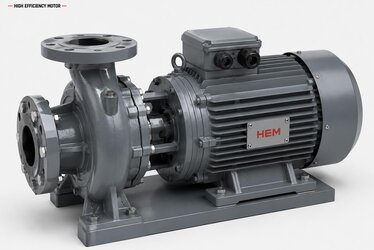
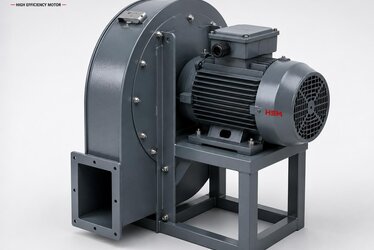
HEM Motor manufactures bidirectional axial fan motors for shelter and NBC ventilation applications in the 0.06 kW–355 kW range. Once the project airflow (m³/h) and static pressure (Pa) are specified, the correct pole count, frame size and protection class are recommended and offered with a fast quote from stock. With IP55, Class F insulation and 100% copper windings, these motors are designed to start without fail in an emergency.
Frequently Asked Questions
Why must a shelter fan motor be bidirectional?
Because a single unit must perform both clean-air delivery (supply) and the evacuation of smoky/contaminated air (exhaust). When the motor's rotation is reversed, the fan switches from supply mode to exhaust mode. This eliminates the need for a separate exhaust fan and makes the system both economical and reliable.
Why is overpressure required in NBC mode?
Overpressure holds a positive pressure inside the shelter relative to outside, preventing contaminated air from leaking in through doors and wall gaps. The motor must continuously push clean air through the NBC filters to maintain this positive pressure, and must have a torque reserve to sustain airflow against the back-pressure.
Which duty type should a shelter fan motor be selected in?
It should be selected in the S1 continuous duty regime. In shelter mode the fan may run uninterrupted for hours, even days, so the motor must be able to run continuously at full load until it reaches thermal equilibrium. IP55 protection, Class F insulation and a 100% copper winding are critical features for this continuous operation.