English
 Türkçe

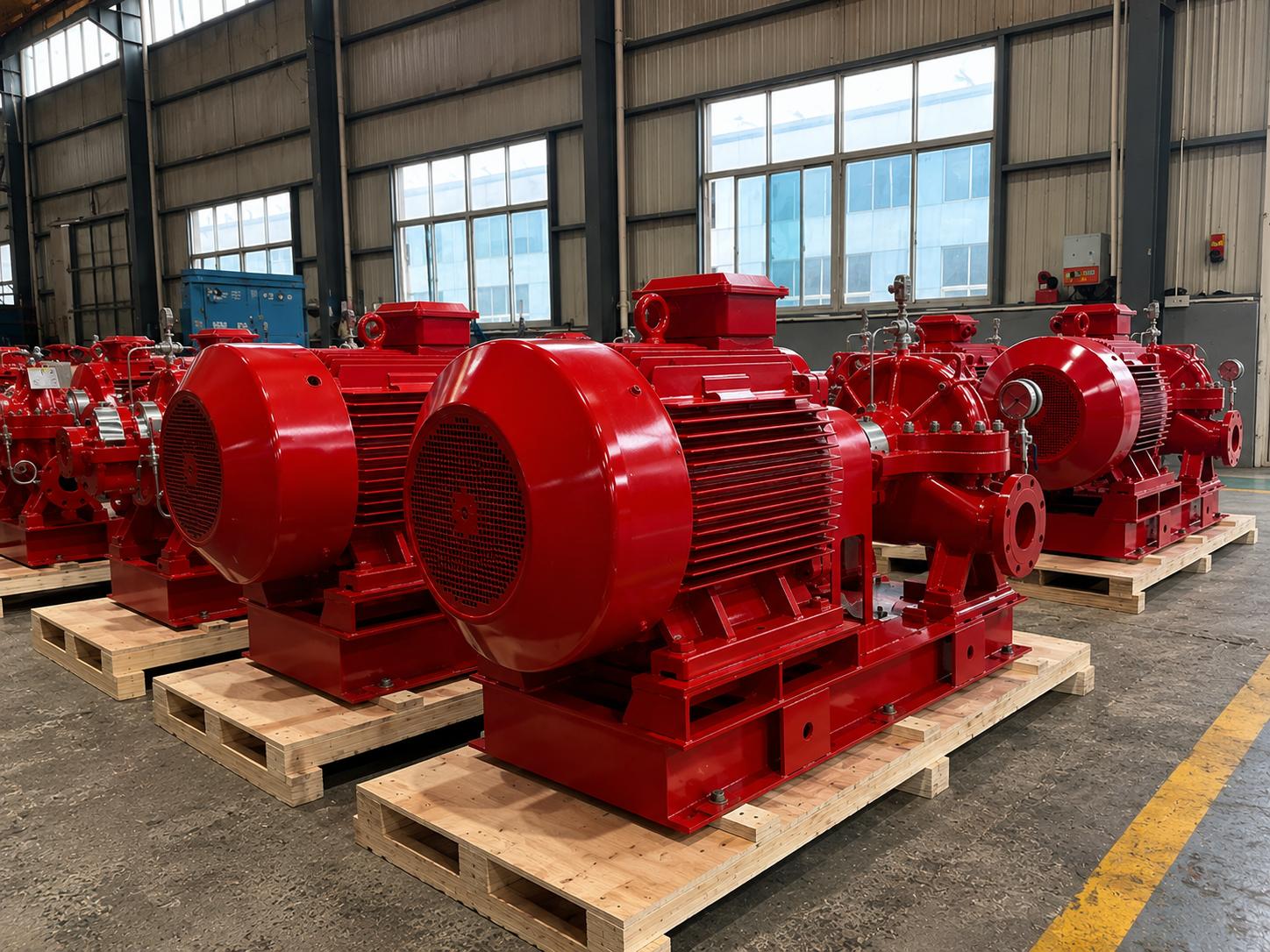

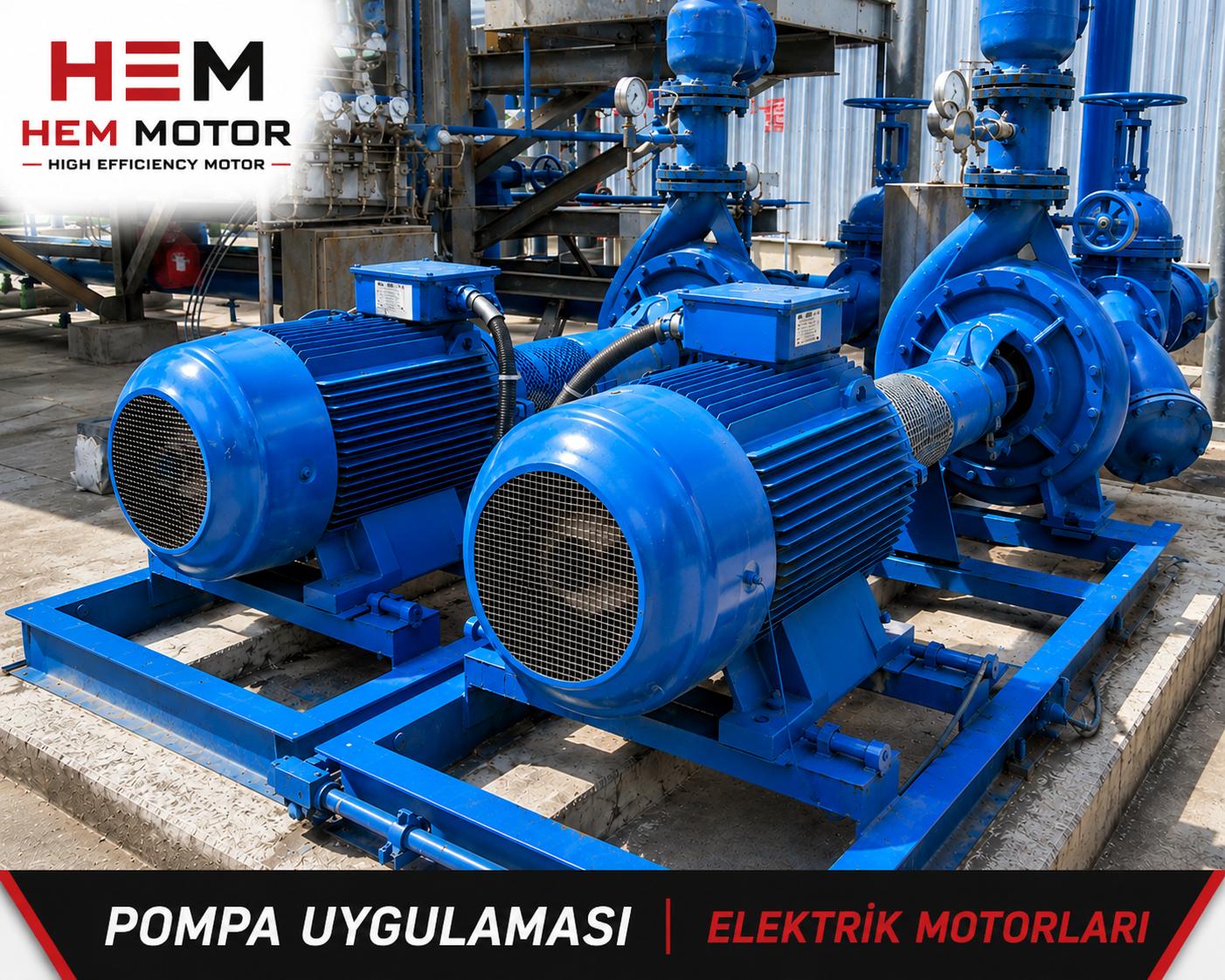
Pump and fan motors operating outdoors, atop water tanks, on irrigation lines or on cooling towers face far harsher electrical threats than those inside an enclosed facility. Foremost among these are lightning-induced overvoltages and surge voltages arising from grid switching. These surges are sudden voltage spikes lasting less than a millisecond but reaching thousands of volts, and they can puncture motor winding insulation in an instant, rendering the motor unusable. For this reason, in outdoor applications surge arrester (overvoltage protection) is not a luxury but a necessity.
As the manufacturer and supplier, we deliver pump and fan motors for outdoor operation from stock with the correct protection class and suitable insulation structure. In this article we examine, on a technical basis, the sources of overvoltage, the damage it does to the motor, surge protective device (SPD) selection and correct motor supply.
Where Does Overvoltage Come From?
The overvoltages to which pump and fan motors are exposed arise essentially from two sources: atmospheric (lightning) and switching. These two types have different characters and require different protection approaches.
Lightning-Induced Overvoltage
A lightning strike on or near the line can carry surges of tens of thousands of volts into the facility via overhead lines. Even without a direct hit, a nearby lightning strike induces high voltage in cables through magnetic coupling. In open terrain, long cable runs on irrigation and pumping lines amplify this induction. At remote points such as pumping stations the risk is even higher; our content on pumping station submersible pump motors provides complementary information.
Switching-Induced Overvoltage
The energizing and de-energizing of large loads, contactor and breaker operations, capacitor bank switching and especially the rapid switching of frequency converters create transient voltage surges on the line. Although not as high as lightning, these surges repeat far more often and, over time, fatigue the winding insulation and shorten its life.
How Does Overvoltage Damage the Motor?
An overvoltage surge is the factor most damaging to a motor's winding insulation. The surge falls disproportionately on the first few turns of the winding, causing local stress in phase-to-phase and phase-to-ground insulation. Repeated surges create micro-holes and partial discharges in the insulation. This damage is cumulative; one day a sudden surge completely punctures the already-fatigued insulation, and the motor winding burns out.
- Phase-to-ground insulation breakdown and earth leakage.
- Phase-to-phase short circuit and winding burnout.
- Bearing damage when combined with bearing currents and frequency converters.
- Accelerated insulation aging from repeated surges.
Preventing this damage is possible with correct overvoltage protection. The protection diverts the surge to earth before it reaches the motor.
Surge Protective Device (SPD) Selection and Correct Staging
A surge protective device (SPD) becomes conductive above a certain threshold and diverts voltage surges to earth. In outdoor pump and fan applications, SPD selection is made according to protection stages.
Protection Stages
- Type 1 (Class B): At the main panel, against direct lightning currents; handles high-energy surges.
- Type 2 (Class C): At sub-panels, against switching and residual lightning surges; the most common protection.
- Type 3 (Class D): Right next to the motor, sensitive final protection.
For pump and fan motors, a Type 2 SPD in the motor panel is generally recommended, and an additional Type 1 SPD at the line entry for risky outdoor lines. If a frequency converter is used, a dV/dt filter or sine filter in the cable from the drive output to the motor also protects the insulation.
Integrated Protection with Correct Motor Supply
Protection is not limited to the SPD inside the panel; the motor itself must also be correctly selected. For motors operating outdoors, a reinforced insulation system, reinforced drive-compatible insulation if used with a frequency converter, and a suitable protection class (at least IP55, preferably higher outdoors) should be chosen. The correct joint design of the earthing system and the SPD determines the effectiveness of the protection.
Selecting pump and fan motors at the correct power is also important; to avoid oversizing, you can review our guide on oversizing and right-downsizing.
So that we can deliver your outdoor pump or fan motor from stock with the correct insulation structure and protection class, simply share the installation environment and grid conditions with us. Our technical team will size the motor and protection solution together and provide a fast quote. For more, visit our homepage.
Outdoor Challenges of Pump and Fan Applications
Outdoors, pump and fan motors face not only overvoltage but also a range of environmental challenges. Direct sunlight, wide temperature swings, humidity, dust and a corrosive atmosphere all affect the motor's mechanical and electrical life. Overvoltage protection should be treated as just one part of this whole set of challenges. A motor selected with a holistic approach must be resilient against all environmental and electrical threats.
In seasonally operated applications such as irrigation pumps, the motor is suddenly energized after sitting idle for a long time. During these long idle periods, moisture can condense in the winding, leading to insulation weakness at first start. Anti-condensation heaters (space heaters) gently warm the winding when the motor stops, preventing moisture condensation. Together with overvoltage protection, this measure significantly increases the reliability of seasonal outdoor motors.
Inertia and Regeneration in Fan Motors
Large fans have high inertia and continue to rotate freely for a long time during stopping. During this free rotation, the fan can turn the motor like a generator and create unexpected voltages on the line. Furthermore, a fan turned in reverse by the wind applies extra stress to the motor at the moment of starting. These dynamics must be managed together with overvoltage protection and correct drive programming; especially when a frequency converter is used, a flying-start (catch-a-spinning-load) feature resolves these issues.
Earthing: The Foundation of Protection
The most critical, yet often overlooked, component of overvoltage protection is the earthing system. No matter how good the surge arrester, if there is no low-resistance earth to discharge the surge into, the protection cannot perform its function. In outdoor pump and fan applications, the motor is usually far from any building, at a standalone point, which requires an independent and effective earthing installation.
A good earthing system must provide low earth resistance (usually below a few ohms) and, through equipotential bonding, unite the motor body, panel chassis and SPD earths at a single reference. If equipotential bonding is not provided, dangerous voltage differences arise between different points during a surge, and these differences stress the insulation. Since damp and variable ground conditions outdoors affect earth resistance, the earthing design must be tailored to local conditions.
The Shortness of the SPD and Earth Connection
The effectiveness of the SPD depends largely on the shortness of its connection cables. Long connection cables, due to their own inductance, create additional voltage drop during a surge and worsen the SPD's protection level. The SPD must therefore be connected to the equipment it protects and to the earth bar with cables as short and straight as possible. This detail is one of the most important installation rules determining the success of the protection in practice.
The Special Case of Submersible Pump Motors
Submersible pump motors, frequently encountered outdoors, carry their own challenges regarding overvoltage. Because the motor is inside the well, tens of meters below the surface, the supply cable running to it is long, and this long cable behaves almost like an antenna for induced surges. Moreover, the submersible motor's insulation is in a position very difficult to access and repair in case of damage, making protection even more critical.
In submersible pump applications, the SPD is placed in the wellhead panel, at the start of the cable running to the motor. If a frequency converter is used, a dV/dt or sine filter becomes almost mandatory because of the long motor cable; otherwise the reflection voltages (wave reflection) at the cable's end seriously stress the motor insulation. For motor selection specific to these applications, our content on pumping station submersible pump motors offers detailed information.
Maintenance, Monitoring and Long Life
Overvoltage protection is not a system to be installed once and forgotten. SPDs wear with every large surge that passes through them and can lose their protective capability over time. Modern SPDs have a status window or remote monitoring contact indicating that the protective element has reached the end of its life. Timely replacement of worn SPDs through regular visual inspection or remote monitoring ensures the continuity of protection.
In addition, periodic insulation resistance measurement on outdoor motors shows whether the insulation is gradually weakening. A falling insulation resistance is an early warning of a future failure and, through planned intervention, prevents the motor from stopping unexpectedly. Thanks to our delivery-from-stock advantage, you can quickly replace a worn motor with a new one and minimize field downtime. When the right motor, the right SPD and the right earthing come together, a long and trouble-free operating life is achieved even under the harshest outdoor conditions.
Frequently Asked Questions
Is the surge arrester (SPD) installed on the motor itself or in the panel?
The SPD is generally installed in the electrical panel at a point appropriate to its protection stage. A Type 1/2 goes in the main panel, a Type 2/3 in the motor panel. A Type 3 device placed right next to the motor provides the final sensitive protection. The SPD's effectiveness depends on a short, correct earthing connection; long earthing cables weaken the protection.
If I use a frequency converter, is additional protection needed?
Yes. A frequency converter applies additional voltage surges (dV/dt) to the motor through its own rapid switching. Adding a dV/dt filter or sine filter to the cable between the drive and the motor therefore protects the winding insulation. In addition, the SPD on the drive's input side must continue to handle grid-sourced surges.
Which protection class should I choose outdoors?
For motors operating outdoors we recommend at least IP55; in environments with heavy dust, splashing and rain, IP56 or higher should be preferred. In addition, a reinforced insulation system and suitable bearing protection significantly extend motor life under outdoor conditions.