English
 Türkçe

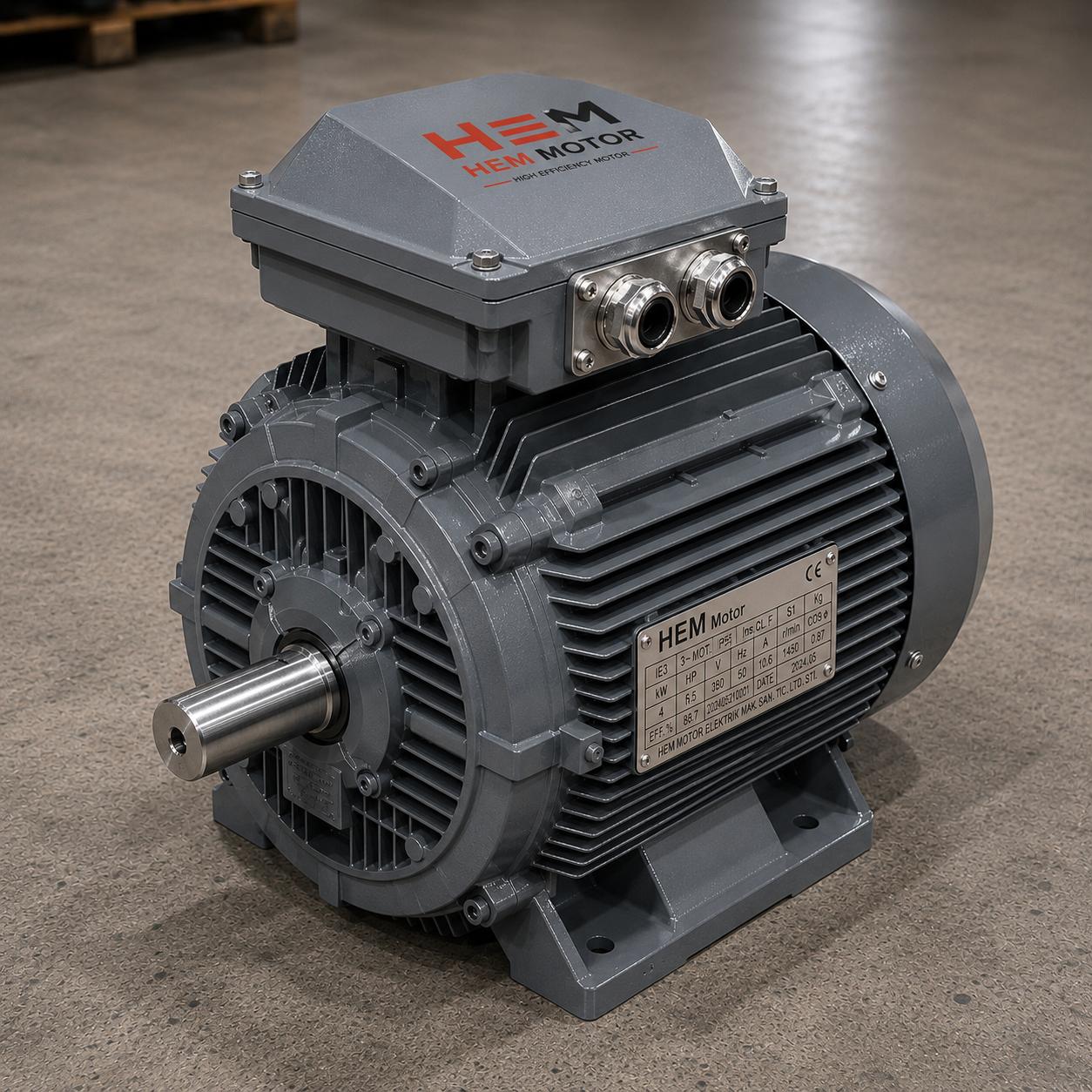

How fast an electric motor will turn is the most fundamental selection criterion, coming even before the power printed on its label. This is because two motors with the same kilowatt rating become suitable for completely different jobs when they turn at different speeds. To drive a pump, fan, conveyor or gearbox correctly, you first need the right speed, and to determine the right speed you need to know the synchronous speed-pole relationship. In this article we examine the synchronous speed-pole table, the speeds of 2-, 4-, 6- and 8-pole motors at 50 and 60 Hz, and how to make the correct motor selection from both a technical and a purchasing perspective.
Synchronous speed is the theoretical speed at which the motor's magnetic field rotates, and it is found with a simple formula. Asynchronous motors turn slightly below this speed because of slip. To select the right motor, you must evaluate the synchronous speed, the slip and the effect of frequency together. Below we explain these concepts step by step and show how they translate into selection decisions in the field.
Choosing the right speed is not only a technical preference; it is also decisive for energy efficiency, motor life and initial investment cost. Choosing the wrong pole count means either an unnecessarily large and expensive motor or a drive that is not enough for the application.
The Synchronous Speed Formula: ns = 120 × f / p
Synchronous speed is found with a very simple but very powerful formula: ns = 120 × f / p. Here ns is the speed in revolutions per minute (rpm), f is the grid frequency (Hz) and p is the pole count. This formula forms the basis of motor selection because it clearly shows the effect of two variables on speed: as frequency increases, speed increases; as pole count increases, speed decreases.
This relationship explains why there are motors at different speeds for the same power. By designing the stator winding for different pole counts, the manufacturer can produce motors at different speeds from the same frame. This lets the user choose the speed most suitable for the application.
The Effect of Frequency on Speed
As the formula shows, speed is directly proportional to frequency. The grid in Turkey and Europe is 50 Hz, while North America is 60 Hz. A motor with the same pole count turns 20 percent faster at 60 Hz than at 50 Hz. Therefore, when selecting a motor for export or for a 60 Hz grid, the speed difference must always be taken into account; otherwise the pump or fan will run at a higher flow than expected.
50 Hz Synchronous Speed-Pole Table
On a 50 Hz grid, the synchronous speeds by pole count are as follows. These values form the backbone of motor selection in the field, and knowing them by heart makes the job much easier.
- 2 poles: 3000 rpm synchronous speed (rated speed about 2900-2950)
- 4 poles: 1500 rpm synchronous speed (rated speed about 1450-1470)
- 6 poles: 1000 rpm synchronous speed (rated speed about 960-980)
- 8 poles: 750 rpm synchronous speed (rated speed about 720-735)
As you can see, when the pole count doubles, the speed halves. 2-pole motors are preferred in high-speed applications; 4-pole motors in pumps, fans and general-purpose drives; and 6- and 8-pole motors in mixers, crushers and slow conveyors that require low speed and high torque.
60 Hz Values
On a 60 Hz grid, the same pole counts give about 1.2 times higher speed: 2 poles 3600 rpm, 4 poles 1800 rpm, 6 poles 1200 rpm, 8 poles 900 rpm. This difference must be handled carefully, especially in export motors and international projects. To evaluate the frequency-speed relationship together with power selection, our article on understanding HP-kW motor power is a useful resource.
Slip: Why Is the Rated Speed Below the Synchronous Speed?
Asynchronous motors cannot turn at synchronous speed, because to produce torque the rotor must lag slightly behind the magnetic field. This difference is the slip. The rated speed printed on the label (for example 1450 rpm) is the real speed at full load and is below the synchronous speed (1500 rpm). As the load increases, the slip increases; the motor turns very close to synchronous speed when idle and at the label value at full load.
Slip is an important value that defines the motor's character. Low-slip motors run at a more constant speed; high-slip motors handle load changes more softly and offer an advantage with shock loads. When replacing a motor, keeping the slip values of the old and new motors similar is important for preserving the operating point in the field. To see the effect of pole selection on torque and speed character in more detail, you can review our asynchronous motor pole selection content.
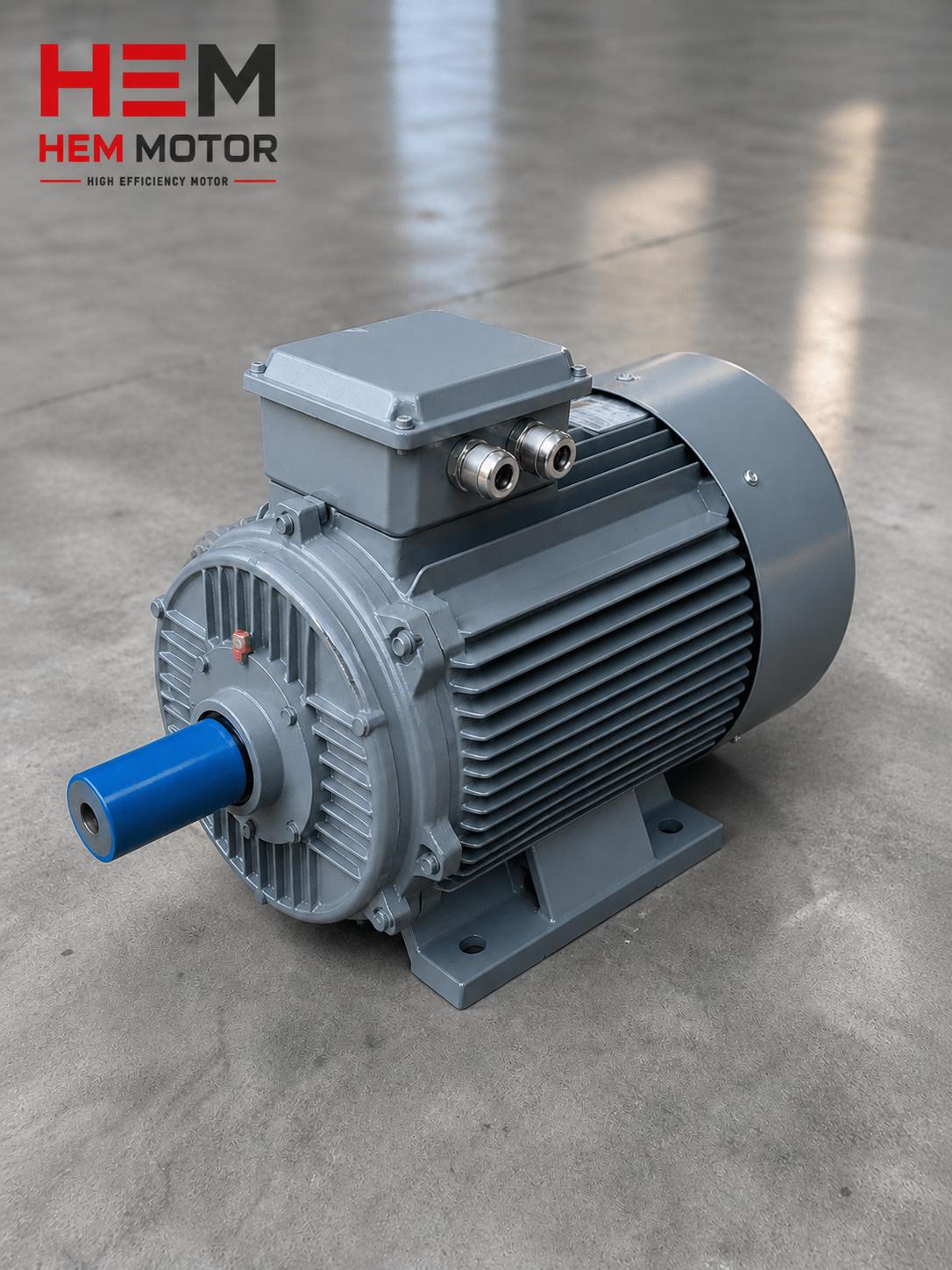
At the Same kW, a Lower-Speed Motor Is Larger and More Expensive
Power depends on the product of torque and speed. The same kilowatt power can only be obtained at low speed with higher torque. Higher torque means a larger rotor, a thicker shaft and a stronger frame. Therefore an 8-pole (750 rpm) motor at the same power is noticeably larger, heavier and usually more expensive than a 2-pole (3000 rpm) motor.
This directly affects motor selection. If the application requires high torque and low speed, a large and expensive low-speed motor is unavoidable. But choosing an unnecessarily low-speed motor in a high-speed application is an investment that takes up more space and costs more money. Correct pole and speed selection is made by watching exactly this balance.
Questions for the Right Speed Selection
- At what speed does the driven machine run efficiently?
- If there is a gearbox, what should the input speed be?
- Is the grid 50 Hz or 60 Hz, and will the motor be exported?
- Does the application require high torque or high speed?
- How does the chosen pole count affect the frame size and cost?
The Effect of Speed Selection on Energy Efficiency
Speed selection not only ensures the machine turns at the right speed; it also directly affects energy consumption. Especially in speed-sensitive loads such as pumps and fans, there is an exponential relationship between speed and power consumption. According to the affinity laws, reducing the speed of a pump by 10 percent reduces power consumption by about 27 percent. For this reason, choosing a motor with the right speed is far more efficient than reducing flow with a throttling valve in the field.
If an application is to run continuously at a flow below the nominal speed, choosing a lower-speed motor with the right pole count from the start both saves energy and runs the motor in a more suitable load band. Conversely, choosing an unnecessarily high-speed motor and throttling the flow with a valve means continuous energy loss. So speed selection is an inseparable part of the efficiency calculation.
Speed Adjustment with a Drive (VFD)
When a variable frequency drive (VFD) is used, the motor speed can be adjusted by changing the frequency. In this case the value of f in the synchronous speed formula becomes variable, and the motor can run, for example, between 30 and 40 Hz instead of a fixed 50 Hz. The drive provides great energy savings in applications that require variable flow. However, the basic pole count must still be chosen correctly, because the drive does not change the motor's character; it only shifts the operating frequency. Therefore knowing the synchronous speed-pole table remains valid in drive applications too.
Using the Table in Practice: Example Selections
A few typical examples are useful for applying the synchronous speed-pole table in the field. In a centrifugal pump, 2900 rpm (2 poles) or 1450 rpm (4 poles) is usually preferred; 2 poles suit high head, 4 poles suit high flow with moderate pressure. In an extractor or air fan, 1450 rpm is the most common choice. In a mixer, where high torque and low speed are needed, 980 rpm (6 poles) or 730 rpm (8 poles) motors are used.
These examples show why the table should be known by heart. After determining the speed the application requires, you can use the table to find within seconds which pole count provides that speed. Then, together with the power and mounting type, the right motor becomes clear.
The Effect of Pole Count on Frame, Current and Power Factor
Pole count not only determines the speed; it also shapes the electrical and mechanical character of the motor. In general, high-speed 2-pole motors have a higher power factor and a smaller frame at the same power, making them more economical per unit of power. In low-speed 6- and 8-pole motors, the power factor is somewhat lower and the frame is larger. This affects both the initial investment cost and the need for compensation.
Starting current and starting torque are also related to pole count. At the same power, low-speed motors can usually produce higher starting torque, which offers an advantage with shock and inertial loads. Therefore, in motor selection, not only speed but also the starting character must be considered. The correct pole count is a decision that watches the balance of speed, torque, frame and cost together.
Reading the Nameplate Values Together
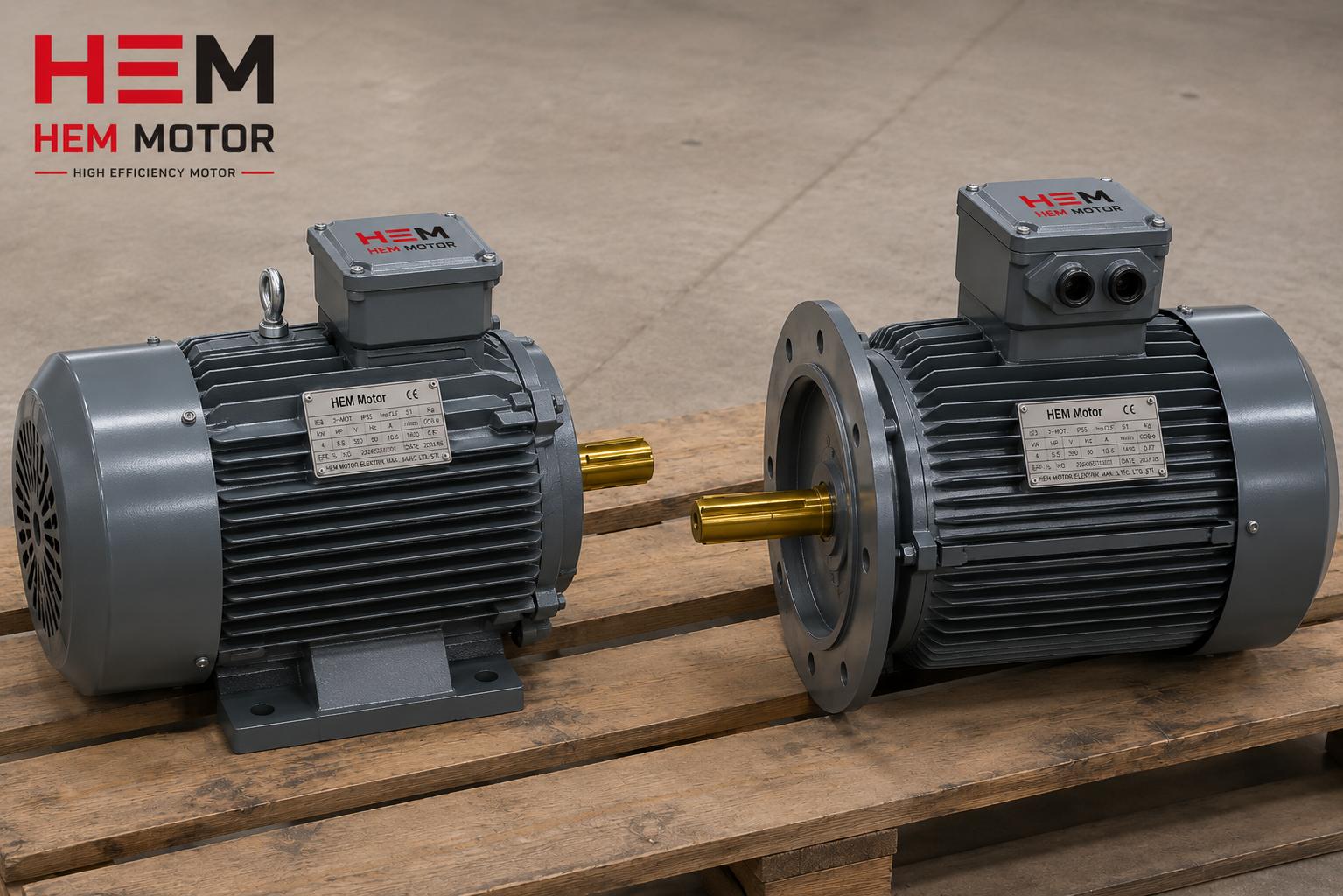
On a motor's nameplate, the speed value indirectly reveals the frequency and the pole count. For example, a motor reading 1455 rpm at 50 Hz is 4-pole and runs with a small slip at the 1500 rpm synchronous speed. Reading the nameplate correctly is the basis for understanding the motor's character and choosing the right spare. Speed, power, current, power factor and efficiency class must always be evaluated together.
Supply from Stock at the Right Speed
Supplying the motor at the right pole, speed and frequency with manufacturer assurance and fast delivery minimises downtime in the field. When the most requested 2-, 4-, 6- and 8-pole motors are kept in stock in different frames and mounting types, the motor at the right speed reaches the field without long waiting. During stock consultation, the speed the application requires is clarified and the motor is recommended accordingly. You can review the whole product family and technical content via the homepage.
In short, the synchronous speed-pole table is the alphabet of motor selection. Knowing the formula and the table, understanding which pole count gives which speed, and accounting for slip are the keys to choosing the right motor the first time. This means both energy efficiency and a long motor life.
Frequently Asked Questions
What is the difference between synchronous speed and rated speed?
Synchronous speed is the theoretical speed at which the motor's magnetic field rotates, found with the formula ns = 120 × f / p. Rated speed is the motor's real speed at full load and is slightly below the synchronous speed because of slip. For example, while the synchronous speed of a 4-pole motor is 1500 rpm, the rated speed is 1450-1470 rpm. The value on the label is always the rated speed.
Can I run a 60 Hz motor on a 50 Hz grid?
It can be run, but the motor turns 20 percent slower, which reduces the flow of the pump or fan. In addition, since the voltage/frequency ratio changes, the motor's magnetic behaviour and torque are also affected. For this reason, the motor should be chosen according to the frequency of the grid it will run on; in export motors, 50/60 Hz compatibility should be clarified at the ordering stage. Some motors are designed as dual-frequency for both 50 and 60 Hz, in which case the power and speed values at both frequencies are stated separately on the label.
Which pole count should I choose at the same power?
The pole count is chosen according to the speed the driven machine needs. Most pumps and fans run most efficiently with a 4-pole (1500 rpm) motor. In mixers, crushers and slow conveyors that require high torque and low speed, 6- or 8-pole motors are preferred; these are larger and more expensive at the same power but provide a high-torque advantage. In high-speed applications such as high-speed centrifugal pumps and fans, 2-pole motors are used; these have a smaller frame and are more economical per unit of power. For the right selection, sharing your application's speed need during the supply stage is the healthiest approach.