English
 Türkçe

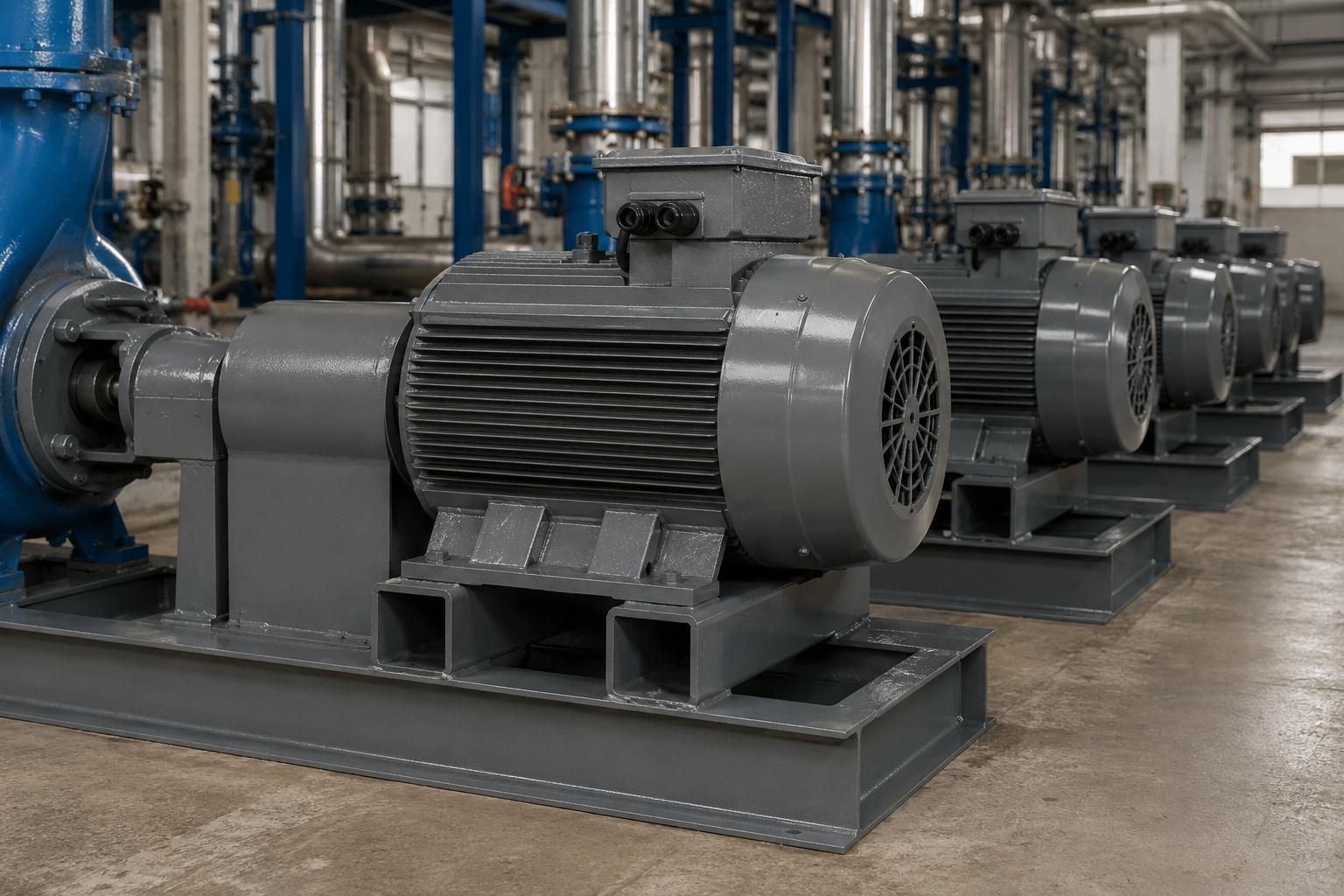

When buying an electric motor, the kW figure on the nameplate is not the only number that matters. There is another equally important concept: the service factor (SF). Most purchasing decisions focus only on rated power, but the parameter that truly determines how the motor behaves in the real world, how much short-term overload it can survive, and at what temperature it will operate, is the service factor and the related power margin calculation. In this guide we explain what a 1.15 service factor means, how it affects motor sizing, the relationship between overload reserve and motor life, and how to choose the correct kW from a buyer's perspective.
What Is the Service Factor (SF)?
The service factor is a multiplier that shows how much load a motor can carry above its rated nameplate power without permanent damage. A 1.15 service factor means the motor can carry 15% more than its rated power under non-continuous conditions. For example, a motor with a given rated kW and SF 1.15 can be operated briefly at 15% above that power, as long as it stays within its insulation limits.
The service factor can be thought of as the motor's "reserve power." However, this reserve is not designed for continuous use; it is a safety margin for sudden load increases, voltage fluctuations, rises in ambient temperature, and temporary process peak loads. Running an SF 1.15 motor continuously at 15% overload means consuming that reserve and shortening the motor's life.
The Difference Between Service Factor and Power Margin
Service factor and power margin are often confused but are distinct concepts. Power margin (headroom) means deliberately selecting a motor one size larger than the real requirement. The service factor is the overload capacity that the manufacturer defines and declares on the nameplate. A good motor sizing approach combines the two: the rated power is matched to the load demand, and the service factor is evaluated to cover temporary peak loads.
How Does a 1.15 Service Factor Affect Motor Sizing?
For correct motor sizing, the application's continuous power requirement should first be determined, then a reasonable power margin added on top. A motor with SF 1.15, when operated close to its rated power, can use this 15% reserve to keep running through temporary load increases without stopping or overheating. This is a critical advantage especially in applications that require an overload reserve.
The most common mistakes in motor sizing are:
- Undersizing: Continuously relying on the SF reserve; this keeps the insulation at high temperature and accelerates aging.
- Oversizing: Selecting a far too large motor; efficiency and power factor drop at low load ratios, raising both capital and energy costs.
- Ignoring the service factor: Fitting an inadequate motor to a peak-load process without accounting for SF; this leads to constant protection trips or burnout.
- Overlooking ambient conditions: At high ambient temperature or high altitude the SF advantage shrinks; sizing must then be reconsidered.
To evaluate this topic in depth, we recommend our guide on IE3 motor service factor and overload capacity, which details how the SF value should be assessed together with the efficiency class.
The Relationship Between Overload Reserve and Heating
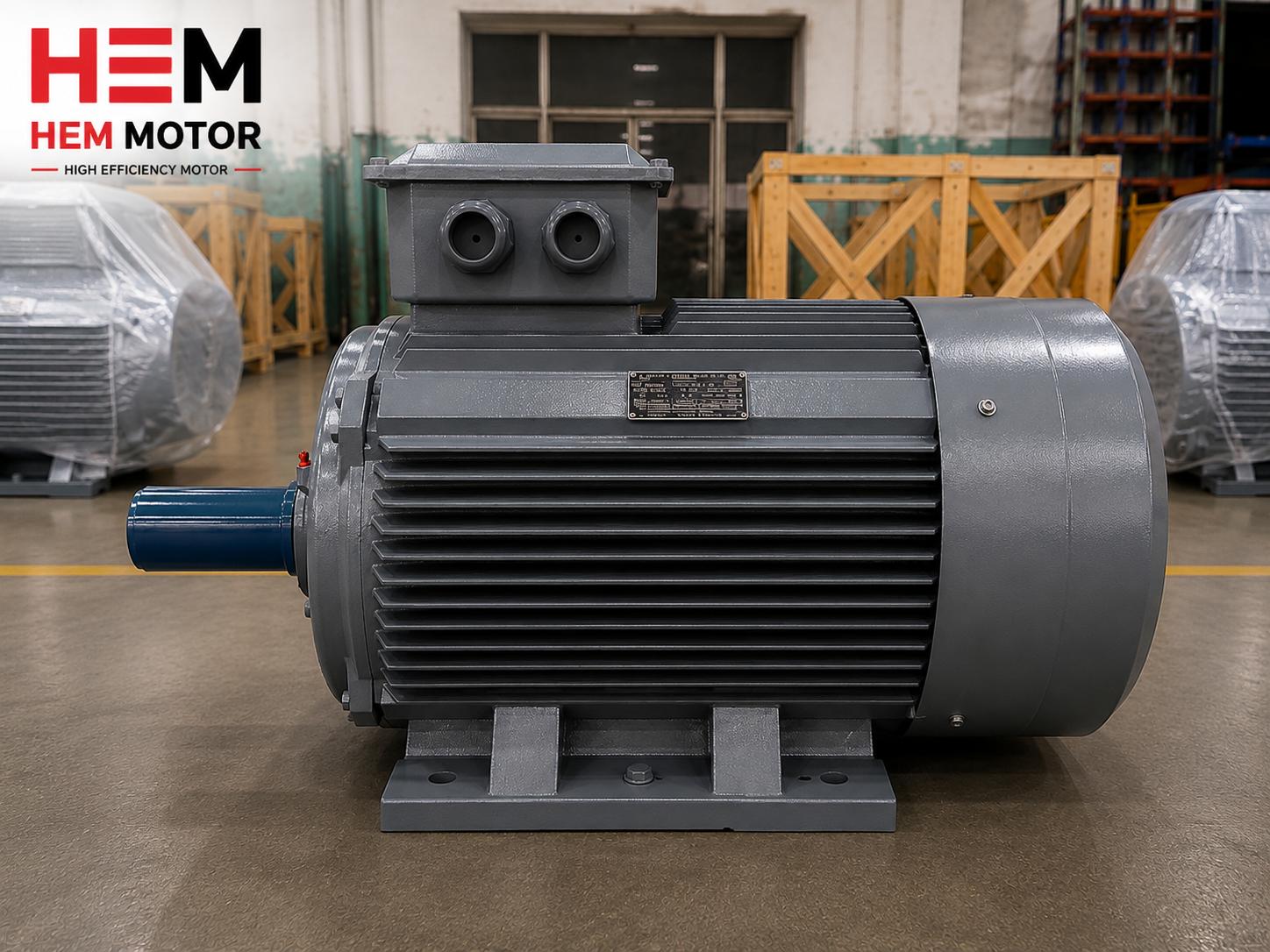
A motor's service factor is directly linked to its insulation class and temperature rise. The F class insulation used as standard in HEM Motor products provides a winding structure resistant to high temperatures. When a motor runs at rated power, a certain temperature rise occurs; entering the service factor reserve increases this rise. That is why the SF 1.15 reserve is designed for temporary, limited-duration use, not continuous operation.
Why Is Temperature Rise So Important?
The higher the motor winding temperature, the shorter the insulation life. As a general rule, every certain increase in winding temperature can halve the insulation life. Continuously using the SF reserve keeps the winding at high temperature and accelerates this aging. Therefore the overload reserve should be treated like an insurance policy; it should engage only when truly needed.
In applications requiring continuous operation, the S1 duty type is decisive. S1 duty indicates the motor is suitable for continuous operation at constant load. For an application that will run continuously at full load, selecting a motor one size larger is often a better investment than leaning on the SF reserve. Our content on motor load ratio, efficiency and correct sizing helps you strike this balance.
Choosing the Correct kW: A Buyer's Perspective
The first step when buying a motor is to calculate the application's real power requirement. The power needed for pumps, fans, conveyors, or general industrial applications is calculated differently. Our guide on required kW calculation for pumps, fans and conveyors shows these calculations step by step. Once the correct kW is determined, the service factor and power margin are assessed with this logic:
- Constant-load, continuous applications: Choose a motor close to the real requirement; let SF 1.15 protect you only during temporary fluctuations.
- Peak-load, variable applications: Keep the power margin a little wider; leave the SF reserve for unexpected peaks, not regular use.
- High ambient temperature or high altitude: Size up; the service factor advantage shrinks in these conditions.
- Efficiency-focused investment: Select the motor to run within the ideal load-ratio band; this saves energy and keeps the SF reserve always available.
As HEM Motor we offer a broad range of general-purpose industrial motors. To review different power, speed and mounting options, visit our general-purpose industrial motors page. For information on current models and electric motor prices, please get in touch with us.
Efficiency Class and Service Factor Should Be Evaluated Together
Modern IE3 and IE4 Super Premium efficient motors heat up less at the same load thanks to their high efficiency. This means the service factor reserve can be used more comfortably. Because a high-efficiency motor keeps the winding temperature low, it has a wider thermal window during overload situations. That is why efficiency class and service factor must be considered together in the right motor selection.
Practical Tips on Service Factor
- Always check the SF value on the nameplate; the common value on standard industrial motors is 1.15.
- Think of the SF reserve not as "continuous extra power" but as a "safety buffer."
- Cast iron body, IP55 protected and F class insulated motors let you use the overload reserve more safely.
- The mounting type (B3 foot, B5 flange, B35 combined) and speed option (1000 / 1500 / 3000 rpm) should be chosen according to the load character.
- For processes with continuous peak load, consider the next power step up instead of relying on the SF reserve.
A correct service factor and power margin strategy both increases operational safety and protects the motor's expected life. A wrongly sized motor either stops production by tripping protection constantly, or raises energy costs by being chosen unnecessarily large. A motor selected through proper analysis, on the other hand, runs trouble-free for years.
Reading the Nameplate and Verifying the Service Factor at Order Time
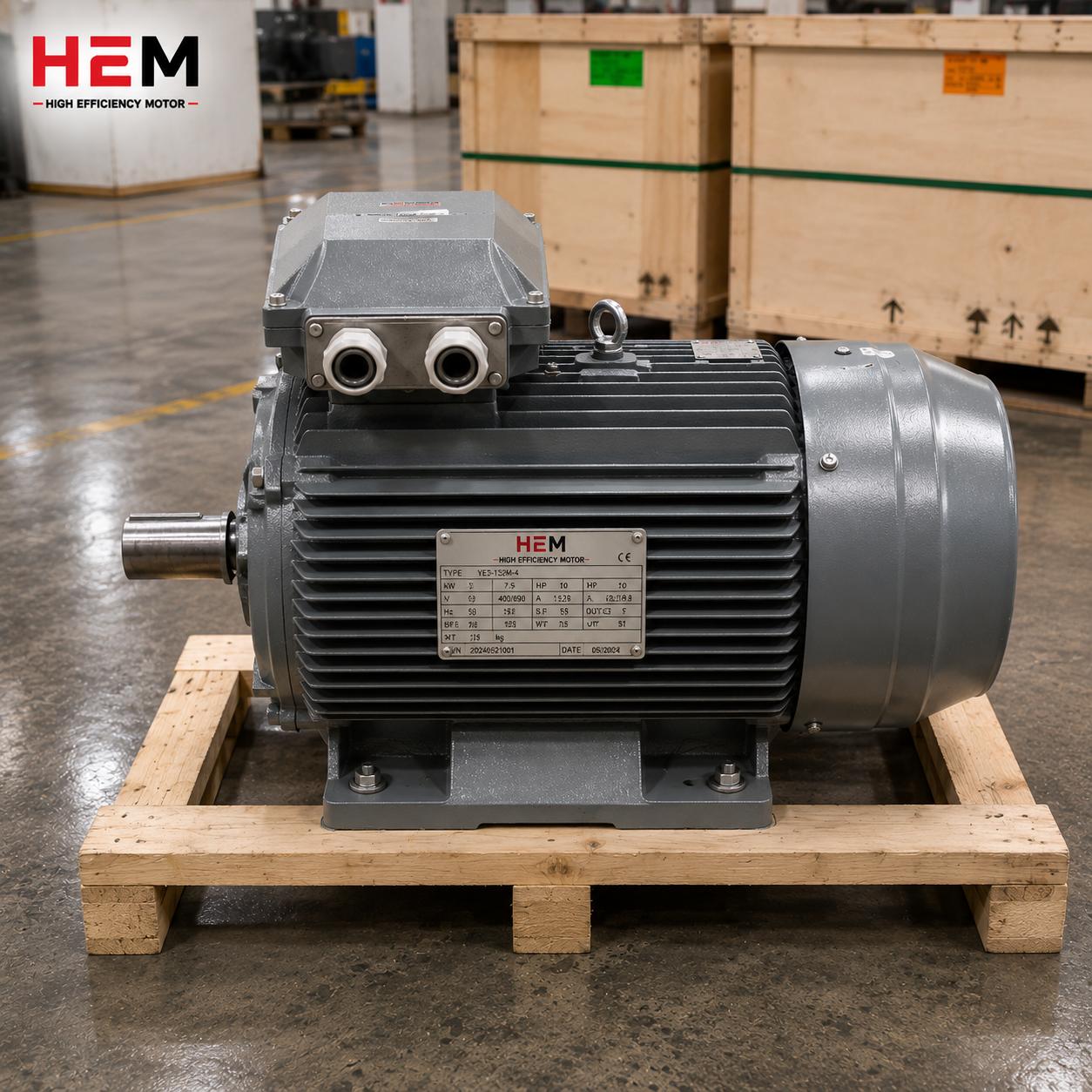
A motor's service factor is clearly printed on the nameplate (rating plate) attached to the motor body. During the purchasing process, however, verifying this value is critical to avoid sending the wrong motor to the field. The nameplate carries the rated power in kW (or HP), speed (rpm), voltage, current, frequency, insulation class, protection class (IP), and the service factor together. Among these, the SF value usually appears as "SF" or "S.F." and is typically 1.15 on standard industrial motors. On some special-application motors this value may be 1.0 (no overload reserve defined) or higher; that is why it should be verified from the nameplate rather than assumed.
At the order stage, if you are replacing an existing motor, photographing the old motor's nameplate and sharing all values in full is the safest method. If you are selecting a motor for a new project, describing the load character and operating regime allows the correct service factor and power margin combination to be determined. The main points to watch when reading the nameplate are:
- Rated power and SF read together: The kW on the plate is the continuous power excluding the SF reserve; the reserve is added on top of it.
- Speed and pole count: The same kW produces different torque at different speeds, directly affecting whether the motor suits the load demand.
- Insulation and protection class: F class insulation and IP55 protection support safe use of the overload reserve.
- Duty type (S1–S8): The duty type on the plate shows whether the motor suits continuous or intermittent operation.
- Connection and mounting type: B3, B5 or B35 mounting information should be clarified before ordering so the motor integrates correctly with the machine.
A motor's actual speed is slightly below synchronous speed because of slip; you can find the effect of this difference on load calculation in our content on slip and actual speed in asynchronous motors.
Altitude, Ambient Temperature and Derating: Why the Power Margin Is Increased
Service factor and power margin calculations are valid for a specific reference operating environment. Standard industrial motors are usually declared for conditions near sea level and a defined reference ambient temperature. When operating conditions fall outside this reference, the motor's cooling capacity decreases and the overload reserve narrows. This is called derating and is an inseparable part of correct motor sizing.
As altitude increases, air density drops, reducing the heat-removal capacity of a fan-cooled motor. Similarly, when the ambient temperature rises above the reference value, the winding starts from a higher base temperature and heats up faster at the same load. In both cases, part of the declared service factor advantage is already consumed. In practice the following approaches are used:
- High ambient temperature: For each step above the reference temperature, the continuous power the motor can carry drops somewhat, so the next kW step up is preferred.
- High altitude: Above a certain altitude threshold cooling weakens, so the power margin is widened or additional cooling solutions are considered.
- Dust and enclosed environments: In closed panels or dusty sites where cooling air is restricted, the IP class is raised while the thermal margin is also reviewed.
- Multiple adverse conditions: When high temperature and high altitude occur together, the effects reinforce each other and sizing is done more conservatively.
For this reason, for motors installed in open fields, near furnaces, in boiler rooms, or on high plateaus, relying on the nameplate service factor alone is not enough; the correct step must be selected by clearly describing the application conditions.
Service Factor and Heating When Running on a Variable Frequency Drive (VFD)
Today many pump, fan and conveyor applications are driven by a variable frequency drive (VFD). A VFD adjusts the motor speed, and therefore energy consumption, to the load, delivering significant savings. However, drive-fed operation introduces some additional considerations for service factor and heating. The switched voltage waveform coming from the drive can cause extra losses in the winding and, to a limited extent, additional heating. For this reason, on motors that will run on a drive, it is a more cautious approach to set aside part of the declared service factor reserve to absorb this extra heating rather than treating the full SF margin as freely available.
At low speeds, the motor's own fan also slows down, so its cooling capacity decreases. If a constant-torque application runs continuously at low speed and full load, forced cooling (separate ventilation) or selecting a motor one size larger comes into play. In variable-torque applications such as fans and pumps, this problem is less pronounced because the load demand also drops at low speed. The following points should be considered when evaluating service factor and power margin on drive-fed systems:
- Drive-compatible insulation: F class insulation and a robust winding structure provide a solid base against the voltage stresses coming from the drive.
- Cooling at low speed: For applications requiring continuous low speed, forced cooling or an increased power margin is evaluated.
- Constant torque or variable torque: The torque character of the application determines how much of the service factor reserve can be used.
- Thermal protection: Protection that monitors motor temperature on drive-fed systems supports safe use of the overload reserve.
In all systems, whether drive-fed or started direct-on-line, the basic principle is the same: the service factor is a safety buffer, not an additional power store to be drawn on continuously. When the correct power step is selected, both energy efficiency is preserved and the motor's expected life is secured.
Stock Availability, Lead Time and Replacement Sizing
Correct sizing matters not only for the technical specification but also for the supply process. When a motor fails in the field, the speed at which a correctly sized replacement can be sourced directly affects production downtime. Because the service factor and power margin of the replacement must match the application, a clear understanding of the original load and duty avoids repeating a previous undersizing or oversizing mistake. As both a manufacturer and a supplier, we help operations match the right power, speed, mounting type and protection class to the application, and to keep critical spares ready.
- Match the replacement to the load, not just the old plate: If the original motor was already wrongly sized, copying its kW perpetuates the problem; the load demand should be re-checked.
- Keep the duty type consistent: A replacement for a continuously loaded S1 application should not be sized as if it only ran intermittently.
- Plan critical spares: For processes where a single motor failure halts the line, holding a correctly sized spare dramatically reduces downtime cost.
- Confirm mounting and shaft details: B3, B5 or B35 mounting and shaft dimensions must match so the replacement integrates without machining or adapters.
Frequently Asked Questions
Can I run a motor with service factor 1.15 continuously at 15% overload?
No. A 1.15 service factor is a reserve defined for temporary, limited-duration overloads. Running the motor continuously on this reserve keeps the winding temperature high, shortens insulation life, and eventually leads to motor failure. If a continuous high load is required, it is better to select the next kW step up.
Does choosing a motor larger than my real requirement eliminate the need for service factor?
Not entirely. Choosing a motor one size larger provides a power margin and lets it run at a lower temperature at normal load. However, an oversized motor causes efficiency and power-factor losses at low load ratios. The best approach is to select a motor matched to the real requirement and treat the service factor as a safety margin for temporary peaks.
Does the service factor advantage change at high ambient temperature?
Yes. The service factor is defined for a specific reference ambient temperature. When the ambient temperature rises above this reference or operation is at high altitude, the motor's cooling capacity decreases and the overload reserve narrows. In these conditions you should select a motor one size larger or take additional cooling measures. Sharing your application conditions is enough for us to recommend the correct selection.