English
 Türkçe


Summary (TL;DR)
- The 2.2 kW electric motor is one of the most stocked and fastest-supplied single power ratings in industry; correct selection starts not with power but with pole count and speed.
- 2 pole ≈ 3000 rpm, 4 pole ≈ 1500 rpm, 6 pole ≈ 1000 rpm; at the same 2.2 kW, as speed drops torque rises and the frame size grows.
- A 4-pole 2.2 kW typically maps to an IEC 100 frame, 2-pole is more compact, and 6-pole needs a larger frame; the application is defined by speed, not power alone.
- Under EU Ecodesign 2019/1781, DOL three-phase motors from 0.75–1000 kW must be at least IE3; therefore a 2.2 kW motor must be bought at IE3 efficiency as a minimum.
- HEM Motor supplies 2.2 kW motors from stock with manufacturer assurance across pole counts, mounting types (B3/B5/B14/B35) and frames; we help you define the right combination for a fast quote and supply.
When you set out to buy a 2.2 kW electric motor, you are not making one decision but several interconnected ones at the same time: how many poles, what speed, which frame, which mounting type and which efficiency class. Most purchases begin and end at the words "2.2 kW", yet motors of the same power can have completely different speed, torque and frame size depending on pole count. This article focuses specifically on a single power rating, 2.2 kW, and explains in detail how the 2/4/6 pole choice changes your purchase, which speed each application needs, and how stock availability shapes the decision. The goal is to help you buy the right motor the first time, with HEM Motor manufacturer assurance.
Why Is 2.2 kW Such a Common Stock Power?
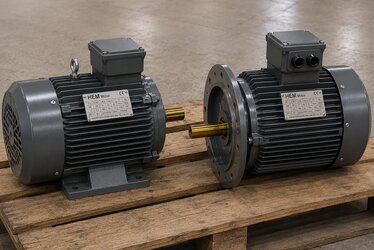
2.2 kW sits right in the middle of the IEC standard power steps (0.75 – 1.1 – 1.5 – 2.2 – 3 – 4 kW...), in the core demand zone of industry. Pumps, fans, conveyors, mixers, compressors, shredders and many machine drives operate in this band. As a result, the 2.2 kW electric motor is the step that almost every manufacturer and supplier holds in the highest quantities. High stock density means two key advantages for you: fast supply and a wide range of variants. In other words, 2.2 kW is not a single motor but many alternatives at once: 2-pole, 4-pole, 6-pole, foot-mounted, flange-mounted and combined mounting can all ship from stock.
However, this abundance does not make the choice automatic. On the contrary, the "I have a 2.2 kW, let us ship it" approach can send the wrong-speed motor to the field. That is why the buying process should begin with speed and torque requirements, not power. When you work with us, the first question we usually ask is not how many kW, but how many rpm and what load.
Pole Count, Speed and Torque Relationship
The synchronous speed of an induction motor depends on supply frequency and pole pairs. On a 50 Hz grid the practical figures are:
- 2 pole → synchronous 3000 rpm, around 2850–2900 rpm under load.
- 4 pole → synchronous 1500 rpm, around 1420–1460 rpm under load.
- 6 pole → synchronous 1000 rpm, around 940–970 rpm under load.
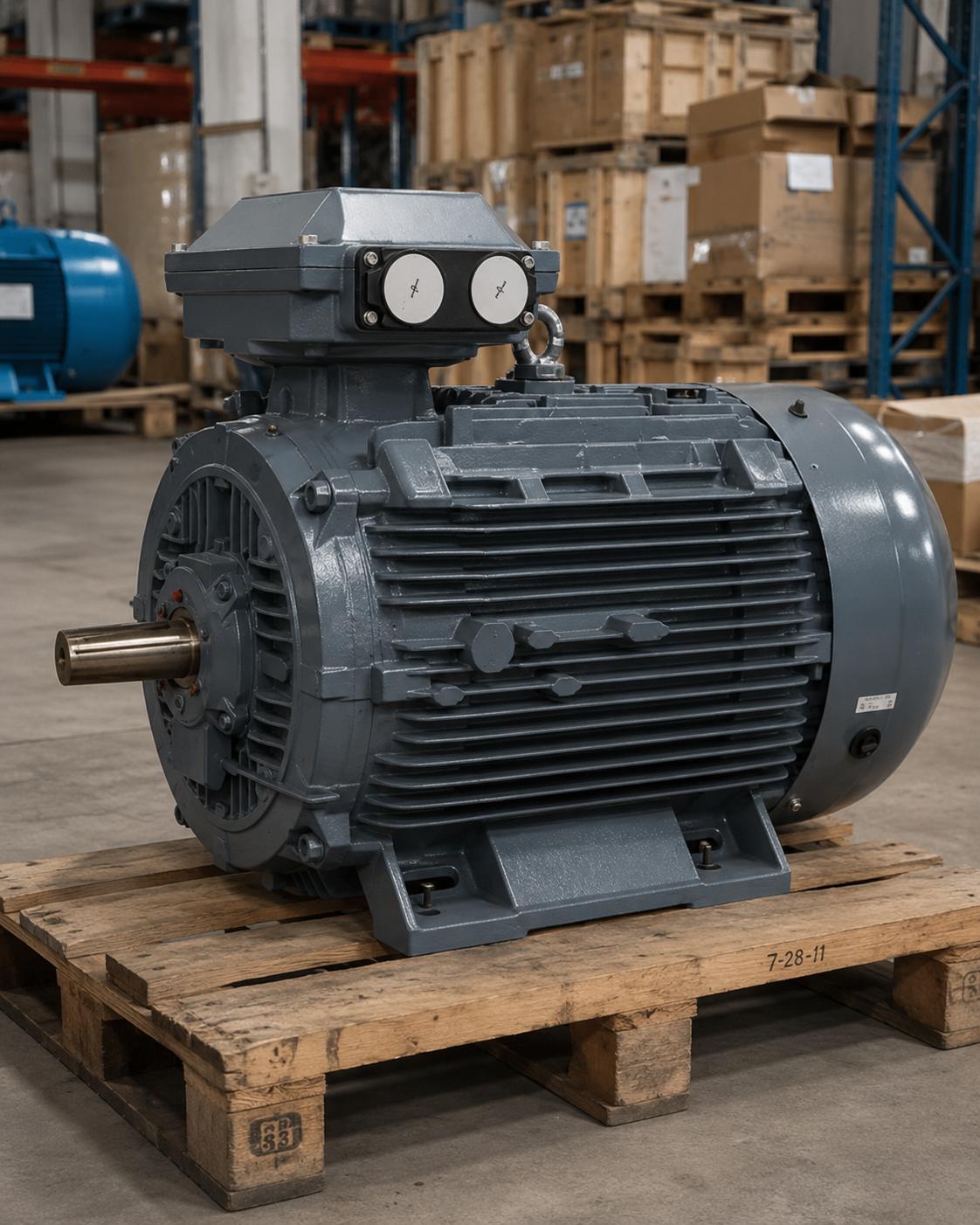
The critical point is this: when power (kW) stays constant, the lower the speed, the higher the torque the motor produces. Mechanical power is the product of torque and angular speed. A 6-pole motor producing 2.2 kW at 1000 rpm delivers roughly three times the torque of a 2-pole motor producing 2.2 kW at 3000 rpm. To carry that higher torque the magnetic circuit and rotor must be larger, so as pole count rises the frame grows, the motor gets heavier and the physical dimensions change.
Understanding this relationship explains why, even at a single 2.2 kW rating, you encounter motors of different size and weight. The free space at your mounting location, the coupling/pulley dimensions and the shaft height are all directly linked to the pole count you choose.
Where Is 2-Pole (3000 rpm) 2.2 kW Used?
It is ideal for applications that demand high speed and low torque. Typical uses: centrifugal pumps, high-flow fans, small compressors, and some grinding and polishing machines. The 2-pole 2.2 kW motor usually sits on the most compact frame, is lighter and takes less space than its 4/6-pole siblings of the same power. Because of the high speed, fan noise can be slightly more noticeable; in these applications choosing IE3 efficient electric motors brings both energy and thermal benefits. For a wider selection, see our IE3 efficient electric motors group.
4-Pole (1500 rpm) 2.2 kW: The Best-Selling Combination
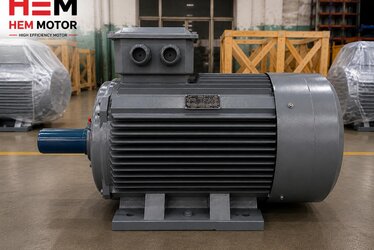
The "default" industrial motor is 4-pole. Because its speed-torque balance fits the widest range of applications, the 2.2 kW 4-pole motor is the most stocked and fastest-shipped combination. Conveyors, gearbox inputs, mixers, medium-flow fans and many machine drives fall into this class. A 2.2 kW 4-pole motor typically maps to an IEC 100 frame (shaft height around 100 mm), which means standardized mounting holes and shaft dimensions. If you are replacing an existing motor, this is most likely the combination you need. For three-phase supply, our three-phase electric motors category is built exactly for this requirement.
6-Pole (1000 rpm) 2.2 kW: Low Speed, High Torque
6-pole is chosen for heavy-starting loads that need low speed and high torque: slow mixers, some shredders, and conveyor or feeding systems requiring low speed. The 6-pole 2.2 kW motor needs a larger frame than its 2 and 4-pole equivalents, is heavier and usually means a higher initial investment. In return it can reduce or even eliminate a gearbox stage, lowering total system cost. The right decision comes from evaluating the motor not in isolation but as a motor + gearbox + load whole.
Frame Size and Shaft Height
The IEC frame number expresses the shaft height in millimetres (e.g. 90 = 90 mm, 100 = 100 mm). At 2.2 kW the typical mapping is:
- 2-pole 2.2 kW → mostly 90L frame, the most compact option.
- 4-pole 2.2 kW → mostly 100L frame, the industry standard.
- 6-pole 2.2 kW → around 112M, a larger and heavier frame.
The frame number defines not only shaft height but also foot hole spacing, flange dimensions, shaft diameter and overall length. Therefore, when replacing a motor, saying only "2.2 kW" is not enough; if the same frame and same mounting type are not provided, the installation may not fit. Sending us the frame code and mounting type from your existing motor's nameplate lets us find the right equivalent from stock and issue a fast quote.
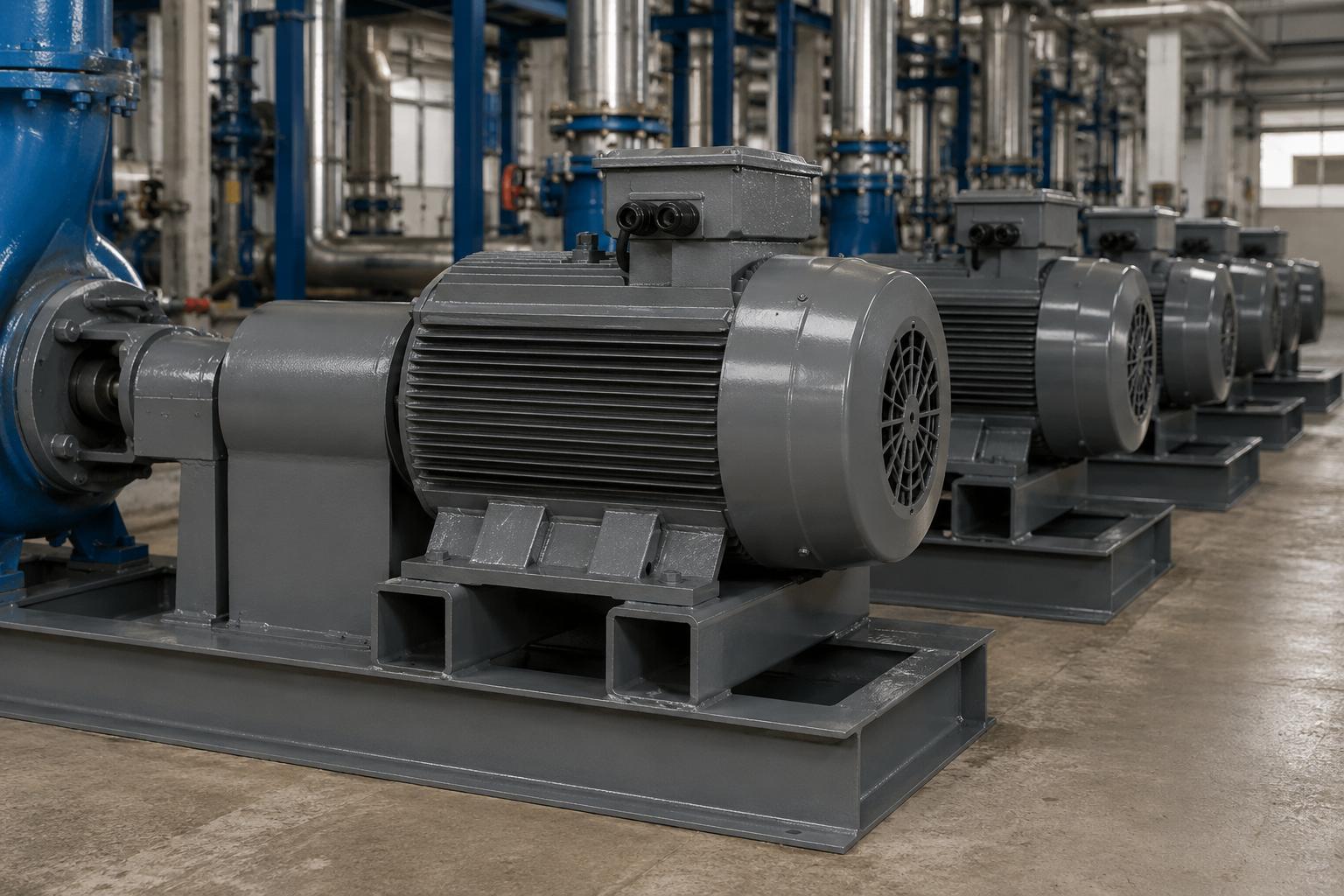
Mounting Types: B3, B5, B14, B35
How you mount your 2.2 kW motor is as important as the pole count. The standard mounting types are:
- B3 (foot-mounted): Bolted to floor or chassis through feet; the most common general-purpose mounting.
- B5 (large flange): Connected directly to a pump or gearbox via a large front flange; no feet.
- B14 (small flange): A smaller threaded flange; used in compact installations.
- B35 (combined): Both feet and large flange together; for applications needing dual support.
Pump and gearbox installations usually require flanged types. For the right flange choice, our B5 flanged electric motors group can be supplied from stock with different pole and frame combinations. A wrong mounting type can make even a motor with the right power and speed unusable in the field, so clarifying the mounting type before purchase is critical.
Efficiency Class: Why At Least IE3 for 2.2 kW?
Under EU Ecodesign Regulation 2019/1781, since July 2021 three-phase induction motors operating directly on the line (DOL) between 0.75 kW and 1000 kW must be at least IE3 efficiency class. Since 2.2 kW sits right in the middle of this range, the motor you buy must be at least IE3. IE3 Premium efficiency, with 100% copper winding and optimized magnetic design, delivers lower losses, less heating and lower operating cost.
For continuously running applications targeting higher efficiency, the IE4 Super Premium option can be considered. IE4 motors pay for themselves quickly through energy savings at high running hours. For general industrial use, general purpose industrial motors offer a balance of efficiency and durability. We can choose the efficiency class together based on your annual running hours.
Protection and Insulation: IP55 and Class F
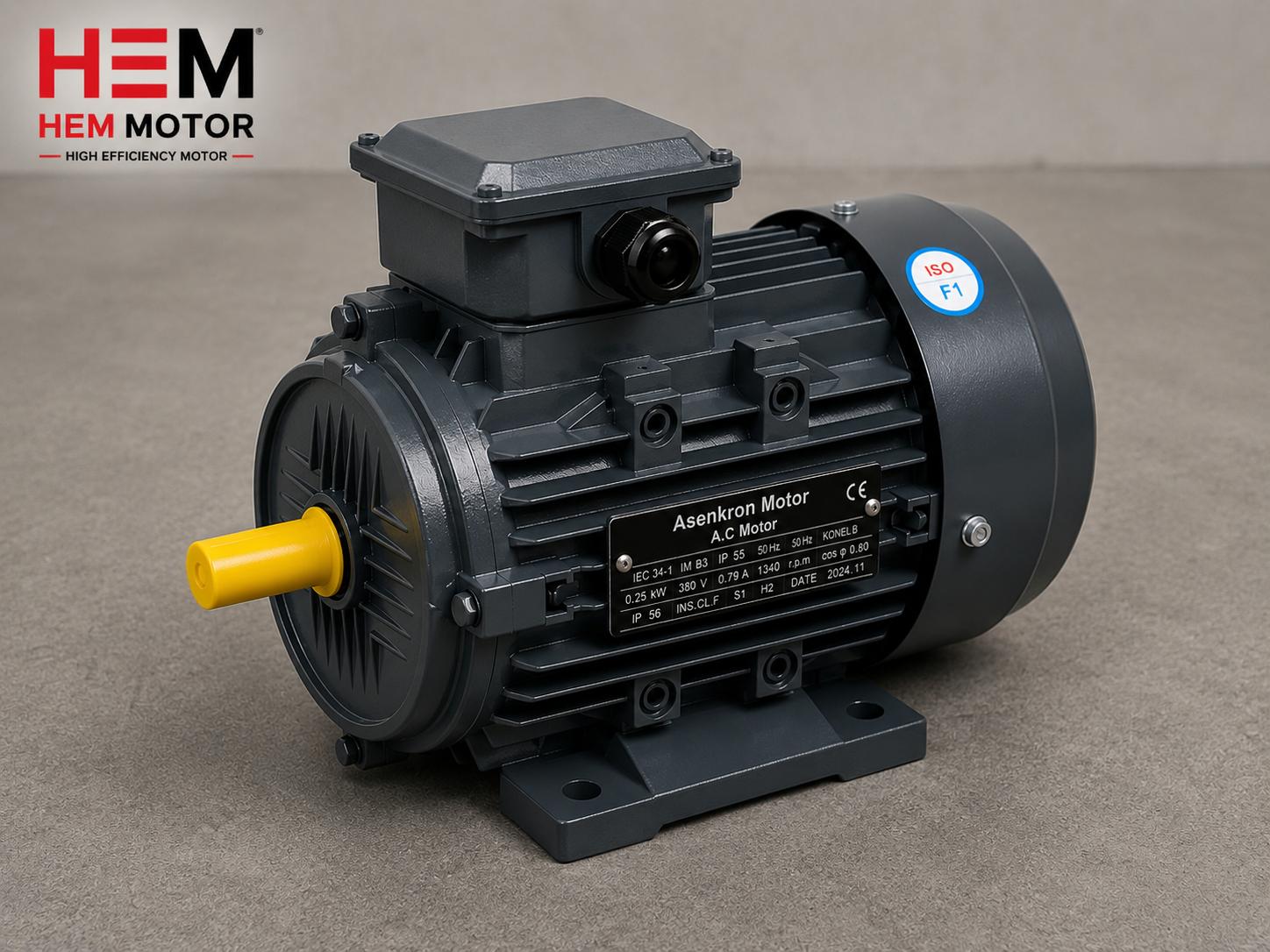
Protection against dust and splashing water matters in an industrial environment. Our standard 2.2 kW motors are offered in IP55 protection class, meaning protection against dust from all directions and low-pressure water jets. Class F insulation windings let the motor withstand high temperatures and extend its life. Together with 100% copper winding, these features make it possible for the motor to run safely in heavy industrial conditions. If your ambient conditions are harsher (high dust, humidity, outdoor), we evaluate options together to raise the protection class.
How Does Stock Availability Affect the Purchase?
Although 2.2 kW is a high-stock power, not every pole and mounting combination is always equally abundant. For example, a 4-pole B3 foot-mounted 2.2 kW is usually ready instantly, while a more specialized variant such as a 6-pole B35 combined may have a different supply time. So when making your buying decision there are two paths:
- If you are flexible: Choosing a ready stock combination lets you advance the project with the fastest shipment.
- If you need a specific equivalent: We supply the exact frame, pole and mounting with manufacturer assurance; in this case planning becomes important.
As HEM Motor, our manufacturer identity gives you not only the product in stock but also the flexibility to source the right combination. When you tell us your need, we evaluate the most suitable stock option and alternative combinations together for a fast quote and supply, and give clear information on current electric motor prices and delivery times.
Pre-Purchase Checklist
Before buying a 2.2 kW electric motor, clarify the following:
- Required speed: 3000, 1500 or 1000 rpm? (this defines pole count)
- Load type and torque requirement: heavy-starting or continuous?
- Frame and shaft height: fit to existing installation.
- Mounting type: B3, B5, B14 or B35?
- Efficiency class: at least IE3, IE4 for continuous duty.
- Protection class (IP55) and ambient conditions.
- Annual running hours and energy-saving target.
When you share this information with us, we define the right 2.2 kW motor in one go and avoid unnecessary returns and mounting mismatches.
Frequently Asked Questions
For a 2.2 kW motor, should I choose 2-pole or 4-pole?
It depends entirely on the speed of your application. For pumps and fans needing high speed, 2-pole (3000 rpm) is used; for general industrial drives, conveyors and gearbox inputs, 4-pole (1500 rpm) is preferred. Because 4-pole has the widest range of use, it is the most stocked combination. Tell us your speed requirement and we will define the right pole count together.
Why do motors of the same 2.2 kW power differ in size?
Because even when power stays constant, the lower the speed the higher the required torque, and higher torque needs a larger magnetic circuit and therefore a larger frame. That is why a 6-pole 2.2 kW motor is noticeably larger and heavier than a 2-pole one. If your mounting space is limited, this difference should be evaluated before purchase.
Must a 2.2 kW motor be IE3?
Yes. Under EU Ecodesign Regulation 2019/1781, DOL three-phase motors from 0.75–1000 kW must be at least IE3 efficiency class, and 2.2 kW is within this range. For continuously running applications you can choose IE4 Super Premium for greater energy savings. We select the most suitable efficiency class together based on your running hours.