English
 Türkçe

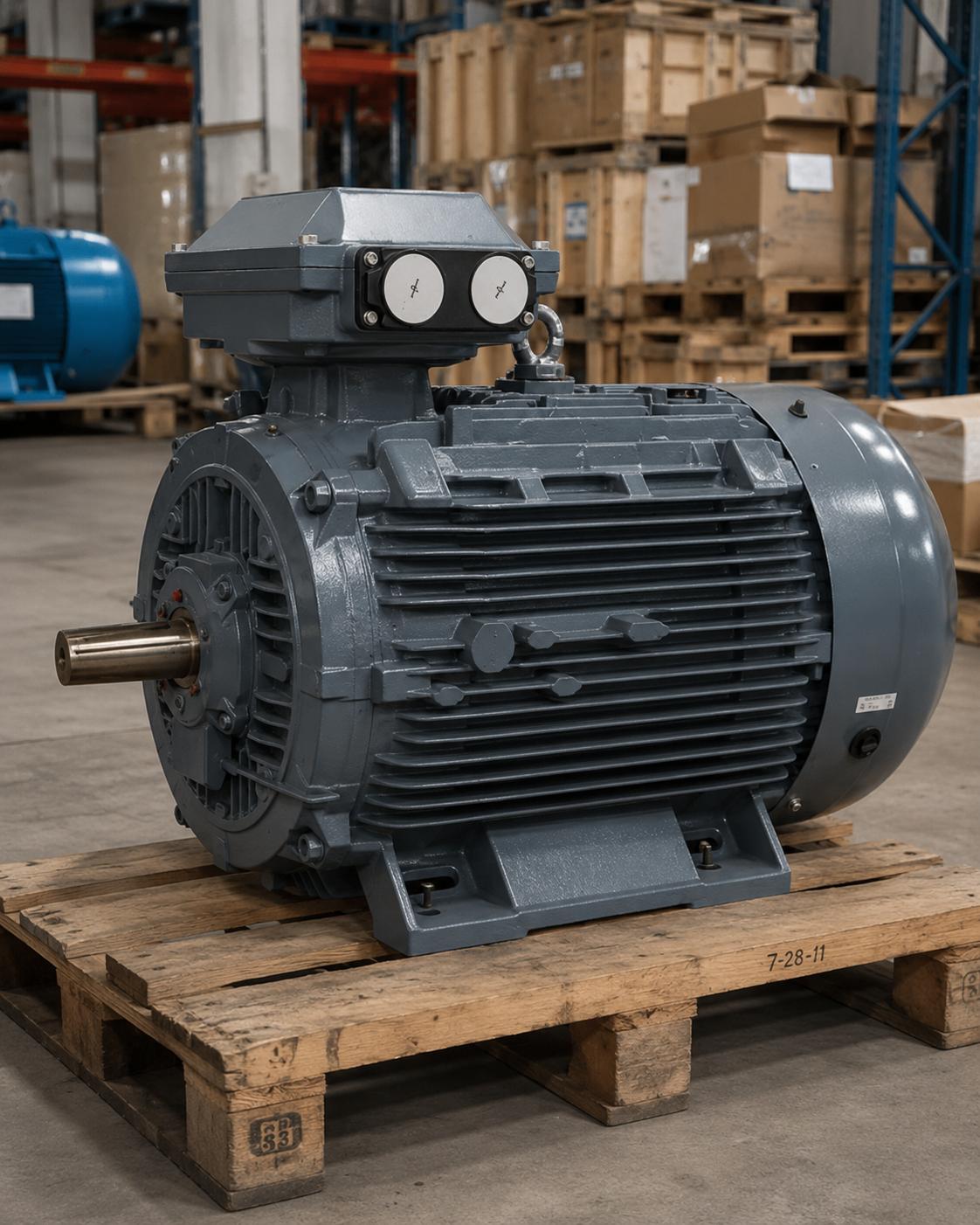

2.2 kW and 3 kW are among the most commonly used electric motor ratings in industry. A wide range of applications, from small pumps to conveyors, from fans to machine tools, operates in this power band. Precisely because of this prevalence, the wrong choice is very easy to make: even if you think you picked the right kW, the motor will not fit the application if the pole count, speed, frame type or mounting are wrong. A correct purchase does not end with saying 2.2 and 3 kW motor; it must be considered together with speed and frame.
As a manufacturer and supplier shipping this power band from a broad stock, the framework we most often explain to customers is this: first pole count (that is, speed), then frame and mounting, and last stock availability. In this article we examine 2/4/6 pole motor selection in terms of speed, frame and stock status, and explain the practical way to buy 2.2 and 3 kW motors correctly.
The Relationship Between Pole Count and Speed
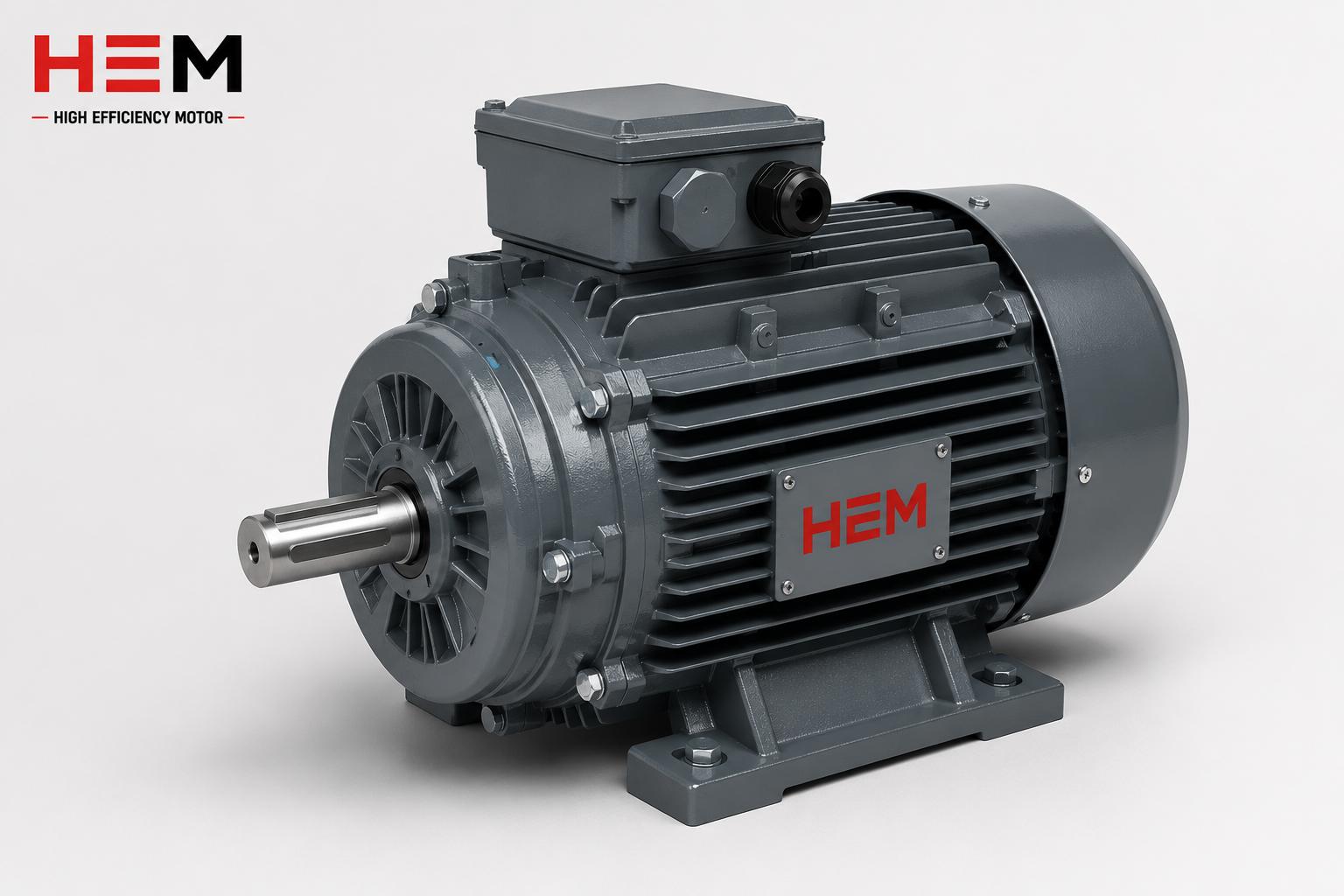
An asynchronous motor's speed is determined by pole count and supply frequency. On a 50 Hz grid, a 2-pole motor runs at a synchronous 3000 rpm, a 4-pole at 1500 rpm, and a 6-pole at 1000 rpm. Under load, the actual speed is slightly lower due to slip (for example about 2900 at 2 poles, about 1450 at 4 poles). The same 2.2 kW rating can be offered at these three different speeds; which one you choose depends entirely on your application.
The critical point here is this: even if power stays constant, the torque the motor produces rises as speed falls. A 6-pole motor delivers much higher torque than a 2-pole motor of the same power, but it turns slower and usually has a larger frame. Six poles make sense for slow, high-torque applications, while two poles suit high-speed fans and pumps.
Which Speed for Which Application?
- 2 pole (≈2900 rpm): Centrifugal pumps, high-speed fans, some compressors.
- 4 pole (≈1450 rpm): The most common choice; conveyors, general-purpose pumps and fans, gearbox inputs.
- 6 pole (≈960 rpm): High torque, low speed; mixers, heavy conveyors, some crushers.
Frame Type and Mounting Arrangement
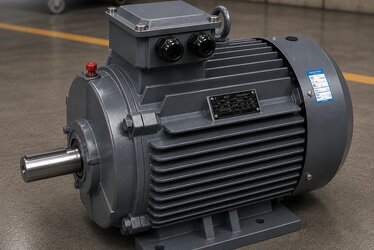
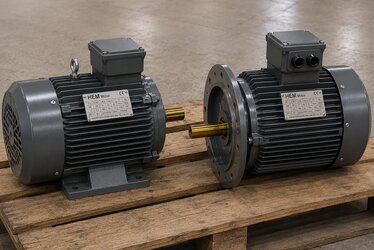
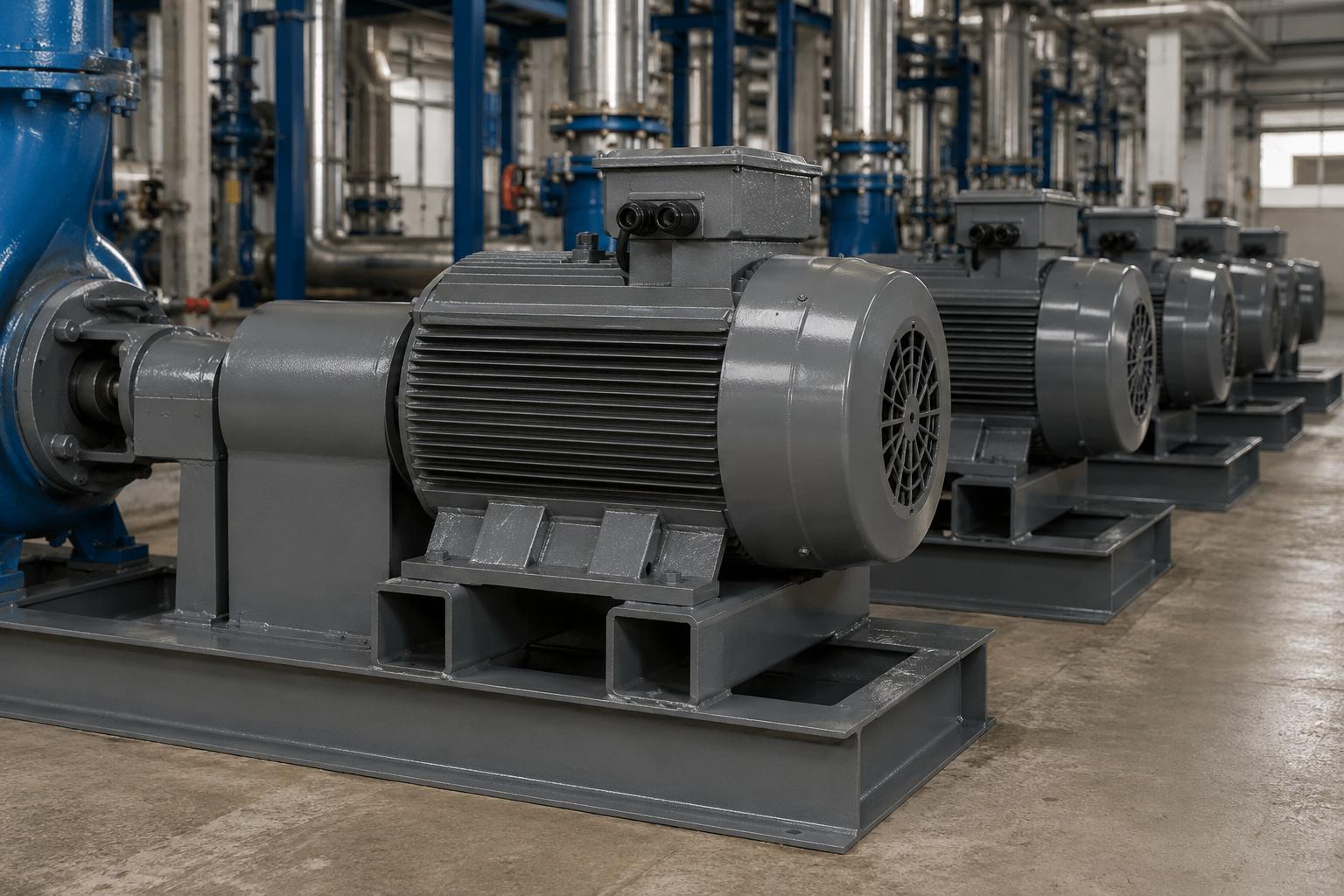
After determining the right kW and the right speed, the frame and mounting arrangement come next. In the IEC standard, 2.2 kW is usually offered in 90L or 100L frame size and 3 kW in 100L frame size; however, the frame size can change with pole count. The 6-pole version of the same rating may be in a larger frame than the 2-pole version. For this reason, when buying a replacement motor, you must confirm not only the kW but also the frame size and shaft diameter.
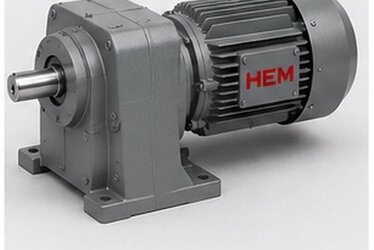
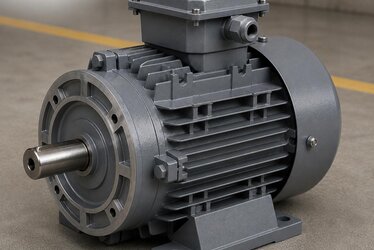
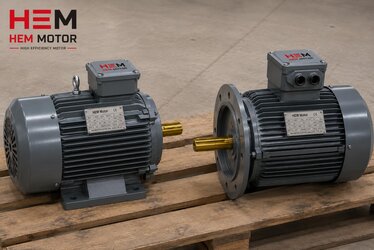
The mounting arrangement is at least as important as the frame. Foot-mounted (B3), flange-mounted (B5), large flange, foot-and-flange (B35) or face-flange (B14) options are selected per application. A motor to be directly coupled to a pump is usually flanged, while a motor driving a conveyor is usually foot-mounted. To study the speed and power relationship for larger ratings, our 7.5 and 11 kW power-speed guide provides direction.
Efficiency Class and Correct Sizing
Today, efficiency class is an important criterion in this power band. IE3 efficiency class has become standard in many applications and delivers energy savings on motors that run long hours. To preserve the advantage of the efficient motor, correct sizing is essential: choosing a motor far above the load's real power demand raises the initial investment and lowers efficiency and power factor. You can find IE3 1.5 and 2.2 kW stock options on our IE3 motor stock and speed page.
Choosing 3 kW "to be safe" when 2.2 kW is sufficient is a common mistake. The load point moves away from the peak of the efficiency curve and the expected savings do not materialize. The right approach is to calculate the load's most demanding operating point and select a power suited to it with a reasonable safety margin.
Checklist for a Correct Purchase
- Required power: 2.2 kW or 3 kW, based on the load's real demand.
- Required speed: the pole count the application needs (2/4/6).
- Frame size and shaft diameter: compatibility with the existing motor if a replacement.
- Mounting: foot, flange or foot-and-flange.
- Efficiency class: IE2/IE3 based on running hours.
- Protection class and operating environment: IP55, ambient temperature, humidity.
Stock Availability and Fast Supply
In industry, a motor is often needed not on a planned basis but urgently at the moment of a breakdown. So stock availability matters as much as correct selection. As a manufacturer, we keep the 2.2 and 3 kW band in stock with different pole counts and mounting arrangements, making it possible to restart a stopped line without delay. When ordering, clarifying kW, pole count, frame size and mounting ensures the right motor arrives the first time.
Share your application's power, speed and mounting requirements with us and we will identify the suitable 2.2 and 3 kW asynchronous motor from stock and provide a quote quickly. To see the full power range and models, visit our homepage.
Common Mistakes
- Looking only at kW and skipping pole count/speed.
- Ordering a replacement motor without confirming the frame size.
- Specifying the mounting arrangement (flange type) incorrectly.
- Unnecessarily choosing a motor one size larger.
- Ignoring the protection class suited to the operating environment.
Reading the Nameplate Correctly
The most concrete way to buy a motor correctly is to interpret the nameplate information correctly. The nameplate carries power (kW), speed (rpm), voltage and connection (e.g. 230/400 V Δ/Y), rated current (A), power factor (cosφ), efficiency class, protection class (IP), insulation class and duty type (S1 continuous, S3 intermittent, etc.). On 2.2 and 3 kW motors, this information directly determines which grid and which starting method the motor suits.
For example, if the nameplate reads 230/400 V, the motor connects in star on a 400 V grid and in delta on a 230 V grid; this also indicates suitability for star-delta starting at small powers. Rated current is critical for correctly selecting protection elements (thermal relay, fuse). Efficiency class directly affects energy cost in long-running applications. Reading the nameplate correctly enables both the right replacement purchase and the right panel design.
What Must Be Checked on the Nameplate
- Power (kW) and speed (rpm) — match with the application.
- Voltage and connection type — compatibility with the grid.
- Rated current — for protection settings.
- Efficiency class (IE2/IE3) — energy cost.
- Protection (IP) and insulation class — operating environment.
- Duty type (S1/S3...) — continuous or intermittent.
Cooling, Protection Class and Operating Environment
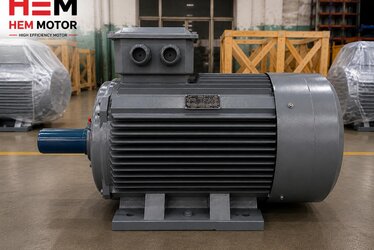
2.2 and 3 kW motors are mostly of the self-fanned, totally enclosed fan cooled (TEFC) design and offered in IP55 protection class. This provides adequate protection against dust and water spray. However, if the operating environment is dusty, humid, corrosive or explosion-risk, the protection class and housing material must be chosen accordingly. High ambient temperature (above 40°C) or high altitude reduces the power the motor can deliver; in this case a one-size-larger motor or special cooling may be needed.
For applications with frequent start-stop or braking, an external fan (forced cooling) or thermistor protection should be considered. On motors running long at low speed with a VFD, self-fan cooling may be insufficient; therefore forced-cooled versions are preferred in VFD applications. When you share your operating environment with us, we recommend the motor with the right protection and cooling class.
Typical Application Examples for 2.2 and 3 kW
Making concrete where this power band is used simplifies the right pole and mounting selection. Below we list applications we commonly encounter and recommended selections:
- Small centrifugal pumps: 2 pole, flanged; high speed, medium torque.
- Conveyor drive: 4 pole, foot-mounted or flanged to a gearbox; balanced torque.
- Air fans and extractors: 2 or 4 pole depending on application.
- Agitators and mixers: 6 pole, high torque; foot-and-flange.
- Machine tools and workshop machinery: 4 pole, mostly foot-mounted.
As these examples show, the same 2.2 or 3 kW power requires entirely different pole and mounting selections depending on the application. The key to a correct purchase is not thinking of kW independently of the application. For larger power needs, our 7.5 and 11 kW power-speed guide, and for your search for more efficient motors, our IE3 1.5 and 2.2 kW stock page, will be helpful.
Power Factor and Behavior Under Load
On 2.2 and 3 kW motors, power factor (cosφ) is an important parameter affecting energy cost. When the motor is at full load, power factor is high; but as the load decreases, both efficiency and power factor drop. So choosing the motor to match real load demand preserves not only efficiency but also power factor. An oversized motor runs continuously at low load, draws current at a poor power factor and demands unnecessary reactive power from the grid; this incurs extra cost under some tariffs.
To estimate behavior under load correctly, you need to know the application's torque-speed profile. A centrifugal pump shows a power demand rising with the square of speed, while a conveyor demands nearly constant torque. This difference determines both the pole selection and the required power reserve. Estimating the load point at which the motor will run correctly is decisive for both the initial selection and the long-term operating cost.
- Operating near full load provides high power factor and efficiency.
- Oversizing lowers efficiency and power factor at low load.
- The application's torque profile determines pole and power-reserve selection.
- Reactive power consumption can incur extra cost under some tariffs.
Spare Motor Strategy and Standardization
In facilities running many motors, a smart spare-motor strategy significantly reduces downtime. For common ratings like 2.2 and 3 kW, keeping a few spares of the frequently used pole and mounting combinations makes it possible to bring a line back quickly during a breakdown. Standardizing as much as possible on the same frame size, the same mounting arrangement and the same efficiency class both shrinks the spare inventory and eases the maintenance staff's job.
Standardization also simplifies purchasing. Rather than random motors from different brands, standardizing within a defined power-pole-mounting matrix provides both price and delivery advantages. As a manufacturer, we can review your facility's motor inventory and evaluate together which power and mounting combinations would benefit you most to standardize on. Fast supply from stock is the strongest pillar of this strategy.
Frequently Asked Questions
How do I decide between 2.2 kW and 3 kW?
The decision should rest on the real power demand at the load's most demanding operating point. If your load calculation is around 2.2 kW, then 2.2 kW with a reasonable safety margin is sufficient; choosing 3 kW "to be safe" pushes the motor outside the efficiency curve. If the load genuinely approaches the 2.5-2.8 kW level, then 3 kW is the right choice.
Why do the same ratings come in different pole counts?
Because the same power can be offered at different speeds and torques. A 2-pole motor gives high speed and low torque, a 6-pole motor gives low speed and high torque. If your application needs high speed (fan, centrifugal pump) choose 2 poles; if it needs high torque (mixer, heavy conveyor) choose 6 poles. The most common general-purpose choice is 4 poles.
What should I watch for when buying a replacement motor?
kW alone is not enough. From your existing motor's nameplate, note the pole count (or speed), frame size, shaft diameter, mounting arrangement and protection class as well. With this information, the shipped motor will fit mechanically in place exactly. Share these details with us and we will identify the suitable motor from stock and provide a quote.