English
 Türkçe


Summary (TL;DR)
- The 0.37 kW motor (about 0.5 HP) is one of the most popular single-power classes in the small-power range; with the right pole and mounting it covers a very wide field of applications.
- Pole count sets the speed: a 2 pole motor runs at ~2800/3000 rpm (high speed), a 4 pole at ~1400/1500 rpm (general purpose), and a 6 pole at ~900/1000 rpm (low speed, higher torque).
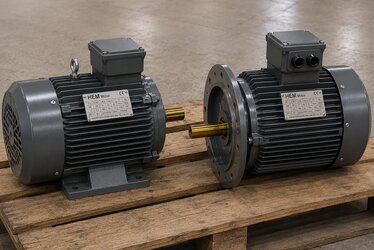
- At 0.37 kW the motor usually comes in an IEC 71 frame with a 14 mm shaft; B3 foot, B5/B14 flange, or combined B35 mounting are available.
- This power class is ideal as the input motor for small gear reducers (HEM40/HEM50 worm gear units); an aluminum body and 230/400 V supply are standard.
- 0.37 kW is a high-volume stock size: choosing the right pole, mounting and voltage on the first order means fast delivery and trouble-free commissioning.
When buying small electric motors, most people focus only on "how many kilowatts." Yet even within a single power class like the 0.37 kW motor, the choices of speed, frame size, shaft diameter, mounting type and voltage directly determine whether the application succeeds. Two motors carrying the same 0.37 kW label can suit completely different jobs if their pole count differs. This guide is written so you can make the right decision the first time when buying this small but highly versatile class.
At HEM Motor we manufacture across a broad range from 0.25 kW up to 355 kW; 0.37 kW is a backbone size of the small-power family that we keep in continuous stock. In this article we cover both the technical side (pole, speed, frame, mounting) and the buying side (stock, delivery, ordering correctly).
What Does 0.37 kW Mean? Getting to Know the Small-Power Class
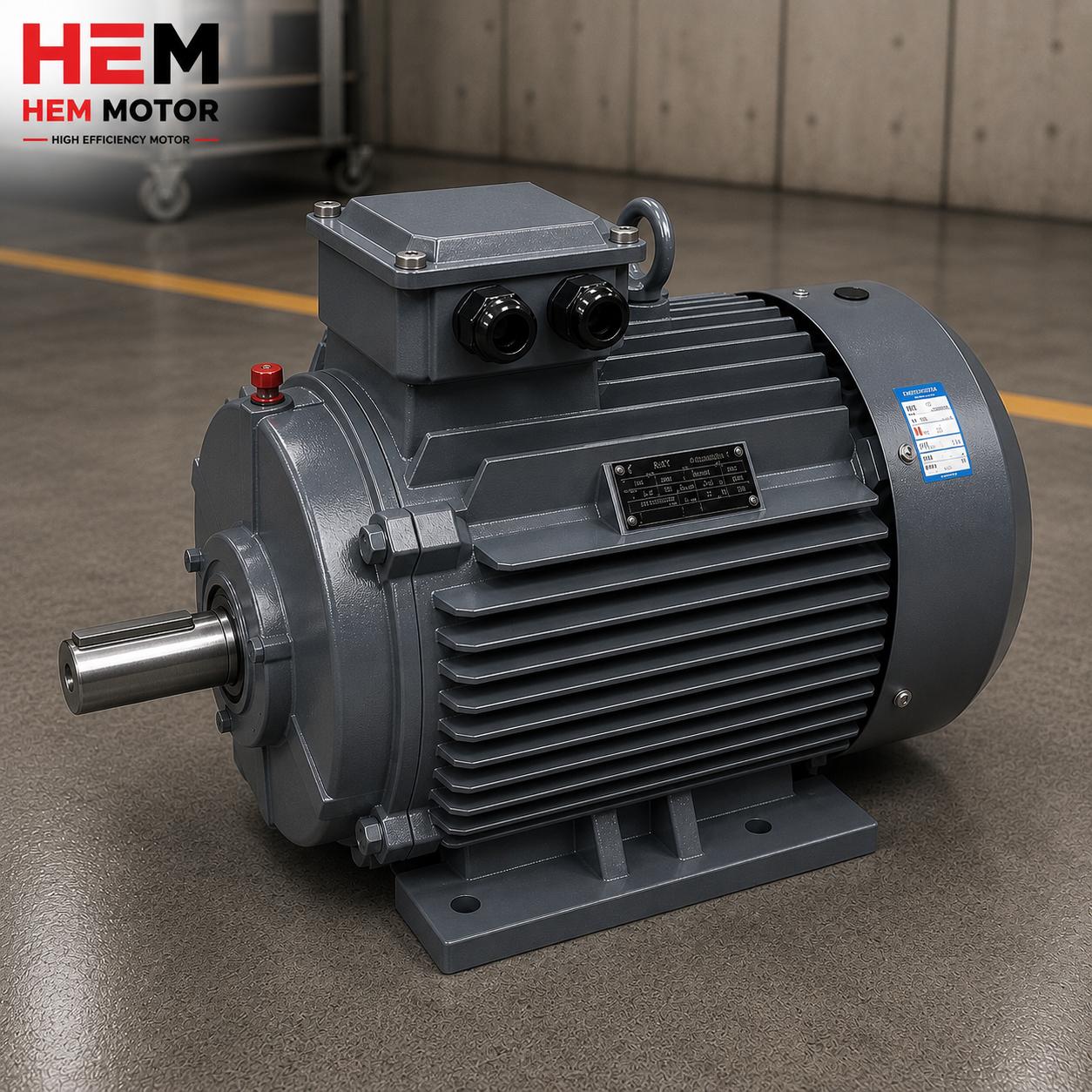
0.37 kW corresponds to roughly 0.5 horsepower (HP). This power is enough for many mechanical drive jobs at the home and workshop scale: small fans, water pumps, conveyor drives, dosing systems, small mixers and especially gear reducer inputs. Despite being a low power, it is one of the most frequently requested classes in industry because it sits right in the middle of the "small but sufficient" drive need.
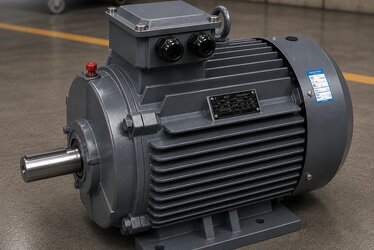
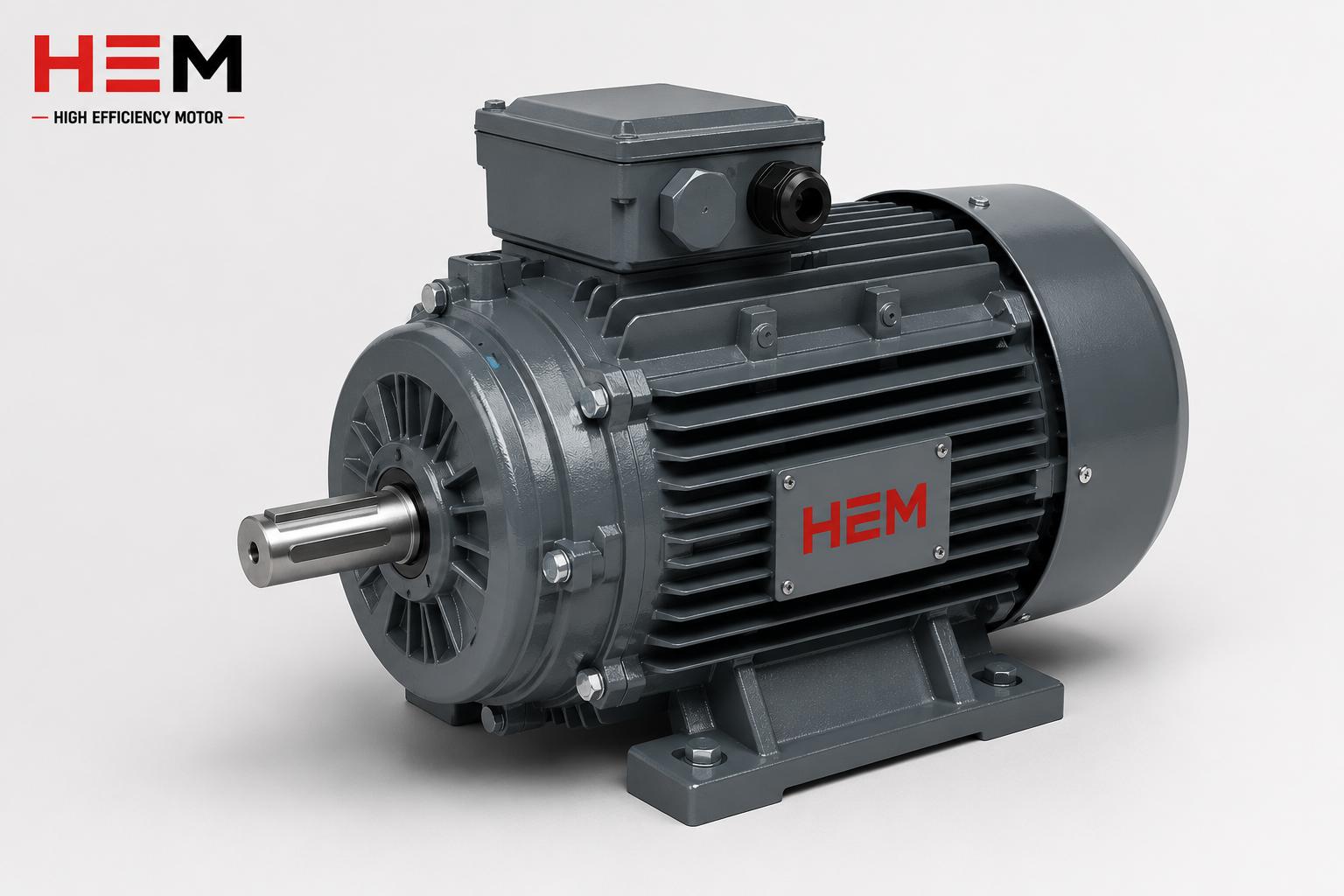
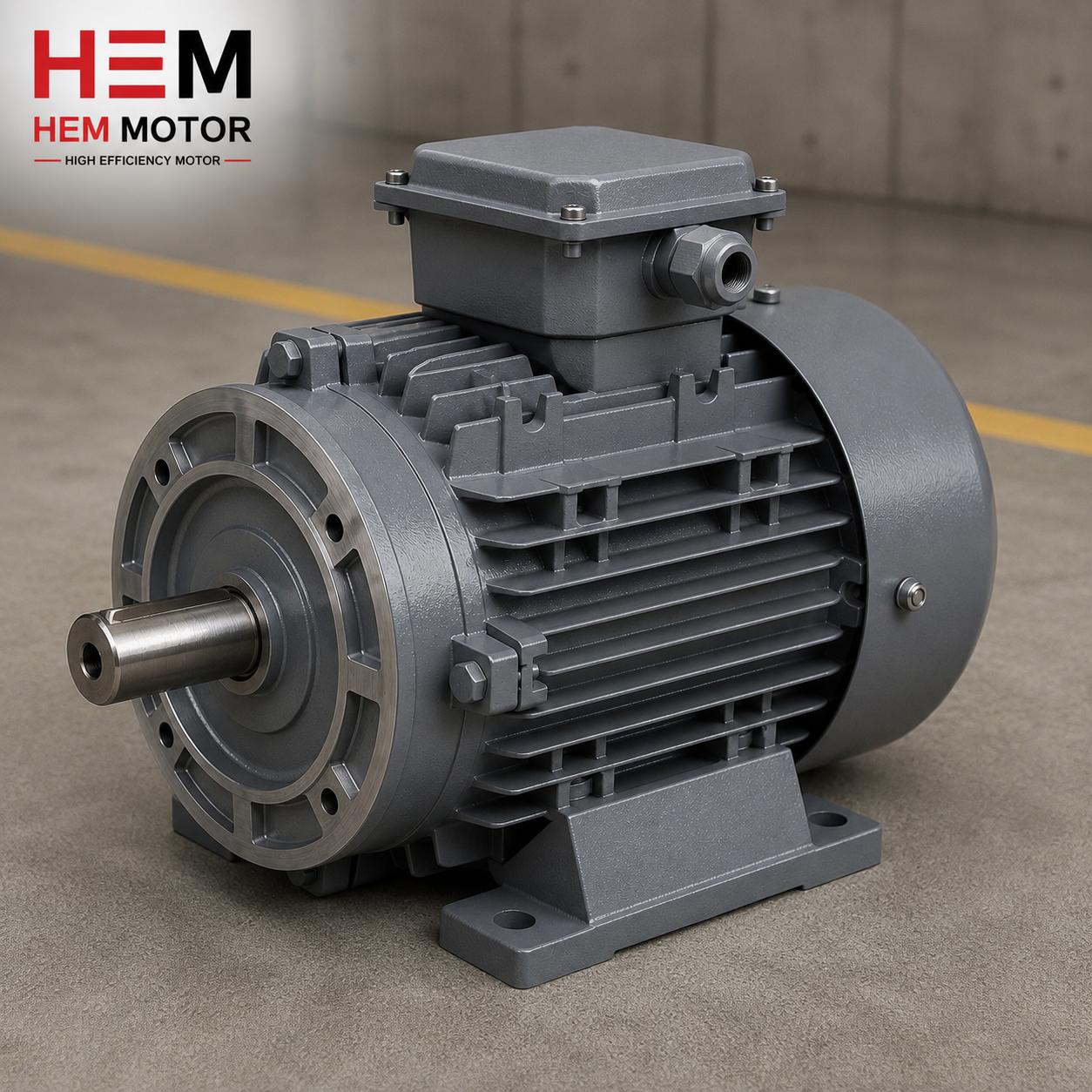
Motors at this rating are typically built in the IEC 71 frame size. The body material at small powers is usually aluminum, which makes the motor light, gives good heat dissipation and makes mounting easy. 100% copper windings, F-class insulation and IP55 protection are the standard quality bar at this power, too.
Pole Count and Speed: Choosing 2 / 4 / 6 Pole
In an asynchronous motor the most fundamental factor setting the speed is the pole count. With the mains frequency (50 Hz) fixed, the synchronous speed drops as the pole count rises. In reality the motor runs slightly below synchronous speed because of slip under load, so the nameplate speed is a little under the synchronous value. In the 0.37 kW class there are three basic options:
- 2 pole — Synchronous 3000 rpm, ~2800-2900 rpm under load. Suited to small fans, small centrifugal pumps, blowers and high-speed drives that need high speed.
- 4 pole — Synchronous 1500 rpm, ~1400-1450 rpm under load. The most common, "general purpose" option. It is the first choice for conveyors, gear reducer inputs, general machine drives and anywhere a balanced speed-torque mix is needed.
- 6 pole — Synchronous 1000 rpm, ~900-960 rpm under load. Suited to mixers, slow conveyors and precise dosing applications that need low speed and relatively high torque.
When deciding which pole to pick, think about the output speed and torque character your application requires. At the same 0.37 kW power, a 6 pole motor turns at roughly three times lower speed than its 2 pole sibling, but with higher torque. If you want to go deeper, our articles on 2, 4, 6 pole asynchronous motor selection and slip and actual speed in asynchronous motors treat the subject in detail.
Why Is Nameplate Speed Different from Synchronous Speed?
Asynchronous (induction) motors by definition do not rotate at synchronous speed; the rotor lags slightly behind the rotating magnetic field. This difference is called "slip" and is usually on the order of 3-5 percent. That is why a 4 pole motor may show 1410 or 1430 rpm on its nameplate instead of 1500. This is normal and does not mean the motor is faulty. Using the nameplate value as the input speed in reducer calculations gives more accurate results.
Frame Size, Shaft Diameter and Mounting Types
The 0.37 kW motor usually comes in the IEC 71 frame with a standard shaft diameter of 14 mm. Because these dimensions are international standards, mating parts such as couplings, pulleys and reducer flanges are easily sourced. Having the correct shaft diameter and frame size means no surprises during mounting.
Choosing the right mounting type is at least as important as the pole. The main options are:
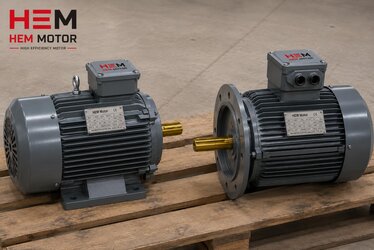
- B3 (foot mounted) — Bolted to a floor or chassis through the motor feet. The most general form of use.
- B5 (large flange) — Connected directly to a machine or reducer via a large bored flange at the front.
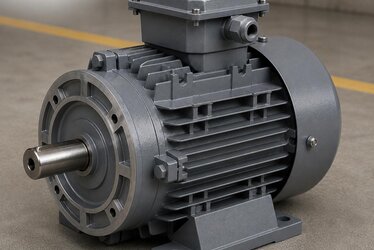
- B14 (small/face flange) — A more compact flange; common on small reducer and pump connections.
- B35 (foot + flange) — Both foot and flange; for mountings that need extra rigidity and flexibility.
If you will use it as a gear reducer input you usually need the B5 or B14 flange version; for a free-standing drive the B3 foot version is enough. Before ordering, clarify which flange the mating part expects.
Voltage, Phase and Efficiency Class
0.37 kW motors commonly run on a 230/400 V supply. Three-phase versions offer star-delta connection flexibility and are standard in industry. Single-phase versions are preferred for environments without three-phase supply; however, at the same power single-phase motors usually come with a starting capacitor and more limited starting torque. If your application offers a three-phase supply, choosing three-phase is generally a more efficient and durable solution.
There is one point to note on the efficiency side: 0.37 kW falls within the 0.12-0.75 kW range under the European Ecodesign regulation, and in this range at least an IE2 efficiency class is mandatory. From July 2023 the IE2 requirement also applies to single-phase motors above 0.12 kW. While IE3/IE4 come to the fore at higher powers, IE2 is the reference in this small-power class. The HEM Motor product family covers IE2, IE3 and IE4 efficiency classes; we set the right efficiency level together for the small-power class. For stock and selection at micro powers, our 0.37 and 0.55 kW micro-power motor stock guide provides complementary information.
0.37 kW as a Gear Reducer Input: HEM40 and HEM50
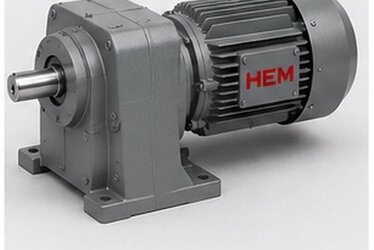
One of the most frequent uses of 0.37 kW is as a worm gear reducer input. The reducer lowers the motor's high speed to provide high torque at the output; this enables applications that need slow but powerful motion such as conveyors, door drives and mixers. In the HEM reducer family the matching by motor power class is as follows:
- HEM30 — 0.06-0.18 kW input class (too small for 0.37 kW).
- HEM40 — 0.12-0.37 kW input class; 0.37 kW fits this reducer exactly.
- HEM50 — 0.18-0.75 kW input class; 0.37 kW is also compatible with this reducer.
These reducers accept IEC 63/71/80 frame, B5/B14 flange motors. Because 0.37 kW is usually in the IEC 71 frame, it mates smoothly with HEM40 or HEM50. If you are planning a geared solution, our electric motors for gear reducers page guides you.
Which Pole Should I Choose for a Reducer?
For reducer inputs the most common choice is a 4 pole motor, because a 1400-1500 rpm input speed produces practical output speeds with catalog reducer ratios. If a very high output speed is wanted, a 2 pole input can be used; if a very low output speed and extra torque are wanted, a 6 pole input may be preferred. The most accurate way is to define your output speed and calculate it together with the reducer ratio.
Stock and Delivery: Why Ordering 0.37 kW Correctly Matters
0.37 kW is one of the highest-volume stock sizes in the small-power family. This means fast delivery when you choose the right configuration. But "0.37 kW" alone is not an order line; at the same power there are many variants such as 2/4/6 pole, B3/B5/B14/B35 mounting and single-phase/three-phase. Choosing the wrong pole or wrong flange leads to work stopping at the mounting stage and to an exchange process.
For that reason we recommend clarifying these five pieces of information before ordering:
- Pole / speed: 2, 4 or 6 pole (according to your application's output speed).
- Mounting type: B3, B5, B14 or B35.
- Frame and shaft: IEC 71 frame, 14 mm shaft diameter compatibility.
- Voltage and phase: 230/400 V, three-phase or single-phase?
- Reducer match: flange compatibility if it will be used with HEM40/HEM50.
Customers who define these five headings in advance receive the right motor on the first order and meet no surprises that would delay commissioning. For prices and current options, you can review our electric motor prices page.
Frequently Asked Questions
How many horsepower is a 0.37 kW motor?
0.37 kW corresponds to about 0.5 horsepower (HP). It is a sufficient and very widely used power class for small fans, pumps, conveyors and especially small gear reducer inputs.
Which pole should I choose for a 0.37 kW motor?
It depends on your application's output speed. For high speed choose 2 pole (~2800-2900 rpm), for general purpose and reducer input choose 4 pole (~1400-1450 rpm), and for low speed with high torque choose 6 pole (~900-960 rpm). The most common choice is 4 pole.
Which reducer does a 0.37 kW motor fit?
Because 0.37 kW is usually in the IEC 71 frame, it is compatible with HEM40 (0.12-0.37 kW) or HEM50 (0.18-0.75 kW) worm gear reducers. These reducers accept B5/B14 flange motors, so it is important to clarify the flange type before ordering.