English
 Türkçe

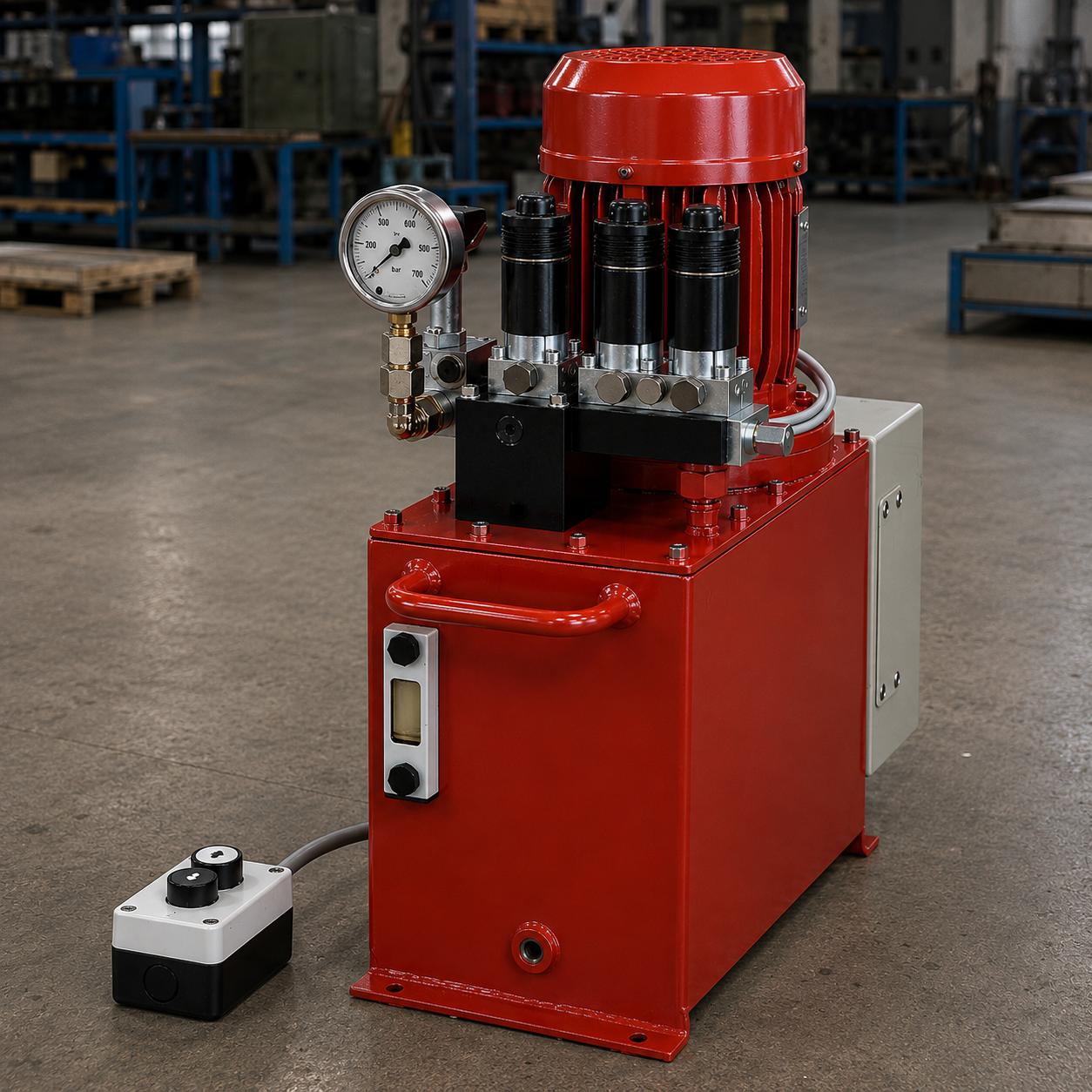

At the very bottom step of the three-phase asynchronous motor family stand two power values that often fit in the palm of a hand: 0.06 kW and 0.09 kW. Do not let their small power mislead you; these micro motors are the indispensable heart of small automation, dosing systems, instrument drives, laboratory equipment and mini gear-reducer applications. When selected correctly they run quietly, precisely and with long life; the wrong pole, frame or flange choice, on the other hand, leads to mounting incompatibility and the wrong speed. In this article we cover the selection logic of 0.06 and 0.09 kW micro motors, the pole-speed relationship, frame and flange options, reducer applications, and their place in efficiency regulation, all from the perspective of fast stock-based buying.
Where Are 0.06 and 0.09 kW Micro Motors Used?
These power steps are ideal for applications that require not high power but precise and continuous motion. Typical fields of use:
- Small automation: Conveyor drives, rotary tables, small mixers.
- Dosing systems: Screw feeders, pump drives, metered material transfer.
- Instrument and device drives: Laboratory equipment, analysis devices, precise positioning.
- Mini reducer input: Slow, high-torque output as the input motor of worm-gear reducers.
In these applications, the correct speed, correct mounting type and quiet, low-vibration operation matter more than the motor's power. For the general logic of correct power-frame matching, our power-speed and frame size (H) matching map is a good starting point.
The Essence of Selection: Pole Count and Speed
At the heart of micro motor selection lies the pole count, because the pole count determines the motor's speed, and the speed is selected according to the load's need.
2-Pole: High Speed
A 2-pole motor turns at around 2800 rpm. It is suited to applications that require high speed where low torque is sufficient: small fans, high-speed mixers, some pump drives. At the same power, a 2-pole motor produces less torque than a 4-pole motor but is faster.
4-Pole: High Torque, Low Speed
A 4-pole motor turns at around 1400 rpm. Because it offers higher torque and lower speed, it is frequently preferred for reducer inputs, conveyors and dosing applications. When the load requires more torque at low speed, 4-pole is the right choice.
The right speed is always determined by the load's need; selecting an unnecessarily high-speed motor creates the obligation of an additional reduction if required. To see the pole-speed-power relationship on a larger scale, our 3 kW electric motor selection (2/4/6 pole) article illustrates the same logic at higher power.
Frame, Material and Flange Options
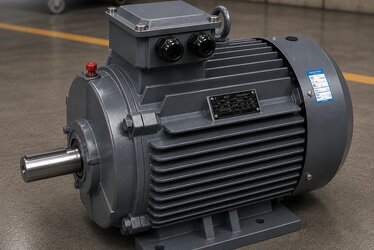
0.06 and 0.09 kW motors are usually built in IEC 56 and 63 frame sizes. Typical features at these powers:
- Aluminium body: Provides light weight, good heat dissipation and a compact structure suited to small applications.
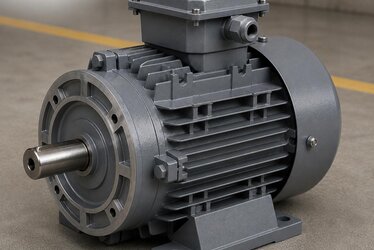
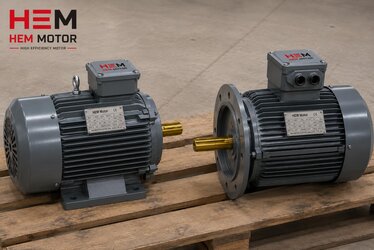
- B5/B14 small flange: Allows direct flanged mounting to a mini reducer or machine body; the B14 face flange is very useful on small machines.
- Foot (B3) mounting: Preferred in drives that run independently.
Choosing the mounting type correctly is critical for the motor to fit the machine smoothly; you can find the effect of the differences between B3, B5 and B14 on the application in detail in our article on multi-mount B3/B5/B35 universal frame substitution selection.
Ideal as a Mini Reducer Input
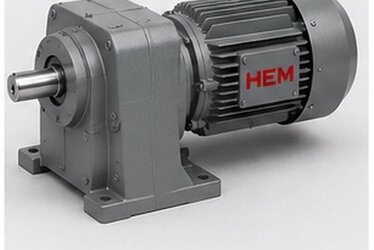
One of the most common uses of these micro motors is as the input motor of worm-gear reducers. When matched with small worm-gear reducers of the HEM30/HEM40 class, a very low output speed and high output torque are obtained thanks to the high reduction ratio. This combination is ideal in dosing, rotation and precise positioning applications. A B14-flanged micro motor mounts directly and compactly to the reducer.
Place in Efficiency Regulation
The situation of micro motors regarding efficiency regulation differs from that of larger motors. The general framework can be summarized as follows:
- Below 0.12 kW: Outside the efficiency class regulation; that is, 0.06 and 0.09 kW motors are not subject to an IE class requirement.
- 0.12–0.75 kW range: Subject to the IE2 efficiency threshold.
This does not mean 0.06 and 0.09 kW motors are low quality; it only shows that the mandatory IE class labeling does not apply for these powers. Even so, quality windings, correct bearings and sound manufacturing are decisive for the life and quiet operation of these small motors. For those who want to see the relationship between efficiency classes and power thresholds in general, our article on the single-phase 220V motor power limit and transition to three-phase is a complementary resource.
Torque, Starting and Load Matching in Micro Motors
Being low-power does not make load matching unimportant for these motors; on the contrary, in dosing and precise-drive applications the correct torque-speed match is critical. There are a few technical points to watch in a micro motor:
- Starting torque: The starting torque the motor provides as the load moves from rest must be sufficient; this is especially important in dosing applications running with a reducer.
- Continuous duty (S1): Since most instrument and dosing drives run continuously, the motor must turn under continuous load without overheating.
- Low vibration: In precise positioning and laboratory applications, vibration can cause problems for measurement and quality; low-vibration manufacturing is preferred.
- Quiet operation: Micro motors usually operate near people; acoustic comfort is an important selection criterion.
The type of load also affects the selection. A constant-torque load (conveyor, dosing screw) and a variable-torque load (small fan) require different power-speed profiles. Our article addressing the effect of load type on motor power selection, constant torque, constant power and variable torque load-type motor selection, details this logic, which holds at small powers too.
Use with a Drive and Speed Control
In many small automation applications the speed of the micro motor must be adjustable rather than fixed. In this case the motor is driven by a frequency converter (drive) and the speed is changed according to the application's instantaneous need. Points to watch in using micro motors with a drive are:
- Speed range: Since the motor's cooling decreases at low speed, additional cooling or a suitable selection may be needed if a wide speed range is used.
- Drive compatibility: The drive must be a model that supports small powers and be parameterized compatibly with the motor.
- Torque requirement: The required torque must be maintained at low speed; this is decisive in dosing and positioning applications.
Operation with a drive gives micro motors capabilities such as adjusting the dosing rate, precise positioning and energy optimization. The correct motor-drive match is as important at small powers as at large ones; HEM Motor guides this match according to frame, pole and application information.
Fast and Correct Buying from Stock
The most common problem with micro motors is mounting incompatibility caused by the wrong pole, frame or flange choice. The key to correct buying is to clarify three pieces of information before ordering:
- Frame size: IEC 56 or 63?
- Pole count: 2-pole (high speed) or 4-pole (high torque)?
- Flange/mounting type: B3 foot-mounted or B5/B14 flanged?
HEM Motor supplies these micro motors quickly from stock; given frame, pole and flange information, the correct product is recommended with a fast quote. As a manufacturer and seller, broad stock and clear lead times minimize waiting time in these small but critical drives. You can reach our full product range through the HEM Motor homepage.
Frequently Asked Questions
Are 0.06 and 0.09 kW motors subject to efficiency regulation?
No. Motors below 0.12 kW are outside the efficiency class regulation; therefore 0.06 and 0.09 kW motors are not subject to mandatory IE class labeling. The 0.12–0.75 kW range, however, is subject to the IE2 threshold. Even so, quality manufacturing is decisive for the life and quiet operation of these micro motors.
Should I choose 2-pole or 4-pole?
This depends entirely on the load's need. 2-pole offers high speed at around 2800 rpm and suits applications where low torque is sufficient; 4-pole provides higher torque and lower speed at around 1400 rpm and is preferred for reducer inputs and conveyors. The right speed is determined by the load's requirement.
Can these micro motors be used with a mini reducer?
Yes, and indeed it is one of their most common uses. 0.06 and 0.09 kW motors with a B5/B14 small flange are ideal as the input motor of HEM30/HEM40 class worm-gear reducers; a very low output speed and high output torque are obtained with the high reduction ratio. This combination is very suitable for dosing, rotation and precise positioning.