English
 Türkçe

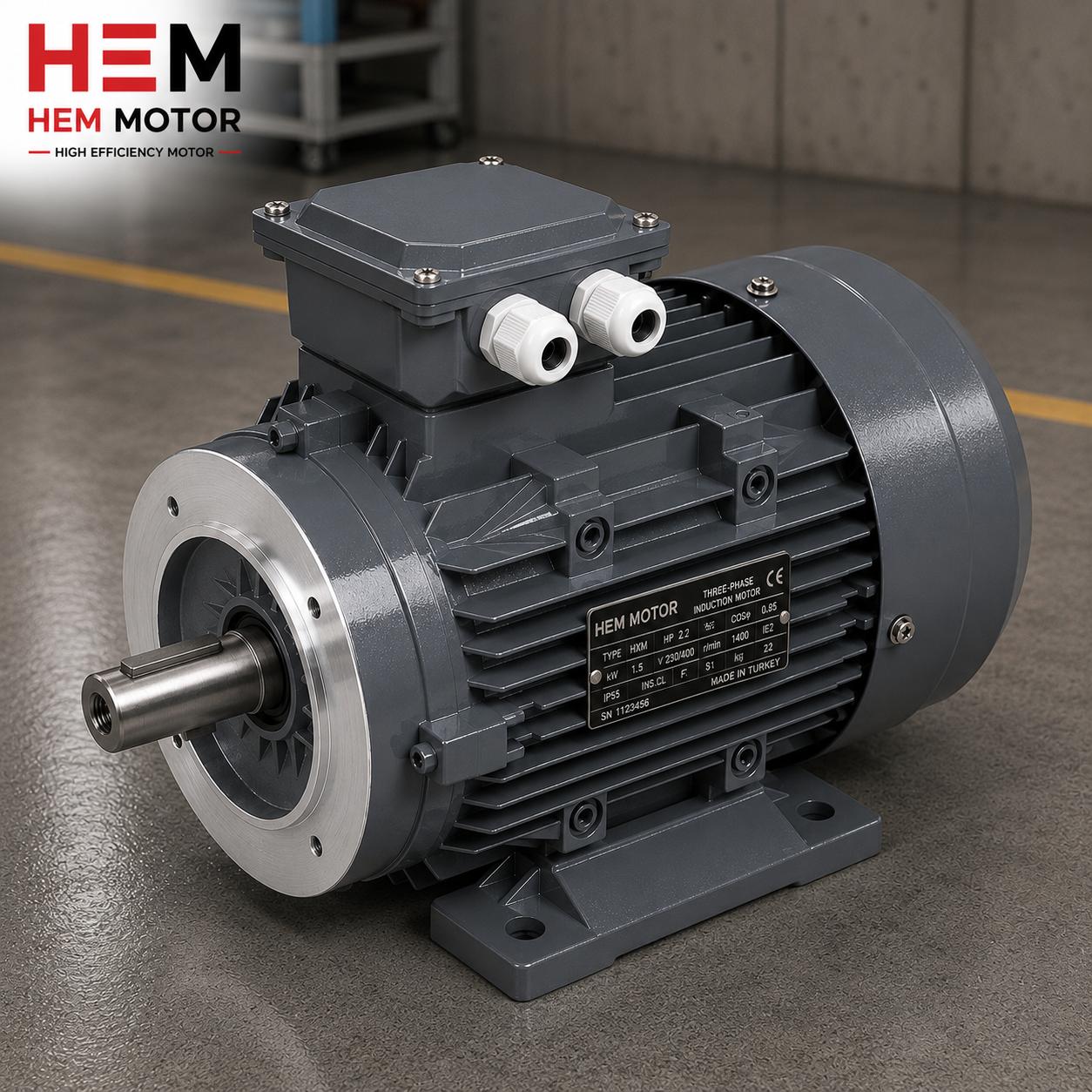

Making a motor purchase focused on a single power value, namely 75 kW, may seem simple at first glance, but it actually involves several technical decisions at once. 75 kW is a power class frequently encountered in Turkish industry in mills, large pumps, fans, compressors, conveyors and crushing-screening plants. Selecting the right motor at this power requires correctly matching a series of parameters ranging from pole count to speed, from frame size to mounting type and, most importantly, stock availability. A wrongly selected 75 kW electric motor affects not only the initial investment but also the energy cost and production continuity for years to come.
In this guide, we discuss step by step what to consider when buying a 75 kW motor: the difference between 2 and 4 poles, the speed-torque relationship, frame size matching, the efficiency class requirement and fast supply from stock. As an electric motor manufacturer and supplier, our aim is to help the engineer, plant manager or purchasing officer making the buying decision ask the right questions when requesting a quotation and bring a fully compatible motor to the field.
Why Is 75 kW a Critical Power Class?
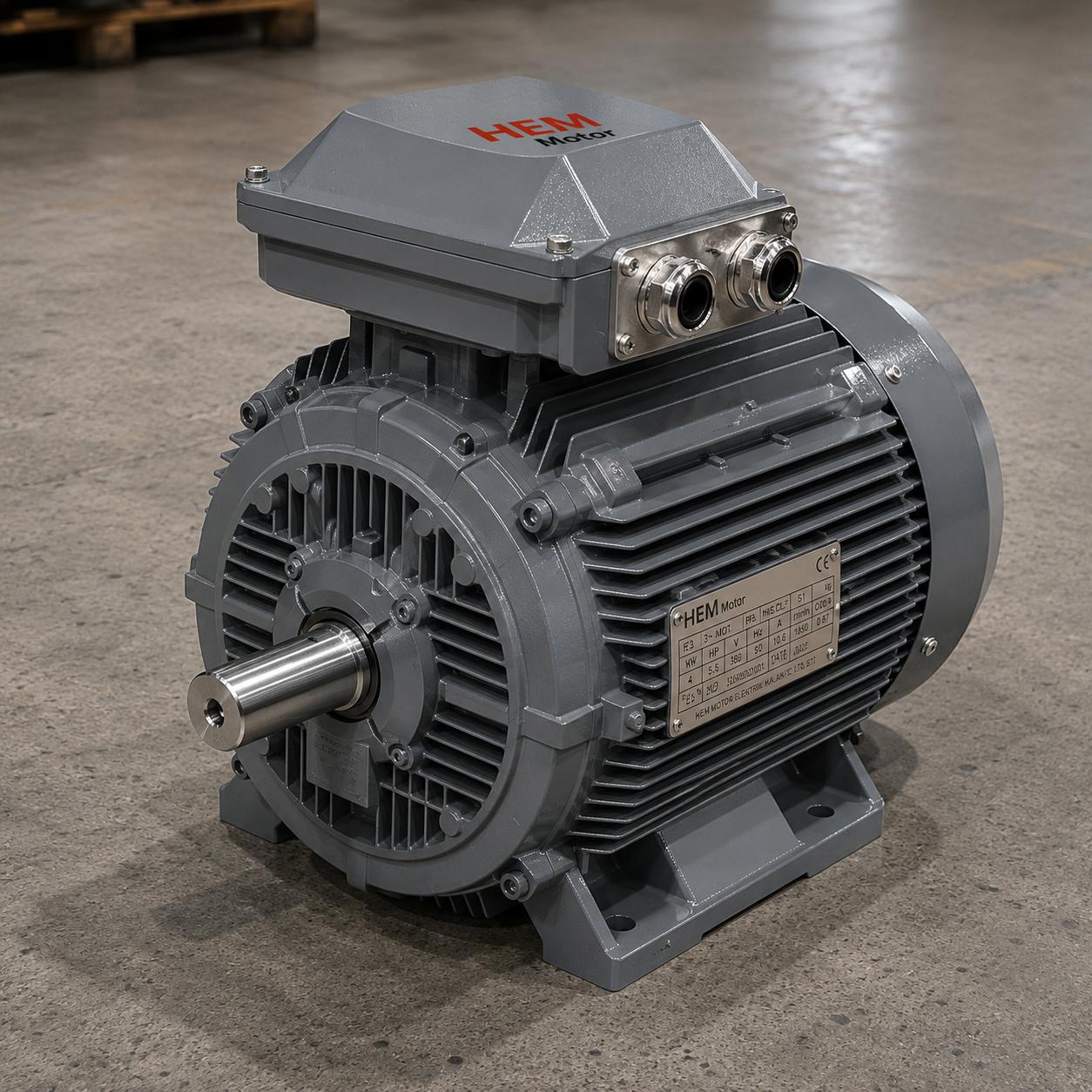
75 kW is an important threshold in the medium-to-high power band of the low-voltage asynchronous motor range. Motors at this power generally operate under continuous duty (S1) in heavy industrial applications. When a mill, a large centrifugal pump or a high-flow fan is driven by a motor in the 75 kW class, both the mechanical strength and thermal capacity of the motor are constantly tested. For this reason, a cast iron body, 100% copper winding, F insulation class and at least IP55 protection are the standard expectation in 75 kW motor selection.
Furthermore, 75 kW is also a critical threshold in terms of regulation. According to Turkish and EU Ecodesign regulations, since 1 July 2023, 2, 4 and 6-pole three-phase motors in the 75–200 kW range must be of at least IE4 efficiency class. In other words, 75 kW is the first power value that falls directly at the IE4 threshold. This means that when making the purchasing decision, the efficiency class is no longer a preference but a legal requirement. You can find a detailed discussion of how the efficiency class choice should be evaluated in terms of investment in our article on IE3 vs IE4 electric motor investment.
2 Pole or 4 Pole? The Speed and Torque Relationship
One of the most important decisions to make when purchasing at 75 kW is the pole count. The pole count directly determines the motor's speed and therefore the torque it produces. A motor of the same power produces low torque at high speed when chosen as 2-pole, and high torque at lower speed when chosen as 4-pole. The speed and torque required by the application form the basis of the pole selection.
- 2 pole (approximately 3000 rpm): Suitable for centrifugal pumps requiring high speed, high-pressure fans and some compressor applications.
- 4 pole (approximately 1500 rpm): Preferred in most conveyor, mill, mixer, crusher drive and general industrial applications; provides high torque and balanced operation.
- 6 pole (approximately 1000 rpm): Used in heavy applications requiring very high torque and low speed.
When the pole selection is wrong, you either have to correct the speed with gearbox/pulley ratios, or the motor runs continuously at an inefficient point. Our guide on asynchronous motor 2, 4, 6 pole selection, in which we discuss in detail which pole count suits which job, helps you clarify this decision. Correct pole selection directly affects both energy efficiency and equipment life.
Frame Size and Mechanical Matching
A 75 kW motor is produced in different frame sizes depending on the speed/pole count. Typically, 4-pole 75 kW motors are in the 280 or 315 frame class, while 2-pole models may be in more compact frames. The frame size determines the foot hole spacing, shaft diameter, shaft height and flange dimensions. If a replacement is to be bought for an existing machine or motor, the frame size and mounting dimensions matching exactly prevents time loss and incompatibility on site.
Mounting Type Selection
- B3 (foot-mounted): Common in coupled and belt-pulley drives, and for fixing to the floor or base.
- B5 (large flange): In direct flange-connected pump, fan or gearbox applications.
- B35 (foot + flange): Preferred in robust, high-power applications requiring both floor connection and flange connection.
At a large power such as 75 kW, the weight of the motor must also be taken into account; handling, lifting and installation planning should be done in advance. Our article on cast iron motor frame size and power matching, in which we discuss frame size and power matching and correct selection from stock in detail, is a good reference for mechanical compatibility.
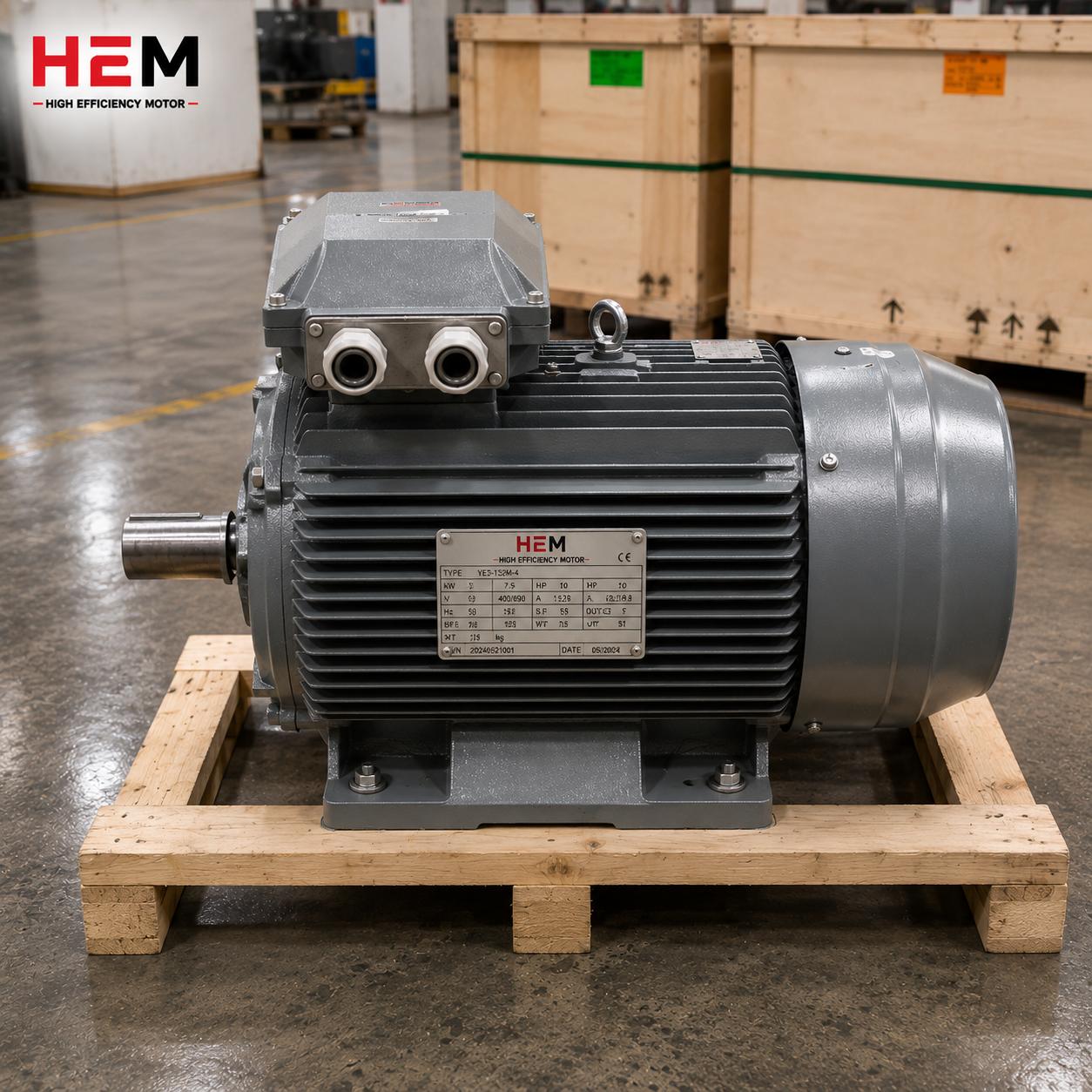
Efficiency Class: The IE4 Requirement at 75 kW
As we noted earlier, the 75 kW power value is the threshold where the IE4 requirement begins as of 1 July 2023. This means that 2, 4 and 6-pole three-phase 75 kW motors must now be supplied in at least the IE4 Super Premium efficiency class. At this power class, an IE4 motor both ensures legal compliance and significantly reduces the annual energy cost of a machine running under continuous duty.
- IE4 Super Premium offers higher efficiency by reducing friction, iron and copper losses.
- At continuously running high powers such as 75 kW, even a small efficiency difference creates serious savings in the annual energy bill.
- Compliant purchasing ensures that you will not have problems in future audit and certification processes.
Our content on IE4 premium motor supply and stock lead time, in which we discuss the stock and lead-time planning of IE4 premium motors, makes it easier to plan in line with the project schedule.
Stock Availability and Fast Supply: Right Purchasing at a Single Power
At high powers such as 75 kW, the most common problem is whether the correct pole and frame combination is available in stock. In a plant, a 75 kW motor usually drives a critical line; when this line stops, production stops too. Therefore, which power-speed combination can be supplied quickly from stock is as important as price in the purchasing decision.
- The most-sought 75 kW 4-pole (1500 rpm) models are generally available from stock; special speeds or mounting types may require a production order.
- Keeping a spare motor on a critical line allows production to be restored within minutes in case of failure.
- The supplier's stock depth and fast shipping capacity directly reduce downtime cost.
You can find the difference in lead time between delivery from stock and production order in detail in our article on delivery from stock vs production order. Our guide on 45, 55 and 75 kW motor 2/4 pole selection, in which we discuss the selection logic of 75 kW and the surrounding power classes (45, 55 kW) together, also offers a comparative view. When you contact us for current electric motor prices and stock status, we quickly match the 75 kW motor that fully fits your need.
Starting and Commissioning
The initial starting current of a 75 kW motor in direct-on-line (DOL) starting rises to several times the rated current. This high current strains both the grid and the mechanical components of the motor. Therefore, the starting method must be chosen carefully at this power class.
- Star-delta: A common and economical solution at high powers that reduces starting current.
- Soft starter: Provides a soft start; reduces mechanical shock in frequently switched applications.
- Variable frequency drive (VFD): Ideal in pump/fan applications requiring variable speed and energy savings.
Before commissioning, winding insulation resistance measurement, rotation direction check and terminal tightness must be checked. In high-power motors, these checks prevent failures that may occur later and extend motor life.
Typical Applications of a 75 kW Motor
The 75 kW power class addresses a fairly wide range of applications in Turkish industry. Motors at this power drive both machines carrying heavy loads under continuous duty and large-flow fluid applications. To be able to select the right motor, it is necessary to clearly define on which machine and under which load profile the motor will work.
- Mills and grinders: High torque and continuous load; generally 4-pole, cast iron body motors with a strong bearing structure are preferred.
- Large centrifugal pumps: High flow and pressure; 2 or 4 poles are chosen according to the pump curve, continuous duty (S1) is essential.
- High-flow fans and aspirators: Load with high inertia; sufficient torque at start and a suitable starting method are required.
- Compressors: Continuous and constant load; high efficiency and low vibration are important.
- Crushing-screening and conveyor drives: Impact and variable load; high torque capacity and a robust mechanical structure are expected.
The application's load profile (constant, variable, impact) directly affects motor selection. While the need for starting torque increases in impact and flywheel loads, efficiency comes to the fore in constant loads.
Total Cost of Ownership: The Initial Price Can Be Misleading
In a large, continuously running motor such as 75 kW, the purchase price is only a small part of the total cost. The energy the motor consumes over its lifetime exceeds the initial investment many times over. Therefore, in a 75 kW motor purchase, it is necessary to look not only at the label price but also at the effect of the efficiency class on the annual energy cost. Although an IE4 Super Premium motor requires a slightly higher initial investment than IE3, this difference usually pays back quickly in a machine running under continuous duty.
Common Mistakes in 75 kW Motor Purchasing
- Not choosing the pole count according to the application: Wrong speed leads to gearbox/pulley necessity and efficiency loss.
- Skipping the efficiency class: IE4 is mandatory at 75 kW; an IE3 purchase does not comply with the regulation and raises the energy cost.
- Not checking the frame dimensions: Frame size and shaft diameter mismatch in replacement purchasing causes assembly problems on site.
- Not planning stock and lead time: Special speeds/mounting types require production time; unplanned purchasing can stop production.
- Not keeping a spare: Leaving a critical 75 kW line without a spare causes high downtime cost in case of failure.
Frequently Asked Questions
Is the IE4 efficiency class mandatory for a 75 kW motor?
Yes. Since 1 July 2023, 2, 4 and 6-pole three-phase motors in the 75–200 kW range must be of at least IE4 Super Premium efficiency class. 75 kW is exactly at the start of this threshold; therefore, in new purchases, IE4 is both a legal requirement and an important source of energy savings under continuous duty.
Should I choose 2 pole or 4 pole for a 75 kW motor?
This depends entirely on your application. 2 poles (approximately 3000 rpm) are preferred in centrifugal pumps and high-pressure fans requiring high speed; 4 poles (approximately 1500 rpm) are preferred for high torque and balanced operation in conveyor, mill, mixer and general industrial drives. If you share the speed and torque needs of your application, we can determine the right pole recommendation together.
Can a 75 kW motor be supplied quickly from stock?
The most-sought 75 kW 4-pole (1500 rpm) IE4 models can generally be supplied quickly from stock. In cases requiring a special speed, special mounting type (e.g. a special flange) or a different protection class, a production order may come into play. Spare motor planning is recommended for a critical line; we offer you the fastest solution by clarifying the stock status and lead time according to your need.