English
 Türkçe

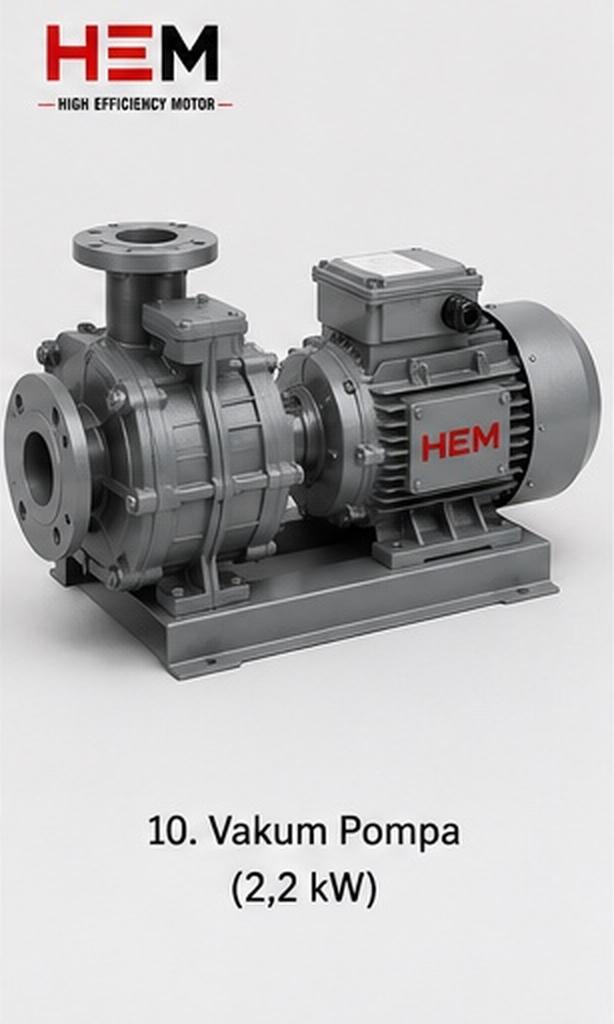

IE5 synchronous reluctance motors are a technology that works together with a drive and represents the peak of the efficiency class. However, to fully use the power of these motors, the drive parameters — and especially low-speed torque production — must be set correctly. In applications with loaded starting, one of the most critical settings is voltage boost: V/Hz boost. In this article we discuss what voltage boost does on an IE5 synchronous reluctance (SynRM) motor, how to secure low-speed torque, and how to plan the right supply in applications requiring loaded starting.
As HEM Motor, we supply IE5 synchronous reluctance motors together with their drives, as a compatible package, for applications that demand high torque at low speed such as conveyors, mixers, extruders and geared drives. Below you will find both the technical logic and the information that clarifies the purchasing decision.
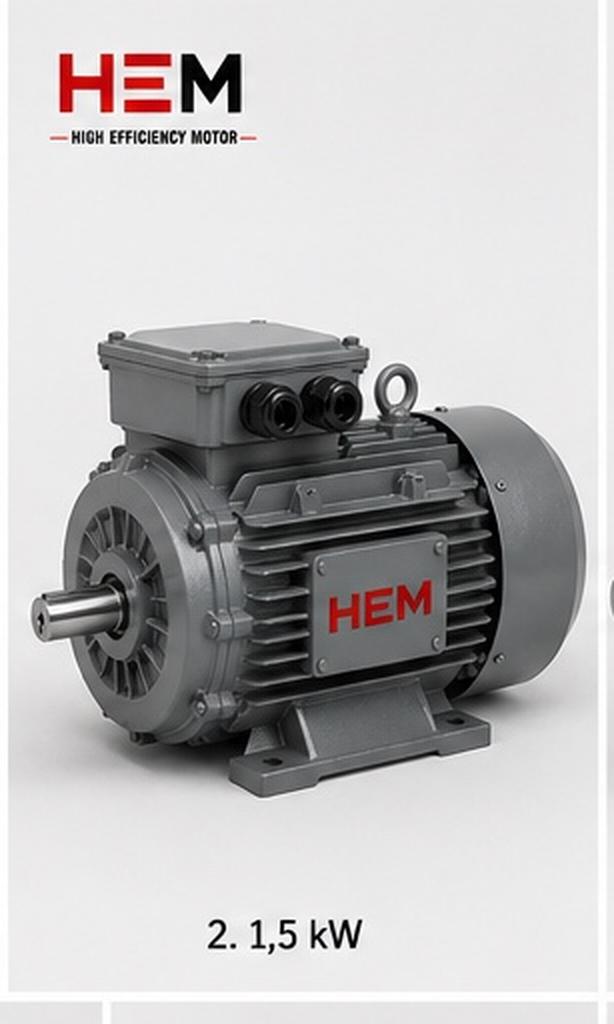
Why Doesn't a Synchronous Reluctance Motor Run Without a Drive?
The rotor of a synchronous reluctance motor has no winding, magnet or cage; torque arises from the difference in magnetic reluctance of the rotor (the ease of the magnetic path). This structure makes the motor very efficient but does not allow it to start by itself when connected directly to the grid. For the motor to turn and produce torque, the magnetic field must be rotated in a controlled way by the drive (VFD). Therefore an IE5 SynRM is always considered together with a drive, as a package.
This is not a constraint but an advantage: thanks to the drive, speed, torque and starting behavior are under full control. However, this control must be set up correctly, especially at low speed and during loaded starting. We compared the fundamental differences between synchronous reluctance and asynchronous motors in our article on the IE4 asynchronous vs synchronous reluctance difference.
What Is V/Hz Boost (Voltage Boost)?
Drives change voltage and frequency proportionally to turn the motor at the desired speed; this is called V/Hz (voltage/frequency) control. As the frequency drops, the voltage also drops. However, at very low frequencies, that is at low speed, the voltage drop created by the winding resistance becomes dominant and the effective magnetic field reaching the motor weakens. The result: torque decreases at low speed.
This is exactly where voltage boost comes in. Boost compensates for the drop created by winding resistance by giving the motor slightly higher voltage than normal at low frequencies. Thus the motor has sufficient magnetic field, and therefore sufficient torque, even at low speed. This setting is decisive in applications with loaded starting and those that require continuously high torque at low speed.
What Happens If Boost Is Too Little or Too Much?
- If boost is too little: The motor cannot produce enough torque at low speed; it struggles, stalls or fails to start under load.
- If boost is too much: The motor draws more current than needed, the winding heats up and efficiency drops; in extreme cases protection trips.
- If boost is set correctly: The motor produces the desired torque at low speed, there is no unnecessary heating and efficiency is preserved.
In synchronous reluctance motors this setting behaves differently from an asynchronous motor because the torque production mechanism is different. That is why it is important that the drive is set to suit the motor type and that autotune is performed. We explained the drive parameterization process step by step in our article on drive parameterization on an IE5 synchronous reluctance motor.
Low-Speed Torque: The Key to Loaded Starting
Many industrial applications require the motor to start with high torque at zero or very low speed. A full mixer, a fully loaded conveyor or an extruder filled with material solidified in the cold demand torque far above nominal at the moment of start. If the motor cannot produce enough torque at this moment, the system cannot start and the drive trips.
An IE5 synchronous reluctance motor, with the correct drive setting, can produce high and stable torque at low speed. Here, voltage boost, the starting torque setting (boost and I×R compensation) and the correct selection of the sensorless/sensored control mode are decisive. You can also find the relationship between starting torque and rated torque, and the correct selection by load, in our article on rated torque and starting torque selection.
I×R Compensation vs. Boost
Voltage boost should be considered together with two related concepts: fixed boost and I×R (current × resistance) compensation. Fixed boost gives the motor a constant amount of extra voltage at low frequencies; it is simple but stays the same even if the load changes. I×R compensation is smarter: it automatically adjusts the extra voltage according to the current the motor is drawing at that moment. When the load increases, the current increases and so does the compensation; thus low-speed torque is preserved together with the load.
In applications with variable load, I×R compensation provides a much more stable low-speed torque than fixed boost. In systems such as mixers or conveyors where there is a large difference between empty and full operation, this difference is clearly felt. The correct setting both prevents unnecessary heating at no load and guarantees sufficient torque at full load. Therefore, when selecting the drive, it is important that not only boost but also current-sensitive compensation capability is present.
Sensorless or Encoder-Based Control?
Low-speed torque performance depends on how well the drive knows the motor. There are two basic approaches:
- Sensorless (open-loop) control: The drive estimates the motor's position from current and voltage measurements. It is sufficient for most applications, but torque production may be limited near zero speed.
- Encoder-based (closed-loop) control: An encoder mounted on the shaft reports the rotor position precisely. It is preferred in applications requiring full torque at zero speed, where loaded starting is critical.
In applications where loaded starting is frequent and heavy, encoder-based control offers a more stable and safer solution than V/Hz boost. Which control mode is suitable depends on your starting load and speed range. Making this decision up front is important for supplying the correct drive and motor package.
The First Start and the Cogging Problem
In synchronous reluctance motors the moment of start behaves differently from an asynchronous motor. If the drive cannot correctly detect the initial position of the rotor, the motor may vibrate at the moment of start or momentarily try to turn in the wrong direction; this is called cogging. Under loaded starting, this can cause the system to fail to start or trip.
The way to prevent this problem is for the drive to correctly recognize the rotor position and for the starting strategy to be chosen according to the application. In sensorless mode the drive applies a position-detection procedure before start; in encoder mode the position is known directly. In applications with loaded and frequent starting, setting up the starting strategy correctly is as decisive as the V/Hz boost setting. We covered the first start and static torque behavior in detail in our article on the first start and static torque on an IE5 synchronous reluctance motor.
Cooling and Thermal Behavior at Low Speed
Producing high torque at low speed means the fan at the shaft end of the motor also turns slowly. That is, exactly at the moment it produces the most torque and therefore heats the most, its own cooling fan blows the least air. This contradiction is an important issue in applications that run loaded at continuously low speed. Two solutions stand out: selecting the motor at a higher power to leave a thermal margin, or using an external (forced) cooling fan that is not coupled to the shaft. The external fan provides constant airflow independent of motor speed, so the motor stays cool even at low speed and safely produces its continuous torque.
The Right Package Supply: Motor + Drive Together
The performance of an IE5 synchronous reluctance motor cannot be considered separately from the drive it is matched with. A mismatched or misadjusted drive causes even the most efficient motor to fail to produce torque at low speed. For a correct package:
- The motor and drive should be selected to suit the same technology and to be compatible with each other.
- It must be ensured that the drive supports the synchronous reluctance motor profile.
- The drive power and current capacity should be selected according to the starting torque requirement.
- If needed, encoder and feedback equipment should be planned from the start.
We covered how to evaluate the package cost in our article on IE5 synchronous reluctance motor drive package cost. As HEM Motor, by supplying the motor and drive as a compatible whole, we secure low-speed torque performance from the start.
In Which Applications Is Low-Speed Torque Critical?
Voltage boost and low-speed torque are much more important in certain application types than in others. The common feature of these applications is that the motor frequently starts at low speed with a heavy load or continuously produces high torque at low speed: mixers, extruders and granulating machines, heavily loaded conveyors, geared drives and positioning/winding systems. In each of these, the correct voltage boost and control mode selection ensures the system starts smoothly and runs stably. The high efficiency of the IE5 synchronous reluctance motor makes it possible to perform these tasks with low energy consumption and low heating.
Commissioning Checklist
When putting an IE5 synchronous reluctance motor-drive package into service, the following steps are followed to secure low-speed torque: first the motor is introduced to the drive with the correct profile and autotuned; then voltage boost and I×R compensation are set according to the application's starting load. The starting scenario is tested with the real load to confirm that the motor produces the required torque at low speed. If starting is unstable in sensorless mode, the system switches to encoder mode. Finally, the thermal behavior is observed at continuously low speed to confirm there is no overheating. Keeping commissioning records allows the same settings to be quickly restored during future maintenance or a possible motor replacement.
Preserving the Efficiency and Torque Balance Together
The greatest attraction of the IE5 synchronous reluctance motor is its high efficiency; however, settings made for loaded starting can affect this efficiency. Excessive voltage boost leads to unnecessary current draw at low speed and therefore efficiency loss. Thus the ideal setting is to find the balance that secures starting torque while preserving efficiency as much as possible. This balance is achieved by autotuning the motor and testing it with the real load. In short, to get full performance from an IE5 synchronous reluctance motor in an application requiring loaded starting, the motor and drive must be treated as a whole; neither the most efficient motor nor the most advanced drive alone gives the expected result without correct matching.
HEM Motor for the Right Supply
In an application requiring loaded starting, the key to success is as much the correct matching of the motor with the drive as it is the motor's efficiency class. As HEM Motor, we supply IE5 synchronous reluctance motors for your applications demanding high torque at low speed, with a compatible drive and the correct parameter approach. To determine the package suited to your needs and for current electric motor prices you can contact us. When you share your starting load, speed range and duty type, we clarify the most suitable solution together.
Frequently Asked Questions
Can I set the V/Hz boost myself in the field?
The basic boost setting can be made from the drive menu, but because the torque production mechanism is different in synchronous reluctance motors, the correct value should be determined by autotuning the motor together with the application's starting load. Wrong boost creates either insufficient torque or excessive heating. Procuring the motor-drive package together makes it easier to start this setting correctly.
For high torque at low speed, is an IE5 or an asynchronous motor more suitable?
Both can produce torque at low speed with a drive, but the IE5 synchronous reluctance motor performs the same task with higher efficiency and heats less at low speed. In loaded applications that run continuously at low speed, the IE5 is advantageous in both efficiency and thermal behavior. The exact choice is made according to the starting profile and operating range.
What should I do if full torque is required at zero speed?
If full and stable torque is required near zero speed, encoder-based (closed-loop) control is recommended. Sensorless control is sufficient for many applications, but in hoisting or loaded-start applications requiring critical torque at zero speed, an encoder guarantees safe and stable operation. Stating this need up front is important for the correct package supply.