English
 Türkçe

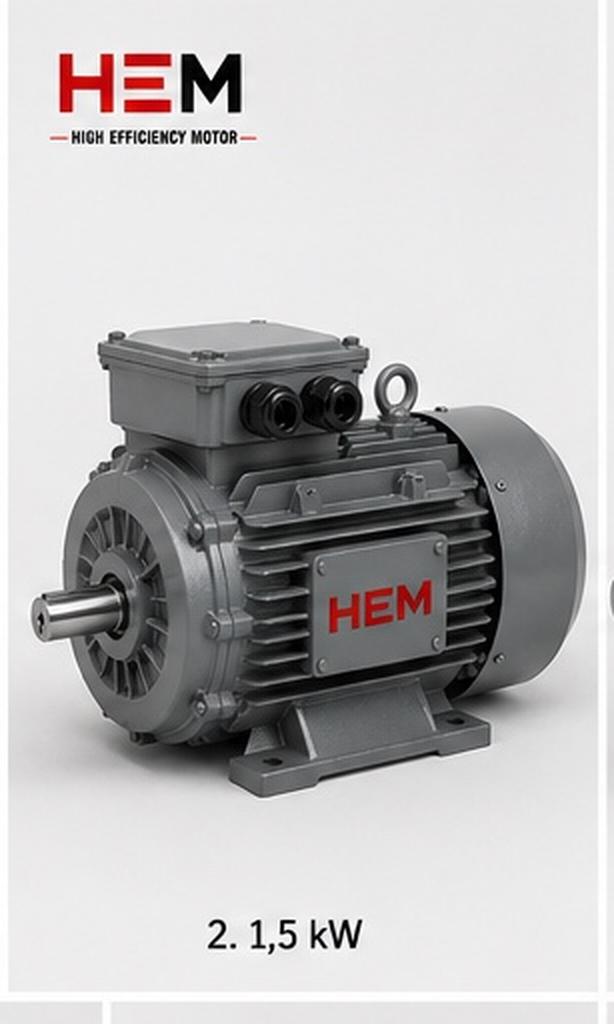

IE5 synchronous reluctance (SynRM) motors do not run without a drive (VFD); the drive is an inseparable part of this technology. In a modern facility, the drive does not work alone but connected to the factory automation network. This is where fieldbus communication comes in: protocols such as PROFINET, EtherCAT, EtherNet/IP and Modbus TCP connect the drive to the PLC or SCADA system. In this article we cover PROFINET and EtherCAT communication on IE5 synchronous reluctance motors, drive integration and the correct supply approach.
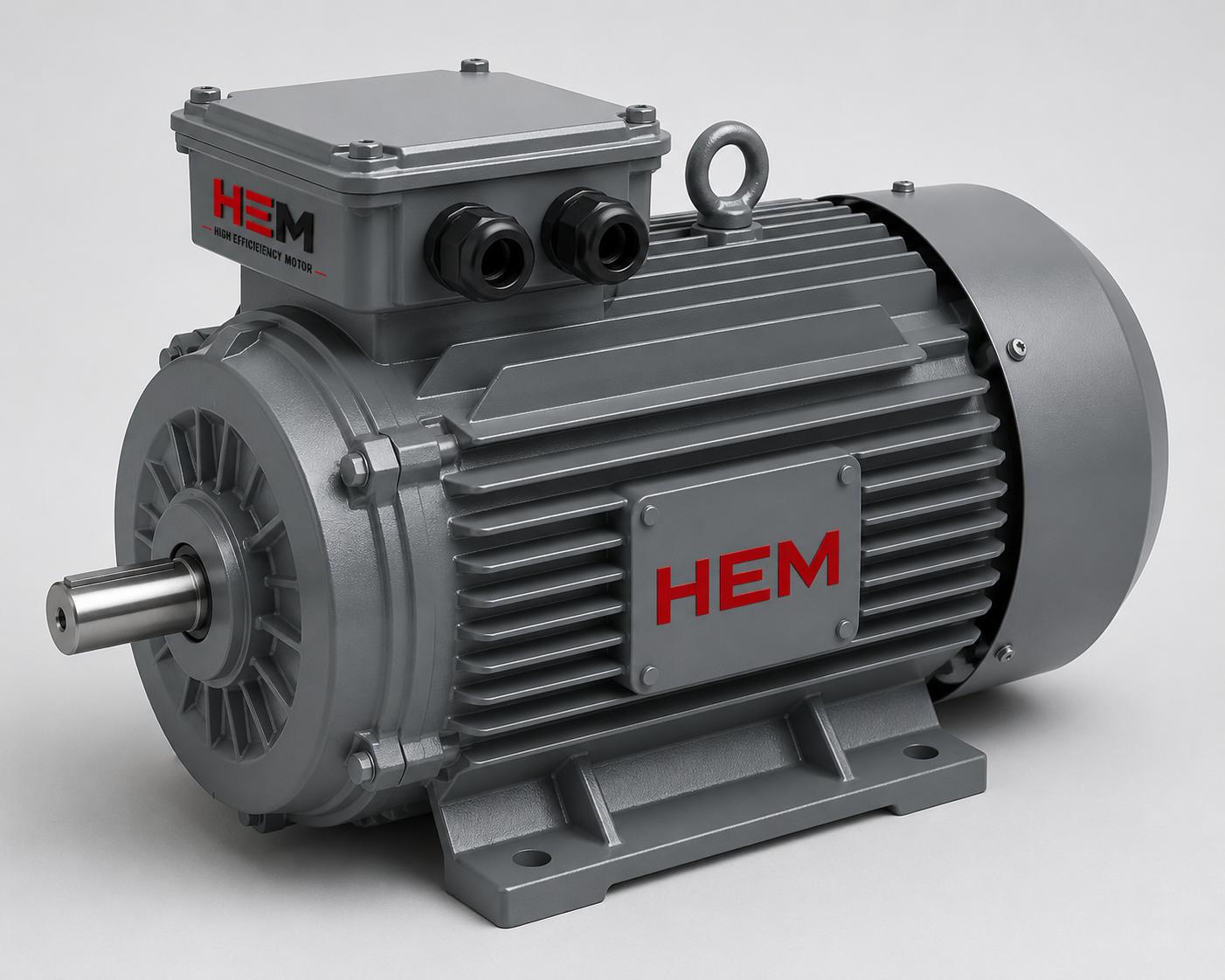
At HEM Motor, with our identity as both manufacturer and seller, we repeatedly see in the field the importance of treating the IE5 SynRM motor and drive as a package and clarifying the communication interface from the start. A wrong or incomplete communication card selection does not affect the motor's efficiency but directly affects the facility's integration. For the right motor-drive package and current electric motor prices, review our product pages.
Why Is an IE5 SynRM Motor Considered Together With a Drive?
The rotor of a synchronous reluctance motor has no squirrel cage; therefore it cannot start directly from the grid. The motor is magnetized and turned in a controlled manner by the drive. This is the fundamental reason for the high-efficiency advantage of SynRM technology, but it also makes the drive mandatory. In addition to driving the motor, the drive provides an interface to the automation system.
Our article on why an IE5 synchronous reluctance motor does not run without a drive, which explains in detail why the package selection must be considered holistically, lays out the concepts that form the basis of this article.
What Is Fieldbus, and What Does It Add to the Drive?
Fieldbus is a digital communication network that connects field devices (drive, sensor, valve) to the central controller (PLC). In the classic method, signals such as start/stop and speed reference are given to the drive over separate wires (digital/analog input). With fieldbus, all of these are transmitted over a single communication cable, and far more information can be exchanged:
- Speed and torque reference: Precise reference transmission over a single connection.
- Status and fault information: Motor current, speed, temperature and fault codes can be read by the PLC.
- Parameter access: Drive parameters can be read/written remotely.
- Reduced wiring: A single line instead of dozens of signal cables; the panel and installation are simplified.
For drive parameterization, autotune and commissioning steps, our article on drive parameterization on IE5 synchronous reluctance motors explains the basic settings to be made before communication.
PROFINET and EtherCAT: Two Common Protocols
The two most commonly encountered Ethernet-based protocols in factory automation are PROFINET and EtherCAT. Both offer high-speed, real-time communication, but their architectures and typical use cases differ:
PROFINET
- Compatible with a broad PLC and device ecosystem; very common in industry.
- Runs over standard Ethernet infrastructure and suits line and star topologies.
- Frequently preferred in continuous-process applications such as pumps, fans and compressors.
EtherCAT
- Offers very low cycle time; strong in applications requiring synchronous axis motion.
- Preferred in machines requiring motion control and multi-axis synchronization.
- Provides an advantage when used together with high-precision position and speed feedback.
Which protocol is chosen depends on the PLC and machine architecture the motor will connect to. In applications requiring closed-loop position/speed control, encoder feedback also comes into play; on this topic, our article on encoder and closed-loop feedback on IE5 synchronous reluctance motors helps select the right option.
Points to Watch in Drive Integration
Even when the communication protocol is correctly selected, there are technical topics that must not be overlooked in integration:
- Communication card/module: On many drives the fieldbus protocol is provided by an option card. The card matching the correct protocol must be specified at the order stage.
- Drive-motor compatibility: For the SynRM motor to preserve its efficiency, the drive must support this motor type and be parameterized with the correct motor model.
- Topology and wiring: Line, star or ring topology; shielded cable and correct connector selection are important for communication stability.
- Grid harmonics: The drive produces harmonics on the line side; precautions may be needed for power quality (THD).
For the harmonics the drive produces on the line side and power quality, our article on drive-induced grid harmonics and power quality (THD) completes the electrical side of integration.
Compatibility With Different Drive Brands
IE5 SynRM motors can work with different drive brands; however, the SynRM support and parameter structure of every drive are not the same. While some drives offer a ready motor profile for SynRM, others require manual parameter entry. If the facility already has a specific brand of drive and communication infrastructure, the motor-drive matching should be done according to this existing structure.
For correct matching in multi-VFD selection, our article on the compatibility of IE5 synchronous reluctance motors with different drive brands clarifies the brand-based integration decision.
Order Information for Correct Supply
At HEM Motor, to correctly supply the IE5 SynRM motor + drive package together with fieldbus communication, we recommend clarifying the following:
- Motor power, speed/torque requirement and load type.
- Intended fieldbus protocol (PROFINET, EtherCAT, EtherNet/IP, Modbus TCP).
- The PLC/automation architecture it will connect to and the existing drive brand.
- Closed loop or open loop? Is an encoder needed?
- Panel structure, wiring and topology.
- Power quality requirements (filter/THD).
With this information, we can supply the motor, drive and communication card as a mutually compatible package. Preserving the SynRM motor's efficiency advantage depends on correct drive matching and correct parameterization.
Open Loop or Closed Loop?
In controlling the IE5 synchronous reluctance motor with a drive, a fundamental choice is between open loop and closed loop. This choice determines both the motor's performance and the required hardware. In open-loop control, the drive estimates the motor's position and speed without a sensor (sensorless), by its own calculation. In closed loop, an encoder is fitted to the motor and the drive reads the actual position/speed information directly.
Which method is chosen depends on the application's precision needs. In applications with moderate speed sensitivity, such as pumps and fans, open loop is often sufficient and requires no additional hardware. However, in applications requiring precise positioning, high torque at very low speed, or synchronous axis motion, closed loop and an encoder are essential. Fieldbus communication can be used with either method; but in closed loop, the encoder data is also included in the system as a whole.
- Open loop (sensorless): Requires no additional hardware; sufficient in moderate-precision pump/fan applications.
- Closed loop (with encoder): Needed for precise position/speed control and high torque at low speed.
- Fieldbus works with either method; in closed loop the encoder data can also be monitored.
The Panel and Current Behavior of the SynRM Motor
The electrical behavior of the synchronous reluctance motor differs from the classic asynchronous motor; this difference affects panel and protection selection. The SynRM motor may have a different power factor and rated current characteristic than an asynchronous motor. For this reason, the drive, contactor and cable feeding the motor must be selected according to this characteristic.
While driving the motor, the drive also draws current on the line side, and the quality (harmonic content) of this current is important for the panel and grid. In high-power SynRM installations, the use of a reactor or filter to reduce line-side harmonics may come into play. When designing the panel, the input current of the drive, not the motor, should be taken as the basis, because from the supply side the apparent load of the system is the drive. This distinction is critical for selecting the correct cable and switchgear.
Other Common Protocols: EtherNet/IP and Modbus TCP
Although PROFINET and EtherCAT are the two most commonly encountered protocols, other protocols also come into play depending on the facility's automation infrastructure. EtherNet/IP is common especially in certain PLC ecosystems and runs over standard Ethernet. Modbus TCP is a simpler, broadly compatible and easy-to-set-up protocol; it is preferred in applications where speed is not critical and that require basic monitoring and control.
What is decisive in protocol selection is how fast and precisely the motor will be controlled, and the existing automation architecture. While Modbus TCP may be sufficient for simple pump/fan monitoring, EtherCAT becomes mandatory on a line requiring synchronous motion. The SynRM motor's drive can support most of these protocols with the correct option card; however, which card will be fitted must be clarified at the order stage.
- EtherNet/IP: Common in certain PLC ecosystems, standard Ethernet-based.
- Modbus TCP: Simple, broadly compatible, suitable for basic monitoring/control.
- Protocol selection is made according to the speed/precision need and the existing PLC architecture.
The Predictive Maintenance Opportunity With Communication
One of the most valuable gains provided by fieldbus communication is continuous access to the motor's status data. The drive can transmit data such as motor current, speed, temperature, load ratio and fault codes to the PLC or SCADA system. When this data is monitored regularly, deviations in the motor's behavior can be noticed before a failure occurs.
For example, drawing higher-than-expected current under load may be a sign of a mechanical problem; a gradual rise in temperature may indicate a cooling issue or a load increase. This data collected over the fieldbus forms the basis of predictive maintenance strategies. As a result, unplanned downtime is reduced, maintenance becomes planned, and the motor's efficiency advantage is preserved in the long term.
Commissioning and Testing Stage
Commissioning the IE5 SynRM motor + drive + fieldbus package requires a more planned process than a classic asynchronous motor. The basic steps to follow during commissioning are:
- Drive-motor matching: The correct SynRM motor model and nameplate values must be entered into the drive.
- Autotune (automatic identification): The drive identifies the motor and determines the most suitable control parameters.
- Communication test: The fieldbus connection must be verified for data exchange with the PLC.
- Verification under load: The motor is run at real load and current, temperature and speed values are checked.
Completing these steps fully both preserves the motor's efficiency and ensures stable operation of the communication. A skipped step in commissioning can lead to problems that are hard to diagnose in the field; therefore the process should be planned from the start.
Frequently Asked Questions
Can I use an IE5 SynRM motor without fieldbus?
The SynRM motor already works with a drive; however, fieldbus is not mandatory. Start/stop and speed reference can also be given via classic digital/analog inputs. Fieldbus is preferred for facilities that want full integration into the automation system, remote monitoring and simplified wiring. The decision should be made according to the facility's automation needs.
Should I choose PROFINET or EtherCAT?
The decision depends on the PLC ecosystem you will connect to and the application. If continuous process and broad PLC compatibility are priorities, PROFINET is a common choice. If multi-axis synchronous motion and very low cycle time are needed, EtherCAT stands out. Your existing automation infrastructure often determines the choice.
Can the communication card be added later?
On many drives the fieldbus module is fitted as an option card and can be added later when a suitable model is selected. However, planning the correct card and drive model from the start is healthier in terms of both lead time and compatibility. Specifying the target protocol at the order stage prevents delays.
When integrating an IE5 synchronous reluctance motor into a facility, the motor, drive and fieldbus communication must be considered as a single whole. Protocols such as PROFINET and EtherCAT strengthen monitoring and control by connecting the motor to the automation network. At HEM Motor, as both manufacturer and seller, we help you preserve the efficiency advantage of SynRM technology in the field by supplying a correctly parameterized motor-drive package with the right communication interface.