English
 Türkçe


Summary (TL;DR)
- The saliency ratio is the heart of a synchronous reluctance motor: the larger the gap between the rotor's d-axis inductance (Ld) and q-axis inductance (Lq), the more reluctance torque the motor produces per amp.
- Saliency is defined as Ld/Lq; as this ratio rises, torque density, power factor and efficiency all improve. A high-saliency, multi-barrier rotor design is exactly what makes the IE5 efficiency class possible.
- Because the rotor has no windings, no cage and no magnets, rotor copper losses are essentially zero — this is the main source of IE5 efficiency, and the rotor also runs cooler.
- An IE5 synchronous reluctance motor cannot start direct-on-line; it must be driven by a variable frequency drive (VFD), usually with sensorless control that reads rotor position from the saliency. Motor and drive must be selected and supplied together.
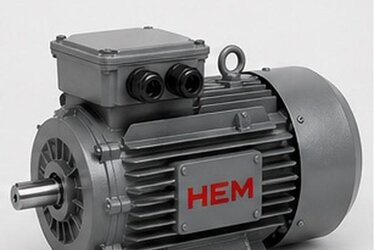
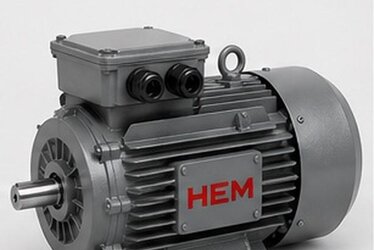
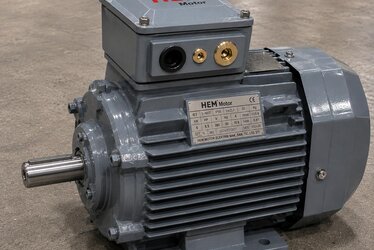
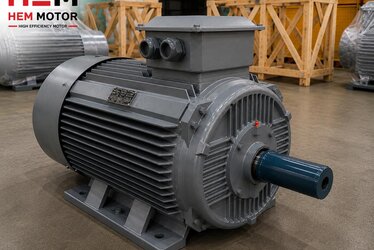
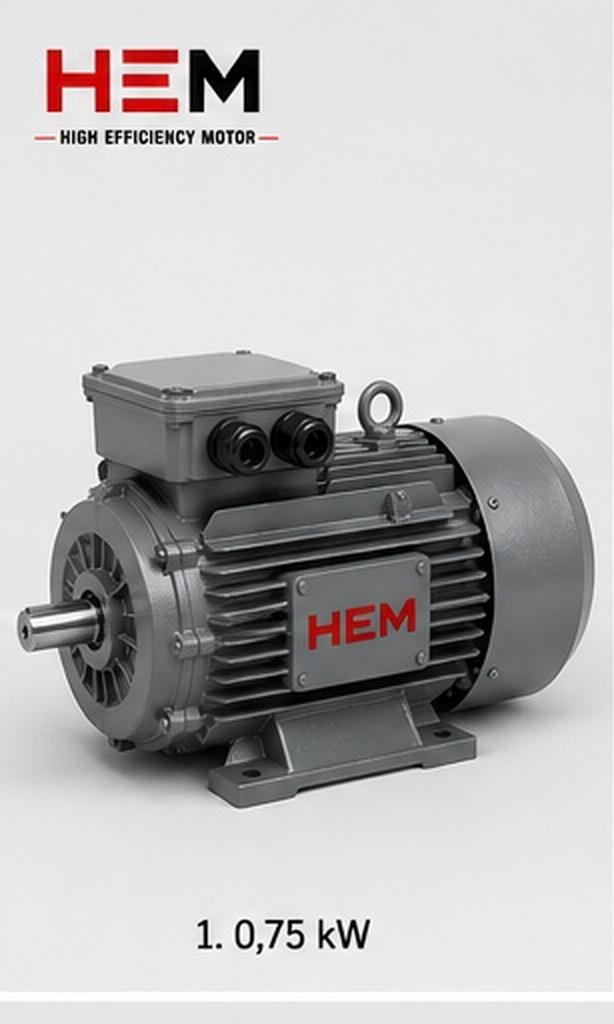
- HEM Motor offers matched IE5 motor + drive packages from stock with manufacturer assurance, selected by kW, speed and saliency class; thanks to IEC frame and shaft compatibility, they can mechanically replace your existing induction motor.
One of the most critical concepts you will meet when choosing a high-efficiency electric motor is the saliency ratio. If you want to understand why an IE5 synchronous reluctance motor (SynRM) is so efficient, how it produces torque, and how to match it with the right drive, you are in the right place. In this article we walk step by step through the d- and q-axis inductances, the Ld/Lq ratio, reluctance torque, and how all of this feeds into your buying decision. For a broader comparison, explore the other posts in the IE5 electric motors blog category.
What Is a Synchronous Reluctance Motor and Why Is It Different?
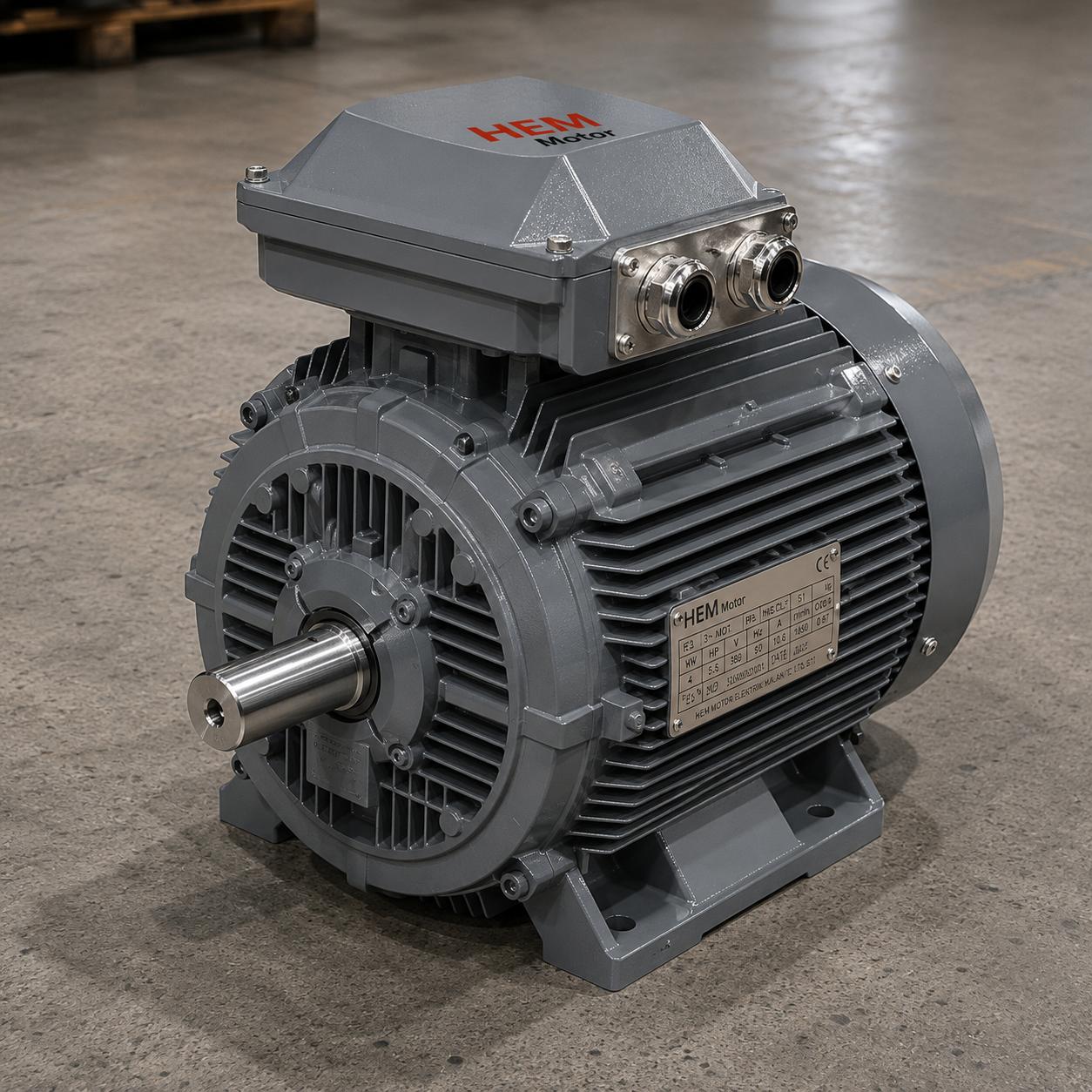
On the stator side, a synchronous reluctance motor looks very much like a classic induction motor: the same three-phase wound stator, the same rotating magnetic field. The real revolution is in the rotor. A synchronous reluctance rotor has no windings, no cage and no magnets. Instead, the rotor laminations are stacked with a special geometry containing carefully placed air gaps known as flux barriers. These barriers make the rotor magnetically anisotropic: flux flows easily along one axis and poorly along the perpendicular one.
This is exactly where the d- and q-axes come in. The axis where flux flows easily — low reluctance, high inductance — is called the d-axis (direct axis), with inductance Ld. The perpendicular axis, where the barriers block the flux — high reluctance, low inductance — is the q-axis (quadrature axis), with inductance Lq. The entire character of the motor is hidden in the difference between these two numbers.
Understanding d-Axis and q-Axis Inductance Intuitively
Think of the d-axis as a "flux highway" inside the lamination stack: the magnetic flux produced by the stator follows this path unobstructed, so the inductance Ld is high. The q-axis, by contrast, is full of barriers lined up in front of the flux; because the flux has to cross these air gaps, reluctance is high and inductance Lq stays low. The rotor tries to align itself to the position that minimizes the reluctance of the flux path pulled by the rotating field, and this tendency to align appears as mechanical torque.
Saliency Ratio and Reluctance Torque
The torque produced in a synchronous reluctance motor is entirely reluctance torque, and in simplified form its magnitude is directly proportional to the difference (Ld − Lq). In other words, the larger the gap between the d- and q-axis inductances, the more torque you get for the same stator current. This gives the designer a single goal: keep Ld as high as possible and Lq as low as possible.
The saliency ratio (also called the anisotropy ratio) measures exactly this, and is expressed as Ld/Lq. The higher this ratio, the better the motor:
- Higher torque density: More torque per amp, meaning higher power in a smaller frame.
- Higher power factor: High saliency lets the motor draw less reactive current for the same magnetization, improving power factor.
- Higher efficiency: Less current means less stator copper loss, which is what brings the IE4 and IE5 efficiency classes within reach.
Older single-barrier rotors with low saliency deliver weak torque and poor power factor, whereas modern multi-flux-barrier rotors achieve much higher Ld/Lq ratios. The number, shape, angle and thickness of the barriers directly determine this ratio, which is why the manufacturer's engineering quality matters so much.
How Does the Saliency Ratio Enable IE5 Efficiency?
In an induction motor, the rotor carries current by induction, and that current causes I²R loss in the rotor bars — the rotor copper (or aluminium) loss. In a typical induction motor a significant share of total losses occurs in the rotor. Because a synchronous reluctance rotor contains no conductors, this loss is almost entirely eliminated. That is the real secret of IE5 efficiency: one of the largest loss components is removed at the root.
A side benefit is that the rotor runs much cooler. Lower rotor temperature extends bearing life, improves lubrication intervals and reduces thermal derating. Thanks to a high saliency ratio, the same torque is produced with less stator current, lowering stator losses and pushing efficiency past the IE5 threshold. If you want to dig deeper into the logic of choosing between and migrating across IE4 and IE5, the IE4 asynchronous vs synchronous reluctance difference article helps clarify this decision.
The Price of Saliency: Power Factor and Drive Sizing
Nothing about a synchronous reluctance motor is perfect; in engineering every gain has a cost. SynRM inherently has a lower power factor than induction or permanent-magnet motors. The reason is simple: because there are no magnets in the rotor, all the flux needed to magnetize the motor must be supplied by the stator. This means a relatively high magnetizing (reactive) current.
The practical consequence is that the drive/inverter must be sized for a higher current and kVA relative to the active power it delivers. In other words, you must select the drive based on the motor's real current demand, not the kW figure on paper. This is exactly why it is so important to select the motor and drive as a package rather than separately. An incorrectly sized drive will fail to deliver the efficiency the IE5 motor promises in the field.
The PM-Assisted Synchronous Reluctance (PM-SynRM) Solution
The intermediate solution developed to raise power factor and torque density is the permanent-magnet-assisted synchronous reluctance motor (PM-SynRM). In this design, small magnets — often ferrite or a small amount of rare-earth material — are placed inside the q-axis barriers. These magnets partially counter the q-axis flux, improving power factor, raising torque density and preserving the same saliency advantage. PM-SynRM offers a balanced middle ground between pure SynRM and a fully permanent-magnet synchronous motor, and is preferred especially where high torque density is required.
Synchronous Operation and the Mandatory Drive
The word "synchronous" in its name describes an important property: the rotor turns at exactly synchronous speed with the rotating magnetic field — there is no slip. With no slip, there are no slip-related losses, and the speed remains extremely precise and constant regardless of load variation. This is a major advantage for applications requiring accurate speed control, such as pumps, fans and process lines.
However, this synchronous structure has a critical consequence: an IE5 synchronous reluctance motor cannot start direct-on-line. An induction motor connected directly to the grid starts itself thanks to slip; a SynRM, having no magnets or cage, cannot produce starting torque. For this reason the motor must be driven by a variable frequency drive (VFD). Moreover, the drive needs to know the rotor position; modern drives usually do this with sensorless (encoderless) control that exploits the motor's saliency. Here the second benefit of the Ld/Lq gap appears: high saliency lets the drive estimate rotor position more reliably, providing more robust control that stays stable even at low speed.
- Motor + drive together: Buying the IE5 SynRM alone is not enough; the motor will not run without a compatible drive.
- Control compatibility: Make sure the drive supports the SynRM control algorithm (sensorless vector control).
- Current margin: Because of the lower power factor, the drive must be chosen to comfortably handle the motor's real current.
How to Select the Right IE5 Synchronous Reluctance Motor
Choosing the right motor is both a technical and a commercial decision. The following criteria ensure your investment pays back quickly through energy savings:
- Running hours: IE5 SynRM makes the most sense in continuous, high-runtime applications (pumps, fans, compressors, process lines). The higher the annual operating hours, the shorter the payback of IE5 efficiency.
- kW and speed match: Choose a motor suited to your load's power and speed profile; thanks to the drive, efficiency can be maintained over a wide speed range.
- Saliency class: A design with a higher Ld/Lq ratio means better power factor and lower drive current.
- Mechanical interchangeability: With matching IEC frame size, mounting type (B3, B5, B35), shaft diameter and flange, the IE5 motor can be fitted directly in place of an existing induction motor, greatly simplifying modernization projects.
In this selection process you should look not just at the motor's nameplate but at the field performance the motor and drive will deliver together. When comparing current electric motor prices and efficiency classes, we recommend evaluating total cost of ownership (motor + drive + energy) as a whole. For product families and technical data, the IE4 high efficiency electric motors product page is a good starting point.
Supply, Stock and Manufacturer Assurance with HEM Motor
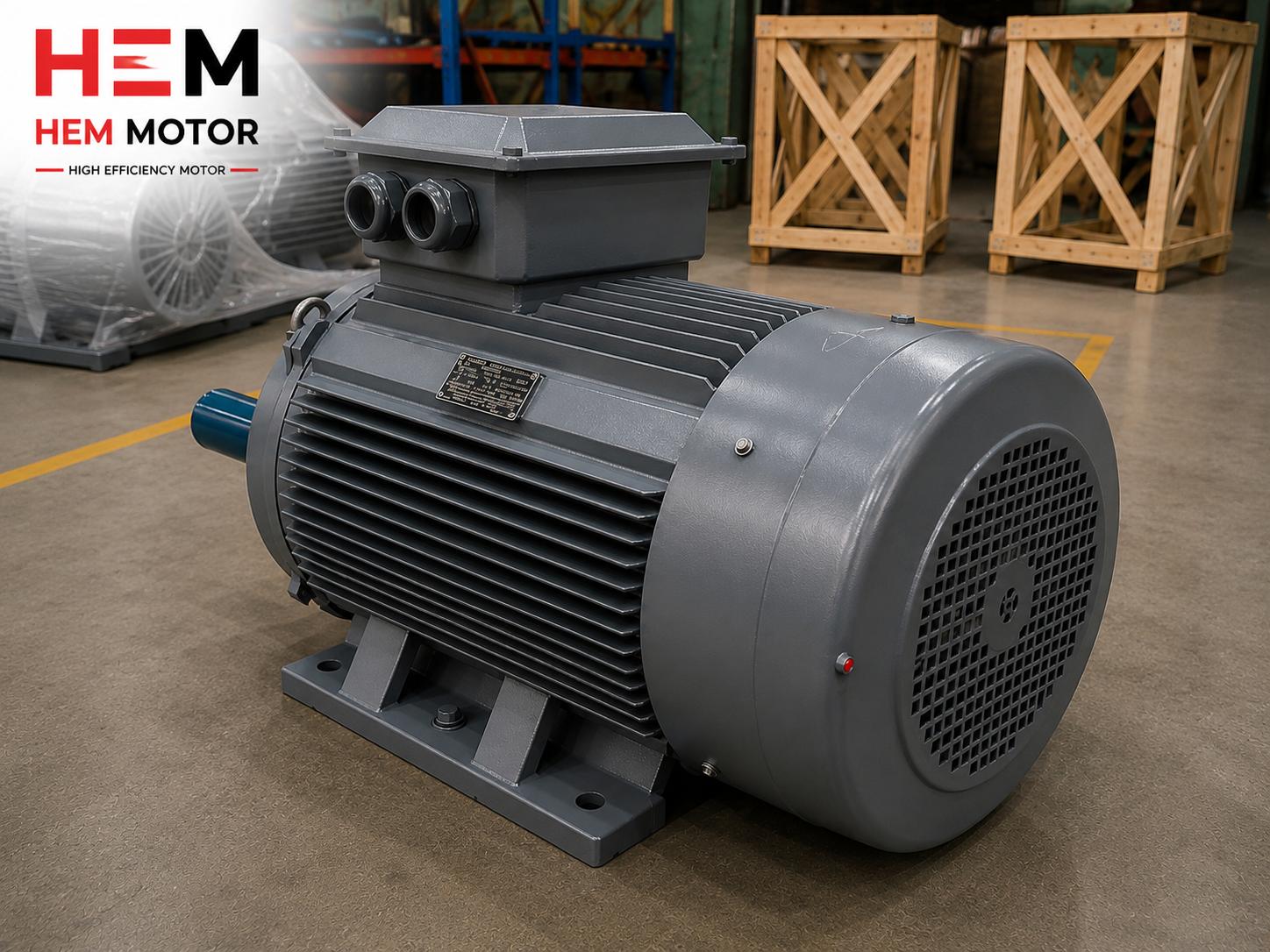
The safest way to bring an IE5 synchronous reluctance motor into your project is to source the motor and drive as a matched package from a single manufacturer. At HEM Motor we offer IE5 motor + drive packages selected by kW, speed and saliency class from stock, and we determine the right configuration for your application together with you. Manufacturer assurance covers not only the product itself but also correct sizing, control compatibility and commissioning support.
To get a tailored quote, check stock availability, or evaluate replacing your existing induction motor with an IE5 equivalent, please get in touch with us. When mechanical compatibility (frame, shaft, mounting) and electrical compatibility (drive current, control mode) are clarified in advance, the transition goes smoothly and the energy savings begin from day one.
Frequently Asked Questions
How high should the saliency ratio (Ld/Lq) be?
The general rule is that the higher the saliency ratio, the better the motor: more torque density, higher power factor and better efficiency. Modern multi-barrier IE5 rotors reach high Ld/Lq values that make IE4 and IE5 efficiency possible. The exact value depends on the design and power class; what matters is evaluating the motor's efficiency class together with its drive current demand.
Can an IE5 synchronous reluctance motor run direct-on-line?
No. Because a synchronous reluctance motor has no cage and no magnets, it cannot produce starting torque and cannot start when connected directly to the grid. It must be driven by a variable frequency drive (VFD), preferably with sensorless control that exploits the motor's saliency. For this reason the motor and drive must be selected and supplied together.
Can I replace my existing induction motor with an IE5 SynRM?
Yes, in most cases. When the IEC frame size, mounting type (B3/B5/B35), shaft diameter and flange match, the IE5 motor can be fitted mechanically in place of the existing induction motor. The only additional requirement is a compatible drive to run it. HEM Motor verifies mechanical and electrical compatibility in advance, recommends a matched package and provides a quote based on stock availability.