English
 Türkçe

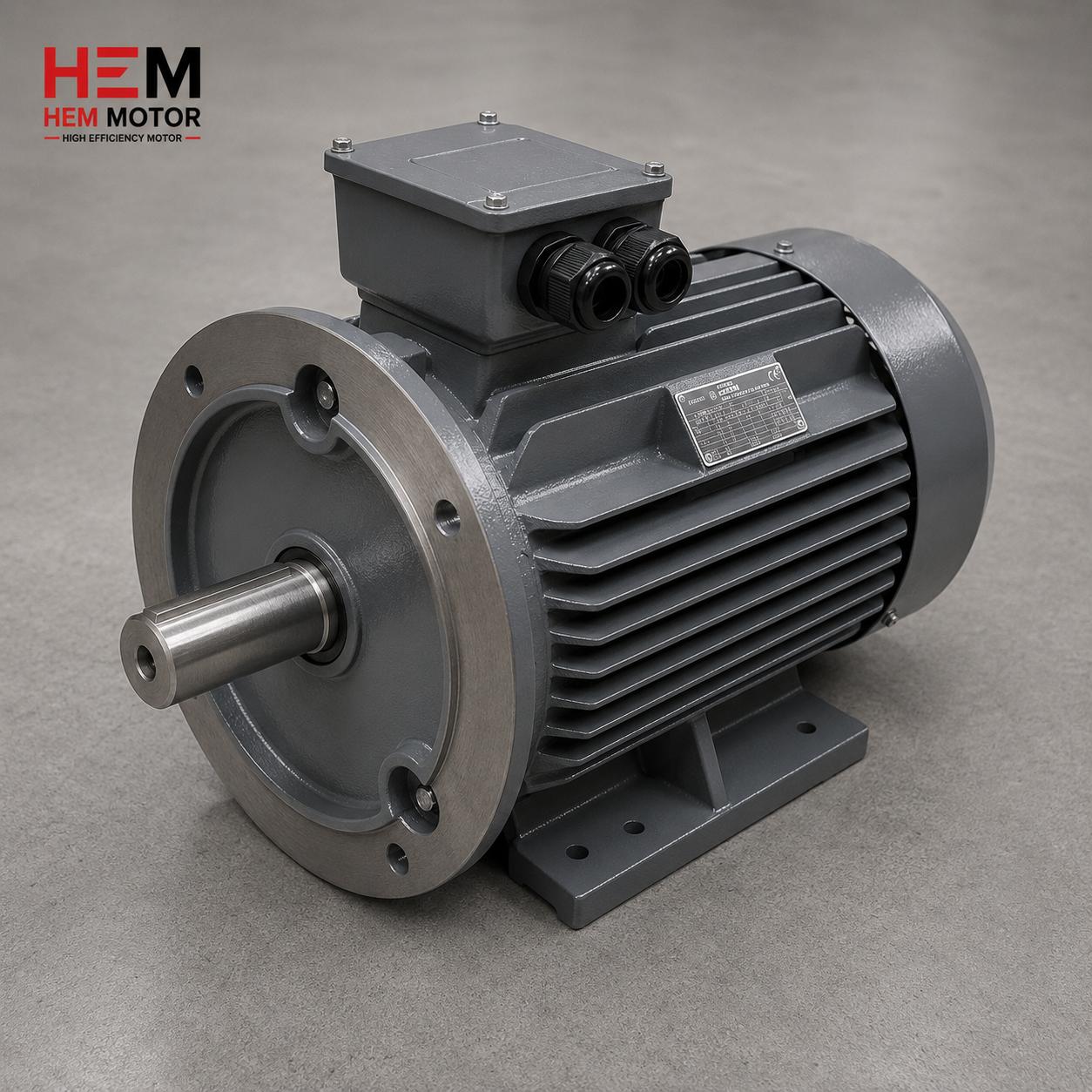

When running an IE5 synchronous reluctance motor with a frequency drive, there is a critical parameter that most engineers overlook but which directly determines efficiency, heating and noise: the switching (carrier) frequency. This value sets how many times per second the drive switches via pulse width modulation (PWM), and when set correctly it visibly improves the overall performance of the system.
A high switching frequency quietens the motor and makes the current waveform smoother, reducing harmonic losses; but this time, because the drive's power switches (IGBT or MOSFET) turn on and off more times per second, the drive heats up more. A low switching frequency lowers the drive losses; but an audible hum and current ripple increase in the motor. In other words, the switching frequency is a setting that must be balanced between two extremes.
In an IE5 synchronous reluctance motor, the optimum switching frequency is the point where the sum of the drive and motor losses is smallest. In this article we examine what the switching frequency is, its effect on efficiency, heating, noise and current ripple, and how the correct setting is made. As HEM Motor, we supply IE5 motors as a matched drive package with autotune and commissioning support from stock.
What the Switching (Carrier) Frequency Is
A frequency drive uses the PWM technique to transfer a fixed DC bus voltage to the motor at a variable frequency and voltage. In PWM, the power switches turn on and off at a very high speed, and the number of repetitions per second of this on-off operation is called the switching frequency (carrier frequency). It is usually expressed in kHz; for example, values such as 2 kHz, 4 kHz, 8 kHz or 16 kHz are used.
The switching frequency is much higher than the fundamental (operating) frequency of the voltage applied to the motor. What determines the actual rotation speed of the motor is the output frequency; the switching frequency determines how smoothly this output waveform is produced. At a high switching frequency, the PWM pulses become more frequent, the current waveform comes closer to a sine wave, and the motor runs more smoothly.
We can summarise this logic as follows:
- Switching frequency: The number of switchings per second of the drive's power switches (kHz).
- Output frequency: The fundamental frequency that determines the motor's speed (Hz).
- Relationship: The higher the switching frequency, the smoother the current and the lower the noise; but the higher the drive loss.
Effects of a High Switching Frequency
Raising the switching frequency brings some clear advantages, but it also carries a cost.
Advantages
- Quieter motor: When the high frequency rises above the range the human ear can hear, the magnetic hum of the motor largely disappears. This is important for environments that require quietness.
- Smoother current waveform: As the current approaches a sine wave, the harmonic content decreases.
- Less motor harmonic loss: A smooth current reduces the additional harmonic-related heating in the motor.
- Lower torque ripple: Especially in a synchronous reluctance motor, a smooth current produces more stable torque.
Disadvantages
- Increased drive loss: The power switches lose some energy at each switching (switching loss). As the frequency increases, this loss grows linearly and the drive heats up.
- Need for drive derating: At a high frequency, the current the drive can carry may decrease; that is, a larger drive may be needed.
- Increased EMI: Fast switching can increase electromagnetic interference and create a need for filtering.
As can be seen, while a high frequency relieves the motor it strains the drive. For this reason, raising the frequency without limit is not the right strategy.
Effects of a Low Switching Frequency
Lowering the switching frequency symmetrically carries its own advantages and disadvantages.
Advantages
- Lower drive loss: As switching becomes less frequent, the heating in the power switches decreases and the drive stays cool.
- Full current capacity: The drive can carry its rated current without derating.
- Less EMI: Slower switching reduces electromagnetic interference.
Disadvantages
- Audible hum: A low switching frequency leads to a motor hum heard as sound.
- Increased current ripple: The current waveform moves away from a sine wave and the ripple grows.
- Increased motor harmonic loss: A distorted current creates additional heating and an efficiency drop in the motor.
- Torque ripple: Especially at low speeds, the smoothness of the torque can deteriorate.
For this reason, while a low frequency relieves the drive it strains the motor. Both extremes have a cost; the right solution is to find the optimum point between the two. For the basics of drive and motor compatibility, you can review our frequency drive and motor matching guide.
The Optimum Point in an IE5 Synchronous Reluctance Motor
The IE5 synchronous reluctance motor, thanks to its high efficiency, is sensitive to every component of the total system loss. In these motors, the optimum switching frequency is the point where the sum of the drive loss and the motor loss is smallest.
To understand this optimum, two curves must be considered together:
- Drive loss curve: Rises as the switching frequency increases (switching loss increases).
- Motor loss curve: Falls as the switching frequency increases (harmonic loss decreases).
The sum of these two curves forms a U shape, and the lowest point of this U is the optimum switching frequency. At a very low frequency, the motor loss is dominant; at a very high frequency, the drive loss is dominant. The optimum point is usually at a middle value and varies according to the motor's power, speed and the characteristics of the drive.
This balance is especially important in a synchronous reluctance motor, because:
- Since there are no windings or magnets in the rotor, the sensitivity to harmonic losses is different.
- A smooth current is critical for the stable production of the reluctance torque.
- To maintain the high IE5 efficiency, the total loss must be kept at a minimum.
In practice, the optimum frequency varies with the motor's power: while a higher switching frequency is suitable for low-power motors, a lower frequency is preferred for high-power motors because the drive loss is dominant. For this reason, the setting must be made specifically for each application. For the basics of IE5 technology, our what is an IE5 synchronous reluctance motor article is a good start.
How to Set the Correct Switching Frequency
To find the optimum frequency, a systematic approach must be followed:
- Start with the manufacturer's recommendation: There is a recommended starting frequency in the matched motor-drive package; the setting should begin from there.
- Run autotune: The drive's automatic identification (autotune) function optimises the control by measuring the motor parameters.
- Monitor the drive temperature: If the drive overheats at a high frequency, lower the frequency by one step.
- Listen to the motor noise: If there is a disturbing hum, raise the frequency by one step.
- Measure the efficiency: If possible, compare the total efficiency at different frequencies by measuring the input power and choose the value that gives the lowest loss.
- Consider the environment: It makes sense to raise the frequency where quietness is needed and to lower it where there is a heat problem.
When these steps are applied correctly, both the drive and the motor stay at a safe temperature, the system runs quietly and the total efficiency rises to the highest level. Correct commissioning is the key to turning the high efficiency that the IE5 motor promises into reality.
For current electric motor prices, IE5 stock availability and matched drive package requests, you can visit our electric motor prices page. We supply IE5 motors from stock with autotune and commissioning support and prepare a quote suited to your project.
Switching Frequency, Drive Temperature and Derating
As the switching frequency rises, the loss generated in the drive's power switches grows linearly, and this loss turns directly into heat. When the drive's heatsink temperature exceeds a certain limit, the drive either limits its output current or trips to protect itself. For this reason, when a high switching frequency is selected, the continuous current the drive can carry decreases; this is called drive derating. A drive that carries full current at 4 kHz at its nominal rating may not carry the same current at 16 kHz, and a larger drive class may be required.
This makes correct drive sizing critical in an IE5 synchronous reluctance motor. If a high switching frequency is wanted for quiet operation or low torque ripple, the drive must be selected somewhat larger. Otherwise the drive runs continuously at its derating limit, and protection trips under high load or in hot summer months, stopping production. We supply IE5 motors with a matched drive, recommending the correct drive rating by taking the target switching frequency and ambient temperature into account, so unexpected derating-related stoppages are avoided in the field.
Ambient Temperature, Panel Ventilation and Field Verification
The internal temperature of the enclosure housing the drive is as important as the switching frequency. In a sealed, poorly ventilated panel the drive can reach its thermal limit even at a low switching frequency, so panel ventilation, fan capacity and filter cleanliness must be evaluated together with the frequency setting. The most reliable way to prove the setting is correct is field measurement: during commissioning, the drive input power, motor surface temperature, heatsink temperature and noise level are compared at different switching frequencies, and the value that gives the lowest total input power while keeping both drive and motor at a safe temperature is chosen as the optimum.
Frequently Asked Questions
Does raising the switching frequency always increase the motor's efficiency?
No. Raising the switching frequency reduces the harmonic losses on the motor side, but increases the switching losses on the drive side. Up to a certain point the total loss decreases; beyond this point the drive loss becomes dominant and the total efficiency begins to drop. For this reason, the aim is to find the optimum frequency where the sum of the drive and motor loss is smallest, not to push the frequency to the highest value.
Is the hum heard in the motor at a low switching frequency harmful?
The hum itself does not directly damage the motor, but the accompanying increased current ripple leads to additional harmonic heating and an efficiency drop in the motor. In addition, the hum may be unacceptable in environments that require quietness. For this reason, the hum created by a low frequency is an indicator that must be taken into account in terms of both comfort and efficiency.
Can I set the correct switching frequency for the IE5 motor myself?
It is possible to make the basic settings, but the best result is achieved with a matched motor-drive package, autotune and commissioning support. Because the optimum frequency depends on the motor's power, speed and the characteristics of the drive, it is necessary to start with the manufacturer's recommendation and fine-tune it by monitoring the drive temperature and motor noise. As HEM Motor, we supply IE5 motors with this support so that the correct setting is made from the start.