English
 Türkçe

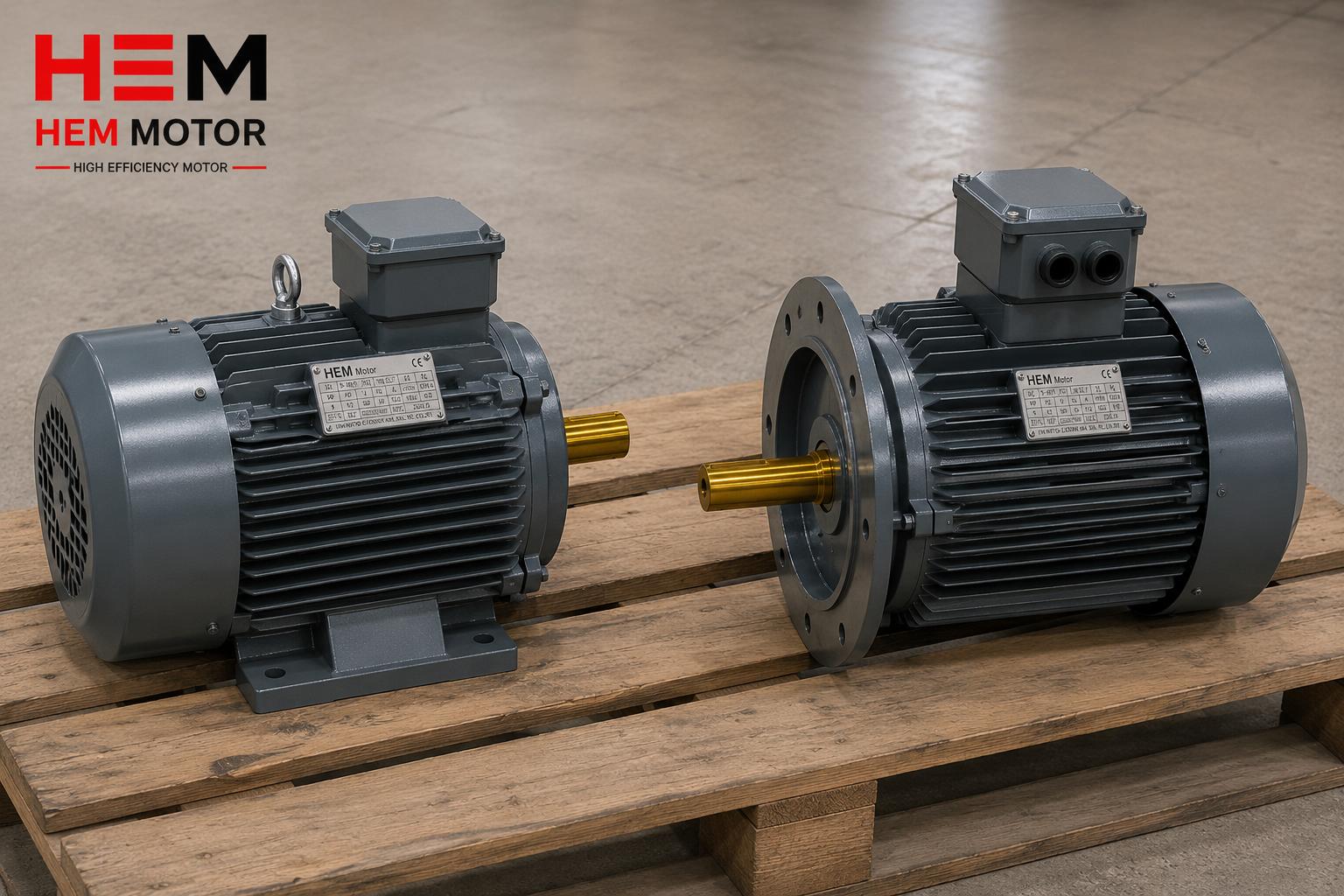

The IE5 efficiency class represents the highest energy-efficiency level achievable in electric motors, and the most common way to reach this class is synchronous reluctance (SynRM) technology. With its magnet-free, robust and highly efficient rotor, an IE5 synchronous reluctance motor cannot run when connected directly to the grid; it must always be fed from a variable frequency drive (VFD). It is precisely at this point that the cable length between the drive and the motor, and the dV/dt voltage spike this cable creates, become a critical factor that directly determines the reliability of the project.
The output of a frequency drive is not a pure sine wave; it consists of very fast rising and falling PWM (pulse width modulation) edges. These fast edges behave like a transmission line on a long cable; the wave reflects at the cable end and causes voltage spikes at the motor terminal that can reach nearly twice the supply voltage. In this article we examine the relationship between drive-to-motor cable length and dV/dt, its effects on winding and bearings, and how to choose the right filter, shielding and solution from a field perspective.
Our goal is to let you correctly define the cable distance at the ordering stage and to plan the motor, drive and required filter as one package. You can reach the product families and engineering support from the homepage.
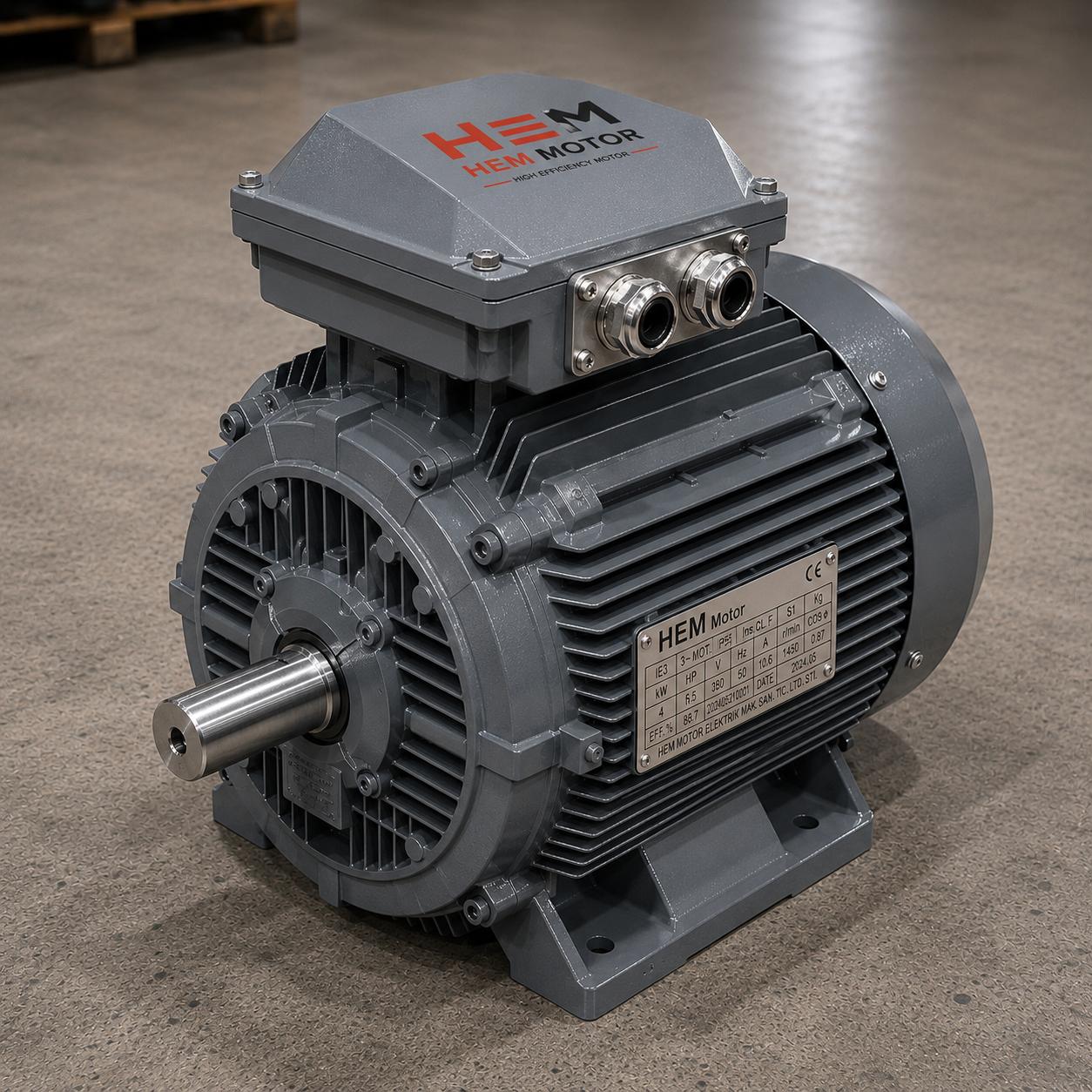
Why Does an IE5 Synchronous Reluctance Motor Always Run from a Drive?
A classic asynchronous motor can produce its own starting torque connected directly to the grid. The rotor of a synchronous reluctance motor, however, has neither a winding nor permanent magnets; the rotor consists of a specially slotted lamination stack with directional magnetic permeability. This rotor produces torque from the reluctance (magnetic reluctance) difference created by the stator field, but it must rotate at synchronous speed and cannot start on its own on the grid. For this reason an IE5 synchronous reluctance motor is always supplied together with a frequency drive that brings the motor up to synchronous speed in a controlled way.
The efficiency and control advantages of running from a drive are great: variable speed, soft starting, precise torque control and high efficiency even at partial load. But the price of these advantages is the electrical stress brought by the high-frequency switching at the drive output; and the foremost of these stresses is the dV/dt voltage spike.
dV/dt and the Reflected Wave Phenomenon
Modern IGBT-based drives raise the voltage in a very short time (typically on the order of a hundred nanoseconds). When the rate of change of voltage with time (dV/dt) is this high, the cable between the drive and the motor no longer behaves like a simple conductor but like a transmission line. Because the characteristic impedance of the cable does not match the high impedance of the motor, the wave from the drive reflects at the motor terminal and superimposes on the incoming wave, increasing the peak voltage.
What Happens as the Cable Gets Longer?
When the cable exceeds a certain critical length, the reflected wave coincides with the peak of the incoming wave, and the peak voltage at the motor terminal can approach twice the DC bus voltage (i.e. roughly 1.35 times the supply voltage). In practice this can mean peak values reaching 1000-1200 V at the motor terminal in a system with 400 V supply voltage. The longer the cable and the steeper the drive's switching edge, the more pronounced this spike becomes.
Effect on Winding and Bearings
Repeated high-voltage spikes impose a disproportionate voltage on the first few turns of the motor winding and stress the phase-to-phase and phase-to-ground insulation. In a motor with standard insulation this leads over time to partial discharges (corona) and early winding failure. In addition, high-frequency common-mode voltages create a leakage current to ground through the bearing (bearing current), causing electrical erosion (fluting) on the bearing balls. This means noise, vibration and early bearing damage.
Solution: Correct Insulation, Filter and Shielded Cable
A layered protection approach is needed to overcome these problems. In drive-fed applications, choosing the right cable and filter is as critical as choosing the right motor.
Reinforced (Inverter Duty) Insulation
Motors to be fed from a drive must be built with reinforced (inverter duty / inverter rated) insulation. This insulation system is designed to withstand repeated voltage spikes and partial discharge. Since an IE5 synchronous reluctance motor is already designed to run from a drive, it leaves the factory with reinforced insulation; this is the first layer of safety in a drive-fed application.
dV/dt Filter and Sine Filter
If the cable is of medium length, a dV/dt filter (output reactor) is added to the drive output to soften the steepness of the voltage edge; this reduces the peak voltage and bearing currents. If the cable is very long, or the voltage waveform at the motor terminal needs to be as close to a sine as possible, a sine filter is fitted to the drive output. The sine filter converts the PWM pulses into a true sine voltage, largely eliminating both the dV/dt and the reflection problem; it is preferred especially over cable distances of hundreds of meters.
Shielded Cable and Grounding
A symmetrical, shielded motor cable must be used for the drive-to-motor connection. The shield must be grounded with low impedance, 360 degrees (full circumferential), at both ends; this provides a low-impedance return path for common-mode currents, reducing electromagnetic interference (EMI) and bearing currents. Grounding from a single point with a pigtail wire largely destroys the effectiveness of the shield.
Bearing Currents and Shaft Grounding
The most insidious side effect of the dV/dt problem is the bearing currents that form in the motor shaft. The high-frequency common-mode voltage produced by the drive creates a voltage between the motor rotor and frame. When this voltage exceeds a certain threshold, it punctures the bearing oil film and creates a spark discharge (similar to EDM). These repeated discharges leave microscopic craters and groove marks (fluting) on the bearing ball and race surfaces; as a result noise increases, vibration rises and the bearing fails far earlier than expected.
Several methods are used together to prevent this problem. The first is fitting an insulated (ceramic-coated or hybrid) bearing on the non-drive side of the motor, preventing the current from passing through the bearing. The second is adding a shaft grounding brush or ring on the shaft to discharge the common-mode voltage directly to ground. The third and most fundamental is providing a low-impedance path for the common-mode current with shielded cable and correct 360-degree grounding. In an IE5 synchronous reluctance motor project, planning these measures at the ordering stage prevents early field failure.
The Role of the Drive Switching Frequency
The drive's switching (carrier) frequency indirectly affects the dV/dt behavior. A high switching frequency makes the motor current more sine-like and reduces noise; however, as the number of pulses increases, the cumulative stress on the winding insulation and bearing current can also rise. A low switching frequency reduces drive losses but increases current ripple and noise. This balance must be evaluated together with cable length and filter selection; raising the switching frequency alone does not solve the dV/dt problem and in some cases even worsens it.
Points to Check Before Ordering
- Determine the real cable distance between drive and motor in meters.
- Note the supply voltage and the drive's switching frequency.
- Make sure the motor has reinforced (inverter duty) insulation.
- Plan a dV/dt filter for medium cables and a sine filter for very long ones.
- Choose a symmetrical, shielded motor cable and ground the shield 360 degrees at both ends.
- Consider an insulated bearing or shaft grounding brush against the bearing current risk.
- Plan the motor, drive and filter as a single compatible package.
When the motor, drive and filter are sized together with correct cable distance information, the energy gain of the IE5 efficiency class is obtained with a safe and long-lasting system. You can review the efficient motor families and drive-compatible solutions on the efficient electric motors page.
Cable Length Scenarios
On short connections (a few meters), a motor with reinforced insulation usually runs safely without an additional filter; still, a shielded cable and correct grounding are always recommended. At medium distances (tens of meters) a dV/dt filter comes into play; it softens the voltage edge enough to protect the winding insulation and the bearing. At long distances (hundreds of meters) a sine filter becomes almost mandatory; otherwise the reflected wave and dV/dt shorten the motor's life.
For this reason there is no single answer to the question "which filter is needed?"; the answer depends on the cable distance, supply voltage, drive type and the motor's insulation class. To determine the correct solution, stating the cable distance at the ordering stage is the most critical step for the reliability of the system. You can follow the effect of power and speed selection in a drive-fed application in our power and speed guide.
Frequently Asked Questions
Can I connect an IE5 synchronous reluctance motor directly to the grid?
No. Since the synchronous reluctance motor's rotor has neither magnets nor windings, it cannot produce starting torque on its own and cannot start directly on the grid. It must always be run with a frequency drive (VFD) that brings the motor up to synchronous speed in a controlled way.
Why does cable length increase the voltage at the motor terminal?
The drive's fast PWM edges cause a reflected-wave phenomenon on a long cable. When the cable exceeds the critical length, the reflected wave coincides with the incoming wave and the peak voltage at the terminal can approach twice the supply voltage; this stresses the winding and bearings.
When is a dV/dt filter needed and when a sine filter?
On medium-length cables a dV/dt filter (output reactor) that softens the voltage edge is usually sufficient. If the cable is very long or a near-sine voltage is wanted at the motor terminal, a sine filter is needed. State the cable distance at order; we plan the motor, drive and filter as a package from stock.