English
 Türkçe


In facilities producing food and beverages, hygiene is the first condition of production safety. On dairy, meat, ready-meal, bakery, beverage and value-added food lines, surfaces, equipment and drive motors go through intensive cleaning cycles at the end of every shift. This cleaning is rarely limited to wiping by hand; it usually involves foam application, rinsing with caustic or acidic chemicals, and finally washing with high-pressure water jets. When a standard industrial motor is not designed to withstand this regime, water ingress, winding degradation and microbiological build-up become inevitable.
This is exactly where the IP69K protection class comes into play. IP69K is the highest level of water ingress protection defined by the IEC 60529 and ISO 20653 standards, and it specifically certifies resistance to high-pressure washdown with high-temperature water jets. When the right body, the right sealing and the right surface finish are selected for a motor used on a food line, both food hygiene requirements are met and the service life of the motor is preserved under cleaning cycles.
In this article we cover how to combine IE4 motor efficiency with an IP69K-level washable body, what differences stainless body and washable motor options make in your food plant, and why standard IP55 motors are not suitable for hygienic washdown zones, with full technical detail.
What Is the IP Protection Class and What Does IP69K Mean?
The IP (Ingress Protection) code defines the degree of protection of an electric motor against solid objects and water with two digits. The first digit represents dust and solid object ingress, while the second represents water ingress. The majority of standard industrial motors are at the IP55 level; this prevents harmful amounts of dust ingress and provides protection against water sprayed from any direction. However, IP55 is not designed against pressurized water jets or continuous washing.
IP69K is the very top of the scale. Here the "9K" digit certifies resistance to water jets applied at approximately 80 °C, in the 80-100 bar pressure range and from a very short distance. During the test, the motor is exposed to jets from different angles on a rotating turntable. This precisely simulates the real cleaning conditions in food plants. Therefore a motor labeled IP69K can be safely included in a daily high-pressure washdown routine.
The Difference Between IP55, IP65/IP66 and IP69K
When selecting a motor in a food plant, the intensity of the hygiene zone is decisive. Distinguishing the following tiers helps you avoid unnecessary cost while also preventing failures caused by inadequate protection:
- IP55: Dust protected, resistant to water sprayed from any direction. Suitable for dry production areas and non-washed zones.
- IP65/IP66: Fully dust-tight; the IP65/IP66 class offers protection against low- and medium-pressure water jets. Preferred for intermediate hygiene zones.
- IP69K: The highest protection against high-pressure and high-temperature water jets. Mandatory for critical food zones that are directly washed and cleaned with caustic.
Why Are Standard IP55 Motors Not Suitable for Washdown Zones?
The most common mistake in many facilities is placing a standard IP55 motor designed for a dry area into a washed zone. Although no problem is visible at first, a pressurized water jet applies a force far more aggressive than the seals can endure. Water seeps in through terminal box seals, the shaft seal or the housing joints. Over time this moisture degrades the winding insulation, starts corrosion in the bearings and leads to short circuits.
In addition, a critical hygiene problem arises. The sharp corners, protrusions, narrow gaps between cooling fins and uneven surfaces on standard bodies create a foundation for water and food residue to accumulate. These accumulation points are ideal breeding grounds for microorganisms. Therefore in food hygiene audits these motors can constitute a non-conformity. In a washed zone, the real solution is a washable motor architecture in terms of both protection class and geometry.
Design Features of an IP69K Washable Motor Body
For a motor to be truly considered a washable motor, simply having a high IP class is not enough. Hygienic design is a whole that prevents water from clinging to the surface and resists cleaning chemicals. The fundamental elements of this design are:
- Smooth, food-grade surface: A flat body with reduced or covered cooling fins, coated with food-grade epoxy or stainless paint.
- Sloped surfaces: Sloped top surfaces that ensure water flows away without stopping; no water pooling is allowed.
- Food-safe seals and gaskets: Sealing elements compliant with food safety in the shaft and terminal area.
- Stainless fasteners: Use of stainless steel in all bolts and nuts exposed to caustic cleaning.
- Stainless or coated body: A full stainless body where required, or a hygienic coating over cast iron where appropriate.
The combination of these elements allows the motor to safely withstand daily caustic and acidic cleaning cycles and hot water jets. Based on the hygiene zone classification of your facility, you can invest at the correct tier by reviewing our guide on IP protection class selection for electric motors.
Stainless Body or Coated Cast Iron?
There are two fundamental hygienic body approaches for food plants. The first is a full stainless body; it is preferred especially in the highest hygiene zones such as dairy, meat processing and areas with close direct product contact. Stainless steel offers the highest resistance to corrosion, is unaffected by caustic cleaning, and minimizes microbiological build-up with its smooth surface.
The second approach is a food-grade hygienic epoxy coating over a cast iron or aluminum body. This solution provides washability close to stainless while being offered across a wider power range and with more flexible delivery times. In HEM range motors the body is produced with cast iron and aluminum options; the appropriate coating and sealing configuration is determined according to the hygiene zone requirement. The right choice depends on the cleaning frequency of the zone, the type of chemical and the audit standard.
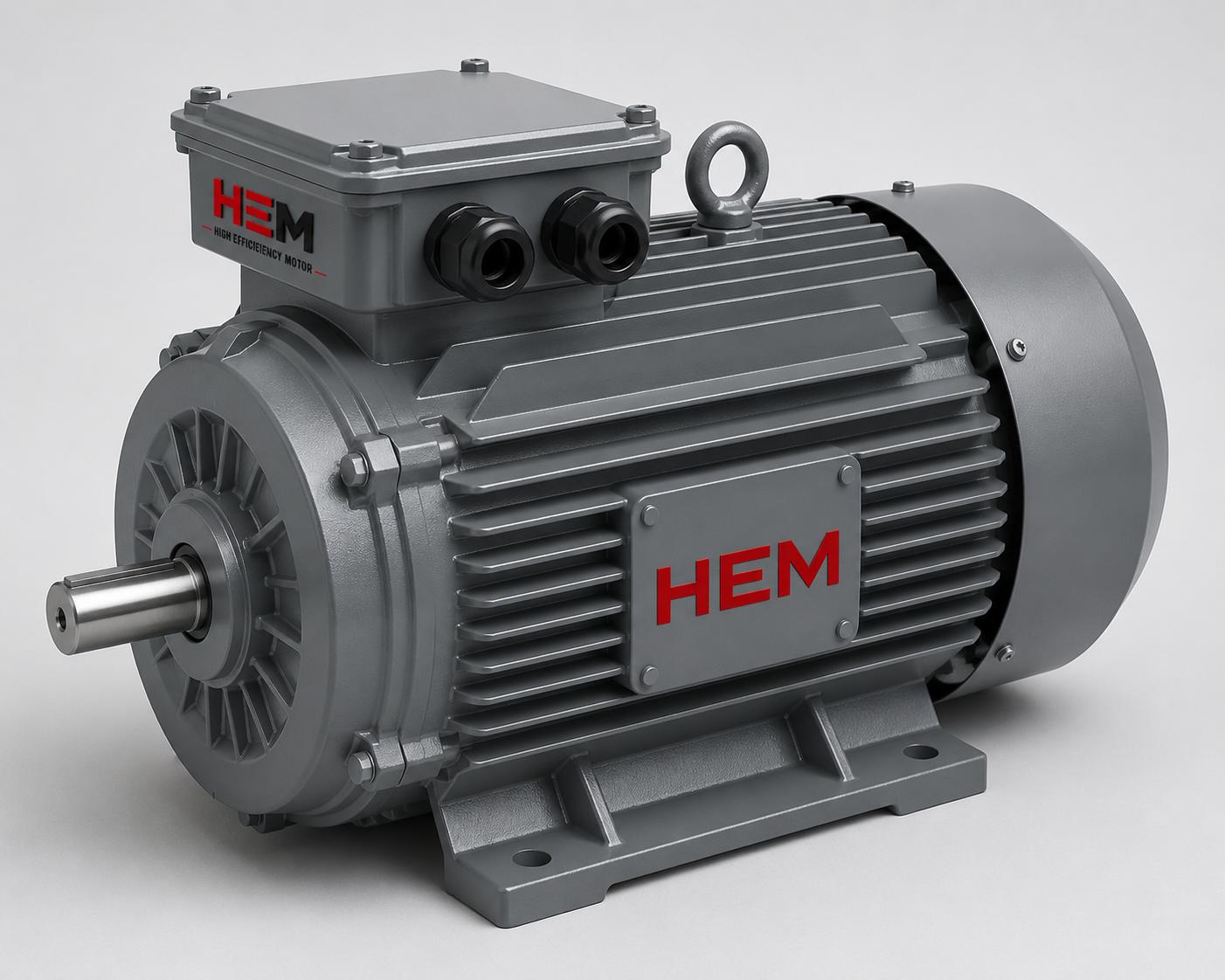
The Combination of IE4 Super Premium Efficiency and Hygiene
Choosing a hygienic body does not mean compromising on efficiency. HEM range motors are produced in the IE4 motor Super Premium efficiency class. This means significant energy savings in the continuously running pump, fan, conveyor and mixer applications of the food plant. In a facility running three shifts, a high-efficiency motor creates a marked difference in annual energy cost.
The technical foundations of HEM motors support both efficiency and durability:
- Class F insulation; high temperature margin and long winding life.
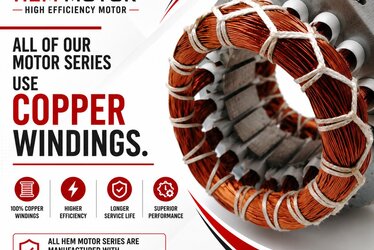
- 100% copper winding; lower losses and better thermal performance.
- Cast iron and aluminum body options; a balance of strength and weight by application.
- Standard IP55, on request IP65/IP66 and washable configurations for hygiene zones.
This combination gathers IE4 motor efficiency with high-pressure washdown resistance in the same unit. For your general purpose applications you can review our general purpose industrial IE4 motors product group, and for your hygiene-focused lines our specially configured solutions.
In Which Food Production Zones Is IP69K Required?
Not every motor in every food plant needs to be IP69K. The right investment is tiered according to the hygiene zones of the facility. In general, the following zones are directly washed and require IP69K:
- Dairy and dairy product processing lines; CIP and external washing cycles are intensive.
- Meat and poultry processing; frequent caustic cleaning is needed for blood and fat residue.
- Beverage filling and bottling; there is continuous water and chemical contact.
- Ready meals and value-added food; mixer and conveyor motors are washed directly.
By contrast, motors after packaging, in dry storage and in technical rooms are usually adequately protected with IP55 or IP65/IP66. Equipping the entire plant with a single class creates either unnecessary cost or risky deficiency; the right approach is zone-based classification. For the general framework of food hygiene architecture, our content on food factory electric motors and hygiene is a comprehensive starting point.
Washable Motors in Water Treatment and Auxiliary Facilities
The hygiene load of food plants is not limited to the production line. Pump and fan motors on wastewater treatment, recovery and process water lines also operate in humid, corrosive and frequently washed environments. In these zones, a high IP class and corrosion resistance can be as critical as on the production line. For your pump and treatment applications, our guide on water treatment and wastewater plant motors offers practical criteria for the right motor selection.
The right motor selection in auxiliary facilities reduces unplanned downtime and lowers the total cost of ownership. High-efficiency, washable and corrosion-resistant motors balance both the energy bill and the maintenance load.
Supply, Stock and Manufacturer Assurance
In food plants, an unplanned motor failure can bring the entire line to a halt and cause product loss. For this reason, the ability to quickly supply motors suitable for the hygiene zone is of critical importance. HEM Motor supplies hygiene-zone-suitable and washable-configured motors with manufacturer assurance and the advantage of stock. A wide range of configurations is available, from the standard IP55 body to IP65/IP66 on request and hygienic washable solutions.
You can request a quote for the combination of power, speed, body type and protection class specific to your project; together we can determine the most suitable solution according to your facility's hygiene zone classification. To get information about current electric motor prices and supply conditions, you can contact us.
Frequently Asked Questions
What is the main difference between an IP69K motor and an IP55 motor?
IP55 motors are protected against water sprayed from any direction, but they are not designed to withstand pressurized water jets or continuous washing. IP69K, on the other hand, certifies the highest level of protection against water jets applied at approximately 80 °C and high pressure. Therefore, in directly washed food zones cleaned with caustic, an IP69K or hygienic washable configuration must always be preferred.
Does every motor in a food plant need to be IP69K?
No. The right approach is to tier the facility according to hygiene zones. While directly washed dairy, meat, beverage and ready-meal lines require IP69K, motors in dry storage and technical rooms are usually adequately protected with IP55 or IP65/IP66. Zone-based selection optimizes both cost and risk.
Can IE4 efficiency and a washable body be combined in the same motor?
Yes. HEM range motors are produced in the IE4 motor Super Premium efficiency class and can be configured with a washable body, food-grade coating, stainless fasteners and the appropriate protection class according to the hygiene zone requirement. This way, food hygiene requirements are met without compromising on energy savings.