English
 Türkçe

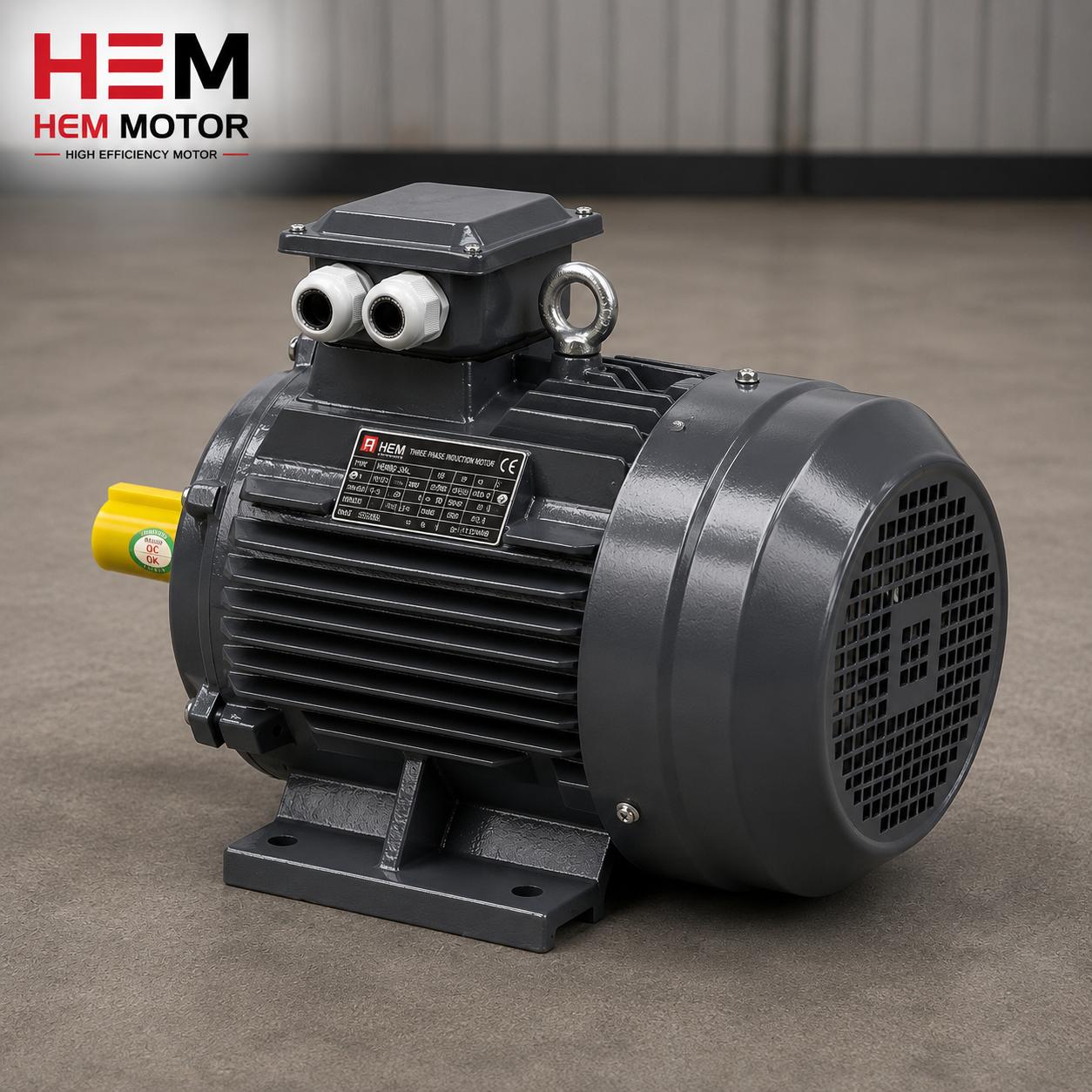

Whether to choose a 30 kW or a 37 kW motor for a plant looks, at first glance, like a simple power preference. In reality this decision shapes everything from the payback period of the investment to the energy bill, from the lifetime of the motor to its performance in the field. This mid-power band is where pumps, fans, compressors, conveyors and gear-driven systems are most heavily used. Chosen correctly, the motor runs at its highest efficiency point throughout its life; chosen incorrectly, you both pay more than necessary and force the motor to work continuously in an inefficient region.
In this article we examine the choice between a 30 kW IE4 motor and a 37 kW IE4 motor from both a technical and a purchasing perspective, looking at the application's real shaft power demand, the IE4 efficiency curve, the load band, speed and pole count, and stock availability. The goal is to help you decide based on the power the machine actually needs at its shaft, not on the kW value printed on a label.
IE4, the super premium efficiency class, clearly reduces losses compared with an IE3 motor of the same power. But for this advantage to fully appear, the motor must operate in the correct load band. Below we review both the technical selection criteria and the advantages of fast supply from stock.
30 or 37 kW? The Decision Depends on the Real Shaft Power
The most common mistake in motor selection is to look at the old motor's label and buy the same or one size up. What really matters, however, is the actual power the driven machine demands at its shaft. In a centrifugal pump this power is calculated from flow, head and efficiency. In a fan, air flow and static pressure are decisive. If the calculated shaft power comes out at 28 kW, a 30 kW IE4 electric motor is the correct choice for this application; choosing 37 kW means running the motor continuously at low load.
Conversely, if the real demand is in the 33-34 kW band, a 30 kW motor will continuously overload, overheat and have a shortened life; in that case 37 kW is the right choice. So the decision should be made with measured or calculated shaft power, not with a habit of "rounding up to the next size".
Service Factor and Safety Margin
The service factor (SF) on the motor label shows how much the motor can be loaded above rated power for short periods. A motor with SF 1.15 can briefly exceed rated power by 15 percent at peak loads. However, the service factor is not a margin to be used in continuous operation; it is only a safety margin for temporary peak loads. The correct approach is to size the motor so that the continuous load stays below rated power and to reserve the service factor only for transient situations.
The IE4 Efficiency Curve: Match the Motor to the 75-100% Load Band
The efficiency curve of an IE4 class motor reaches its highest value in the region between roughly 75 and 100 percent of rated power. This band is the point for which the motor design is optimised. Matching the motor to this band is the way to obtain both the highest efficiency and the best power factor.
Using a 30 kW motor in an application whose real demand is 25-28 kW runs the motor in the 83-93 percent load band, which is ideal. If a 37 kW motor is used in the same application, the motor drops to the 67-75 percent band; efficiency is still good but slightly below the peak, and the power factor begins to fall.
What Happens at Low Load?
The price of oversizing a motor appears in the low-load region. When the load falls below 50 percent, both efficiency and power factor drop rapidly. A low power factor increases the reactive power drawn from the grid, which raises the need for compensation and the risk of a reactive penalty. So running a 37 kW motor at an 18-20 kW load is both an unnecessary initial investment and an efficiency loss that continues throughout operation.
- If the load is in the 75-100% band: IE4 efficiency is at its peak, the ideal choice.
- If the load is in the 50-75% band: efficiency is still acceptable, power factor falls slightly.
- If the load is below 50%: efficiency and power factor drop noticeably, an unnecessary investment.
- If the load is continuously above 100%: the motor overheats, life is shortened, a larger size is needed.
For this reason, the "let's buy the bigger one just in case" approach is usually wrong. The correct power is the one that places the measured load point at the top of the efficiency curve.
At the Same kW, Pole Count Changes Speed and Torque Character
A power of 30 kW or 37 kW can be delivered at different speeds with different pole counts. A 2-pole motor turns at around 3000 rpm, a 4-pole at 1500 rpm, a 6-pole at 1000 rpm. At the same power, a lower-speed motor produces higher torque, has a larger frame and usually costs more.
Therefore the selection should be made not only by kW but also by speed and torque character. In machines such as pumps and fans, where load is proportional to speed, speed directly determines flow; in a conveyor or crusher, starting torque comes to the fore. To examine the relationship between speed and power in more detail, our article on understanding HP-kW motor power is a good starting point; to see the effect of pole count, you can look at our asynchronous motor pole selection content.
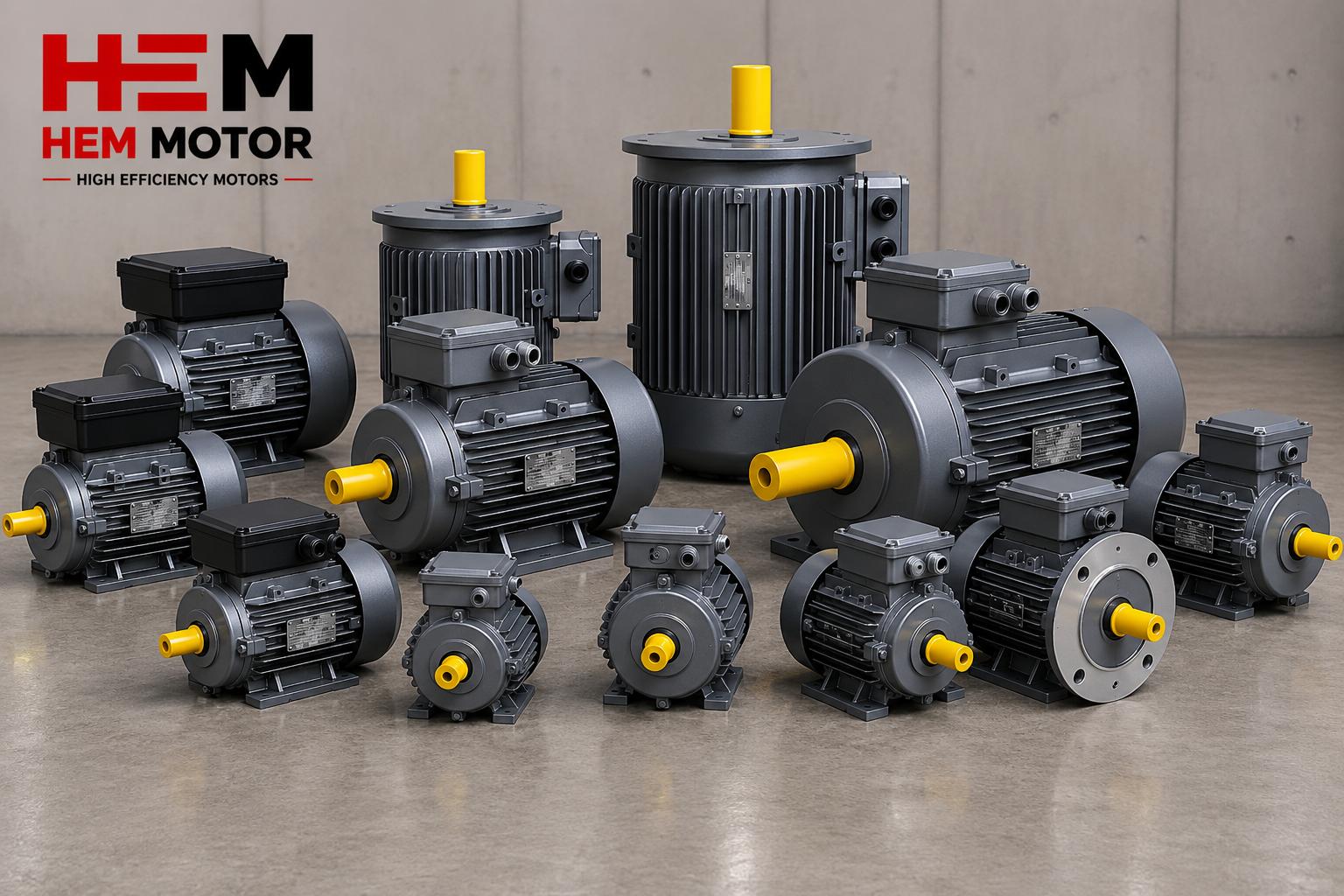
Why Is 1500 rpm the Most Common Choice?
Most field applications run with a 1500 rpm (4-pole) motor. This speed offers the most balanced point between torque and frame size; most pumps, fans and gearbox inputs are designed around it. For this reason, the most requested configuration in the 30 and 37 kW class is the 1500 rpm B3 (foot-mounted), B5 (flange-mounted) and B35 (foot and flange) mounting types.
Stock Availability and Fast Supply Advantage
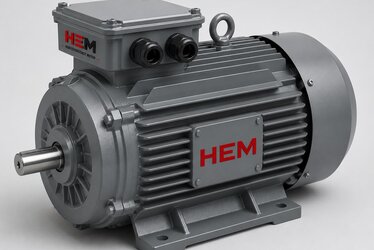
Once the correct power and speed are determined, the second critical issue is how quickly the motor will reach the field. In a failure or a new line investment, a delivery time of weeks means lost production. HEM Motor keeps the most requested 30 and 37 kW class 1500 rpm B3/B5/B35 configurations in stock, so the right motor reaches the field without long waiting.
Fast supply from stock is not only a logistical advantage; it also reduces the risk of wrong power selection. During stock consultation, the real load of the application is questioned, the 30-or-37 decision is made together, and the motor is recommended to operate in the most suitable load band. You can review the whole product family on the IE4 electric motor page and reach the blog for more technical content via the homepage.
Checklist for Correct Supply
- Was the real shaft power calculated, or was the old label simply copied?
- Does the chosen power place the load in the 75-100% efficiency band?
- Are the speed and pole count suitable for the driven machine?
- Are the mounting type (B3/B5/B35) and frame size correct?
- Will the motor be supplied from stock, and would the delivery time disrupt production?
The Effect of the Efficiency Curve on Operating Cost
The purchase price of a motor is usually small next to the energy it consumes over its life. A continuously running 30 kW IE4 motor consumes energy for thousands of hours per year; the electricity bill paid in that time rises to many times the initial cost of the motor. This is why the efficiency class and the correct load point are the most decisive components of the total cost of ownership (TCO).
The IE4 super premium efficiency class lowers this operating cost by reducing losses compared with IE3. But for this gain to materialise, the motor must run at the top of its efficiency curve. Running a 37 kW motor at a 22 kW load means spending part of the IE4 class advantage from the very start, because the motor operates outside its optimum band, at lower efficiency.
How to Lower Total Cost of Ownership
Lowering the total cost of ownership requires addressing three steps together: correct power selection, correct efficiency class and correct load band. Correct power selection prevents buying an unnecessarily large motor; the correct efficiency class reduces losses; and the correct load band guarantees operation at the top of the efficiency curve. When these three come together, the motor both consumes less energy and lasts longer.
Mounting Type and Mechanical Compatibility
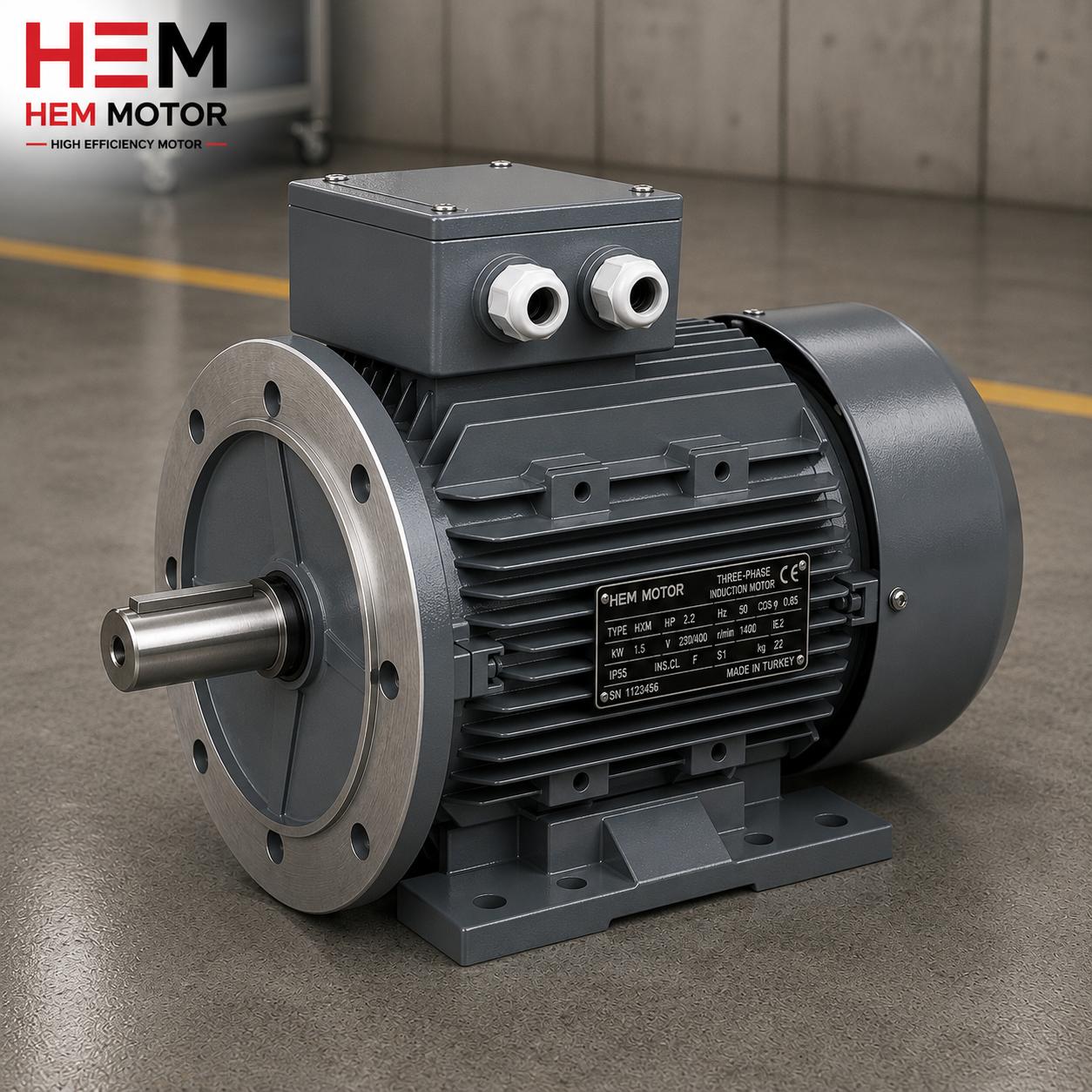
In the 30 and 37 kW class, the mechanical connection of the motor is also an inseparable part of the selection. B3 foot mounting is the classic solution where the motor is fixed to the floor or base frame by its feet; it is used in most pump-motor sets, fans and conveyors. B5 flange mounting is the type preferred in gearbox and pump-body integrated solutions, where the motor is connected directly to the machine through the flange on its front cover. B35 includes both foot and flange, providing both high mechanical strength and precise centring.
Choosing the wrong mounting type creates mismatch in the field and additional adaptation cost. Therefore, just like power and speed, the mounting type must be clear at the ordering stage. Because the most requested B3/B5/B35 options are held in stock, the correct mechanical configuration can be supplied without long waiting.
Frame Size and Shaft Diameter
30 kW and 37 kW motors are usually found in close but different frame sizes. This difference affects the shaft diameter, the connection holes and the foot dimensions. When replacing an existing motor, making sure the new motor's frame size and shaft diameter are compatible with the old mounting minimises coupling and pulley changes. This detail shortens delivery and commissioning time, especially in fast failure replacements.
Speed, Slip and the Real Operating Point
In an asynchronous motor, the rated speed printed on the label is slightly below the synchronous speed; the difference is the slip. For example, while the synchronous speed of a 4-pole motor is 1500 rpm, the rated speed is between 1450 and 1470 rpm. This slip enables the motor to produce torque under load. As the load increases, the slip increases somewhat; therefore the real operating point depends on both the selected power and the load curve of the driven machine.
To make the right choice in the 30 and 37 kW class, the machine's load curve and the motor's torque-speed curve must be evaluated together. In pumps and fans, where load changes with the square or cube of speed, even a small speed difference causes a noticeable change in power demand. For this reason, two motors with the same kW label can produce different operating points in the field if they have different slip values.
Reading the Nameplate Correctly
A motor's nameplate shows values such as power (kW), speed (rpm), current (A), power factor (cosφ), efficiency class (IE4) and service factor. For a correct selection, all of these values must be read together. Looking only at the kW value means missing the speed and torque character. Especially when replacing a motor, recording all the old motor's nameplate values and ensuring the new motor is compatible with them is the safest way to avoid surprises in the field.
Frequently Asked Questions
If 30 kW is enough, why might 37 kW be recommended?
If the application's real shaft power is very close to the 30 kW limit and there are transient peak loads, 37 kW may be recommended so that the motor does not continuously overload. However, this decision must be based on measured load data; buying one size up purely for a feeling of safety pushes the motor into the low-load band and lowers efficiency.
What is the harm of a large motor running at low load?
When the load falls below 50 percent, both efficiency and power factor drop. This means a higher initial investment, more reactive power draw and a possible reactive penalty. In addition, since a larger motor is more expensive and heavier, installation and maintenance costs also rise.
Which speed should I choose at the same power?
Speed is chosen according to the driven machine. In pumps and fans, 1500 rpm is usually the most common and balanced choice. Applications that require high torque and must run at low speed prefer 1000 or 750 rpm motors; these have a larger frame at the same power and usually higher torque. Choosing a low-speed motor for a fast-running application means buying an unnecessarily large and expensive motor; conversely, choosing a high-speed motor for a high-torque application falls short. For the right speed and stock status, sharing your application during the supply stage is the healthiest approach, because the type of driven machine, operating hours, ambient temperature and mounting type all clarify the speed and power selection.