English
 Türkçe

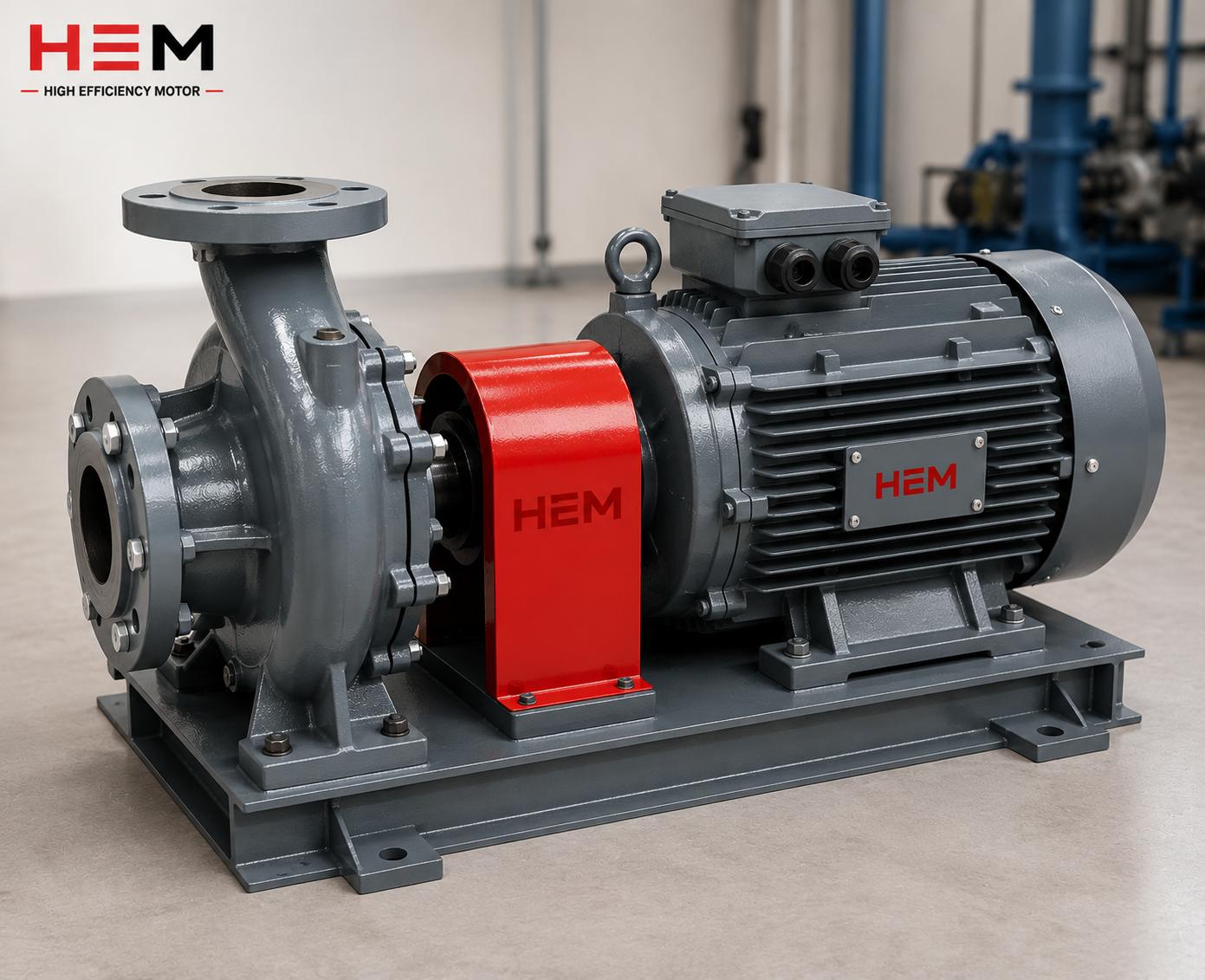

The mid-power class is the real backbone of industrial plants. The vast majority of motors in a facility lie between a few kilowatts and a few tens of kilowatts; almost all pumps, fans, conveyors, small geared drives and general-purpose machines fall within this band. The two values most frequently encountered in this band are 3 kW and 5.5 kW. These two power ratings represent a critical threshold where stock turnover is high and where, if chosen wrongly, the cost returns to the plant for years as an extra energy bill. In this article we examine 3 and 5.5 kW IE4 motor mid-power selection across the axes of pole count, speed, frame size and stock availability, explaining step by step how to make the right purchase.
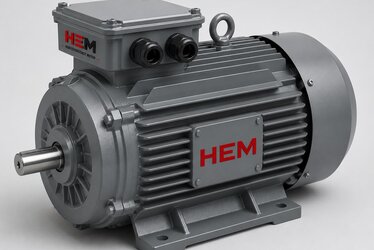
At HEM Motor, in the mid-power motors we manufacture and sell in the IE4 Super Premium efficiency class, the right choice is not merely hitting the kW figure. The same 3 kW or 5.5 kW motor serves an entirely different application depending on whether it is 2-pole or 4-pole, B3 foot-mounted or B5 flange-mounted, in which frame size and at which speed. Selecting the wrong pole count or wrong mounting type can turn into a mistake as costly as buying the motor itself.
Why IE4? The Importance of Efficiency Class at Mid-Power
Mid-power motors mostly run continuously (S1); a pump or fan motor turning 16-24 hours a day consumes many times its purchase price in energy over the year. For this reason, a few-percent difference between efficiency classes turns into a significant annual gain even at mid-power. IE4 Super Premium motors do the same job with less loss, lowering the energy bill, running cooler and therefore lasting longer.
On the regulatory side the direction is clear: high efficiency classes are steadily becoming mandatory. Choosing IE4 today both lowers current energy cost and makes the investment future-ready. We covered the investment comparison between IE3 and IE4 with a payback calculation in our IE3 vs IE4 electric motor investment article.
2, 4 and 6 Poles: Same kW, Different Speed and Torque
A motor's pole count determines its synchronous speed. On a 50 Hz grid, approximately:
- 2 poles → ~3000 rpm: High speed, low torque. The natural choice for pump and high-speed fan applications. Gives the smallest and lightest frame at the same power.
- 4 poles → ~1500 rpm: The standard of general-purpose industry. The most preferred speed in conveyor, gearbox input, compressor and balanced fan applications. The most balanced point between torque and speed.
- 6 poles → ~1000 rpm: Lower speed, higher torque. Used in mixers, heavy-start conveyors and low-speed direct drive applications.
The key point is this: a 3 kW motor may fit a pump perfectly when 2-pole, but when you select the same 3 kW as 6-pole you end up with a much larger framed, more expensive motor with a different torque character. Pole selection must be made according to the speed the machine requires; the kW figure alone is not sufficient. You can find the logic of pole selection in detail in our 2, 4, 6 poles which for which job guide.
Typical Pole-Application Matching in a 3 kW Motor
- 2 poles (3000 rpm): centrifugal pump, booster, high-speed blower.
- 4 poles (1500 rpm): conveyor drive, small gearbox input, general-purpose machine, HVAC fan.
- 6 poles (1000 rpm): mixer, heavy-start belt, low-speed process drive.
Typical Pole-Application Matching in a 5.5 kW Motor
- 2 poles (3000 rpm): medium-pressure pump, fire pump, high-speed compressor.
- 4 poles (1500 rpm): screw compressor, conveyor group, gearbox input, concrete plant auger.
- 6 poles (1000 rpm): mill-grinder drive, heavy mixer, low-speed fan.
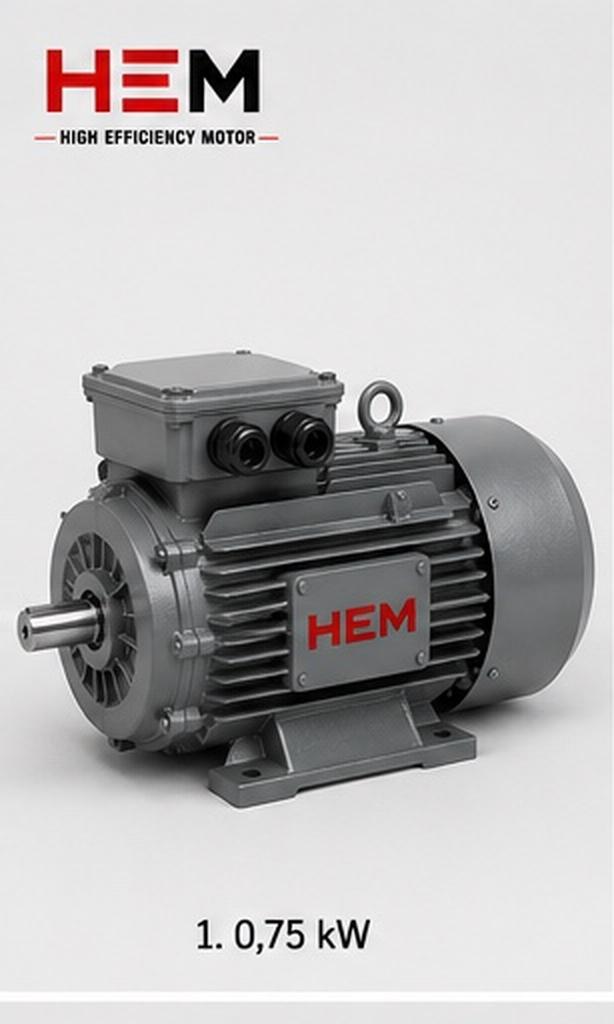
Frame Size: The Key to Mechanical Compatibility
The same power and speed correspond to different IEC frame sizes depending on pole count. Frame size determines not only the physical size of the motor but also the foot hole spacing, shaft diameter, shaft height and flange dimension. When connecting a motor to a machine, these dimensions matching is as important as the kW figure matching.
- Shaft diameter: The coupling, pulley or gearbox input is selected by shaft diameter. A wrong shaft diameter requires an extra adapter or coupling change.
- Shaft height: Critical for axis alignment with a pump or gearbox. A wrong shaft height may require shimming on the base or a new base.
- Foot hole spacing: In B3 foot-mounted motors the hole spacing must match to seat on the existing base.
For this reason, in a 3 kW or 5.5 kW order, not only the power but the pole count and frame size must be clarified. The right frame size eliminates installation surprises in the field.
B3, B5, B35: Choosing the Mounting Type Correctly
In mid-power motors the mounting type determines how the motor connects to the machine:
- B3 (foot-mounted): Connected to a base, frame or floor with feet. The standard of belt-pulley and coupled applications.
- B5 (large flange): Connected directly to a pump, gearbox or machine body via the front flange. Footless.
- B35 (foot + flange): Connected both by foot and by flange; used in applications where it is flange-mounted to a gearbox and additionally supported by feet.
A 3 kW motor to be connected to a gearbox input has a different mounting type than a 5.5 kW motor that will run with a coupling on a base. The wrong mounting type prevents the motor from fitting the machine even if it is the correct kW. You can review the difference between mounting types on our B5 flange electric motors page.
Copper Winding: The Invisible Source of Mid-Power Efficiency
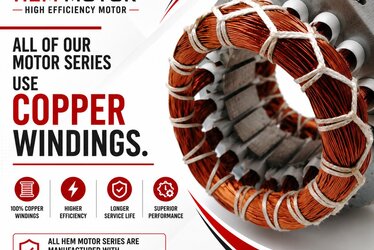
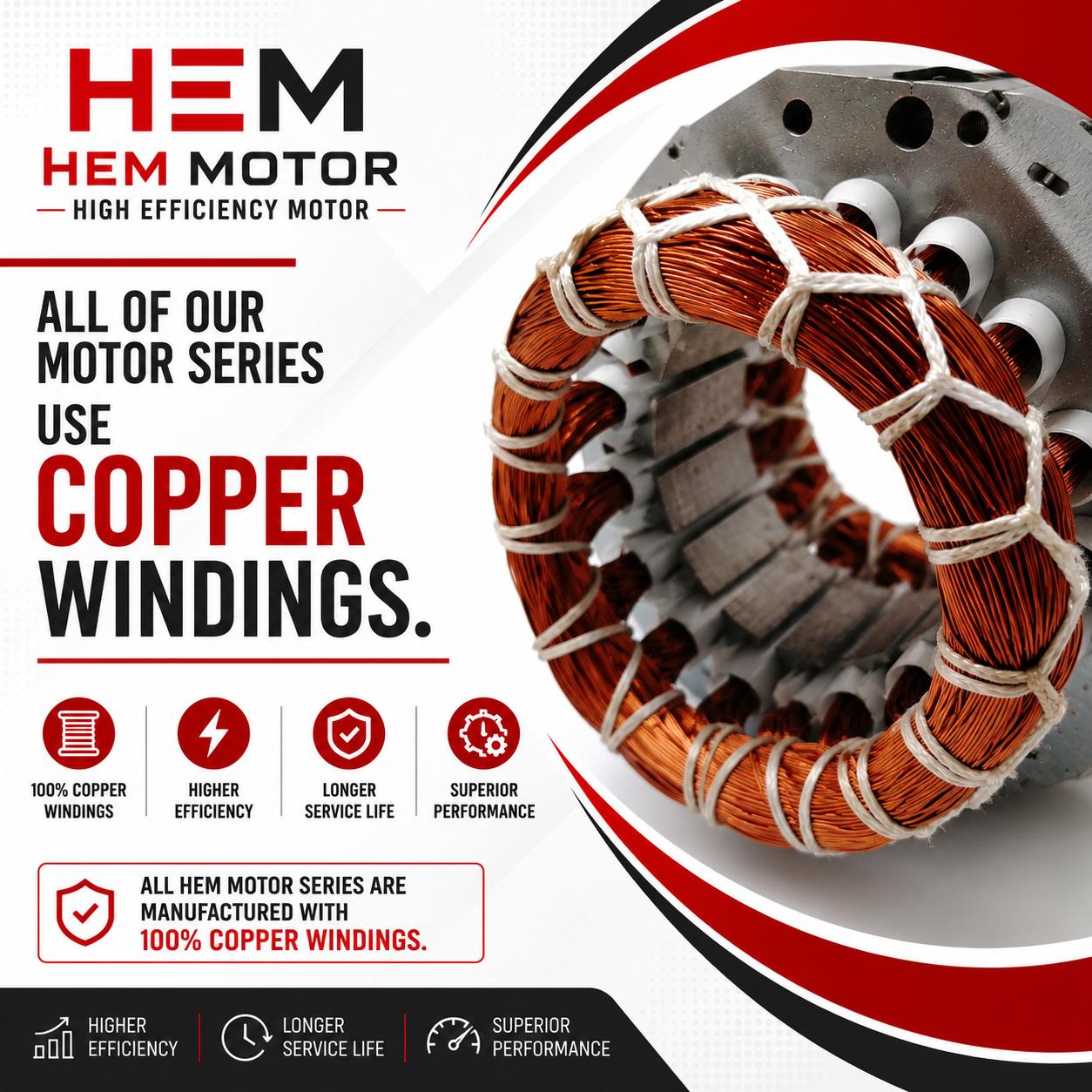
One of the most critical elements determining a motor's efficiency class is the winding material. HEM Motor uses 100% copper winding in mid-power IE4 motors. Copper's conductivity is markedly higher than aluminum; this means lower I²R (ohmic) losses in the winding, hence less heating and higher efficiency. In the mid-power band, that is in continuously running motors like 3 and 5.5 kW, this difference is directly reflected in the annual energy bill. Copper winding also increases thermal resilience; when the winding runs cooler, insulation life extends and failure risk drops. Therefore the IE4 efficiency class is not merely a label but the result of concrete engineering decisions like copper winding and quality core steel.
Rated Current and Panel Compatibility
A frequently overlooked subject when selecting 3 kW and 5.5 kW motors is the correct selection of panel elements according to the motor's rated current. Even at the same kW value, the IE4 motor's rated current varies by voltage and pole count. The cable cross-section, fuse/motor protection switch and contactor must be selected according to this current. A wrongly selected protection element either stops the motor unnecessarily (when undersized) or leaves it unprotected during a fault (when oversized). When buying a new motor, the compatibility of the nameplate current with panel elements must be checked. We covered cable, fuse and contactor selection according to rated current in our rated current cable fuse contactor selection article.
Stock Availability: Getting the Right Motor on Time
The biggest practical advantage of the mid-power band is that the most demanded configurations can usually be supplied from stock. 3 kW and 5.5 kW, 4-pole (1500 rpm), B3 or B5 mounted IE4 motors are among the most active bands in the market. However, this does not mean every configuration is on the shelf at all times. Points to consider in stock planning:
- Common configuration = fast supply: 4-pole, B3/B5, standard shaft diameter is usually the fastest-supplied combination.
- Special speed/mounting = lead time: Requests such as 6-pole, B35, special shaft or special terminal orientation may require lead time.
- Project-based multiple orders: If multiple motors will be bought for the same plant, standardizing configurations both speeds supply and eases spare parts management.
At HEM Motor we offer both fast delivery from stock and planned project-based supply in mid-power IE4 motors. For current electric motor prices and stock status you can review our product range and determine the configuration suitable for your application together.
3 kW or 5.5 kW? The Borderline Choice
Sometimes the application falls exactly between these two values. Here the golden rule is to select the motor slightly above the continuous running load but not excessively large. A motor chosen too small is constantly overloaded, heats up and its life shortens; a motor chosen too large runs at a low load factor, its efficiency and power factor drop and unnecessary initial investment cost arises. The machine's real shaft power and service factor need should be determined and a 3 kW or 5.5 kW chosen accordingly. This borderline decision should preferably be evaluated together with application details.
Service Factor and Backup in Mid-Power Motors
In continuously running mid-power motors, the service factor (SF) indicates how much short-term overload the motor can handle. The service factor provides some safety margin in borderline load conditions; however this margin is for temporary fluctuations, not for continuous overload. Running the motor constantly at the top of its service factor fatigues the winding and shortens its life. Therefore, in a 3 or 5.5 kW selection, correctly determining the real shaft power and treating the service factor as a buffer while keeping the actual operating point close to the rated power is the soundest approach. Backup motor planning is also important in critical processes; keeping a spare motor of the same configuration in stock allows the line to restart within minutes rather than hours during a failure.
Pre-Order Checklist
- Has the required shaft power and continuity (S1 or short-term) been determined?
- Has the speed the machine requires been clarified (pole selection depends on it)?
- Is the mounting type (B3/B5/B35) suitable for the machine?
- Do the shaft diameter and shaft height match the existing connection?
- Is the terminal box orientation suitable for the panel side?
- Has the IE4 efficiency class and required IP protection been selected?
- Stock or lead time; if there is a project-based multiple order, has it been standardized?
We also covered speed and stock selection in the related power band in our 2.2 / 3 / 4 kW asynchronous motor selection article; we recommend it as complementary reading.
Frequently Asked Questions
Is it reasonable to buy a 5.5 kW instead of a 3 kW and run it at low load?
Generally not. When a motor runs significantly below its rated load, its efficiency and power factor drop; in a continuously running application this means unnecessary energy cost over the years. The initial investment is also higher. The correct approach is to determine the real shaft power and select the nearest standard power leaving some margin. If frequent load increases are expected, the next power up may be considered.
Can I get the same 3 kW motor as both 2-pole and 4-pole?
Yes, the same power is produced in different pole counts; however the frame size, shaft diameter, speed and torque character change. 2-pole is high-speed low-torque, 4-pole is balanced, 6-pole is low-speed high-torque. The choice must be made according to the speed the machine requires; even if the kW stays the same, a pole change is a different motor.
Are mid-power IE4 motors supplied quickly from stock?
The most common configurations (3 and 5.5 kW, 4-pole, B3/B5) are usually the most active and fastest-supplied bands. Requests such as special speed, special mounting or special shaft may require lead time. At HEM Motor we offer both delivery from stock and planned project-based supply; once you clarify the configuration, we can plan the supply time together.