English
 Türkçe


Summary (TL;DR)
- Replacing old or standard-efficiency motors with a high-efficiency motor (IE4 Super Premium, IE5) permanently cuts electricity use and, indirectly, CO2 emissions; this verifiable saving can become a revenue source in the voluntary carbon market (VCM).
- Generating a carbon credit requires a solid baseline, an additionality argument and an MRV (measurement-reporting-verification) process; IPMVP-based M&V documentation is the heart of it.
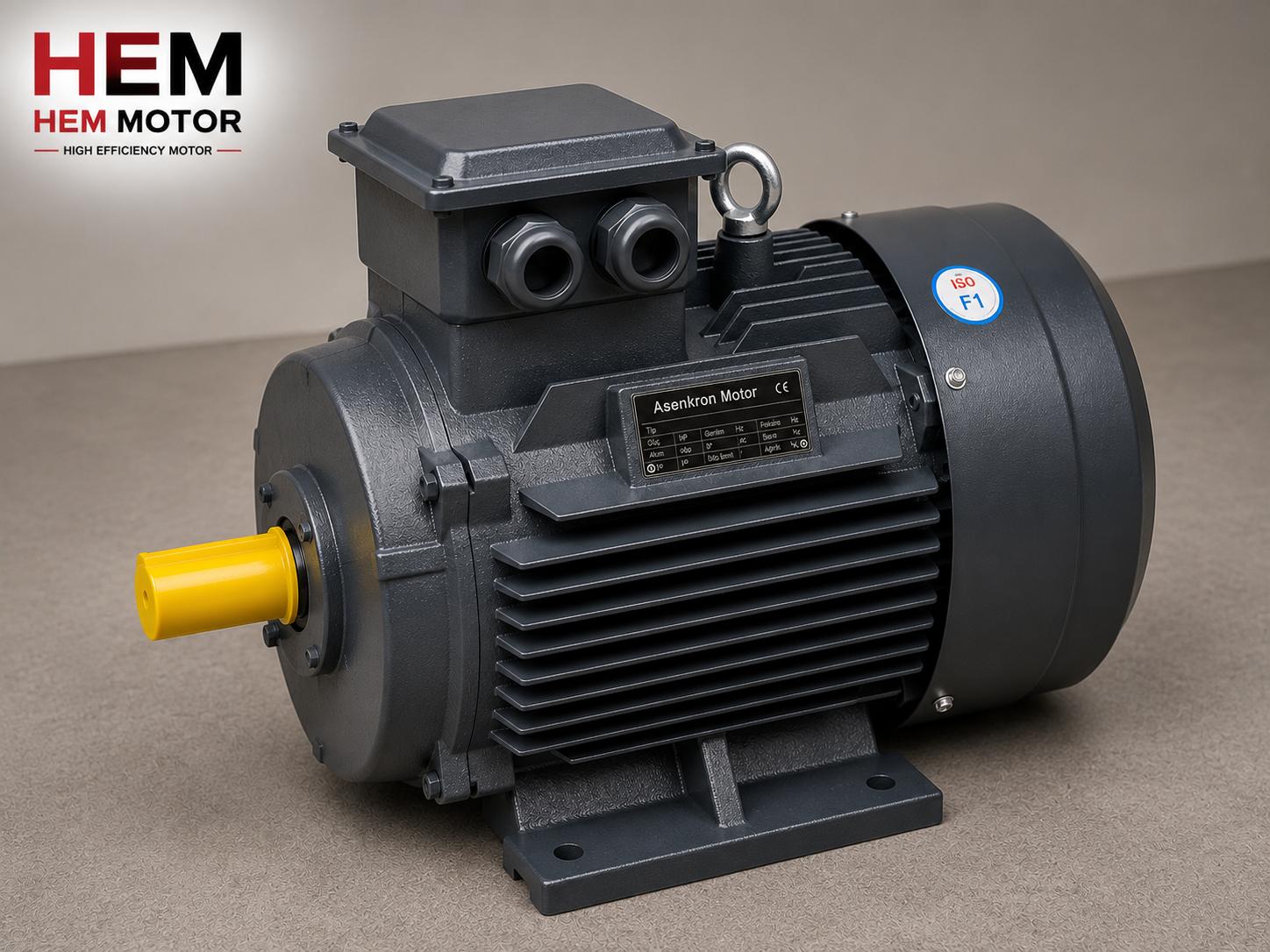
- HEM Motor manufactures and sells IE3 Premium, IE4 and IE5 motors from 0.55 to 355 kW, supplying both the motor and the verified-efficiency evidence needed for documentation, with stock and supply assurance.
- The VCM is voluntary and operates around registry concepts such as Gold Standard or Verra; it differs from compliance mechanisms like CBAM.
- A fleet-wide motor retrofit lowers the energy bill and makes the documented CO2 saving usable for crediting or reporting.
A large share of the electricity consumed by industry is used by electric motors. Pumps, fans, compressors, conveyors and machine tools run for hours, often for years without interruption. That is why the fastest and most measurable improvement in a plant's energy and carbon profile usually runs through the motor fleet. When you replace an old motor or a standard-efficiency unit with a high-efficiency motor, losses fall, you do the same work with fewer kilowatt-hours, and the CO2 behind every kilowatt-hour you draw from the grid also drops. In this article we explain how that saving can be documented and gain value within the voluntary carbon market, the concepts of baseline and additionality, the MRV process, and how HEM Motor's manufacturer assurance smooths this journey.
What Is the Voluntary Carbon Market (VCM)?
The voluntary carbon market is a market where companies and organizations finance or buy emission reductions without a legal obligation, to support their own climate goals. The core unit traded here is the carbon credit, which typically represents one tonne of carbon-dioxide-equivalent (tCO2e) reduced or removed. A project can generate a credit for every tonne not emitted to or removed from the atmosphere. Energy-efficiency projects, which reduce indirect emissions by consuming less energy, are one of the classic categories of this market.
The VCM differs from compliance markets. In compliance markets, governments or regional regulations place an emissions cap on operators and require them to buy and sell allowances. In the voluntary market participation is optional: a business may generate or buy credits to support its own voluntary net-zero commitment, meet customer and investor expectations, or strengthen corporate sustainability reporting. An efficiency project such as a motor retrofit, when properly documented, can be positioned as a reduction source in the voluntary market.
How the VCM Differs from CBAM and Compliance Markets
There is an important distinction not to confuse. CBAM (the Carbon Border Adjustment Mechanism) is an import-compliance mechanism; a mandatory framework where exporters are subject to reporting and cost obligations for the embedded emissions of certain products. The European Union Emissions Trading System is also a compliance market. The voluntary carbon market, by contrast, is independent and optional. A voluntary credit produced by a motor-retrofit project does not automatically satisfy a CBAM obligation; the two worlds operate under different rules. Still, the common ground is the same in both: genuinely reduce emissions and document them credibly. For readers focused on CBAM and exports, the article High Efficiency Motors and related export content complement this topic.
Why Does Motor Replacement Produce Carbon Reductions?
An electric motor cannot convert all the electrical energy it draws into mechanical work; some of it turns into heat through winding resistance, iron losses, windage and friction, and stray losses. As the efficiency class rises (IE3 Premium, IE4 Super Premium and IE5) these losses fall noticeably. An IE4 or IE5 motor carrying the same load consumes less electricity than an old IE1 or IE2 unit. As operating hours accumulate over the years, this difference reaches a meaningful kilowatt-hour saving.
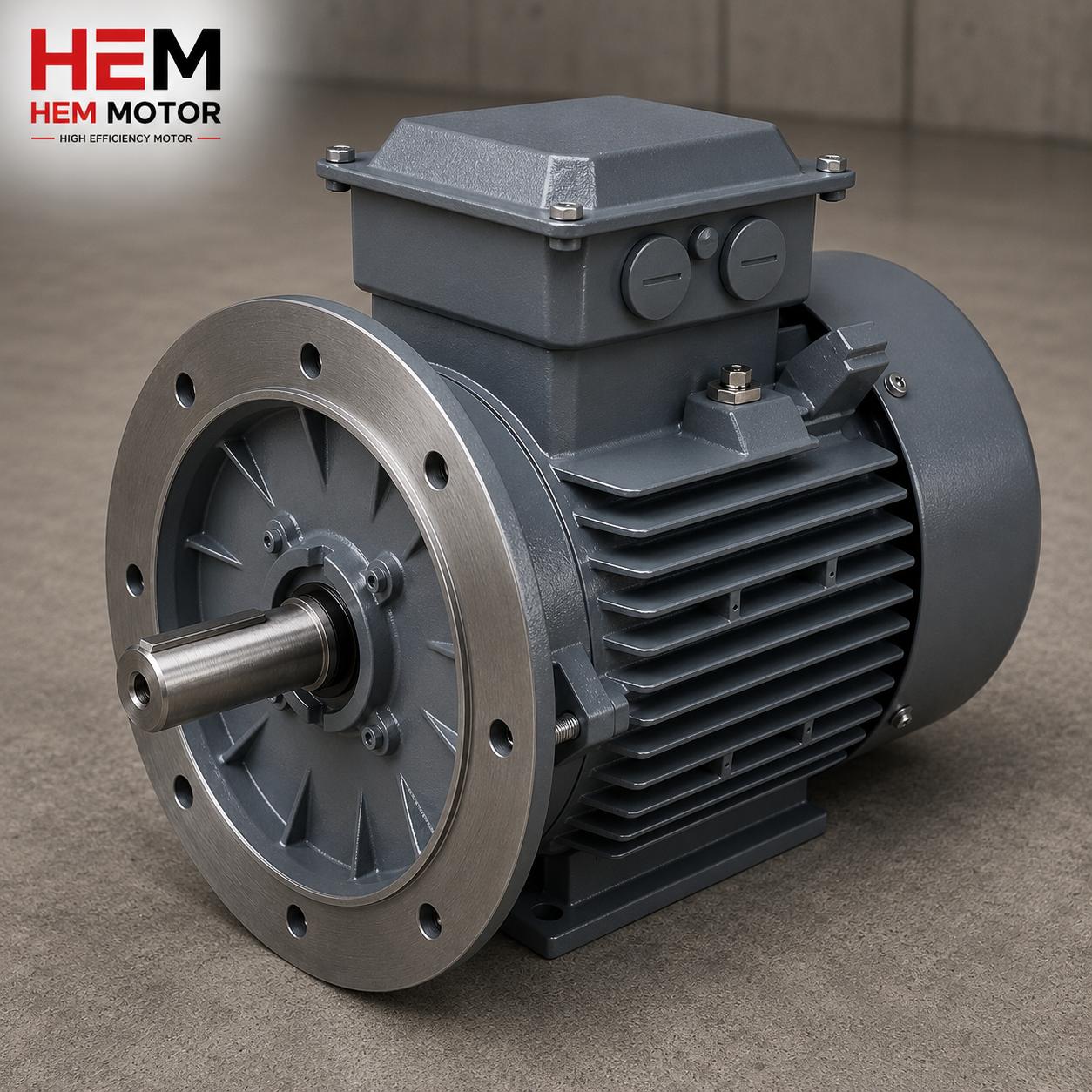
Every kilowatt-hour saved, multiplied by the grid emission factor, corresponds to a CO2 reduction. The grid emission factor depends on the energy mix of the electricity generated and varies by region. This is exactly why motor replacement can be a carbon credit source: the energy saving is directly measurable and, when tied to an emission factor, turns into a documentable reduction. HEM Motor's high-efficiency motors, with 100 copper windings, cast-iron frame, IP55 protection and F insulation, are built to deliver precisely this measurable gain.
Typical Retrofit Scenarios
- Replacing aged or rewound motors: Motors rewound many times have degraded efficiency; replacing them directly cuts losses.
- Moving from IE2 to IE4 or IE5: The largest emission gain appears in projects where the class jump is widest.
- Right-sizing oversized motors: Selecting a high-efficiency motor matched to the real load keeps operation near the efficiency peak and lowers consumption.
- Fleet-wide replacement: Planned renewal of dozens of motors offers economies of scale and a stronger documentation base than single projects.
The Pillars of a Carbon Credit: Baseline, Additionality and Durability
For an efficiency project to generate credits in the voluntary market, it is expected to meet three core principles.
Baseline
The baseline answers the question of how much energy would have been consumed and how much would have been emitted without the project. In motor replacement, the baseline is usually the consumption of the old motor calculated from measured or nameplate values. For an accurate baseline, the old motor's power draw, operating hours and loading profile must be recorded. The more robustly the baseline is documented, the more credible the resulting reduction.
Additionality
Additionality is the principle of showing that the reduction happened only because of the project and would not have occurred otherwise. Some methodologies treat moving to an above-average efficiency class (for example choosing IE4 or IE5 beyond standard practice) as a positive indicator of additionality. The deliberate selection of a high efficiency class supports the argument that the project goes beyond an ordinary replacement.
Durability, Double Counting and Measurability
A reduction must be real, measurable and durable, and the same reduction must not be counted twice. In efficiency projects the reduction occurs continuously as the motor runs, so monitoring over the equipment lifetime matters. To prevent double counting, credits must be held with a unique serial number in a registry and retired when used.
MRV and M&V: How Do You Document the Saving?
MRV stands for measurement, reporting and verification, and it is the backbone that ensures a credit's credibility in the voluntary market. In the measurement stage, field data is collected; in the reporting stage this data is documented in line with the methodology; in the verification stage an independent party confirms the consistency of the calculations and data. In energy-efficiency projects, measurement and verification (M&V) usually rest on the IPMVP (International Performance Measurement and Verification Protocol) framework.
IPMVP offers several options to prove savings. For motor retrofits, the most common approaches rely on retrofit-isolation measurements (tracking the before-and-after consumption of a single piece of equipment) or on whole-facility consumption monitoring. Whichever method is chosen, the common requirement is the same: reliable before (baseline) and after measurements, an operating-hours record, and transparent documentation of the emission factor used in the calculation.
What to Collect for Documentation
- The old motor's efficiency class, power, measured consumption and operating hours.
- The new high-efficiency motor's efficiency-class label, rated power and test/conformity data.
- The loading profile and real operating regime (continuous, intermittent, variable speed).
- The grid emission factor used and its source.
- Installation dates, billing records and, where available, meter or measurement-device data.
For those who prefer a systematic approach over building this documentation discipline from scratch, structured measurement and verification practices provide a practical start, and a holistic view of motors' carbon footprint impact reinforces the case.
Methodologies and Registries
For a project to generate credits in the voluntary market, it must be developed under a methodology approved by a recognized registry. At a conceptual level, organizations such as Gold Standard and Verra (VCS) provide standards and methodologies that define how projects are designed, how the baseline is set, how additionality is proven and how the MRV process is run. Methodologies exist for energy efficiency and demand-side management, and motor replacement can be assessed within this scope.
Conceptually, the process proceeds as follows: a suitable methodology is selected, a project design document is prepared, the baseline and expected reduction are calculated, the project is registered with a registry, monitoring is carried out, independent verification is completed, and a carbon credit is issued for the verified reduction. When credits are used, they are retired in the registry to prevent double counting. The critical point here is that the technical side of the project (a real and measurable efficiency gain) is solid, because the entire verification process rests on that technical reality.
Turning Fleet Renewal into Credits: A Practical Roadmap
- Inventory and screening: List the efficiency class, power and operating hours of every motor in the plant; prioritize units with the highest gain potential.
- Baseline measurement: Before replacement, measure current consumption or calculate it from nameplate and load data; document this.
- Correct motor selection: Choose a load-matched high-efficiency motor (IE4 or IE5); avoid oversizing.
- Installation and post-measurement: Commission the new motors and monitor post consumption per the M&V plan.
- MRV and verification: Prepare the IPMVP-based report and submit it for independent verification under the methodology.
- Crediting or reporting: Use the verified reduction for voluntary credit generation or corporate sustainability reporting.
The technical foundation of this roadmap is supplying the right motor with the right data. To review the relevant product family, see our high-efficiency motor range and contact us for current electric motor prices and stock status.
HEM Motor Manufacturer Assurance: Motor and Documentation Together
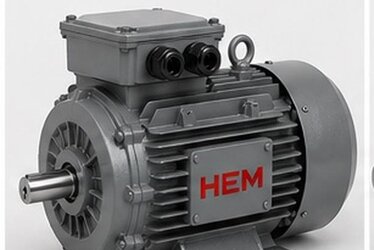
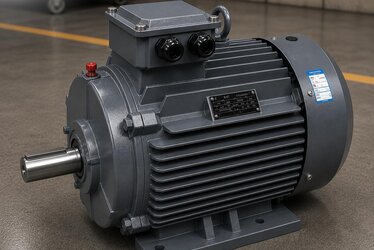
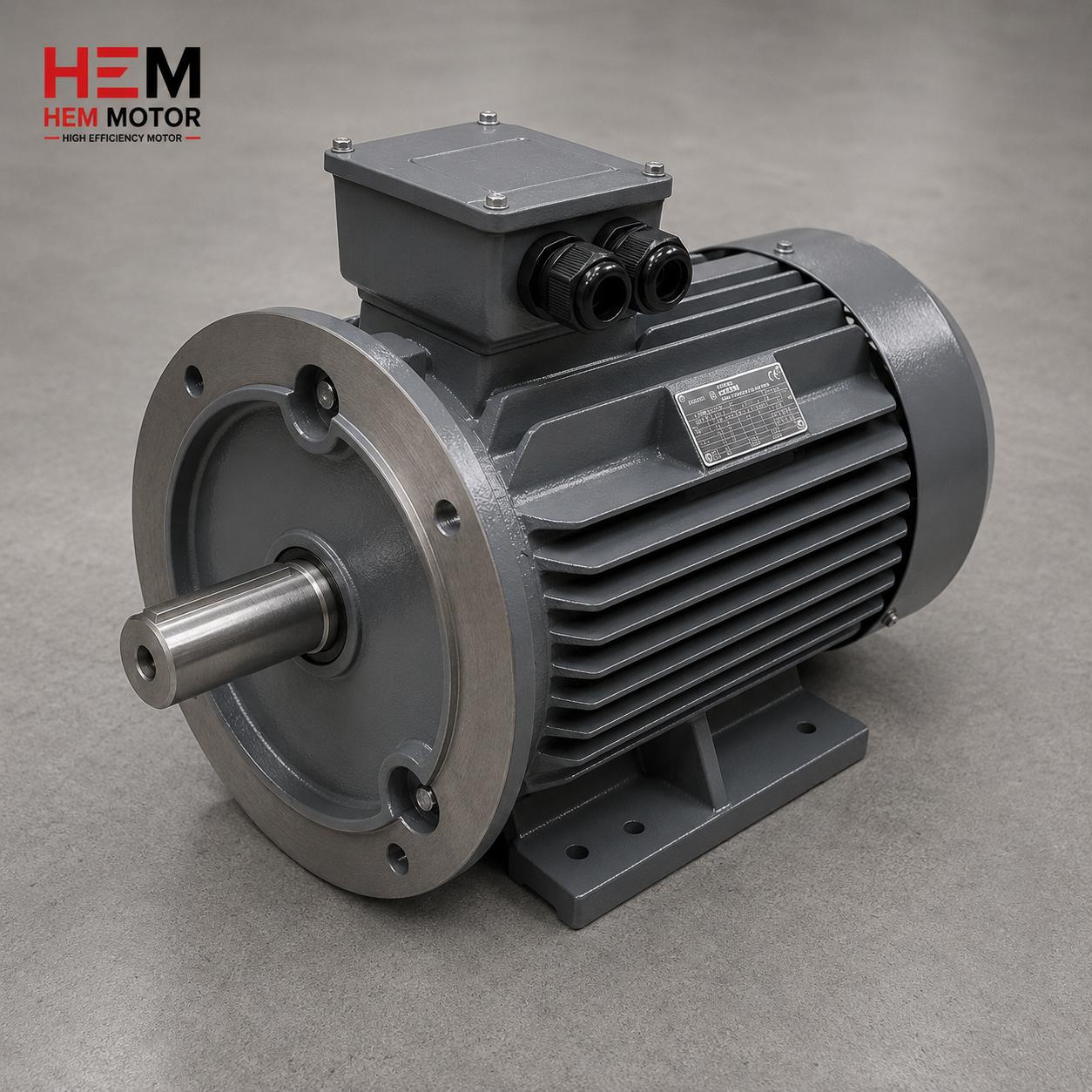
The most fragile point of the carbon-credit journey is the reliability of the data that proves the efficiency gain. As an organization that both manufactures and sells the motor, HEM Motor provides a decisive advantage at this point. Our IE3 Premium, IE4 Super Premium and IE5 motors cover a wide power range from 0.55 kW to 355 kW; with 100 copper windings, a cast-iron frame, IP55 protection and class F insulation, they deliver durable and stable efficiency. The verified efficiency-class label and technical data strengthen the documentation side of your M&V file.
- Stock and supply assurance: Timely supply of motors at the right power keeps a fleet-renewal schedule on track.
- Quotation and technical support: Technical quotation support helps select the right efficiency class and power for the load and application.
- Documentation-friendly data: Efficiency class, ratings and conformity information can be used directly in your MRV and baseline calculations.
- Wide power range: The 0.55-355 kW range allows single-source supply from small auxiliary equipment to large drive systems.
This way you obtain both the verified high-efficiency motor and the technical evidence you need for documentation from a single supplier, enabling a project that both lowers your energy bill and produces a reduction usable in the voluntary market.
Frequently Asked Questions
Does motor replacement always produce a carbon credit?
No. The saving always occurs, but for it to become a formal carbon credit, the project must be developed under a suitable methodology, prove baseline and additionality, and pass independent verification. A single small motor may often lack the scale; fleet-wide replacement is more favorable for crediting. In any case, the energy and cost saving is achieved directly.
Are the VCM and CBAM the same thing?
No. The voluntary carbon market is optional and helps organizations support their own climate goals. CBAM is a mandatory compliance mechanism concerning the embedded emissions of imported products. A voluntary credit does not automatically satisfy a CBAM obligation. They are separate frameworks operating under different rules, although both reward genuine emission reductions and credible documentation.
How does HEM Motor help in the carbon-credit process?
HEM Motor manufactures and sells IE4 and IE5 motors with a verified efficiency class; the efficiency label, ratings and technical data feed the documentation side of your M&V file. Stock and supply assurance protects your fleet-renewal schedule. This lets you source both the motor and the technical evidence needed for your baseline and MRV calculations from a single supplier, placing your project on a solid technical foundation.