English
 Türkçe


Buying an efficient motor is only the first step toward saving energy; the real gain comes from running that motor with the right control strategy. This is exactly where VFD flux optimization and energy-saving mode come into play. Instead of letting the frequency drive feed the motor with full magnetic field at all times, reducing the magnetic field in line with the load lowers the iron (magnetic) losses, and this produces visible energy savings particularly in systems that operate at partial load. In this article we explain how flux optimization works, in which applications it delivers the highest gain, where it is not recommended, and how to use this feature in the most efficient way by selecting the correct IE3/IE4 motor.
What Is VFD Flux Optimization and How Does It Work?
VFD flux optimization is the drive reducing the motor's magnetic field according to the load in order to cut iron loss. When an asynchronous motor runs, there are two main groups of losses: load-dependent copper losses and iron (magnetic) losses that are largely independent of the load. Iron losses arise because the stator is magnetized and reversed thousands of times every second, and they grow larger the higher the motor's magnetic field (flux) is.
A standard drive always supplies the motor with rated flux; in other words, whether the motor runs at no load or at 20% load, the magnetic field stays at its full value. Yet at low load there is no need for such a strong magnetic field. Flux optimization is the drive sensing the instantaneous load and holding the magnetic field at exactly the level required. When the load drops, the flux is reduced and iron losses fall; when the load rises, the flux is raised again to provide torque.
- Iron loss: depends on flux and is relatively independent of load; it is the target of optimization.
- Copper loss: depends on current (load); this loss varies directly with the load.
- Flux reduction: minimizes total loss by lowering the magnetic field at low load.
The logic behind the feature can be understood through a simple balance. At any operating point the total loss of the motor is the sum of the iron loss and the copper loss. At full load, copper loss dominates and the flux must remain at its rated value to keep the torque available, so there is little room to intervene. As the load falls, however, the copper loss shrinks quickly while the iron loss stays high because it is tied to the magnetic field rather than to the shaft load. By trimming the flux at this point, the drive shifts the operating point toward the minimum of the combined loss curve. The control algorithm continuously searches for the flux level that yields the lowest total input power for the torque actually being demanded, and it keeps the motor near that point as conditions change.
In Which Applications Is the Highest Saving Achieved?
The highest saving is achieved in fans, pumps and conveyors that run for long periods at partial or variable load. The common feature of these applications is that they rarely run at full load and spend most of the day at low or variable load.
Fan and Pump Applications
Fans and centrifugal pumps have a variable-torque characteristic; as the flow rate drops, the power drawn falls rapidly as well. Systems such as ventilation fans, cooling towers and circulation pumps rarely run at 100% capacity. In these systems flux optimization reduces iron losses during low-flow periods and produces a marked decrease in the annual energy bill.
Conveyor Applications
Many conveyors run at variable load depending on the amount of product they carry. During the hours when they run empty or half full there is no need for full flux; flux optimization saves quietly during these periods. Because conveyor duty cycles often alternate between long stretches of light loading and short bursts of heavy loading, the cumulative effect of trimming the flux during the light periods can be significant over a full shift, even though no single moment shows a dramatic figure.
It helps to remember why fan and pump systems are such strong candidates. In a centrifugal machine the power demand follows roughly the cube of the speed, so running at 80% flow already draws only about half the rated power, and at 50% flow the demand collapses to a small fraction of full load. A motor sized for the peak therefore spends most of its life far below its rated point, exactly the region where carrying full flux wastes energy in the iron. Flux optimization targets precisely this wasted magnetizing energy and recovers a part of it across the many hours of partial-load operation that define these systems.
Why Is the Gain Limited at Constant Full Load?
In motors that run at constant full load the gain is limited, because they are already close to optimum flux. If a motor runs continuously at rated load, its magnetic field must already be at full value and there is no surplus to reduce. In applications of this kind the gain that flux optimization can provide is negligible.
For this reason flux optimization is not a feature to be applied blindly without analyzing a system's load profile. For a compressor or mill that runs continuously at full load this feature offers no advantage; but for a ventilation fan that turns at low load for hours each day it is a serious source of saving. The correct decision is to first map out the load profile and then select a motor suited to energy-saving mode.
A practical way to judge whether the feature is worth enabling is to record how many hours per day the system spends below roughly 60% of rated torque. The more of the operating calendar that falls into this low-load band, the larger the return from flux optimization. A machine that sits near full load almost all the time will see the saving disappear into measurement noise, whereas a machine that idles or runs lightly for the greater part of each day can justify the feature on its energy bill alone. This is why the load profile, not the motor's nameplate, decides the outcome.
Applications Where Flux Optimization Is Not Recommended
Flux optimization is not suitable for every application. It is not recommended in applications that demand constant torque and undergo sudden load changes, such as cranes and elevators. In these systems torque is needed in full at every moment, even at the instant the load is lifted. A motor with reduced flux may not respond fast enough to a sudden load demand; this leads to loss of position or difficulty at start-up.
- Cranes and hoisting: the load demands full torque at every moment; reducing flux creates a safety risk.
- Elevators and escalators: sudden load changes and position sensitivity require full flux.
- Positioning axes: fast torque response is essential; flux optimization slows it down.
Mind the Cooling at Low Speed
Whether flux optimization is applied or not, cooling is a critical issue in motors that run at low speed with a drive. When a self-fan-cooled (IC411) motor turns at low speed, its fan also slows down and cooling can become inadequate. For motors that will run at low speed for long periods, an externally supplied (forced) fan or a larger frame should be preferred.
Supplying the Correct IE3/IE4 Motor With Drive Compatibility and Commissioning Support
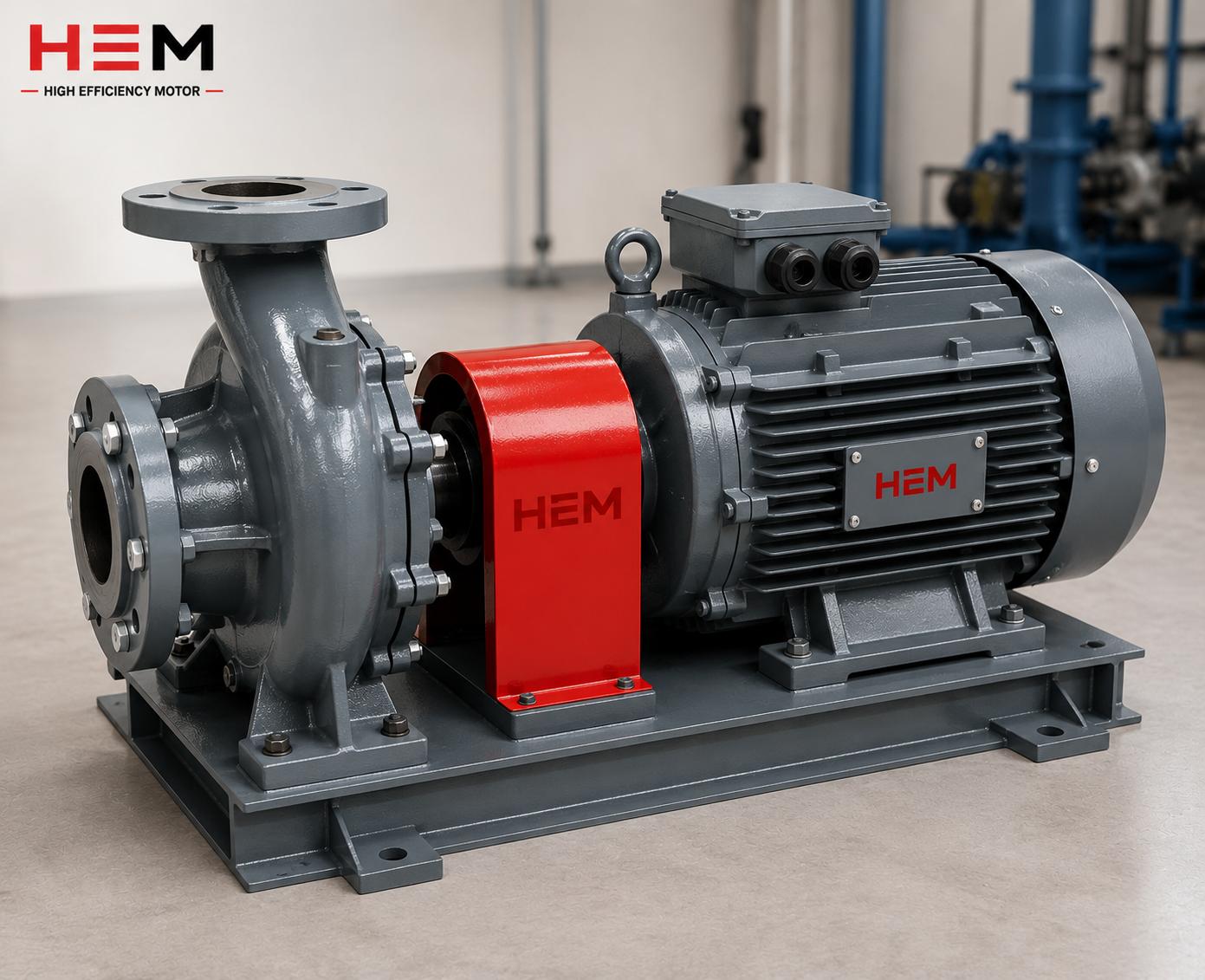
We supply efficient IE3/IE4 motors suited to energy-saving mode from stock, together with drive compatibility and commissioning support. To obtain the full benefit of flux optimization, not only the motor's efficiency class but also its drive-compatible insulation (inverter duty), suitable insulation class and correct cooling structure are important. A supply backed by the manufacturer ensures that the motor and the drive are selected to be compatible with each other and that the parameters are set correctly during commissioning.
We evaluate which efficiency class and which cooling type is right for which application together with your load profile, and we supply quickly from stock. Taking the drive and commissioning support into account in your system planning, alongside current electric motor prices, lowers the total cost of ownership.
Frequently Asked Questions
Does flux optimization shorten the motor's life?
When applied correctly, no. Flux reduction is carried out only at low load and temporarily; as soon as the load rises, the flux is raised again. The point that really needs attention is cooling at low speed. If a forced fan or a suitable frame is chosen for motors that will run at low speed for long periods, no shortening of life occurs; on the contrary, heating is reduced.
In which applications should I not use flux optimization?
It is not recommended in applications that require constant torque and undergo sudden load changes, such as cranes, elevators and positioning axes. In these systems torque is needed in full at every moment, and a motor with reduced flux cannot respond fast enough to a sudden demand. In these applications flux optimization is switched off.
Does flux optimization work in a motor running at constant full load?
The gain is very limited. A motor that runs continuously at full load already operates close to optimum flux; since there is no surplus to reduce, the saving is negligible. This feature delivers its real benefit in fans, pumps and conveyors that run at partial or variable load.