English
 Türkçe

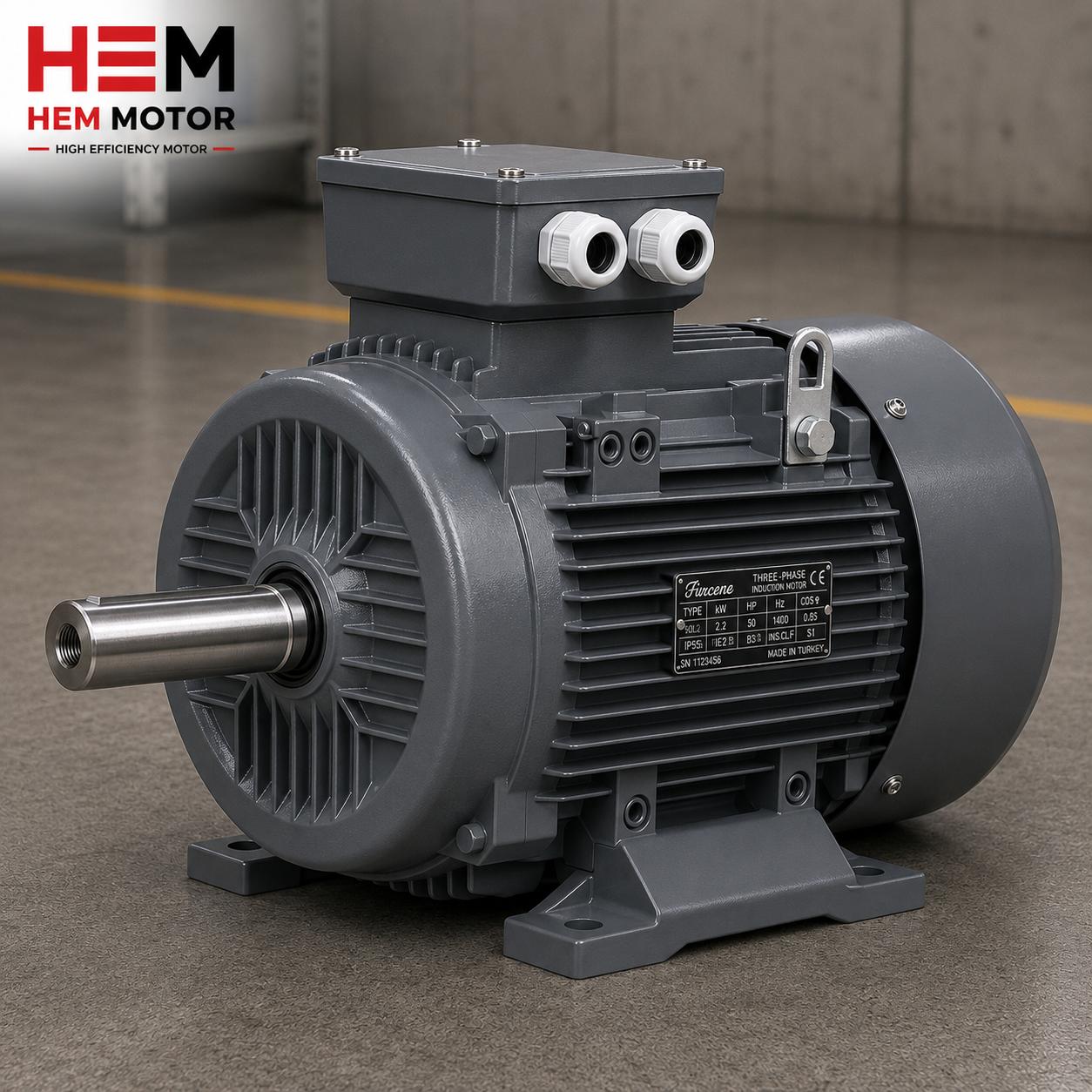

The real cost of an electric motor does not begin with the amount you pay at purchase; from the moment that motor starts running on a production line, in a pump, a fan or a compressor, it consumes electricity every single second and steadily grows its total cost. In a continuously running motor, the energy expense climbs far above the initial investment. That is why the two most critical figures you need to know in order to choose the right motor are its operating hours and its load ratio. When combined in an annual kWh calculation, these two values clearly reveal which efficiency class motor makes the most sense for your application.
In this article, we walk step by step through the calculation you should perform when selecting an efficient motor: how to compute annual energy consumption starting from rated power, how the efficiency gap between an IE3/IE4 motor translates into annual consumption, how savings turn into money, and the logic of the payback period that shows how many years it takes for the extra investment to pay for itself. Our goal is to demonstrate, with a concrete method, how a difference of just a few efficiency points turns into a serious sum over the years.
Setting up the calculation correctly is not merely an engineering exercise; it directly shapes your purchasing decision. In high operating-hour and high-load applications, a total cost of ownership (TCO) perspective shows that the cheapest motor can in fact be the most expensive choice. At HEM Motor, our aim is to help you select the right motor with the right calculation and to supply those motors from stock with manufacturer assurance.

Operating Hours: The Multiplier in the Calculation
How many hours a motor runs per year is the most decisive multiplier in its energy consumption. If, of two motors with the same power, one runs 4 hours a day and the other 20 hours, the second one's annual consumption is five times higher. For this reason, whether an efficiency investment makes sense is largely determined by operating hours.
Estimating operating hours correctly
When calculating annual operating hours, you should account for the number of shifts, weekly working days, and downtime for planned maintenance and holidays. In a single-shift operation, a motor runs roughly 2,000 hours a year, while in a continuous three-shift production facility this figure climbs above 8,000 hours. Pump, fan and compressor motors running in S1 continuous duty have the highest operating hours, and for exactly that reason they are where efficiency investments pay back fastest.
- Single shift (8 h/day, 250 days): about 2,000 hours/year
- Double shift (16 h/day): about 4,000 hours/year
- Three shifts / continuous process: 6,000–8,760 hours/year
- Seasonal applications (irrigation, cooling): variable, calculate separately
Load Ratio: How Loaded Is the Motor Running?
The second critical variable of the efficiency calculation is the load ratio. A motor rarely runs at full rated power; in most applications the real load is between 50% and 90% of rated power. The ratio of the actual shaft power a motor draws to its rated power determines both consumption and the real efficiency at that load.
An important point: motors generally reach their peak efficiency at around 75% load. An oversized motor running continuously at 30–40% load operates at both low efficiency and poor power factor. That is why correct power sizing comes before efficiency class. An annual kWh calculation made without knowing the load ratio does not reflect reality.
How do you determine the load ratio?
The most practical way to measure load ratio in the field is to measure the actual current the motor draws and compare it to the rated current. For a more precise result, the real active power (kW) can be measured with a power analyzer. If measurement is not possible, a reasonable estimate can also be made from the process data of the driven machine (flow rate, pressure, line speed).
The Method of the Annual kWh Calculation
Now that we know the two multipliers of the calculation, we can compute annual energy consumption. The essence of the method is this: the electrical power a motor draws from the grid is found by dividing shaft power by efficiency; multiplying that power by the annual operating hours yields annual energy consumption.
Symbolically, the method is set up as follows:
- Shaft power = rated power (kW) × load ratio
- Power drawn from grid = shaft power ÷ (efficiency ÷ 100)
- annual kWh calculation = rated power (kW) × load ratio ÷ (efficiency ÷ 100) × annual operating hours
The power of this formula lies in uniting three variables in a single table. As operating hours increase, as the load ratio rises and as efficiency drops, annual consumption grows. Raising efficiency, that is, switching to a higher efficiency class motor, enlarges the denominator in this equation and lowers consumption.
A worked annual kWh example
As an example, consider a motor of 30 kW rated power, running at an 80% load ratio, for 6,000 hours a year. Suppose this motor runs at 93.0% efficiency in the IE3 class. The power it draws from the grid is about 30 × 0.80 ÷ 0.930 = 25.8 kW. Annual consumption is then 25.8 × 6,000 = approximately 154,800 kWh. If an IE4-class motor with 94.5% efficiency were used in the same application: 30 × 0.80 ÷ 0.945 = 25.4 kW, giving around 152,380 kWh per year. The difference amounts to roughly 2,400 kWh of savings per year, and that is for just one motor.
Calculating Savings Correctly
Savings are simply the difference between old and new consumption. That is:
- Annual savings (kWh) = annual consumption of the old motor − annual consumption of the new motor
- Monetary savings = annual savings (kWh) × unit energy cost
At this point there is a distinction to keep in mind: the efficiency on the nameplate and the efficiency the motor actually delivers in the field may not always be exactly the same. Winding quality, voltage imbalance, mechanical losses and installation conditions affect the real field efficiency. To go deeper into this topic, you can review our article on the nameplate vs field efficiency difference. For a realistic calculation, field conditions must also be brought into the equation.
Factors that magnify savings
Savings depend not only on efficiency points but also on operating hours and load ratio. Savings are greatest in motors running with high operating hours (continuous S1, multi-shift) and a high load ratio. Therefore, if a facility is to begin an efficiency investment, prioritization should always start from the motors that run the most and are the most heavily loaded. While switching a rarely used backup pump to IE4 may take years to pay back, the same investment on a continuously running main process motor pays back far faster.
Payback Period and Total Cost of Ownership
The clearest indicator measuring whether an efficiency investment makes sense is the payback period. The calculation is simple:
- payback period (years) = extra investment ÷ annual monetary savings
The "extra investment" here is the additional purchase difference an IE4 motor creates compared to an IE3 or lower-class motor. If the annual monetary savings are large enough, this difference usually amortizes within a few years, and in high operating-hour applications in a far shorter time. What matters is that the total savings the motor delivers over its economic life exceed this extra investment many times over.
The perspective that sees the whole picture, however, is total cost of ownership (TCO). TCO sums up purchase, installation, energy and maintenance costs over the motor's life. In a continuously running motor, the energy item can make up more than 90% of total cost. For this reason, a difference of a few efficiency points overshadows the purchase difference when viewed over the lifetime. For details on the subject, you can look at our article on total cost of ownership (TCO) for high-efficiency motors.
Does it make sense to replace an old motor?
Old motors that have run for years, been rewound many times and lost efficiency often cause serious energy loss unnoticed. Replacing these motors with a new IE4 usually proves profitable when the calculation is done correctly. To examine the payback logic of replacement in depth, you can read our article on the payback of replacing an old motor with IE4.
The Hardware That Makes the Efficiency Difference Possible
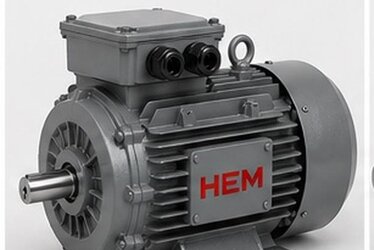
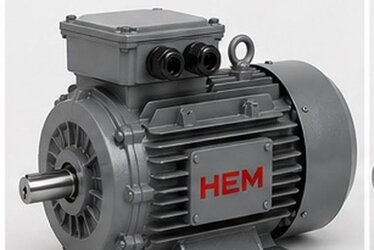
The efficiency class on a motor's nameplate is no coincidence; it stems directly from the motor's internal construction. High efficiency is achieved by reducing losses, and that is made possible by quality materials. The HEM Motor efficient motor range is built on the hardware that makes this difference permanent.
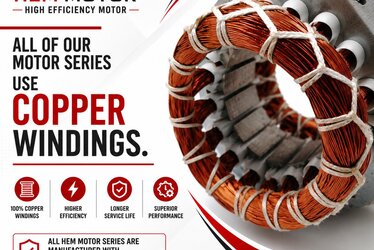
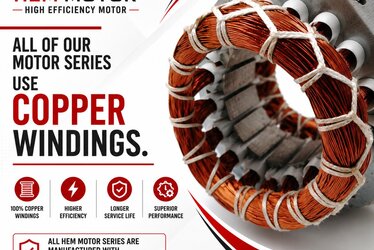
- 100% copper winding: provides lower resistance, less copper loss and higher efficiency compared to aluminum.
- Cast iron housing: superiority in mechanical strength and heat dissipation.
- IP55 protection class and Class F insulation: long life under harsh field conditions.
- IE3 Premium and IE4 Super Premium options, in a power range of 0.55–355 kW.
At HEM Motor, we supply a wide range of efficient motors from stock, foremost among them IE4 high-efficiency electric motors with these features. We can calculate together which power and which efficiency class suits your application based on your operating hours and load ratio, and offer a quote tailored to your request. You can contact us for current electric motor prices and stock availability.
Putting the Calculation Into Practice
To make the right decision in the field, the sequence to follow is this: first determine the motor's annual operating hours, then measure or estimate the real load ratio, then plug in the efficiency values of the existing and target motors and perform two separate annual kWh calculation runs. Multiply the difference between the two consumptions by the unit energy cost to find annual savings, and finally divide the extra investment by these savings to compute the payback period. This simple chain clearly shows which motor is truly economical.
What should not be forgotten is that this calculation is meaningful even for a single motor and can be transformative for an entire facility. In a plant with dozens of motors, an efficiency improvement applied to the few motors that run the most provides a serious reduction in the annual energy bill. When the right calculation, the right motor and reliable supply come together, efficiency becomes not a cost but an investment with a clear payback.
Frequently Asked Questions
Which efficiency value should I use in the annual kWh calculation?
It is best to use the efficiency at the load point where the motor operates. The efficiency on the nameplate is usually the full-load (100%) value; however, if your motor runs at 75% load, you should use the efficiency value at that load point. Most motors reach their peak efficiency around 75% load, so knowing your real load ratio is critical to the accuracy of the calculation.
In how many years does the extra cost of an IE4 motor pay for itself?
This depends entirely on operating hours, load ratio and unit energy cost. In high operating-hour and high-load continuous process motors, payback usually occurs in a very short time, while it can be longer for rarely used motors. To see the correct result you need to run a payback calculation with your own operating hours and load ratio; we can assist you with this calculation.
Does an efficiency investment make sense for low operating-hour motors too?
Because the annual savings are smaller in low operating-hour motors, the payback period can lengthen. Nevertheless, high-efficiency motors generally offer higher-quality materials and lower heating, providing advantages in terms of life and reliability. Starting the investment priority from the motors that run the most and are the most heavily loaded is the way to achieve the fastest payback.