English
 Türkçe

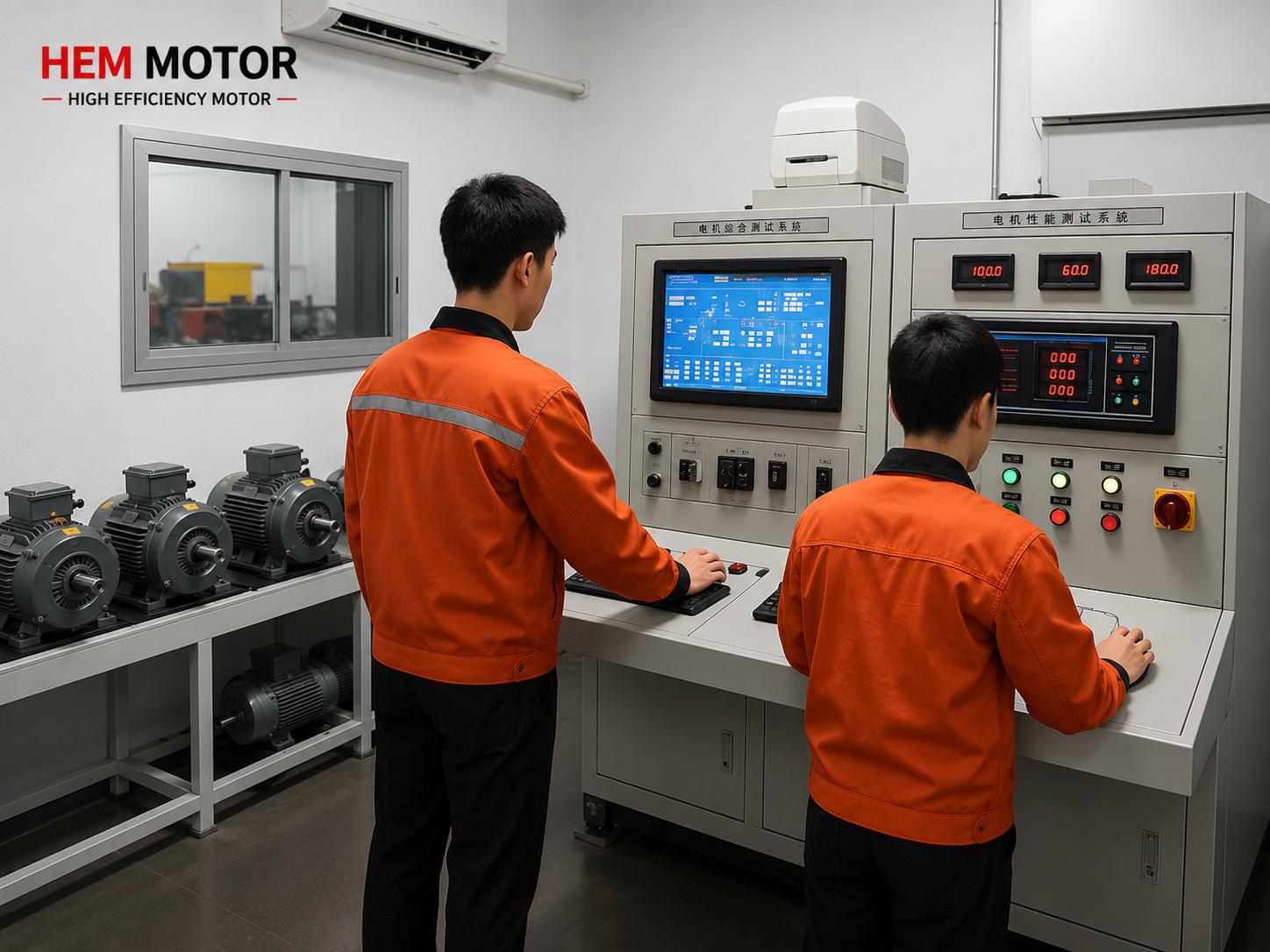

In industry, the largest share of the electricity bill comes from electric motors. In most plants, more than half of total electricity consumption is spent by the motors driving pumps, fans, compressors, conveyors and mills. That makes one of the most powerful levers for cutting energy cost twofold: raising the efficiency of the motor itself, and intelligently managing when those motors run. This is exactly where the concepts of the night tariff and peak (puant) hours come into play: by doing the same work at different hours, it is possible to achieve substantial savings without any loss of production.
In this article we examine the logic of time-of-use tariffs, the method of shifting flexible production steps into low-tariff hours, and the two-way saving that comes from demand management by limiting the power drawn during peak hours. The common denominator of all these strategies is a high-efficiency motor: a well-chosen motor lowers unit energy consumption and at the same time increases the flexibility to exploit the tariff.
Time-of-Use Tariffs: Day, Peak and Night
For industrial consumers, electrical energy is generally priced differently across three time bands. The day tariff covers standard hours; the peak tariff applies during the evening hours when demand spikes and is the most expensive band; and the night tariff offers the lowest unit price during the late hours when demand falls. The price difference between these bands is far from trivial, and the ratio between peak and night can often exceed two to one.
This structure is a cost signal that directly affects production planning. If a plant consumes most of its energy in the expensive peak band, it is paying far more per kilowatt-hour. By re-timing consumption — shifting energy-intensive tasks into the night band — it is possible to reduce the bill without doing a single unit less work. This is precisely where the efficient motor acts as an enabler: it draws less energy and, when suited to variable-speed operation, makes it easier to align the production rhythm with the tariff.
- Day band: Standard production hours, mid-level unit price.
- Peak band: Evening spike in demand, the highest unit price — the band to avoid wherever possible.
- Night band: The lowest unit price — the ideal window for flexible and energy-intensive tasks.
Why an Efficient Motor Amplifies the Tariff Advantage
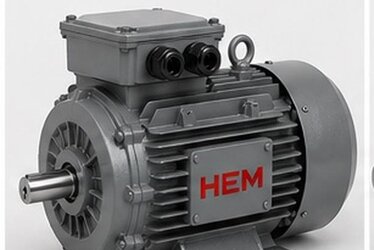
A high-efficiency motor converts a larger share of every kilowatt it draws from the grid into mechanical work; the losses are not wasted as heat. IE3 and IE4 efficiency class motors produce noticeably fewer losses under load than older standard motors. Accumulated over a year on a continuously running motor, this creates a meaningful difference in energy and cost.
Combining the efficiency advantage with a tariff strategy creates a multiplier effect. Imagine a pump or fan that both consumes less energy per hour because it is more efficient, and is scheduled to consume most of that energy on the night tariff. In that case two savings stack on top of each other: unit consumption falls, and so does the unit price. IE4 high-efficiency electric motors are investments aimed at exactly this double gain, and they pay for themselves quickly in applications that run thousands of hours a year.
To evaluate the efficiency class correctly when selecting a motor, you have to read the nameplate values correctly. Rated power, rated current and efficiency values determine the true operating cost of a motor. Our guide on reading IE3 motor nameplate ratings helps you make a like-for-like comparison.
Shifting Flexible Production Steps into Night and Low-Tariff Hours
Not every production step is equal in terms of timing. Some tasks must be carried out continuously and at fixed hours; but in most plants certain steps are flexible and their timing can be moved. Identifying these flexible steps and moving them into the night band is the fastest way to cut the bill.
Typically shiftable loads include:
- Water and wastewater pumping: Filling tanks and reservoirs at night removes the need to run pumps during the daytime peak.
- Cooling and chilled-water/ice production: Cold produced at night with thermal storage can be used during the day.
- Air compressors with compressed-air storage: Large tank capacities allow the compressor's operating window to be shifted to night.
- Grinding, crushing and raw-material preparation: Coarse processing steps that allow intermediate stock can be moved to the night band.
- Tank heating, mixing and pre-preparation: Preparation steps that feed continuous processes can be completed overnight.
To enable this shift, the motor must be suited to flexible operation. In applications that start and stop frequently, run under variable load, or are controlled by a variable frequency drive (VFD), the motor must be chosen to withstand that regime. In pump and fan applications, efficient motors running with a drive both save energy through speed control and can easily be programmed for night operation. In this respect, the approach of high-efficiency motor with VFD pump and fan savings is a powerful component that complements the tariff strategy.
Demand Management: Limiting the Power Drawn at Peak Hours
An industrial electricity bill is not made up only of consumed energy (kWh). A significant line item is the demand charge — the fee arising from the highest instantaneous power (kW) the plant draws within a given period. It is calculated on contract power and maximum demand. When a plant energizes many large motors at the same moment, instantaneous power spikes, and that spike drives the whole bill upward.
Demand management aims to flatten this spike. The goal is not to run large loads simultaneously, to spread their start-ups over time, and especially in the peak band to keep total power draw below a predetermined limit. When this is achieved, a two-way gain results: the expensive kilowatt-hours of the peak band are avoided, and by lowering maximum demand the demand charge is reduced.
The main techniques used in demand management are:
- Load sequencing: Energizing large motors one after another rather than all at once; separating inrush current peaks.
- Soft starting and drive use: Suppressing the instantaneous power peak by reducing high current surges at start-up.
- Peak-hour load curtailment: Stopping flexible motors or running them at reduced speed during the peak band.
- Maximum demand monitoring: Automatically shedding non-priority loads when instantaneous power approaches the limit.
Efficient motors play a key role in this strategy, because by doing the same work while drawing fewer kilowatts they naturally keep the plant's total power peak lower. A lower baseline power draw means more room to maneuver for demand management.
Choosing the Right Motor: Matching Stock, Power and Speed
At the heart of all these tariff and demand strategies lies a correctly chosen motor. A motor of the wrong power class or unsuitable speed will limit your energy-saving target no matter how smart your planning. It is essential to choose a motor that matches the real load profile of the application, with the correct pole count and speed and a high efficiency class.
A wide and deep stock ensures fast supply of the right power and frame, so the efficiency investment goes live without stalling the project. To evaluate which power and speed suit your application, you can draw on our IE3 electric motor stock guide for power and speed and quickly source the motor you need.
For any plant that wants to lower its energy cost, our recommendation is clear: first raise motor efficiency, then combine those efficient motors with a tariff and demand strategy. By working with our expert team on correct motor selection, the right efficiency class and fast supply, you can permanently pull your plant's energy bill down. Visit our homepage to explore our wide motor stock and let us help you identify the solution that best fits your needs.
Practical Steps to Put the Tariff Strategy into Action
Knowing the advantages of the night tariff and demand management in theory is not enough; they must be applied systematically in your operation. The steps below offer a realistic road map for lowering your plant's energy cost. At the heart of every step is again a correctly chosen, efficient motor, because no matter how well you plan, if the core equipment is inefficient the gain remains limited.
- Map the consumption profile: First measure at which hours and which loads your plant runs. Without determining which motors run continuously and which run flexibly, no correct shifting can be done.
- Identify the largest consumers: Usually a few large motors make up a significant part of total consumption. Saving priority should be given to these motors.
- Flag the flexible loads: Separate the loads whose timing can be shifted via intermediate stock or storage, and set up a schedule to move them into the night band.
- Find the maximum demand peaks: Detect the power peaks created by large motors energizing at the same moment, and flatten them with load sequencing.
- Raise the efficiency class: Lower the baseline consumption by replacing high-hour motors with efficient models as a priority.
Plants that follow these steps achieve a noticeable drop in the energy bill without any loss of production. Moreover, this gain is not one-off; set up correctly, it is a permanent saving that recurs every month. With efficient motors that can be supplied quickly from stock, you can launch this transformation fast and see results without waiting.
Efficient Motor, Drive and Tariff: A Trio That Works Together
The most powerful way to minimize energy cost is to use three components together: a high-efficiency motor, a variable frequency drive where appropriate, and smart tariff/demand planning. When this trio works together, the saving achieved is greater than the sum of what each delivers on its own.
The efficient motor lowers baseline consumption. The variable frequency drive, on variable loads such as pumps and fans, runs the motor at exactly the needed speed to prevent wasted energy, and at the same time, by enabling load sequencing and soft starting, suppresses power peaks. Tariff and demand planning then optimizes when that energy is consumed. The harmony of the three components takes your plant's energy efficiency to a higher level.
Building this integrated approach requires the right equipment and expert support. By evaluating your application's load profile, we can jointly determine which motor, which efficiency class and which drive combination will deliver the fastest return. Thanks to our wide stock, you can source the motor in the right power and speed without waiting and put your tariff strategy into action without delay.
Frequently Asked Questions
Do we have to run all production at night to benefit from the night tariff?
No. Shifting all production into the night band is neither possible nor necessary for most plants. The real goal is to move energy-intensive steps with flexible timing — pumping, cold production, compressed-air storage, grinding and the like — into the night band. Running even these flexible loads at night delivers a noticeable drop in the bill; the rest of production can continue during its normal hours.
Are demand management and night-tariff saving the same thing?
No, these are different but complementary methods. Night-tariff saving delivers a gain on the unit energy price (kWh); demand management saves on the demand charge by lowering the maximum instantaneous power (kW) the plant draws. Applied together, both how much you pay and when you pay are optimized, and the total bill is minimized.
Is it worth replacing my existing standard motors with efficient ones?
On motors that run thousands of hours a year under continuous load, switching to an efficient model usually pays for itself in a short time, because the reduction in losses accumulates throughout the year. Combined with tariff and demand strategies, the payback period shortens further. To determine which motors should be replaced first, simply share your application load profile with us; with our stock motors in the right efficiency class, power and speed, we will offer the solution that delivers the fastest return.