English
 Türkçe

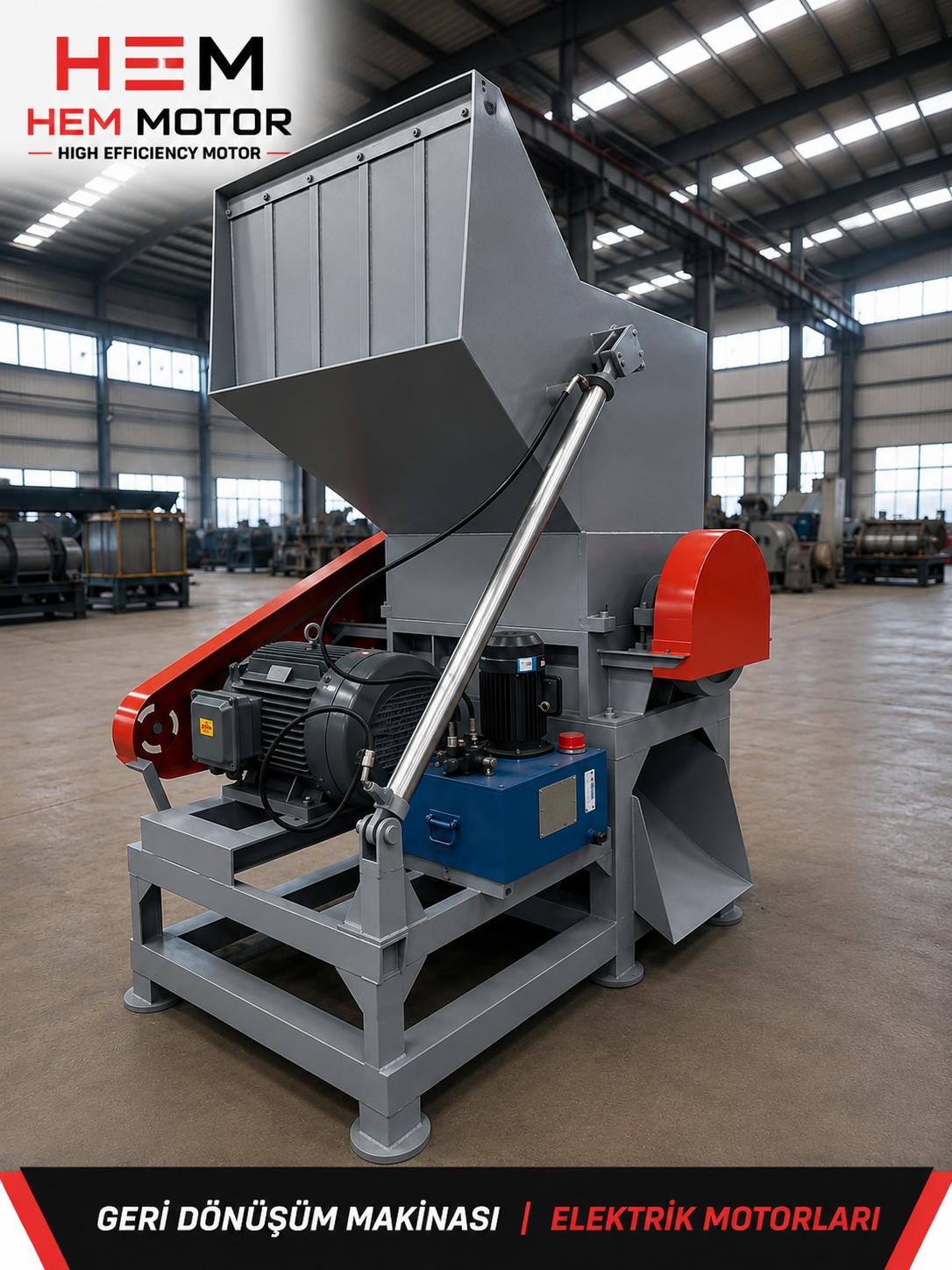

Slag, a byproduct of iron-steel and metallurgical plants, is processed in crushing-screening plants for recovery. But slag is no ordinary stone: it is an extremely abrasive material, often still hot, containing metal fragments. For this reason, crusher motor selection demands harsher conditions than standard stone-crushing applications. As HEM Motor, with our identity as both manufacturer and seller, we offer durable, correctly protected and reliably available motors for crusher and crushing systems that process slag. In this guide we cover the effect of abrasive and hot material on the motor, the challenges of impact load, the right power and protection class, the selection of the other motors on the line, and the supply strategy that minimizes downtime cost.
On a slag crushing line, the motor faces impact load, high dust, possible heat and continuous heavy-duty conditions all at once. This demanding combination requires careful attention to parameters such as body material, insulation, protection class and starting behavior in motor selection.
Slag recovery is a valuable process both environmentally and economically. The metallic fragments within it are separated and reused, while the remaining material is used in construction and road building. But the crushing-screening line that enables this recovery is one of the most demanding applications in the sector for the motor. Compared to a standard aggregate crushing plant, a slag line presents an environment that wears the motor faster and requires higher protection. Motor selection must therefore be done correctly from the outset; otherwise frequent failures, unexpected downtime and high cost are inevitable.
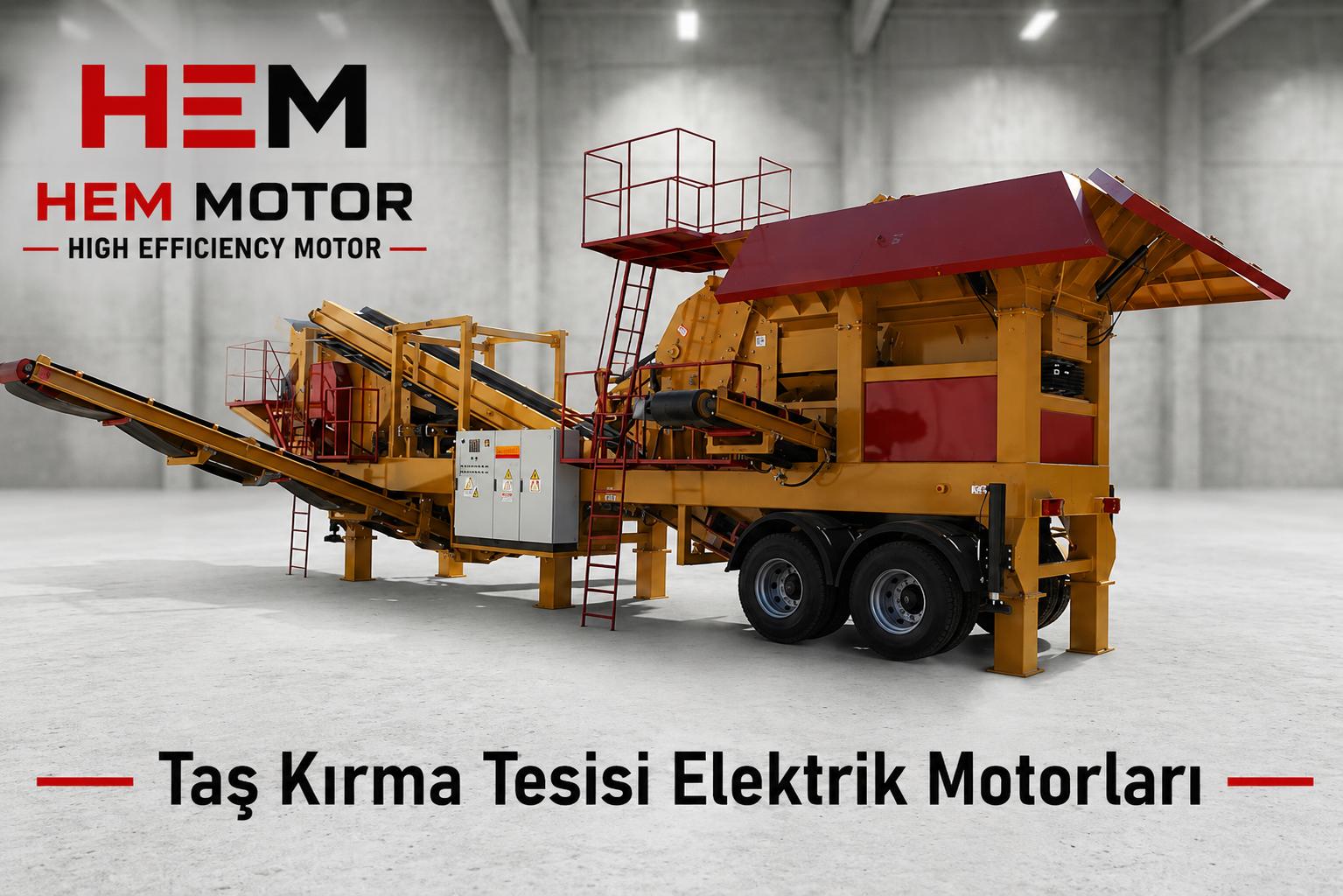
The Challenges Slag Processing Brings to the Motor
Compared to standard aggregate crushing, slag processing carries three additional challenges, and each affects motor selection.
Abrasiveness
Slag is highly abrasive; the fine dust it produces can rapidly wear the motor's cooling fan, bearings and sealing elements. The motor must therefore have a high protection class against dust ingress and a durable body structure. A cast iron body provides mechanical strength and long life in such environments.
The effect of abrasiveness is far more severe than standard stone dust. Because of its metallic, sharp structure, slag dust acts almost like sandpaper; over time it wears every surface it touches. This means the motor can be worn down not only from the outside but also from within through leakage. For this reason, the protection class for motors on a slag line is chosen higher than for standard aggregate applications; sealed structures that completely prevent dust ingress are preferred. The motor's longevity in this abrasive environment depends on selecting the correct protection class from the start.
Temperature
Depending on its source, slag can still be warm or hot when processed. High ambient temperature makes motor cooling harder and raises the winding temperature. In this case, high-temperature Class F or H insulation and, if necessary, a derating calculation gain importance. We covered hot and dusty environment motor selection in detail in our article on motor insulation class in hot and dusty environments.
Impact Load and Metal Fragments
When hard metal fragments in the slag enter the crusher, they create a sudden impact load. The motor must withstand these sudden torque fluctuations. Flywheel and inertia support under impact load protects the motor from these shocks; we covered the topic in our article on flywheel and inertia under impact load.
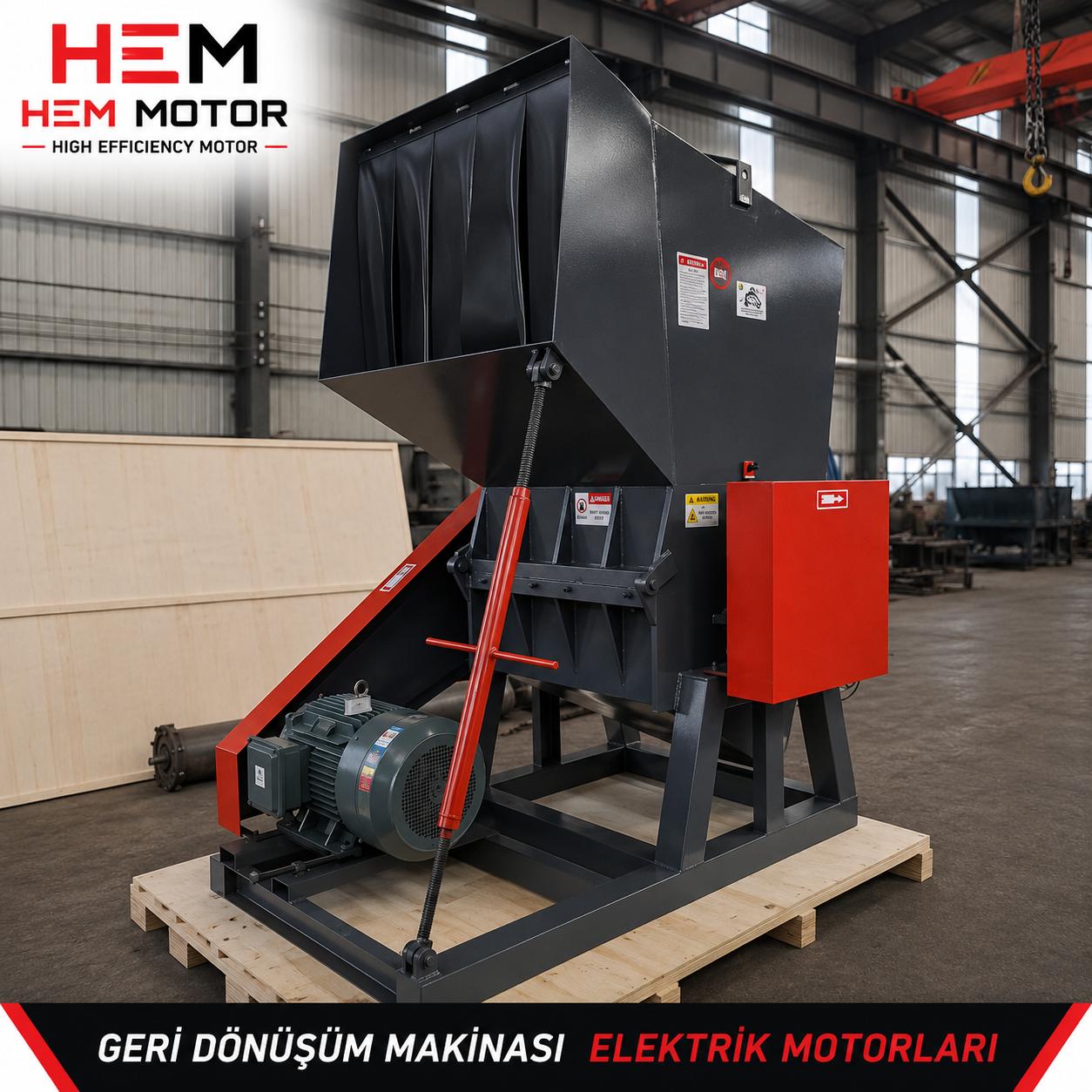
Correct Power and Protection Selection
In a slag crushing motor, the goal is to safely meet both the impact load and the abrasive-hot environment. For the right choice, these parameters are critical:
- Cast iron body: The most durable body structure against impact, vibration and dust; standard for heavy duty.
- High protection class: In dusty, abrasive environments, IP55 and higher protection prevents dust ingress into the motor. In very demanding sites, higher IP protection is considered; our article on dust sealing and IP65/66 in crusher motors explains selection by site conditions.
- Class F/H insulation: Protects the winding under hot slag and continuous full load.
- Sufficient power margin: To meet impact-load peaks, the motor should be selected with a suitable margin over the continuous load.
- Reinforced bearings: A quality, reinforced bearing structure is important for long life under high vibration and impact.
- Sturdy shaft and key: Under impact load, the shaft and key must be sized to withstand repeated torque fluctuations.
When all these parameters are evaluated together, the motor reliably handles both the continuous heavy-duty load and the sudden impact peaks of a slag line. Focusing on a single parameter is not enough; the abrasive dust, the possible heat and the impact load must all be considered at the same time. This holistic approach is what ensures a long, trouble-free service life in one of the harshest applications in the crushing sector.
Starting and Cooling
Slag crushers may start with material loaded or with high inertia, which means high starting current. Soft starting or star-delta brings the start under control. The cooling of a motor running continuously at full load must also not be neglected; our article on cooling and overheating in crusher motors details this topic. For choosing a starting method, our guide on starting a crusher motor offers a practical comparison.
Cooling is especially critical on a slag line, because the environment may be hot and the abrasive dust can clog the motor's cooling fan and air channels. When the cooling fan is coated with dust, its efficiency drops and the motor heats more than expected. Motors on a slag line should therefore have their cooling surfaces cleaned regularly, and solutions with higher cooling capacity or external cooling should be considered if needed. In a crusher motor running continuously at full load, the reliability of cooling directly determines the motor's life.
The Effect of Abrasive Dust on Bearings and Seals
Slag dust threatens not only cooling but also the motor's most sensitive mechanical parts. If fine, hard dust seeps in through the oil seal at the shaft exit, it mixes with the bearing grease and rapidly wears the bearing. Quality sealing elements and a reinforced bearing structure are therefore important in motors on a slag line. In a dusty, abrasive environment, the choice of oil seal and sealing directly affects the motor's trouble-free running time. Not just the body protection class but also the sealing solution on the shaft side should therefore be evaluated carefully.
Other Motors on the Slag Line
In a slag crushing-screening plant, motors are found not only at the main crusher but at every point of the line. Each of these motors performs a different task and faces different challenges:
- Main crusher motor: The highest power and the most demanding impact load appear here; a cast iron body and high protection are essential.
- Feeder motors: Feed material to the crusher steadily; in vibrating feeders a durable structure is important.
- Screen motors: Run under continuous vibration; require reinforced bearings and a sturdy body.
- Belt conveyor motors: Carry the processed slag; in a dusty environment, a high protection class and reliable starting are important.
- Magnetic separator drives: Drive the equipment used to separate metal fragments.
All these motors share the same dusty, abrasive and hot environment. Evaluating the entire plant holistically therefore ensures each motor is correctly selected for its task and the conditions it faces. Our content addressing the selection of auxiliary motors on the crushing-screening line provides guidance for equipment other than the main crusher.
The Advantage of a Cast Iron Body
In a demanding environment like slag, the choice of body material is the determinant of motor life. A cast iron body provides far higher mechanical strength than aluminum. It is resistant to impact, vibration and mechanical stress, which is a critical advantage for crusher motors working under impact load. A cast iron body also helps the motor cool by dissipating heat better and is more resistant to the surface wear caused by abrasive dust. For slag crushing applications, a cast iron body is therefore the unquestioned standard choice.
Supply and Downtime Cost
On slag processing lines, a single motor failure can halt the entire line and cause serious production loss. The supply strategy is therefore at least as important as motor selection.
- Critical spare motor: Keeping a spare of the main crusher motor on site enables replacement within hours during a failure.
- Exact matching: For replacement, when the existing motor's nameplate data (power, speed, IEC frame, mounting type, shaft dimensions) is provided, an exact equivalent is supplied.
- Fast shipping: Delivery from stock minimizes downtime.
We covered strategies to reduce downtime cost in our article on motor failure and downtime cost in crusher plants. For correct power and speed selection in all stone-crushing applications, including slag crushing, our guide on crusher and stone-crushing plant motor selection is a comprehensive starting point. Contact us for current electric motor prices and stock. On the product side, Stone Crushing and Screening Plant Motors are designed for these applications.
On a slag crushing line, an unexpected motor failure often causes a cost far higher than the motor's own price. When the line stops, production halts, contracted deliveries may be delayed, and staff wait idle. Experienced facilities therefore establish a spare strategy in advance for their critical motors. This strategy can range from keeping an exact equivalent spare motor on site to arranging a fast-supply agreement with a reliable supplier. For exact-equivalent supply to work smoothly, the motor's nameplate data must be recorded completely; power, speed, pole count, IEC frame size, mounting type and shaft dimensions ensure the right equivalent is selected and shipped without losing time during a failure.
Frequently Asked Questions
Which body material is needed for a slag crushing motor?
Because slag processing involves impact, high dust and possible heat, a cast iron body is the standard choice. Cast iron provides far higher mechanical strength and vibration resistance than aluminum. This significantly extends motor life in an abrasive, impact-prone environment.
How does processing slag while hot affect the motor?
High ambient temperature makes motor cooling harder and raises the winding temperature. In this case, high-temperature Class F or H insulation is selected, and if necessary the motor is taken one power size higher by calculating derating. If you send us the ambient temperature, we will recommend the suitable insulation and power.
Should I keep a spare motor for the slag line?
We strongly recommend it. On a slag crushing line, a main motor failure halts all production and the downtime cost far exceeds the motor's price. Keeping a critical spare motor on site enables replacement within hours during a failure, minimizing this loss. We can prepare and supply an exact equivalent spare in advance.