English
 Türkçe

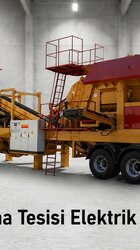
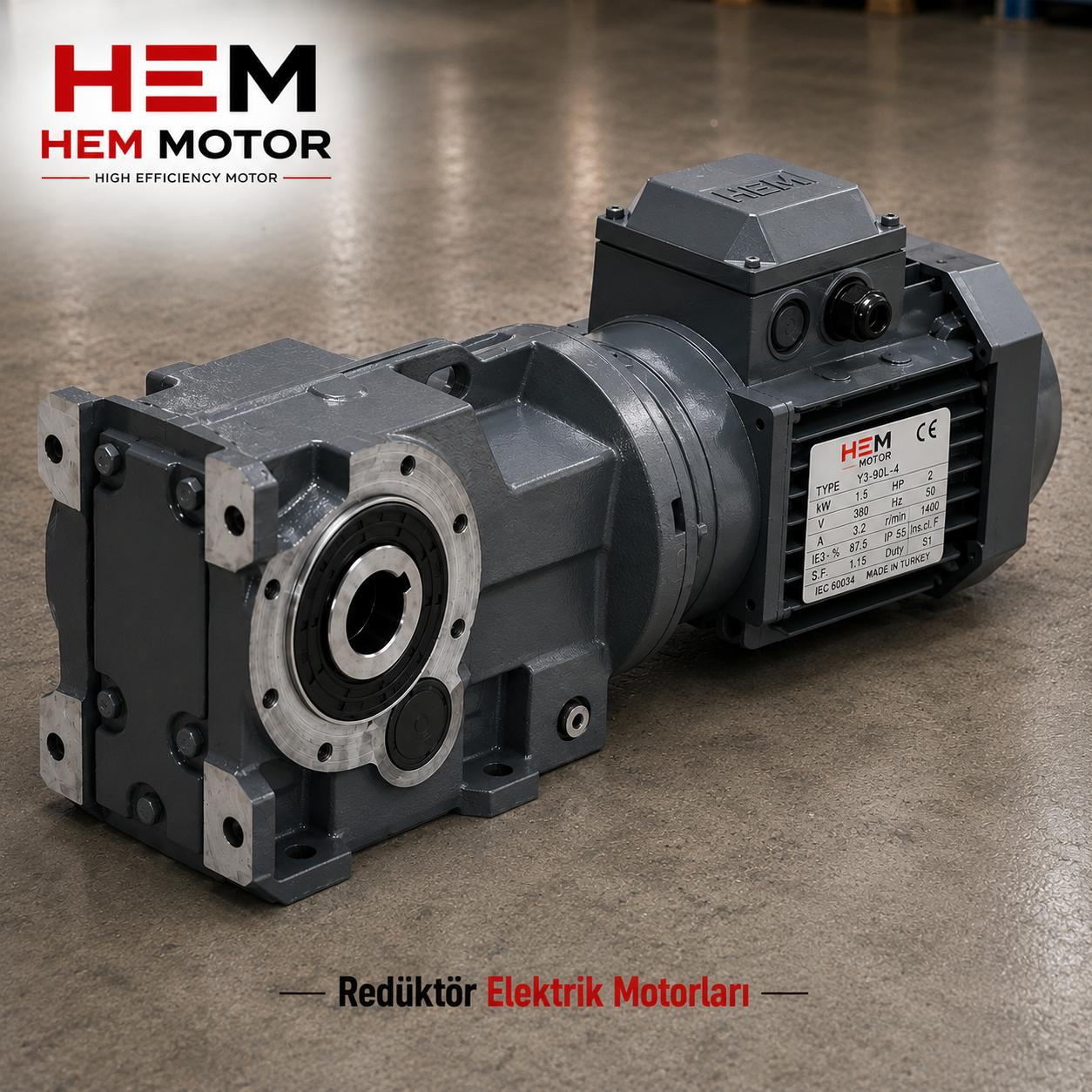

In crushing and mining plants, dust is not merely a comfort issue; it is a critical engineering problem that directly affects equipment life, operator health, and legal compliance. The fine mineral dust that becomes airborne at crushing, screening, conveying, and transfer points carries the risk both of exceeding respirable-dust limit values and of entering moving equipment, leading to the premature failure of bearings, gears, and electric motors. For this reason, in a modern mining or aggregate plant, the dust collection system is designed as an inseparable part of the production line.
One of the most common and efficient methods of dry dust collection is the bag filter (jet pulse baghouse) system. Although the visible star of this system is the filter bags, the real component that keeps the whole system alive and moves the air is the high-flow ID fan motor. When the fan motor is not selected correctly, even the most expensive filter bags cannot deliver the expected dust collection efficiency; suction weakens, dust leakage increases, and the plant fails to meet its measured limit values. In this article we examine in detail the working principle of the bag filter system, how the fan motor should be sized, and which protection and starting choices should be made under the demanding conditions of a crushing/mining site.
Keeping the correct equipment in stock on site minimizes unplanned downtime. For this reason, treating the fan motor as a critical spare and planning the procurement process in advance is a strategic decision that determines total productivity.
How Does a Bag Filter (Jet Pulse Baghouse) Work?
The bag filter system draws dusty air into a housing and passes this air through a large number of fabric filter bags. The dust particles accumulate on the outer surface of the bags while the clean air passes through the inside of the bags and reaches the clean-air chamber. The reason the system is called "jet pulse" is that the accumulated dust layer (cake) is shaken off the bag at certain intervals by reverse-direction bursts of compressed air (pulses). This cleaning process is carried out in sequence while the filter bags continue to operate, allowing the system to remain at a continuous flow rate.
The critical point here is this: when the bags are clean, air passes through them easily and the pressure drop is low. As the dust cake builds up on the bags, the passage of air becomes more difficult and the pressure drop across the filter increases. Although jet pulse cleaning tries to keep this pressure drop within a certain band, the design point of the system must always be able to meet the worst-case (dirtiest bag) pressure drop.
The Difference from Water-Spray Dust Suppression
There are two approaches in dust control that are often confused. The first is the water-spray dust suppression system; here fine water droplets weigh the dust down and prevent it from remaining suspended in the air. The second is the dry dust collection we describe here, that is, the bag filter approach. Water-spray systems have a low investment cost but do not remove the dust from the air completely, they wet the product, and in cold climates they can create freezing problems. The bag filter system, on the other hand, physically separates the dust from the air, yields a recoverable dry product, and provides measurable emission values. The two systems are not alternatives to one another but are most often complementary solutions; however, the selection of the fan motor concerns only the dry dust collection side.
The Heart of the Fan Motor: Overcoming Flow Rate and Pressure Drop
The task of an ID (induced draft / suction) fan is to provide the required air flow rate (usually m³/hour or m³/s) against the total pressure drop in the system. The total pressure drop is the sum of the duct losses, the resistance in the filter bags, and the losses at hoods and transfer points. The power of the fan motor depends fundamentally on the product of flow rate and pressure, and on the fan efficiency.
The most common engineering mistake here is sizing the fan according to the average operating point of the system. When the bags are clean, the system runs comfortably, but as the bags become dirty the pressure drop rises and the fan needs more power to deliver the same flow rate. If the motor was selected according to the average condition, then in the dirty-bag condition the fan cannot produce sufficient flow; suction weakens, dust escapes from the hoods, and dust collection efficiency falls.
Why the Worst-Case Operating Point?
The correct approach is to select the fan motor according to the worst-case (dirty bag, highest pressure drop) operating point. This guarantees that the motor can maintain the required flow rate even at the most demanding moment. In practice the designer determines the pressure-drop band between clean and dirty bags and selects the fan curve so as to meet the upper limit of this band. The motor is then determined by adding a safety margin on top of the shaft power at this point.
- Airflow: The total air requirement determined by the hood suction velocities and the transfer points.
- Pressure drop: The sum of the duct, filter, and hood losses; maximum with a dirty bag.
- Fan efficiency: The fan efficiency at the operating point; low efficiency increases the motor power.
- Safety margin: The margin added to the calculated shaft power to allow for leakage and aging.
- Density correction: The effect of the change in air density at high altitude and in hot gas.
Continuous Operation on a Crusher/Mining Site (S1 Duty)
The dust collection fan runs without stopping for as long as the plant is in production. This means the motor must be selected in the continuous S1 duty type. S1 is the duty type in which the motor can reach thermal equilibrium and operate for an unlimited time at rated load. Using a motor designed for intermittent (S2, S3) duty in a continuous dust collection application leads to an uncontrolled rise in winding temperature and a shortening of insulation life.
In a continuously running fan motor, bearing lubrication, cooling, and thermal protection become critical. In large-frame motors, re-greasable bearings and a grease nipple should be preferred, and the winding temperature should be monitored with PTC or PT100 sensors. In this way the motor is kept within a safe temperature range even in continuous duty.
Cast Iron Frame and Mechanical Strength
In the vibrating and impact-prone environment of a mining site, the motor frame is also important in terms of mechanical strength. A cast iron frame offers far higher vibration and impact resistance than an aluminum frame, dissipates heat better, and is long-lasting. For fan motors near a crusher, a cast iron frame is in effect considered standard. The frame also preserves the mechanical position of the bearings over a long period, which keeps the vibration level low in large continuously running fans.
Protection Class in a Dusty Environment: IP55, IP65, and IP66
The motor of a dust collection fan is, by its very nature, located in an extremely dusty environment. For this reason the selection of the protection (IP) class is of critical importance. For a standard industrial environment, IP55 protection is generally sufficient; this class provides a certain degree of protection against the ingress of dust and resistance to water jets from all directions. However, near a crusher, where there is very dense, fine, and continuous dust exposure, IP65 or IP66 protection should be preferred. IP6X means complete sealing against dust (dust-tight) and entirely prevents fine mineral dust from entering the motor.
When dust enters the motor, it disrupts cooling, abrades the winding insulation, and mixes into the bearing grease, shortening bearing life. For this reason, economizing on the protection class at points of high dust density costs much more in the long run.
Starting a High-Inertia Load: Softstarter and VFD
A large-diameter ID fan has a high moment of inertia (GD²/J). When commissioned with direct-on-line (DOL) starting, accelerating the fan rotor takes a long time, and throughout this time the motor draws a high inrush current. This high current causes both a voltage dip on the grid and heating of the motor.
For this reason it is recommended that high-inertia fan motors be started with a softstarter (soft starter) or a VFD (variable frequency drive). A softstarter reduces the inrush current and mechanical shock by gradually ramping up the voltage. A VFD, on the other hand, both provides a controlled start and offers significant energy savings by adjusting the flow rate to the actual requirement; when the bags are clean, it reduces the fan speed and prevents unnecessary energy consumption.
- Flow control with a VFD is far more efficient than with a throttling damper.
- A softstarter protects mechanical belts and couplings from sudden shock.
- A controlled start reduces the required generator size on generator-fed sites.
- A VFD indirectly keeps the winding temperature low, extending insulation life.
Stocking the Fan Motor as a Critical Spare
When the dust collection fan stops, production in most plants must stop as well; because dust emission becomes uncontrolled, and it becomes impossible, both legally and operationally, to continue working. For this reason the fan motor is one of the most critical spare motors in the plant. Keeping in stock a spare motor with the correct frame, pole number, protection class, and duty type provides a changeover that takes not hours but minutes in the event of a possible failure.
When carrying out stock and procurement planning, recording the nameplate data, mounting type, and shaft/coupling details of the fan motor in full saves time when placing a replacement order. Requesting a quotation for current electric motor prices and suitable frame options minimizes the risk of unplanned downtime. In addition, evaluating the crusher motors and fan and exhaust fan motors groups together for the whole dust collection line simplifies spare-parts management.
Frequently Asked Questions
Why should I select the dust collection fan motor according to the worst case, not the average?
Because as the filter bags become dirty the pressure drop rises and the fan needs more power to deliver the same flow rate. If the motor is selected according to the average operating point, then in the dirty-bag condition suction weakens, dust escapes from the hoods, and dust collection efficiency falls. Sizing according to the worst-case point (dirty bag, highest pressure drop) guarantees that the system maintains the required flow rate under all conditions.
Which protection class is suitable for a fan motor near a crusher?
For a standard industrial environment, IP55 is generally sufficient. However, with the very dense and fine dust exposure near a crusher, IP65 or IP66 protection should be preferred. IP6X provides complete dust-tightness and prevents fine mineral dust from entering the motor, disrupting cooling, and abrading the windings. Economizing on the protection class in heavy dust costs more in the long run.
How should I start a high-inertia fan motor?
Large ID fans have a high moment of inertia, and with direct starting a long starting time and high current occur. A softstarter reduces the inrush current and mechanical shock by gradually ramping the voltage. A VFD both provides a controlled start and offers energy savings by adjusting the flow rate to the actual requirement. Using a VFD together with a motor selected for continuous S1 duty is the most suitable solution in terms of both safe starting and low operating cost.