English
 Türkçe

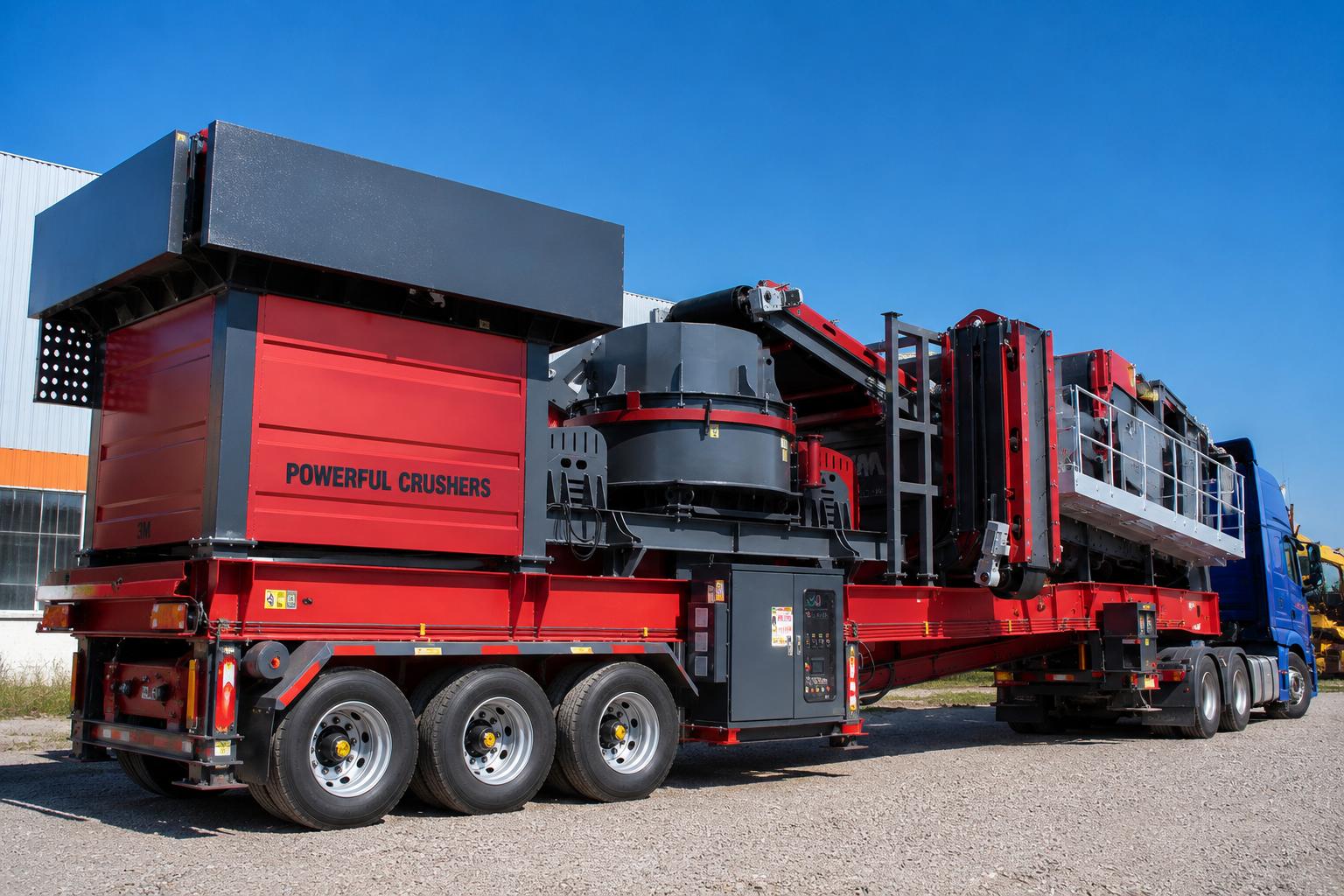

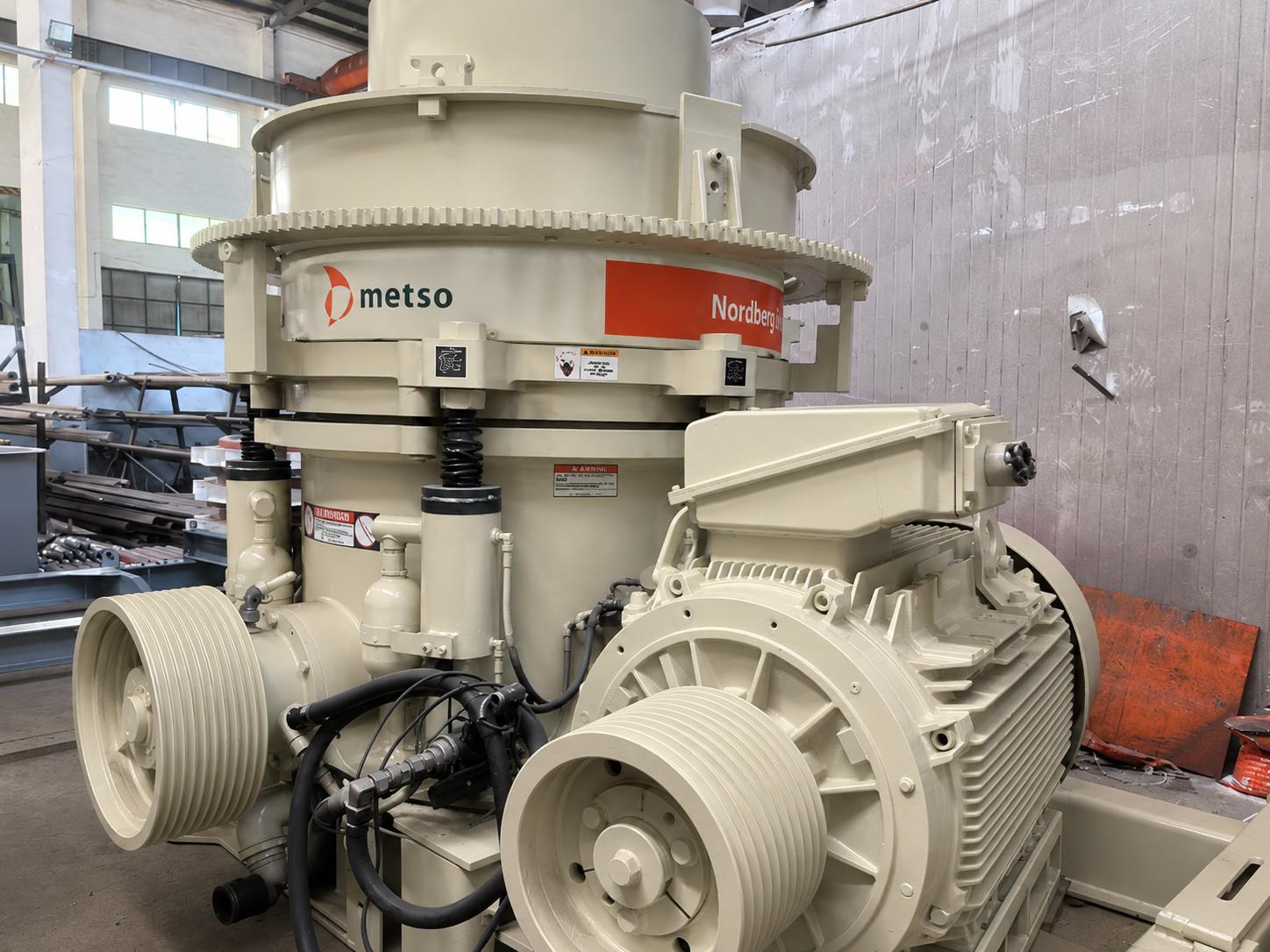
Cone and gyratory crushers are the heaviest-duty machines in mining and aggregate plants. At the heart of these crushers is the eccentric shaft that produces the crushing motion, and the electric motor that turns it must carry high torque and impact load under continuous operation. Crusher eccentric shaft drive motor selection is very different from an ordinary motor purchase, because the load profile is irregular, the starting torque is high, and the mechanical strain is constant. A wrongly selected motor will quickly overheat, burn its winding, or struggle to start.
In this article we address how to correctly select the motor driving the eccentric shaft in cone and gyratory crushers, in terms of torque demand, impact-load endurance, starting method and efficiency. We manufacture such heavy-duty motors on our own production line, and once you have defined the power suited to your application we encourage you to request a quotation.
Load Character in Cone and Gyratory Crushers
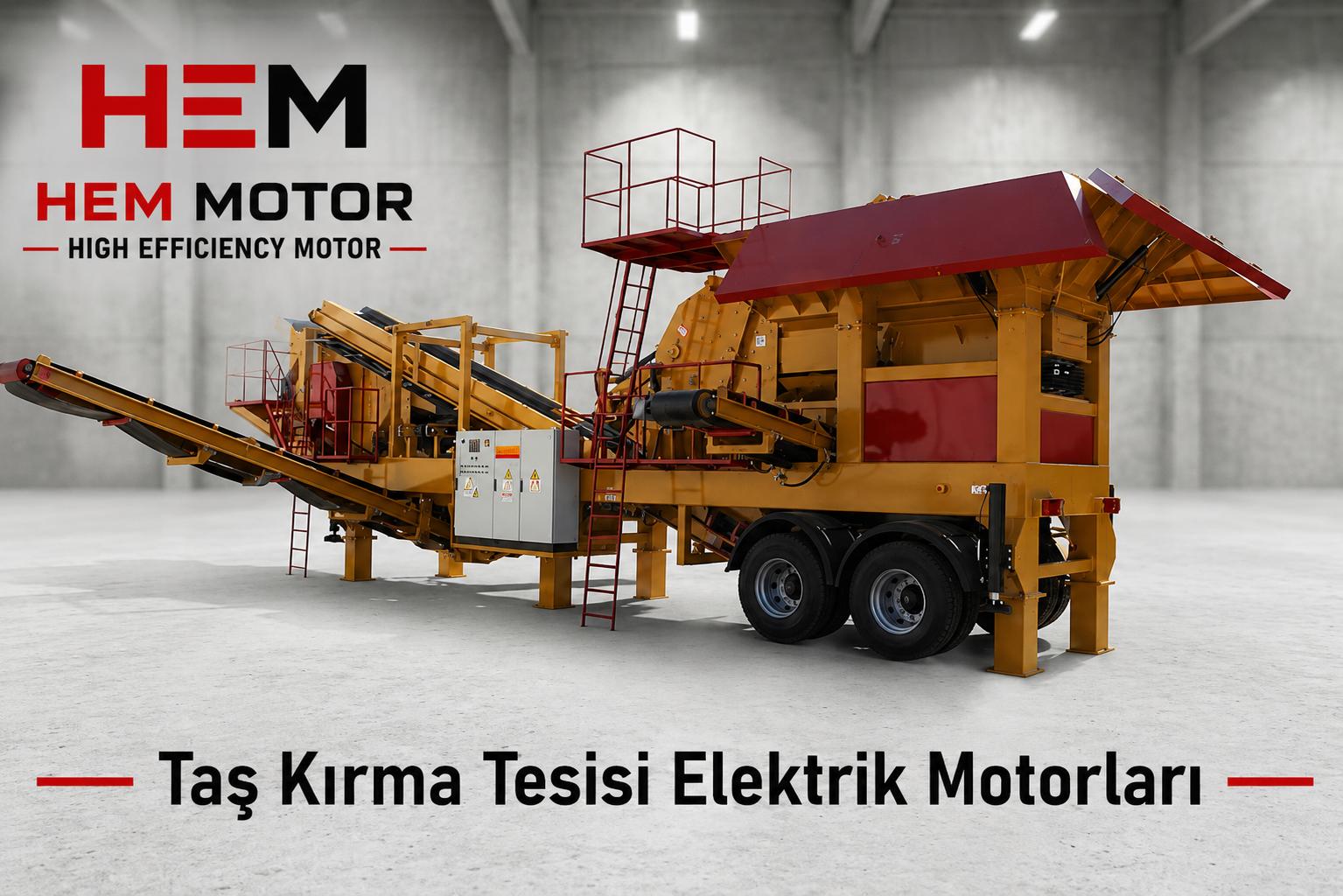
In a cone crusher, material is crushed by being squeezed between a rotating cone and a fixed mantle. The gyratory crusher works on a similar principle but at larger capacities. In both types, the eccentric shaft imparts an oscillating motion to the crushing element. During this motion the load reaching the motor is not constant; it shows large instantaneous fluctuations depending on the size and hardness of the crushed stone and the feed rate.
For this very reason, the motor must be selected according to peak load and impact-torque demand, not the average power demand. A sudden hard rock or a blockage imposes a brief but very high torque load on the motor. The motor must meet these impacts without stalling, overheating or dropping speed.
The Need for High Starting Torque
Crushers usually start unloaded rather than under load; however, because the inertia of the eccentric shaft and flywheel mass is high, a large starting torque is required even at start-up. The flywheel stores energy during crushing to smooth the impacts, which means a large moment of inertia at start-up. The motor's starting torque must be high enough to accelerate this large inertia in a reasonable time. Insufficient starting torque causes the motor to draw excessive current without accelerating, tripping the protections.
Continuous Duty (S1) and Heating
Crusher motors mostly run in the S1 continuous-duty regime, close to full load for long hours. The motor's thermal class and cooling are therefore critical. Because the current continuously fluctuates under impact loads, the average heating is high. High thermal-class (F or H) insulation, a robust rotor cage and effective cooling enable the motor to operate with a long life under these conditions. A heavy-duty crusher motor must be designed more ruggedly than a standard general-purpose motor.
Starting Method Selection
Because crusher motors are high-power, direct-on-line starting imposes a large current surge on the grid. Staged starting methods are therefore generally used:
Star-Delta Starting
Reduces the starting current and torque to roughly one third. It is frequently preferred in crushers that start unloaded, but a torque dip can occur at the transition moment in high-inertia systems.
Staged Autotransformer Starting
Autotransformer starting limits the current while offering a higher and adjustable starting torque compared with star-delta. For a high-inertia crusher shaft, this method both protects the grid and provides sufficient starting torque.
Soft Starter
Electronic soft starters reduce mechanical strain by raising the current and torque gradually. In frequently switched crushers, they extend belt and coupling life.
Correct Power and Frame Selection
Crusher drive motors are generally selected in high power classes and large frames according to the machine's capacity. When calculating power, crushing capacity, material hardness, flywheel inertia and drivetrain efficiency are evaluated together. The motor's shaft diameter must match the coupling or belt-pulley system, and the bearings must be sized to withstand the radial load. If you are replacing an existing motor, sharing the nameplate data, frame code and starting type with us allows us to supply a fully compatible motor.
- Has the crushing capacity and peak torque demand been calculated?
- Has a starting torque suited to the flywheel and shaft inertia been determined?
- Has the thermal class (F/H) for S1 continuous duty been chosen?
- Has the starting method (star-delta, autotransformer, soft starter) been determined?
- Are the frame, shaft diameter and mounting type compatible with the existing system?
After clarifying these criteria, you may review, for similar heavy-duty applications, the selection of a coal crusher and pulverizer mill motor, for staged starting the staged autotransformer starting guide, and for durable cast-frame motors our cast-iron motor frame shrink-fit content.
Frequently Asked Questions
Why can't I select the crusher motor by average power?
Because the load in a crusher is not constant; a hard rock or a sudden feed loads the motor with a brief, very high torque. A motor selected by average power drops speed under these peak loads, overheats and is damaged over time. The correct selection is made according to peak torque and impact-load demand.
Is star-delta starting sufficient for a crusher?
It may be sufficient in some low-inertia cone crushers that start unloaded; however, in high-flywheel-inertia systems the torque dip at the transition moment can cause problems. In such cases, staged autotransformer starting or a soft starter is a safer solution.
What makes a heavy-duty motor different from a standard motor?
A heavy-duty crusher motor stands out with higher thermal-class insulation, a reinforced rotor cage, a strengthened bearing structure and a mechanical design resistant to impact load. This enables long-life operation under continuous and impact loads. Tell us your application, and let us determine the suitable heavy-duty motor together. For more information you may visit our homepage.