English
 Türkçe

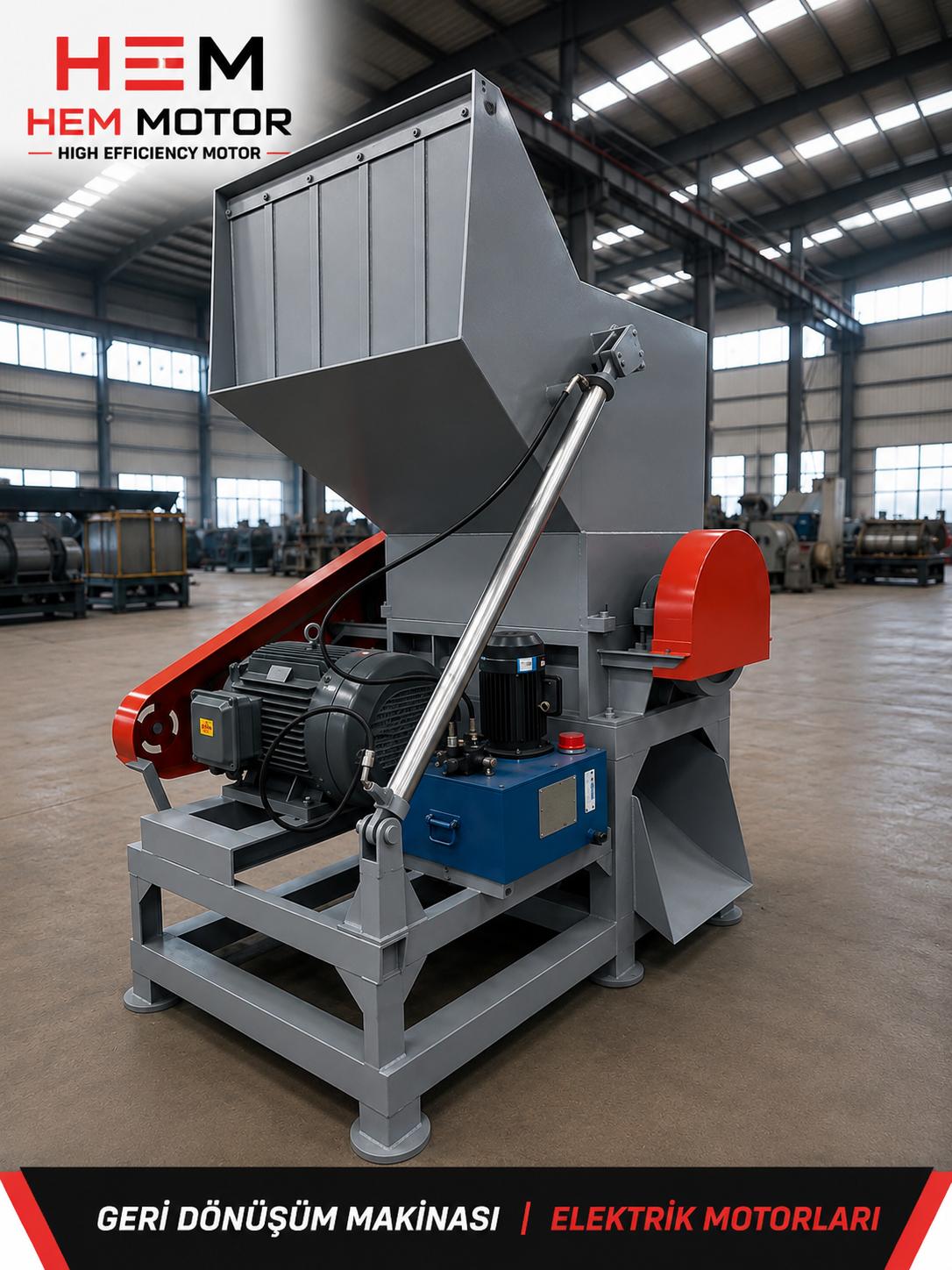

In a crusher or mining plant the first point where material flow begins is the feeder. Feeders that transfer raw material coming from the bunker or stockpile to the crusher or screening system at a controlled and balanced rate directly determine the efficiency of the plant. If the feeder runs irregularly, the crusher either runs empty or becomes blocked by overfeeding; in both cases production and energy efficiency drop. Therefore, selecting the feeder drive motor is an engineering decision separate from the main crusher motor but at least as critical. In this guide, as an electric motor manufacturer and supplier, we examine in detail the drive motors of the two basic feeder types used in crusher and mining plants (apron/chain feeder and vibrating feeder), their power and torque requirements, protection requirements and the correct supply approach.
Feeder Types and Drive Requirements
In mining and stone-crushing plants, feeders come in different types according to the nature of the material, particle size and flow rate. The two most common groups are apron (chain plate) feeders and vibrating feeders. The drive philosophy and therefore the motor requirement of each are fundamentally different.
Apron feeders work like a heavy belt made of overlapping steel plates and can carry large, heavy, sharp-edged blocks. These feeders run at low speed with high torque and are usually turned by a geared drive. Vibrating feeders, on the other hand, carry the material forward in a trough by generating vibration; the drive is provided either by unbalanced-weight vibration motors or by an eccentric shaft drive. These two systems have completely different requirements in terms of the motor.
Apron (Chain) Feeder Drive
In an apron feeder the motor must move the loaded plate belt at low speed with continuously high torque. The required torque is high due to the material load, the weight of the plates and friction; especially moving the loaded feeder from a standstill (starting) is the most demanding moment. Therefore, in an apron feeder drive, a motor with high starting torque and a suitable gearbox are used together. The motor is usually selected at low speed (4 or 6 pole) and the output speed is reduced much further by the gearbox. Due to the heavy-duty conditions, the motor's service factor and thermal capacity should be selected generously.
Vibrating Feeder Drive
In vibrating feeders the material is carried forward by jumping with the vibration of the trough. The drive is provided by special vibration motors with unbalanced (eccentric) weights or by an eccentric shaft and standard motor combination. Vibration motors have reinforced bearing and housing structures to withstand continuous vibration and high-acceleration load. In an eccentric shaft drive with a standard motor, the motor turns the mechanism that generates the vibration; in this case it is important that the motor is isolated so as not to be damaged by the vibration. In selecting vibrating feeder motors, the vibration amplitude and frequency directly determine the material flow rate.
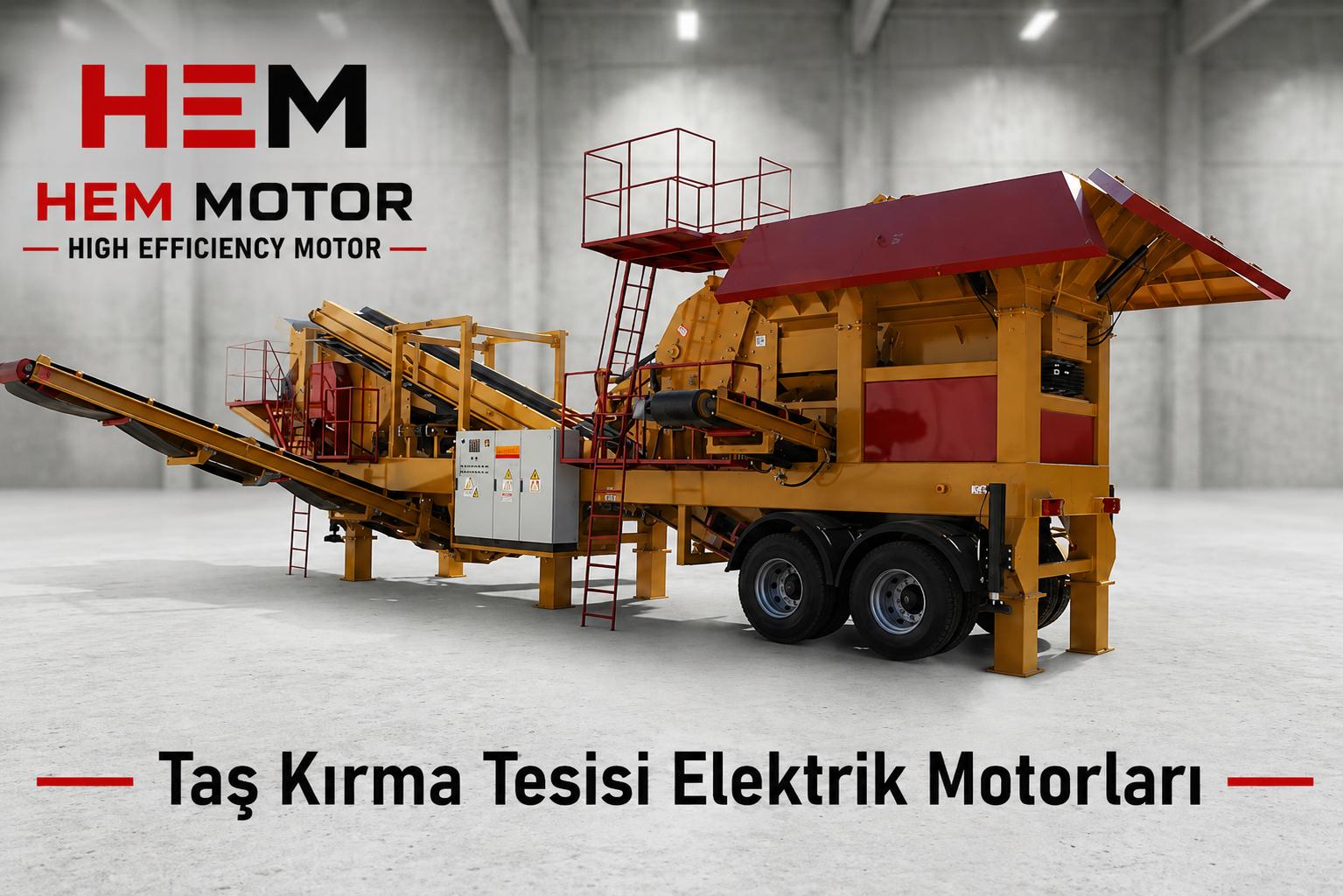
Power and Torque Calculation: Selection According to Feeder Load
The power of the feeder motor is determined according to the flow rate of the carried material, the feeder type and mechanical losses. In an apron feeder the power calculation is made over the material load, plate weight, inclination and friction coefficient. In a vibrating feeder the required power depends on the energy spent to generate vibration and the material load. In both cases the starting torque is much higher than the continuous running torque; therefore the motor must be selected not only according to continuous power but also according to starting torque.
Evaluating the motor selection of other auxiliary drives (screen, belt) besides the feeder together in a crusher plant ensures consistent supply across the whole plant. To see the selection of motors other than the main crusher comprehensively, our guide on screen, feeder and belt drive motors in a crushing-screening plant offers a comprehensive framework. The content on electric motor selection for crusher and stone-crushing plants, which addresses the general motor-selection logic (power, speed, stock), is also a basic starting point.
Impact and Variable Load Behaviour
Large blocks falling onto the feeder create sudden impact loads. In an apron feeder these impacts are transferred directly to the drive chain and the motor; in a vibrating feeder the trough and springs absorb some of the impact. The impact load requires the motor to deliver much higher torque momentarily; in this case the flywheel inertia and the motor's overload capacity become important. To examine motor selection under impact load in depth together with the concepts of flywheel and inertia, our guide on motor selection under impact load: flywheel, inertia and crusher drive is a guide. Correct torque reserve prevents the feeder from stalling under sudden load and the motor from being overstressed.
Selecting the Gearbox and Drive Transmission
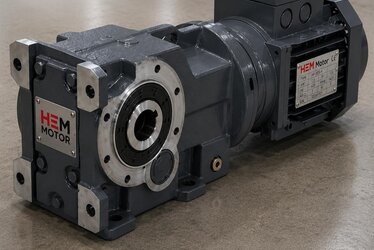
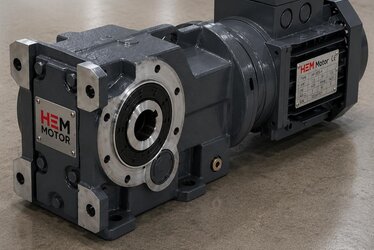
In apron and heavy-duty feeders the motor alone is not sufficient; it usually works together with a gearbox. The gearbox provides the slow and powerful movement the feeder needs by reducing the motor's high speed. The correct gearbox ratio must produce the output speed that gives the desired material flow rate of the feeder. Therefore the motor and gearbox are sized together; the motor power must be compatible with the gearbox input capacity, and the gearbox output torque must exceed the value that will lift the loaded feeder.
In the drive transmission, the motor-gearbox connection is made either directly flanged (monoblock) or with a coupling. The flanged connection is compact and reduces the alignment problem; the coupled connection offers ease of maintenance and replacement. When heavy duty and impact load are involved, using a flexible coupling softens the direct transfer of impact to the motor somewhat. The motor's mounting type (B5 flanged or B3 foot) is determined according to this choice. The correct mounting type and connection affect both mechanical strength and ease of maintenance.
Another point to consider in a geared drive is the total inertia of the system. A feeder with high inertia keeps the motor at high current for a long time at start; this affects the motor's thermal capacity and the starting method. Therefore the gearbox selection must be evaluated not only in terms of torque and ratio but also in terms of inertia. A correctly configured motor-gearbox combination ensures both smooth starting and continuous balanced operation of the feeder.
Protection Against Dust, Moisture and Impact
The mining and stone-crushing site is one of the harshest environments for a motor: intense dust, moisture, vibration and mechanical impact are present together. The feeder motor must have a protection level that allows it to operate safely under these conditions. While standard IP55 protection is sufficient for many applications, higher protection classes such as IP65/IP66 are preferred in very dusty and washed-down environments. As housing material, impact-resistant cast iron stands out; an aluminium housing is usually insufficient on a heavy-impact site.
- High IP protection: The winding is protected against dust and water ingress with IP55, and with IP65/IP66 on a harsh site.
- Cast-iron housing: Provides high resistance against impact and mechanical stress.
- Reinforced bearings: Extend bearing life under vibration and impact load.
- F/H insulation class: Increases winding resistance at high ambient temperature and in continuous heavy duty.
- Effective cooling: Design so that dust does not block the cooling fan, and regular cleaning.
To see motor protection against site conditions in detail under the headings of dust, moisture and impact, our guide on motor protection at the stone quarry and mining site offers practical recommendations.
Starting and Continuous Operation
Feeder motors usually run continuously together with the plant; however, lifting the loaded feeder from a standstill requires high starting current and torque. Therefore the starting method must be chosen correctly to protect both the motor and the plant's electrical infrastructure. A soft starter reduces sudden mechanical shocks in a loaded feeder and limits the starting current. In vibrating feeders, the starting strategy becomes important for controlled increase of the vibration amplitude. In continuous heavy duty, the motor's cooling reserve must be evaluated taking into account the high temperature of the site.
Stock, Supply and Reducing Downtime Cost
In mining and crusher plants, when the feeder stops the whole line stops, because the material flow is cut off at the source. Therefore, downtime in the feeder motor turns directly into production loss. The correct supply approach minimises this risk:
- Fast supply from stock: Keeping the most common power and frame combinations on site in stock prevents the line from stopping for a long time in case of failure.
- Equivalent replacement: Quickly determining the correct motor with frame, shaft and mounting dimensions suitable for the existing feeder drive.
- Spare motor strategy: Keeping a ready spare on site or in the supplier's stock for critical feeders.
- Clear quotation and lead time: Clarifying delivery time and technical documentation from the start in project-based purchases.
- Manufacturer assurance: A motor suited to heavy duty with cast-iron housing, reinforced bearings and documented test values.
To see in detail the strategies for reducing the cost of motor failure and downtime in a crusher plant, our content on reducing motor failure and downtime cost in a crusher plant is a valuable resource. For current quotation and stock information on the motor suitable for your feeder drive, you can contact us via our elektrik motoru fiyatları page.
Frequently Asked Questions
What is the difference between an apron feeder motor and a vibrating feeder motor?
An apron feeder moves the heavy plate belt at low speed with high torque; therefore a low-speed motor and gearbox are used together, and the most demanding moment is the start of the loaded feeder. A vibrating feeder carries the material forward by vibration; the drive is provided by special unbalanced-weight vibration motors or by an eccentric shaft and standard motor combination. Vibration motors have reinforced bearings and housing to withstand continuous vibration; in an apron drive, high starting torque and thermal capacity stand out.
Which protection class is required for a feeder motor?
The mining and stone-crushing site contains intense dust, moisture and vibration; therefore at least IP55 protection is accepted as standard in a feeder motor. In very dusty and washed-down environments, higher protection classes such as IP65/IP66 are preferred. As housing, impact-resistant cast iron, reinforced bearings under vibration and impact load and a high insulation class ensure long-life operation of the motor in the field.
On what basis is the feeder motor power selected?
The power of the feeder motor is determined according to the flow rate of the carried material, the feeder type and mechanical losses. In an apron feeder the material load, plate weight, inclination and friction are taken into account; in a vibrating feeder the energy needed to generate vibration and the material load are considered. In both cases the starting torque is much higher than the continuous torque; therefore the motor must be selected not only according to continuous power but also according to the starting torque that will lift the loaded feeder.