English
 Türkçe

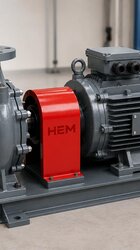
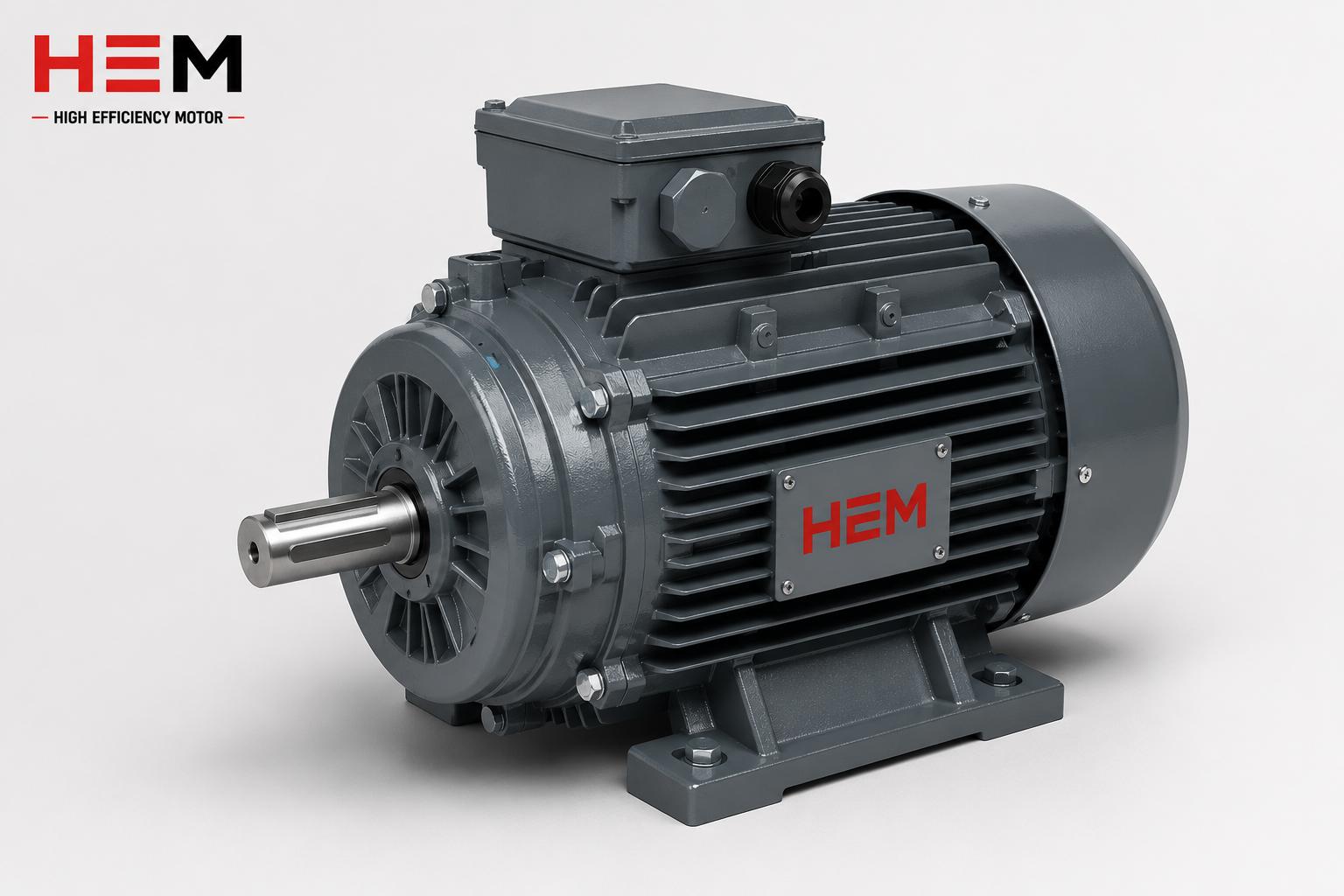

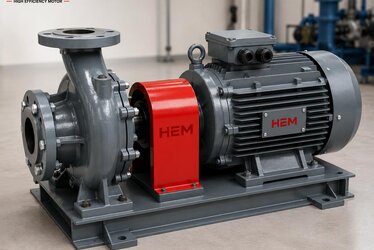
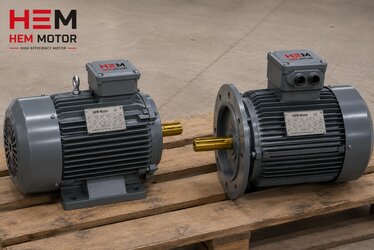
Composite and fiberglass production plants are facilities that look simple at first glance but hold quite varied challenges in terms of motor selection. On one side there are low-speed, high-torque mixers that blend the resin homogeneously; on another, precise winding lines that wind the roving at a constant tension; and alongside these, curing oven fans, pultrusion (pulling) lines, and aspiration systems. So many different load profiles cannot be met with a single type of motor; for each line the electric motor selection and, where needed, the gear reducer combination must be made according to the load character of the application.
At HEM Motor, when supplying motors to composite plants, we handle each line's load separately: the winding line's constant-tension need, the resin mixer's high starting torque, the fans' continuous load, and the resin-vapor environment's protection class requirement are all different from one another. In this article we cover the main lines of a composite/fiberglass plant, the motor and reducer selection suited to each, and correct supply criteria. To draw up the plant-wide motor requirement list together, you can get in touch with us from our electric motor prices page.
Resin Mixing and Dosing Line
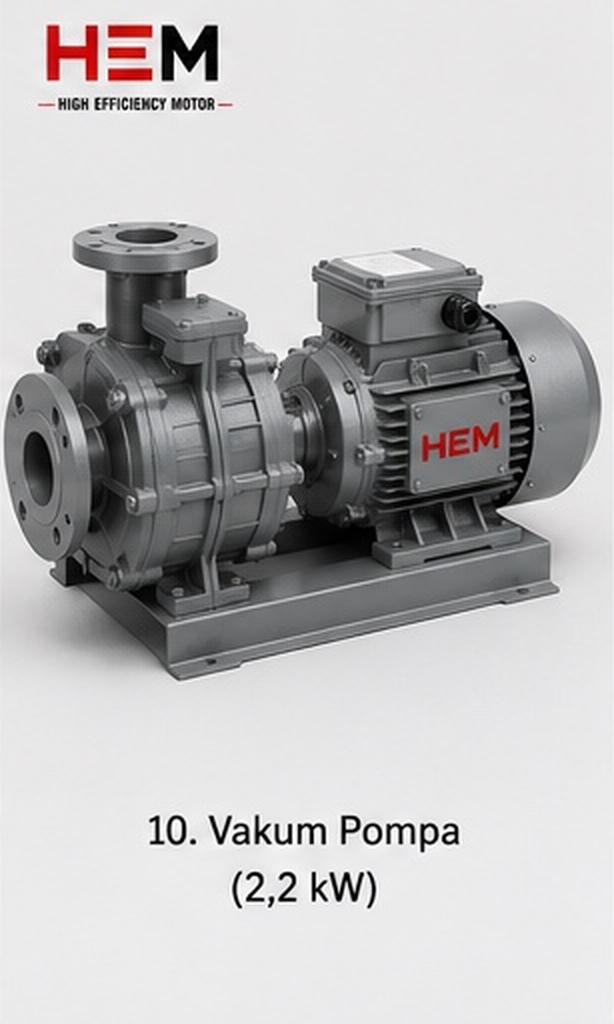
The heart of composite production is the resin. Without homogeneously mixing the resin with fillers and additives, quality product cannot be obtained. The mixer motor faces several harsh conditions here:
- High starting torque: Viscous resin makes the motor's startup difficult while at rest. The motor must have a starting torque capable of initiating rotation without being overcome by the load.
- Low output speed: Mixing usually needs to be slow and powerful; therefore the motor is often used not directly but reduced to low speed with a reducer.
- Continuous heavy duty: Mixing can take a long time; the motor must withstand a continuous duty regime (S1) without overheating.
The typical solution on this line is pairing a robust cast iron frame motor with a worm gear or bevel-helical reducer. While the self-locking feature of the worm gear reducer is desired in some mixers, a bevel-helical reducer is preferred in continuous applications needing high efficiency. We compared the economic difference between worm gear and bevel-helical in our bevel-helical or worm gear article. We explained which IEC-frame motor fits the reducer in our motor matching to reducer article.
Filament Winding Line
Winding the fiberglass roving around a mandrel at a specific angle and constant tension is the foundation of composite pipe and tank production. This line is the most sensitive in motor selection because:
- The roving tension must stay constant; if the tension drops the winding is loose, if it rises the roving breaks.
- To maintain the winding angle, the shaft axis and the traversing motion must be synchronized.
- Speed adjustment must be stepless and precise; this often requires operation with a frequency drive (VFD).
For this reason, the efficient motor + frequency drive combination stands out on winding lines; indeed, in applications needing constant tension and precise position, an IE5 synchronous reluctance motor + closed-loop control may be preferred. We addressed when VFD-with-motor selection is needed in our asynchronous motor with frequency drive article.
Curing Oven Fan, Pultrusion, and Aspiration
Curing Oven and Circulation Fans
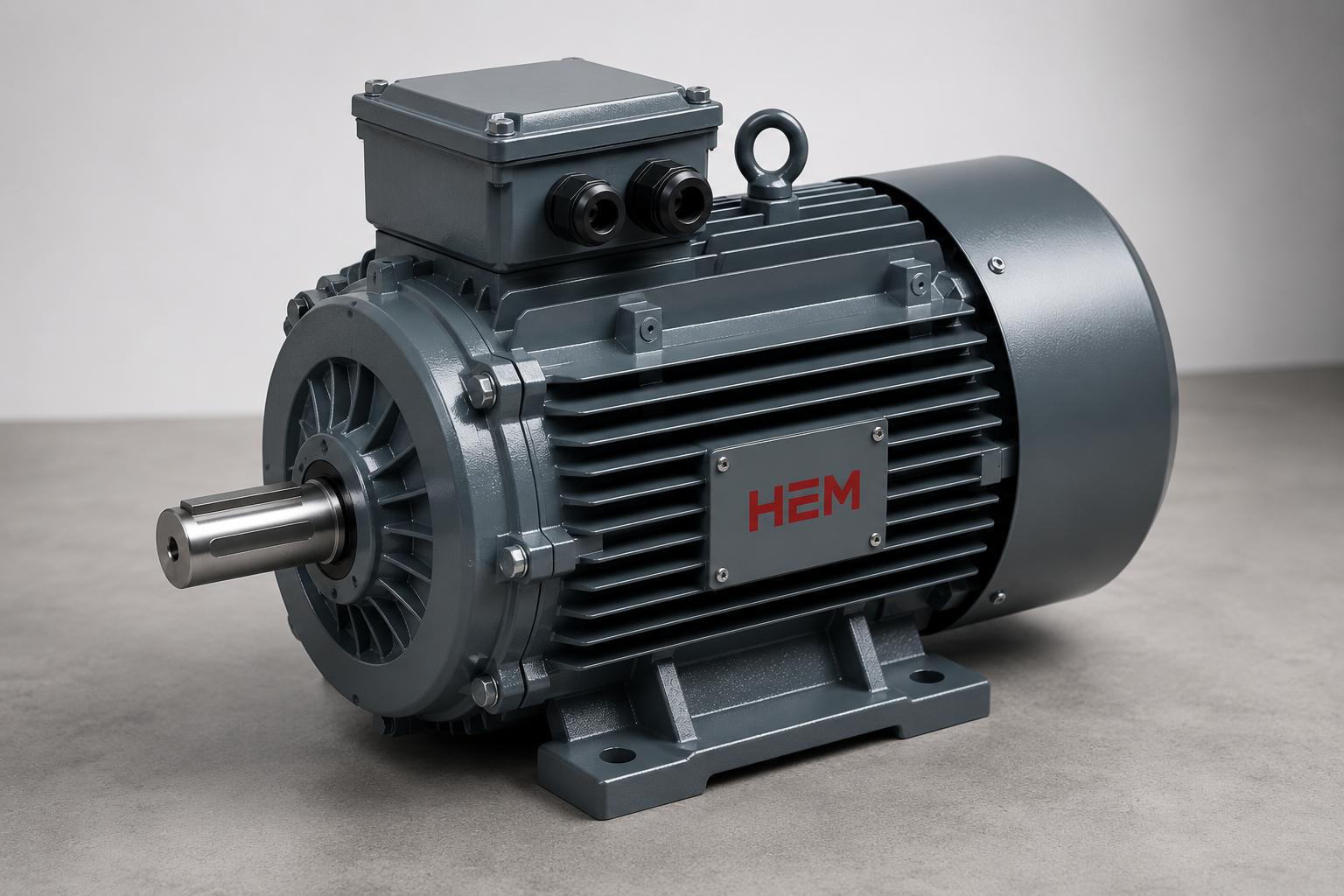
Hot-air circulation is needed in heated ovens for the resin to harden (cure). Because oven fan motors operate in a hot environment, power reduction (derating) according to ambient temperature and a suitable insulation class must be considered. To keep the motor from losing power in a hot environment, one frame size up or Class H insulation may be needed. We also addressed this topic specifically for glass-composite plants in our fiberglass and composite factory motor supply article.
Pultrusion (Pulling) Line
Pultrusion is the method in which the fiber is dipped into resin and pulled at a constant speed through a heated die to produce a profile. The pulling motor must produce high torque at a low but very stable speed; a sudden speed fluctuation degrades product quality. This line too needs low-speed geared drive and precise speed control.
Aspiration and Dust Collection
Cutting and grinding fiberglass generates fine dust; the resin process can produce volatile vapor. Therefore powerful aspiration fan motors are present in the plant. It is important that these motors are of a suitable IP protection class against dust and selected for continuous operation. We examined fan and aspirator motor selection in our aspirator and dust collection fan motor selection article.
Protection and IP Class in a Resin-Vapor Environment
An often-overlooked aspect of a composite plant is the ambient atmosphere. Resin, solvent, and hardener vapors create a harsh environment for motors. For correct supply, the following points must be evaluated:
- IP protection class: At least IP55 in dusty sections; IP65/IP66 should be considered in areas with aggressive vapor or washdown.
- Insulation protection: Tropicalization and suitable varnish protection extend winding life in a vapor environment.
- Explosion risk assessment: Some solvent vapors can be flammable; in that case the area must be zone-classified and suitable protection selected.
- Frame material: A robust, corrosion-resistant cast iron frame provides long life in an aggressive environment.
At HEM Motor, we evaluate the load and environment of each line of your plant separately and plan the motor + reducer + protection combination holistically. For lines requiring a reducer, our motors for reducers and worm gear reducers ranges are suitable starting points.
What You Should Share With Us for the Plant Motor Requirement List
- The load type of each line (mixing, winding, pulling, fan, aspiration)
- The desired output speed and required power
- Whether precise speed control is needed (VFD requirement)
- Environmental conditions (temperature, dust, vapor, moisture)
- If replacing existing motors, the old nameplate data
With this information we can gather the plant's entire motor and reducer requirement into a single list and create a supply plan that is compatible across lines and can be delivered quickly from stock.
Reducer Selection: Worm Gear or Bevel-Helical?
On the composite plant's lines requiring low speed (mixing, pulling, curing-drum rotation), selecting the motor alone is not enough; the right reducer is an equally important decision. The two basic reducer types serve different needs:
- Worm gear reducer: Provides a high reduction ratio in a single stage, and is compact and economical. At some ratios it offers a self-locking feature; this is an advantage in mixer and lifting applications where load backdrive is undesirable. Frame options from HEM30 to HEM130 cover a wide range from small powers to medium-large powers.
- Bevel-helical reducer: Offers a 90-degree-angled power output and higher efficiency than a worm gear. It is preferred on lines needing continuous heavy duty and high efficiency; the K-series types suit different power ranges.
Which reducer is economical depends on the operating regime and the desired efficiency. On a continuously running line, the high efficiency of a bevel-helical reducer pays for itself in energy terms, while on a line running little or needing self-locking, a worm gear is more sensible. We addressed this comparison from the purchasing and maintenance angle too in our geared motor or separate motor + reducer article. We compiled the factors affecting reducer price in our factors affecting geared motor price article.
Redundancy and Stock Planning in Continuous Production
Composite plants often run continuously or on long shifts. In such a facility, when the motor of a critical line fails, all production can stop. If the motor of the resin mixer or winding line fails unexpectedly, the batch in progress can be spoiled and costly scrap occurs. For this reason, in composite plants running continuous production, keeping spares of critical motors in stock is recommended.
Which motors should be backed up depends on line criticality and lead time:
- Main line motors that would halt the facility (mixing, winding, pulling) are priority spare candidates.
- Standard, easily sourced powers can be supplied quickly from stock; keeping a spare is more critical for special or large powers.
- In geared drives, the motor and the reducer must be considered together.
At HEM Motor, we support facilities in identifying exact-equivalent spare motors for critical lines and in stock planning. Thus, in the event of a failure, production loss is minimized. When we draw up the motor and reducer list of all lines plant-wide together, we can create both the initial installation and the redundancy plan at the same time. For lines requiring continuous heavy duty, our general purpose industrial motors and bevel-helical gear reducers ranges are suitable options.
Efficiency Class Selection: IE3 or IE4 in a Composite Plant?
In a composite plant, most motors run long hours, often continuously. This situation turns efficiency class selection directly into an economic decision. In a continuously running mixer, fan, or aspiration motor, the IE4 Super Premium class provides marked energy savings compared to lower classes, and over the motor's lifetime these savings more than cover the purchase price difference.
By contrast, in a secondary drive running only briefly each day, the effect of the efficiency difference on the bill may remain limited; here an IE3 class may be sufficient. So instead of imposing a single efficiency class on a composite plant, making the selection according to each line's operating hours is the most rational approach. Prioritizing IE4 on continuously running main lines both lowers energy cost and improves the facility's overall energy performance. We addressed IE4's continuous-load advantage on process lines in our continuous load on a process line with IE4 article. At HEM Motor, we determine the suitable efficiency class according to each line's operating profile and create a balanced supply plan for the entire plant.
Frequently Asked Questions
For a resin mixer, should I buy a geared motor or a low-speed motor?
Most mixers need low speed and high torque; you obtain this most economically with a geared drive. In some applications requiring very low speed, high-pole direct drive can also be considered. If you share the viscosity of the resin being mixed and the desired speed, we will recommend the most suitable combination.
Why is a frequency drive needed on the winding line?
On the winding line, stepless, precise speed control is essential to keep the roving tension constant and to maintain the winding angle. A motor operating with a frequency drive (VFD) provides this best. If constant tension and position are critical, an IE5 synchronous reluctance motor + closed-loop control can also be considered.
Which protection class is needed in a resin-vapor environment?
At least IP55 is standard in dusty sections; IP65/IP66 is recommended in areas with aggressive vapor, washdown, or moisture. If the solvent vapor is flammable, the area must be zone-classified and suitable protection selected. If you tell us your environmental conditions, we will determine the right frame and protection class together.