English
 Türkçe


Summary (TL;DR)
- The stator lamination core is built by stacking thin, insulated silicon-steel sheets and press-fitting them into the cast iron frame; the quality of this fit directly governs the motor's quietness, efficiency and service life.
- A loose or poorly pressed core lets the laminations vibrate under magnetic forces, producing twice-line-frequency (100 Hz) magnetic noise, hum, extra iron losses and local hot spots.
- In quality manufacturing the core is locked into the frame by press/shrink fit, keys, weld seams or cleats, and the winding is baked so the whole assembly behaves as a single rigid mass.
- The cast iron frame damps the residual vibration far better than aluminium thanks to its mass and graphite-rich microstructure.
- When buying, ask about slot insulation, lamination steel grade, interference fit, impregnation and manufacturer assurance; HEM Motor offers stock, supply and quotation support with manufacturer assurance.
We often say the "heart" of an electric motor is its winding, but the skeleton that carries that heart, the frequently overlooked stator lamination core, silently decides almost everything. This core is formed by stacking hundreds of insulated silicon-steel sheets, each thinner than half a millimetre, into one magnetic body. How that core sits inside the cast iron frame, how tightly it is pressed, how it is locked and secured, determines how quietly the motor runs, how hot it gets and how many years it turns without trouble. A loose core will come back to you as both noise and hidden efficiency loss, no matter what the nameplate says.
In this article we explain, from a manufacturer's point of view, how the lamination core is made, how it is fitted into the frame, why a loose core produces magnetic noise and vibration, how the cast iron frame damps it, and most importantly how to recognise quality when you buy a motor. As HEM Motor manufactures and sells these motors, we want to help you make the right choice. For current electric motor prices and the right frame option, simply send us your request.
What Is a Stator Lamination Core and Why Is It Laminated?
The stator core is the ferromagnetic body that carries the rotating magnetic field and holds the winding slots. If it were made of one solid block of steel, the changing magnetic field would induce huge eddy currents, heating the motor and wrecking its efficiency. That is why the core is built from thin, electrically insulated sheets, that is, as a laminated core. Each sheet is typically 0.35 mm to 0.65 mm thick and coated with a thin insulating varnish or oxide layer, which interrupts current flow perpendicular to the sheet plane and minimises eddy-current losses.
The sheets are stamped in presses, with slots, teeth and the outer ring cut in a single operation. They are then stacked to form the stator lamination core. The "tightness" of the stack, how firmly the sheets are pressed together, is critical: any air gaps between sheets make the stack "soft", disturb the magnetic flux path and leave it mechanically free to vibrate. A quality core is compressed under high pressing force so that virtually no gap remains between sheets.
Methods of Bonding the Sheets Together
- Interlock: Small embossed dimples on each sheet mechanically clinch the sheet above and below. Fast and economical.
- Weld seam: Axial weld seams along the outer surface bind the sheets lengthwise, turning the stack into a rigid cylinder.
- Tie rods / rivets: Rods or rivets running through the stack clamp the sheets between end plates.
- Bonding: In high-quality, low-noise applications the sheets are glued with resin between layers, making them behave as one block and sharply reducing magnetostriction hum.
Whatever method is chosen, the goal is the same: to make the stack rigid enough that it will not move or "breathe" even under the magnetic attraction forces of operation. Our companion article Stator Core Hum and Magnetostriction goes deeper into this vibration mechanism.
Fitting the Core into the Cast Iron Frame: Interference Fit
Once stacked and secured, the stator lamination core is placed inside the motor's outer shell, the cast iron frame. The key concept here is the interference fit: the outer diameter of the core is designed slightly larger than the inner diameter of the frame. The core is therefore forced into the frame, sitting tightly with a permanent contact pressure between them. This contact provides both the mechanical grip and the path for heat to flow from the core into the frame.
In production this fit is usually achieved in two ways. The first is cold pressing, where the core is pushed into the frame under a hydraulic press. The second, and the more favoured one, is the shrink (thermal) fit: the frame is heated in an oven to expand it, the core is inserted, and as the frame cools it shrinks and grips the core from every direction. The shrink fit gives a far more uniform circumferential pressure and truly "locks" the core into the frame. A good manufacturer additionally uses a key, weld points or cleats pressed into the frame to stop the core from rotating or sliding axially after fitting.
Signs of a Loose Fit
- A metallic hum or "whine" that becomes noticeable under load or at start-up.
- A high-frequency vibration felt by hand on the frame that does not change with speed.
- Excessive heating in certain areas because the core does not fully contact the frame and heat cannot escape.
- Noise that grows over time, as the loose stack "frets" and wears its own contact surfaces.
How Does Magnetic Noise Arise in a Loose Core?
In an induction motor the air-gap magnetic field creates time-varying radial attraction forces between the stator teeth and the rotor. These forces have a component pulsating at twice the line frequency (100 Hz on a 50 Hz grid). In a solidly pressed core these forces flex the whole stack as one mass only very slightly, and the noise stays low. But if the stator lamination core is loose, the sheets slide and vibrate by microns relative to one another under this pulsating force. That shrill, continuous hum we hear, the magnetic noise, largely originates here.
Magnetostriction adds to it: a ferromagnetic sheet changes size by a tiny fraction when magnetised. In a tight stack these micro-movements are suppressed by neighbouring sheets; in a loose stack each sheet "breathes" freely and amplifies the sound. The result is not just an annoying hum; this vibration also means extra iron losses, mechanical fatigue and gradual wear of the slot insulation. A loose core means noise today and failure tomorrow.
The vibration also interacts with the frame and the mounting base. Vibration travels from the core to the frame, then to the feet and the foundation; if the foundation resonates, the noise multiplies. Our article Foundation and Base Resonance in Cast Iron Motors shows that a noise problem must often be solved not only in the motor but also in the installation.
How Does the Cast Iron Frame Damp the Vibration?
This is where the importance of the cast iron frame becomes clear. Grey cast iron, thanks to its graphite-bearing microstructure, has a high internal damping capacity. This means it converts vibration energy passing through it into heat and dissipates it. At the same time the cast iron frame is much heavier and stiffer than aluminium; a large mass responds to a given force with less movement. Combined, these two effects mean the magnetic noise and vibration coming from the core are largely absorbed by the frame.
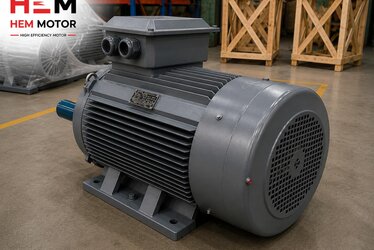
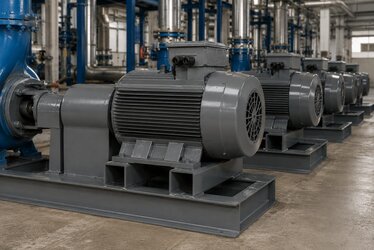
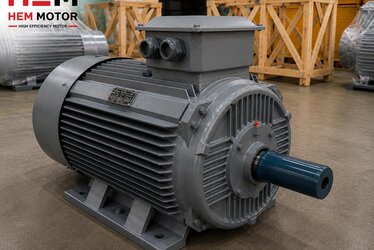
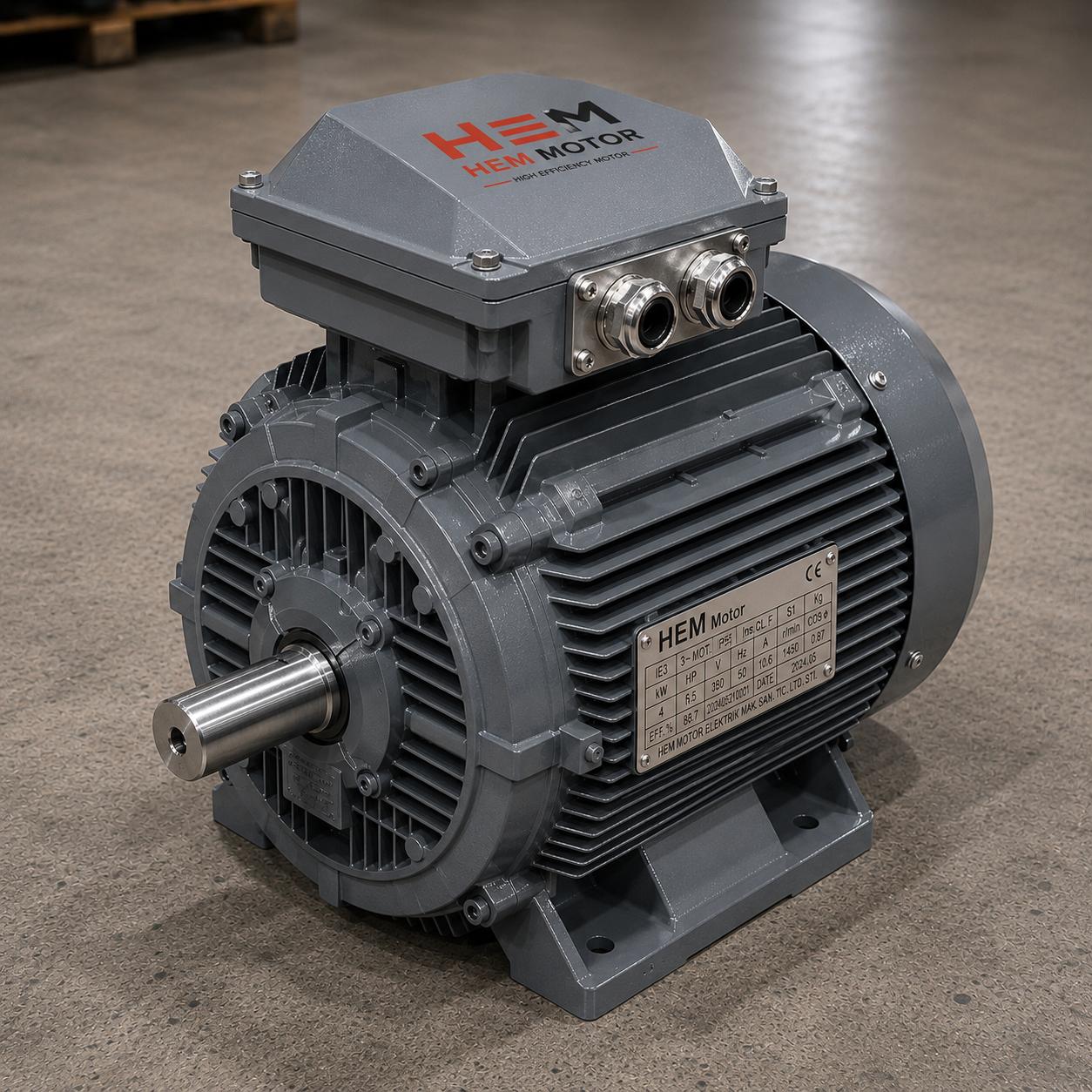
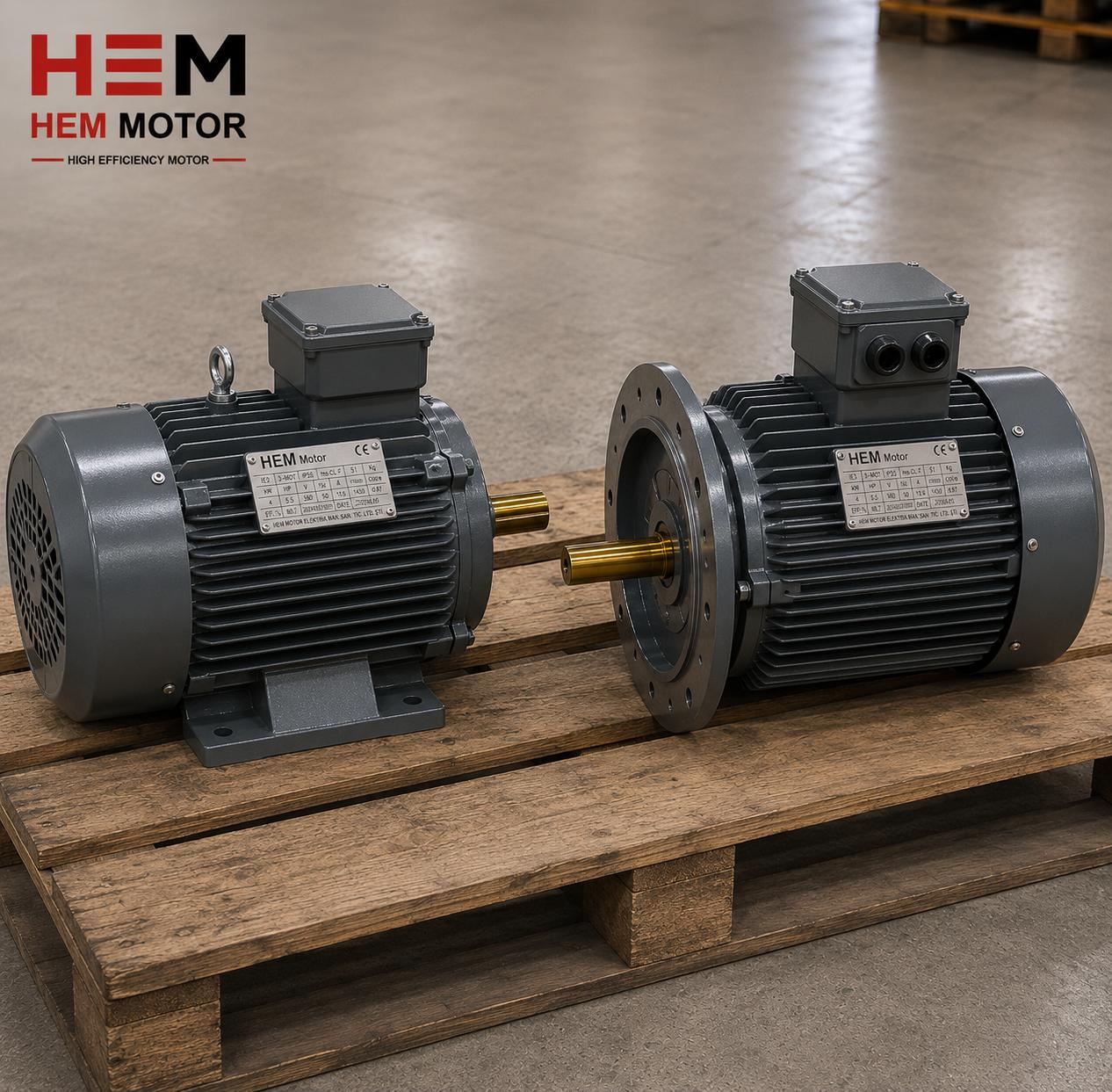
Aluminium-framed motors are light and economical, but their low mass and low damping let the same core vibration out more readily; the difference is felt immediately where quiet operation matters. That is why cast iron frames are preferred for pumps, fans, compressors and continuously running industrial lines. The HEM Motor range includes cast iron framed motors from IEC 56 to 355, with IP55 protection and class F insulation; you can review them on the Cast Iron Frame Electric Motors page and find more technical reading in our Cast Iron Body Motors archive.
How to Recognise Quality When Buying
Judging a motor only by its external size is misleading. To understand the quality of the lamination core inside, you have to ask the right questions. The points below help you tell a quiet, long-lived motor apart.
1. Lamination Steel Grade
High-quality motors use low-loss, high-silicon, cold-rolled non-oriented electrical steel. These sheets reduce both eddy-current losses and magnetostriction hum. You can ask the manufacturer which grade is used; high-efficiency motors (IE3 Premium, IE4 Super Premium) generally use better steel.
2. Slot Insulation and Winding
The slot liner must be clean, continuous and of the correct class to guarantee electrical safety between winding and core. Class F insulation and 100% copper winding are critical for thermal endurance and low losses. Baked (vacuum-impregnated) windings hold the wires and sheets together and reduce vibration, so a good motor must be impregnated.
3. Interference Fit and Securing
A core secured in the frame by a key, weld or cleat prevents noise from the start. Manufacturers offering real assurance state these details. A low vibration class is a sign of a quality fit and good balance; you can find the vibration and balance acceptance criteria in our Vibration and Balance in IE4 Motors (ISO 20816) article.
4. Manufacturer Assurance, Stock and Supply
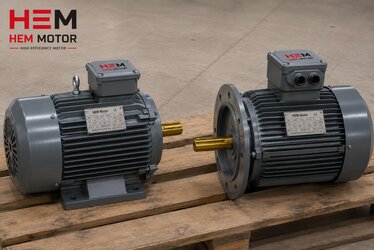
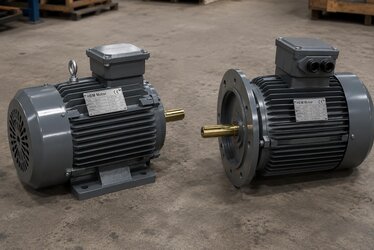
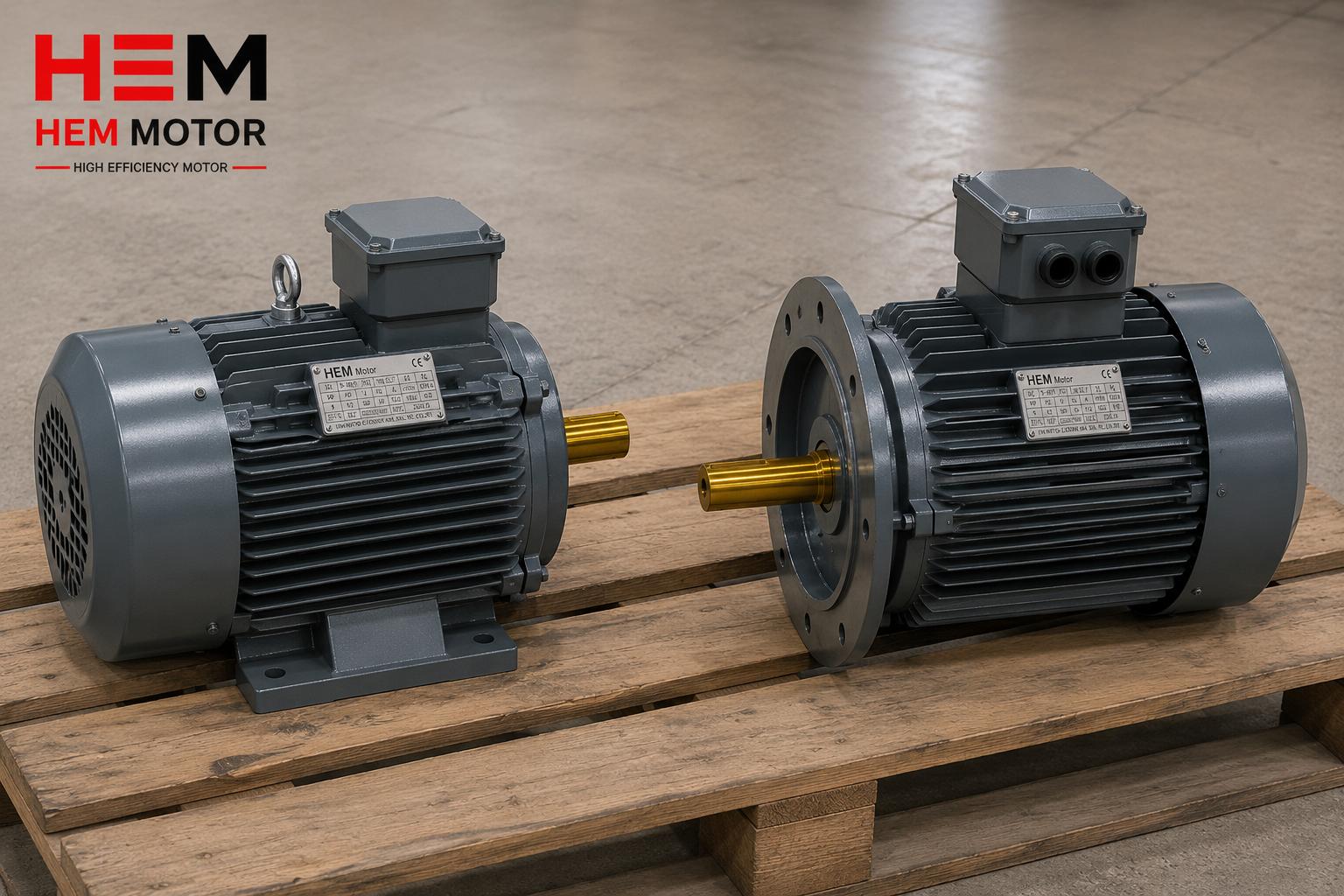
Buying a motor from a manufacturer, or a supplier with manufacturer assurance, means buying not just the product but the engineering behind it. As HEM Motor we offer a wide stock and fast supply, with power from 0.55 kW to 355 kW, speeds of 1000/1500/3000 rpm, and B3/B5/B35 mounting options. Just send us your requirement and we will recommend the right model with a clear quotation.
A Practical Checklist for the Right Choice
- Does the environment require quietness? If yes, choose a cast iron frame.
- Will it run continuously or intermittently? Continuous duty demands a quality core and an impregnated winding.
- Does the efficiency class (IE3/IE4) match your need? A higher class brings both energy and noise advantages.
- Are the mounting type (B3/B5/B35) and IP protection class suitable for the application?
- Does the supplier provide stock, warranty and technical support? Manufacturer assurance lowers cost in the long run.
In short, a motor's quietness and life are hidden in an invisible detail: how well the stator lamination core is pressed into the frame. When a quality lamination core, a solid interference fit and a damping cast iron frame come together, your motor runs quietly and efficiently for years. Manufacturing and supplying motors that combine all three is the foundation of our work.
Frequently Asked Questions
My motor hums louder as load increases, could a loose lamination core be the cause?
It can be. As load and magnetisation rise, the magnetic attraction forces grow; a loose stator lamination core lets its sheets vibrate under these forces and produces a hum around 100 Hz. However, similar noise can also come from bearings, imbalance or foundation resonance. The safest approach is to locate the source with a vibration measurement and, if necessary, replace the motor with a new one carrying manufacturer assurance.
Is a cast iron frame really quieter than aluminium?
Generally yes. The cast iron frame absorbs more of the vibration from the core than aluminium thanks to its mass and the internal damping of its graphite structure. That is why cast iron frames are recommended where quietness and continuous operation are required. Even at the same efficiency class, the frame material can make a noticeable difference in sound level.
How should I question core quality when buying?
Ask about the loss grade of the electrical steel, the method of fitting and securing the core to the frame (key/weld/cleat), whether the winding is impregnated, the insulation class and the efficiency class (IE3/IE4). A supplier with manufacturer assurance shares this information openly. As HEM Motor we provide stock, technical support and a clear quotation so you can choose the right motor.