English
 Türkçe

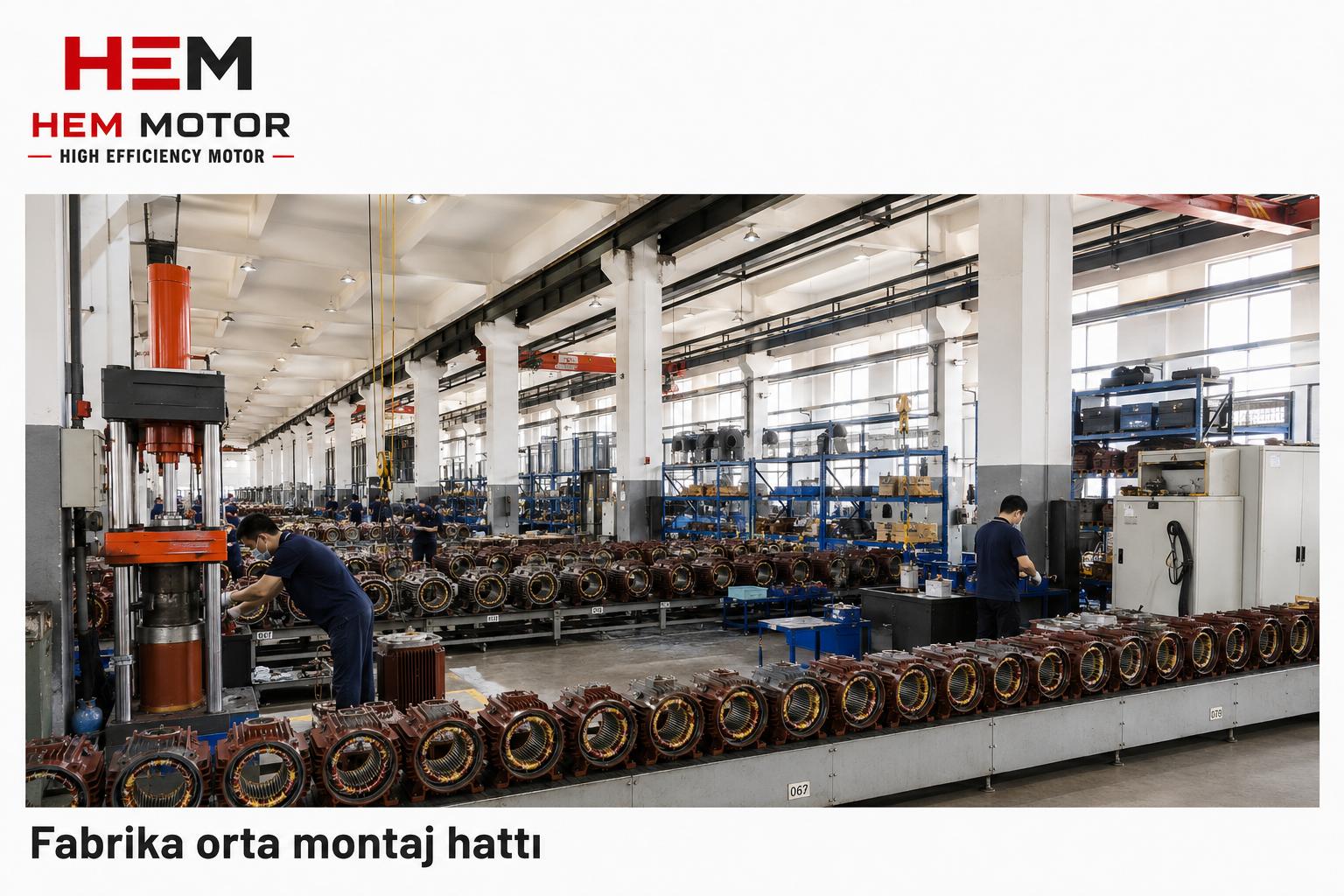

In high-power industrial motors, bearing lubrication is one of the most critical factors determining a motor's lifespan and reliability. Particularly in cast iron bodied, large-frame class motors, proper bearing lubrication under the pressure of high speed, heavy load and uninterrupted production lines transforms from a simple maintenance detail into an engineering discipline that directly affects plant efficiency. One of the standout solutions at this point is the oil-bath bearing lubrication system.
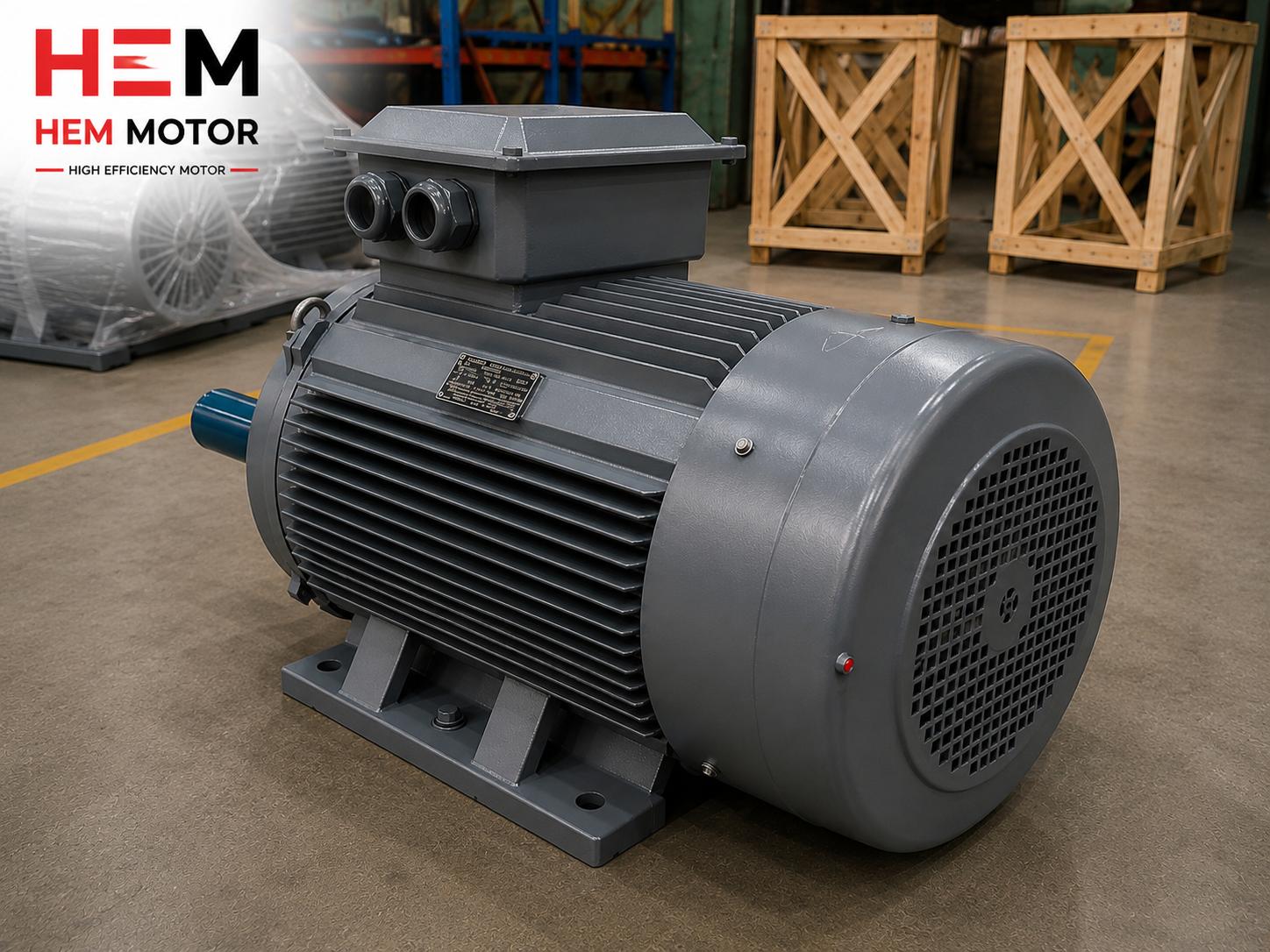
As HEM Motor, the IE3 Premium and IE4 Super Premium asynchronous motors we manufacture cover a wide power range from 0.55 kW to 355 kW. At the upper end of this range, large powers such as 315 and 355 kW are mostly designed to operate at 1500 rpm with 355 frame sizes and Ø100 mm shafts. In this class of motors, bearing loads, peripheral speeds and heat generation reach such levels that the limits of conventional grease lubrication begin to be challenged. This is precisely where oil-bath bearing lubrication comes into play, providing a continuous and reliable oil film.
In this article, we examine the working principle of oil-bath lubrication in cast iron large-frame motors, the conditions under which it should be preferred, the advantages it provides under high speed and continuous duty conditions, and the criteria to consider for correct motor selection, all from a technical perspective.
What Is Oil-Bath Bearing Lubrication and How Does It Work?
Oil-bath bearing lubrication is a lubrication method in which the lower part of the bearing rotates in a reservoir filled with oil up to a certain level, and as the shaft turns it carries this oil throughout the bearing housing. Unlike grease lubrication, the oil here remains fluid; the bearing elements come into contact with a fresh and cooling oil film at every revolution. This both dissipates friction heat and keeps the bearing clean by carrying wear products away from the bearing zone.
The system basically consists of the following components: an oil reservoir, an oil level indicator, fill and drain plugs, sealing elements and an appropriately sized bearing. The high rigidity and heat dissipation capacity of the cast iron body greatly contribute to this oil reservoir operating at a stable temperature. The vibration damping capability of cast iron preserves the continuity of the oil film by suppressing micro-vibrations that may occur at high speeds.
The Difference Between Grease Lubrication and Oil-Bath Lubrication
Grease lubrication is extremely suitable for medium and low speed applications that allow periodic maintenance intervals. However, in large-power motors where peripheral speed rises and bearing temperatures remain continuously high, the oil in the grease separates over time and lubrication performance declines. Oil-bath bearing lubrication eliminates this problem by offering a stable oil film even at high speeds. The items below summarize the fundamental differences between the two systems:
- Cooling capacity: The oil bath removes heat from the bearing far more effectively thanks to the circulating fluid oil.
- Speed limit: At high peripheral speeds, the oil-bath system provides a clear advantage over grease lubrication.
- Maintenance interval: With proper sealing, oil level monitoring offers a more predictable maintenance regime than grease replenishment.
- Continuous duty compatibility: In S1 continuous duty type, in uninterrupted production, the oil film remains continuous.
- Contaminant control: Wear particles are carried within the oil and removed from the bearing surface.
Why Do Cast Iron Large-Frame Motors Need Oil-Bath Lubrication?
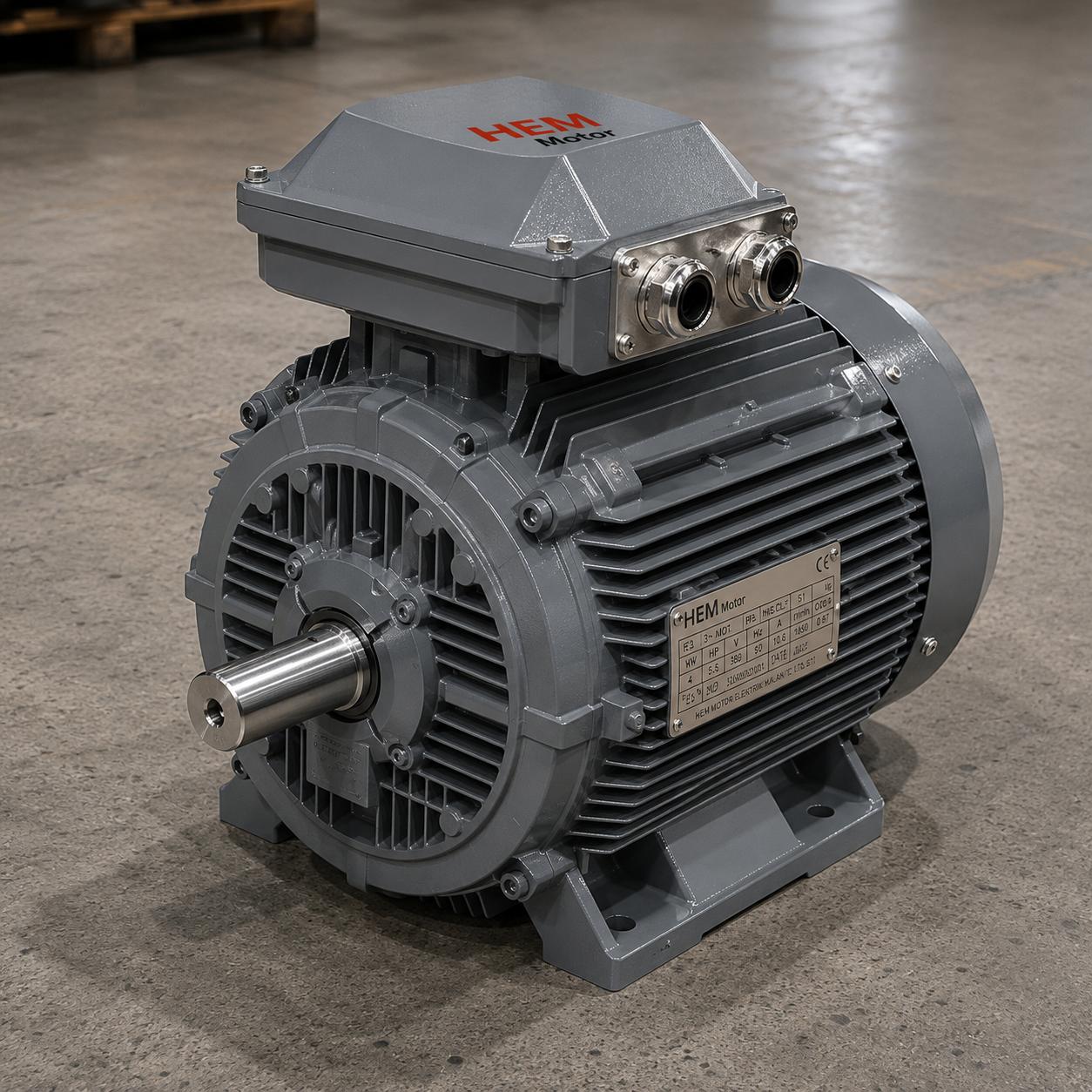
In large-power motors, the increase in transmitted torque and rotating mass directly raises bearing loads. In motors with 315 and 355 frame sizes, large shaft diameters such as Ø100 mm lead to high surface speeds. Under these conditions, the friction heat within the bearing can reach critical levels within minutes. The high mechanical strength and excellent heat dissipation capacity provided by the cast iron body offer the thermal stability that the oil bath requires.
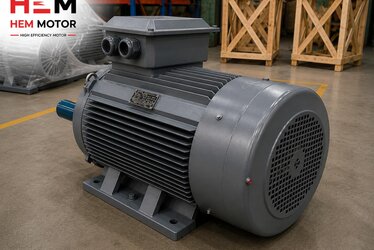
In the HEM Motor product family, the cast iron body is preferred as standard for high mechanical strength; together with IP55 protection class, F class insulation and 100% copper winding, these motors are designed for heavy industrial conditions. The use of reinforced and heavy-duty bearings in the large-frame class, combined with the advantages brought by oil-bath lubrication, results in a long-lasting system with a low failure rate.
The Relationship Between High Speed and Peripheral Speed
In motors capable of operating even at high speeds such as 3000 rpm, the peripheral speed at the outer ring surface of the bearing increases as the shaft diameter grows. This speed is the determining parameter in the choice of lubrication method. While grease may not be able to maintain film continuity at high peripheral speeds, oil-bath bearing lubrication forms a robust hydrodynamic film thanks to the continuously supplied fluid oil. This film minimizes wear by preventing metal-to-metal contact and extends the service life of large-frame motors.
Challenges Brought by Continuous Duty (S1) Conditions
Many industrial applications require the motor to run without stopping 24 hours a day. In sectors such as cement, iron and steel, paper, petrochemicals and mining, motors operate under the S1 continuous duty regime. In this regime, the bearing temperature reaches an equilibrium; however, this equilibrium temperature depends on the quality of lubrication. An unstable oil film can cause the temperature to rise gradually and eventually lead to bearing damage. Oil-bath bearing lubrication keeps this equilibrium temperature within safe limits through continuous fluid oil circulation.
Criteria to Consider for Correct Motor Selection
When selecting the right motor for a facility, looking only at power and speed values is not sufficient. Lubrication type, body material, protection class and duty type must be evaluated as a whole. The following criteria are decisive in selecting a cast iron large-frame motor:
- Power and speed match: Large powers such as 315/355 kW are usually paired with the 355 frame and 1500 rpm; the load profile of the application must be clearly defined.
- Lubrication type: Oil-bath lubrication is evaluated for high speed and continuous duty, while grease lubrication suits medium speeds.
- Body material: For vibration and heat, the cast iron body provides mechanical strength and thermal stability.
- Efficiency class: To reduce energy costs, IE3 Premium or IE4 Super Premium should be preferred.
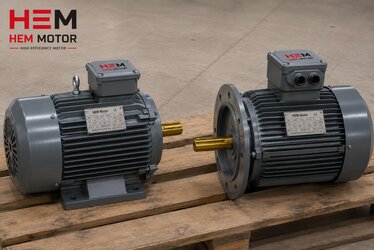
- Mounting type: B3 (foot), B5/B14 (flange) or B35/B34 (combined) mounting options are determined according to the application.
- Protection and insulation: IP55 protection and F class insulation are standard for heavy industrial environments.
For engineers who want to understand bearing life and maintenance planning in depth, our content detailing bearing and bearing life in cast iron motors is an important reference point. The critical role of sealing in oil-bath systems is examined in detail under the oil seal and sealing protection heading.
Sealing: The Lifeline of Oil-Bath Systems
The most sensitive point of oil-bath lubrication is sealing. While leakage of oil out of the system reduces lubrication performance, the entry of dust, moisture and contaminants from outside degrades oil quality. For this reason, multi-layer sealing solutions such as labyrinth seals, V-rings and radial oil seals are used in large-frame motors. While the IP55 protection class protects the motor against dust and low-pressure water jets, the special seals in the bearing zone guarantee that the oil stays within the system.
The machining precision of the cast iron body allows seal seats to be produced in smooth and tight tolerances. This ensures that the sealing elements seat correctly and operate for a long time. Regarding the load-bearing and form stability of the body, our content on IEC 56-355 frame load-bearing capacity provides valuable information for those who want to understand which frame size suits which load class.
Maintenance, Operation and Energy Efficiency
One of the greatest advantages oil-bath lubrication brings to operation is predictable maintenance. With regular checking of the oil level, periodic oil changes and monitoring of sealing elements, the system operates trouble-free for many years. In addition, since proper lubrication reduces friction losses, it also positively contributes to the overall efficiency of the motor.
The matter of efficiency directly reflects on operating costs in large-power motors. Considering the annual energy consumption of a continuously running 355 kW motor, the savings provided by the IE4 Super Premium efficiency class quickly pay for themselves. When 100% copper winding, an optimized core pack and low-loss design are combined with the low-friction advantage of oil-bath lubrication, they produce some of the industry's leading solutions in terms of energy efficiency. To examine the product family of efficient cast iron bodied motors, our cast iron electric motors product group is a comprehensive starting point.
- Regular oil level checks prevent unexpected downtime.
- The correct oil type is selected according to temperature and speed conditions.
- Periodic inspection of sealing elements prevents oil losses.
- Predictive maintenance can be applied with vibration and temperature measurements.
- The IE4 efficiency class reduces energy costs in continuous duty.
For up-to-date pricing and model options, you can visit our electric motor prices page to evaluate the most suitable solution for your facility. The HEM Motor engineering team is ready to plan together the most appropriate bearing and body selection for the load profile and operating regime of your application.
Frequently Asked Questions
At which motor powers is oil-bath lubrication necessary?
Oil-bath lubrication stands out mostly in large-power motors that require high speed and continuous duty. Especially at large powers such as 315 and 355 kW, in structures with the 355 frame size and Ø100 mm shafts, the oil-bath system provides a clear advantage because bearing loads and peripheral speeds increase. While grease lubrication may be sufficient in medium and low speed applications, oil-bath bearing lubrication is preferred at high peripheral speeds. The correct choice should be made according to the application's load profile and operating regime.
How does the cast iron body contribute to the oil-bath system?
The cast iron body, thanks to its high mechanical strength and excellent heat dissipation capacity, enables the oil bath to operate at a stable temperature. The vibration damping capability of cast iron preserves the continuity of the oil film by suppressing micro-vibrations that may occur at high speeds. In addition, its machining precision allows seal seats to be produced in tight tolerances and ensures sealing elements seat correctly. When these features come together, large-frame motors operate with long life and low failure rates.
What advantage does the IE4 efficiency class provide together with oil-bath lubrication?
The IE4 Super Premium efficiency class provides low losses with 100% copper winding and optimized design. When combined with the low-friction advantage of oil-bath lubrication, the overall efficiency of the motor increases and energy costs drop significantly in continuously running large-power applications. Considering the annual consumption of a continuously running 355 kW motor, the savings provided by this efficiency class reflect directly and positively on the operating budget and allow the investment to be amortized in a short time.