English
 Türkçe

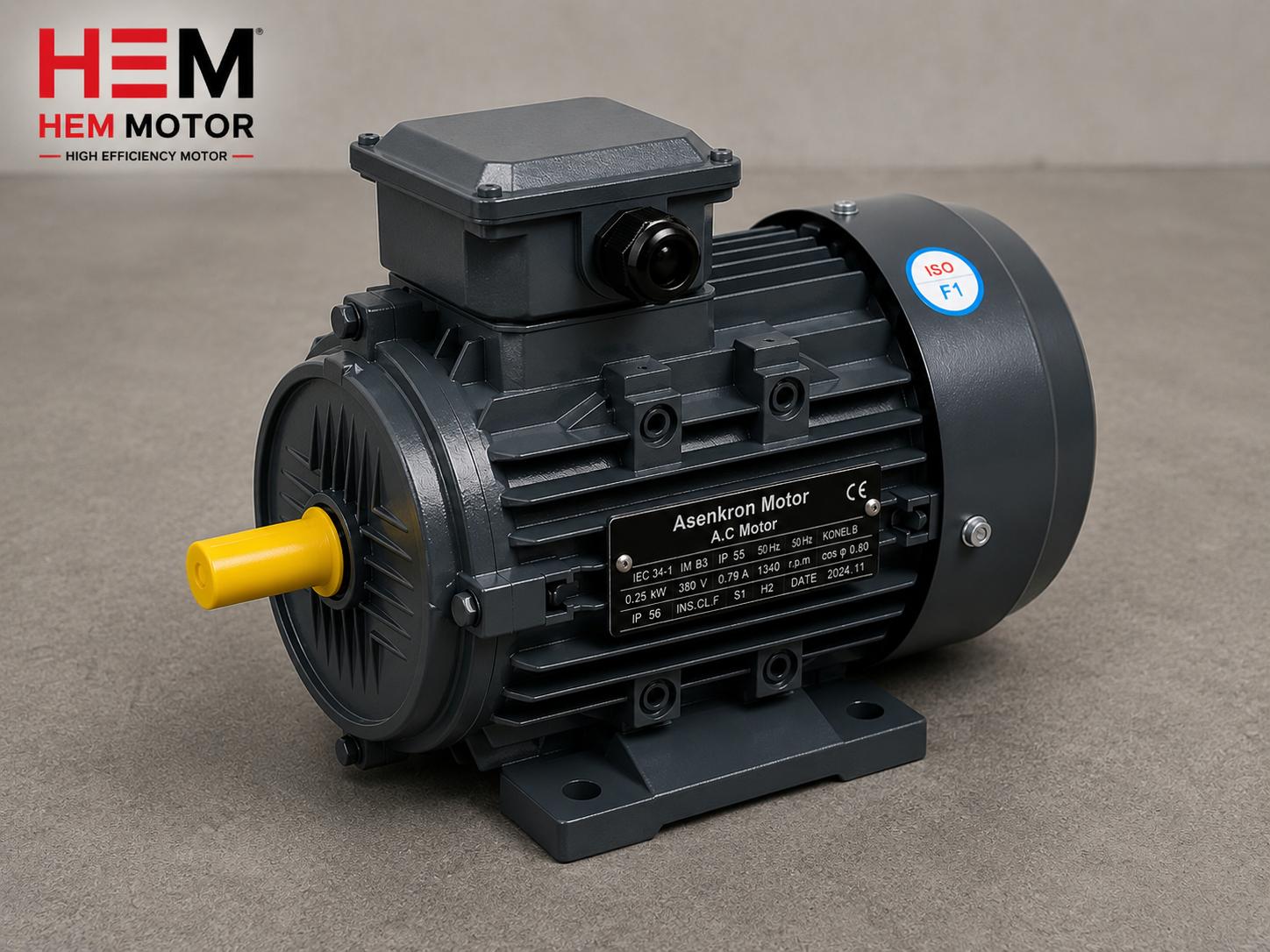

When selecting an electric motor, most buyers first look at power (kW), speed and efficiency class. Yet a motor's long life, quiet operation and real field efficiency depend heavily on something invisible: magnetic stray flux and eddy-current heating in the cast iron motor frame. Part of the flux that should circulate within the magnetic circuit spills out of the windings and core stack, reaching the frame, feet, terminal box and flange. Inside the conductive cast iron frame, this changing field induces eddy (Eddy) currents, and those currents heat the frame. The result is additional loss, local temperature rise, shortened bearing life and a field performance below the rated efficiency class. In this article we explain where stray flux comes from, why eddy-current heating matters, and how to evaluate the quality of a cast iron motor from this angle, in engineering language but with the purchasing decision in mind.
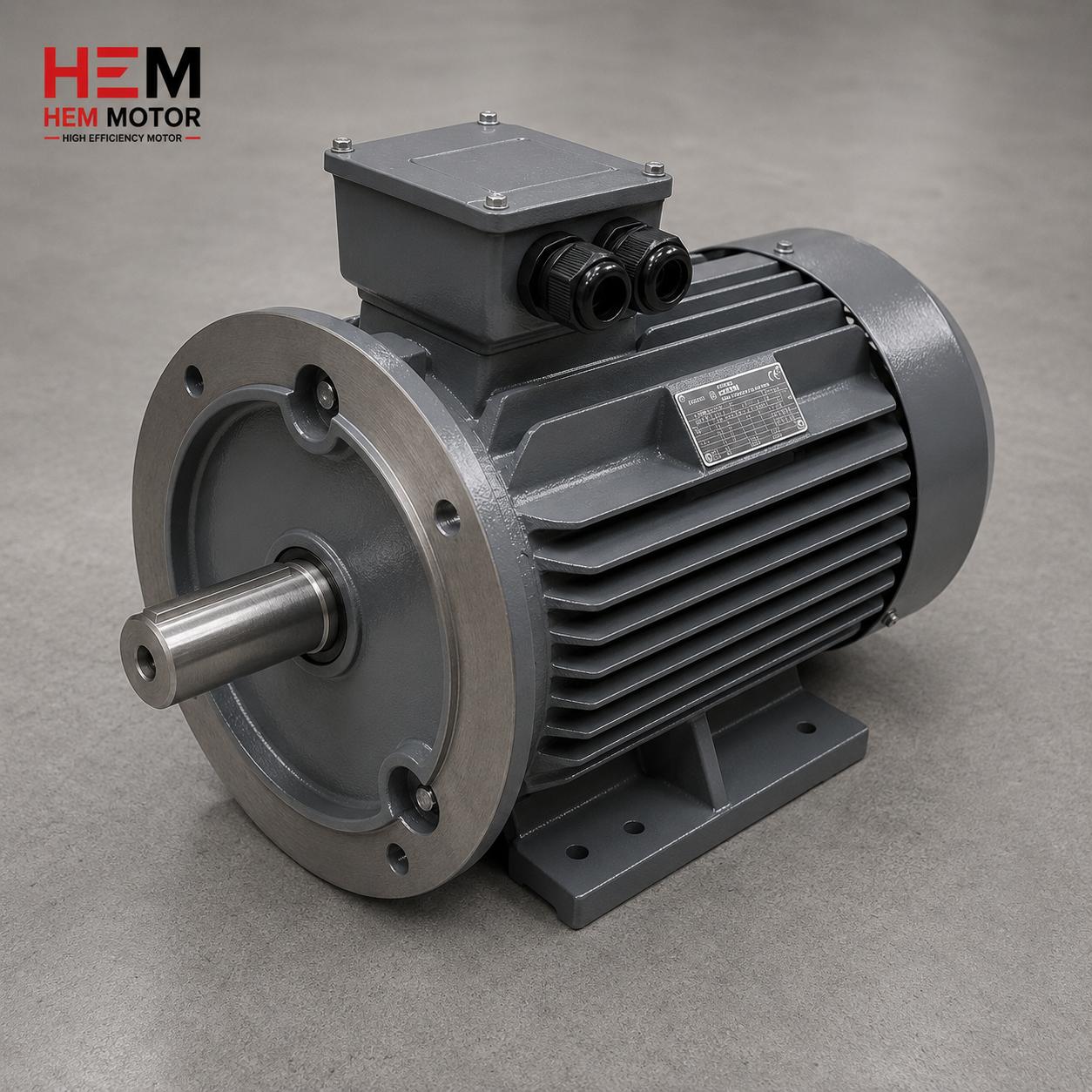
What Is Magnetic Stray Flux and Why Does It Matter in Cast Iron Frames?
In an ideal induction motor, the magnetic flux produced by the stator crosses the air gap, drives the rotor and follows a closed path through the magnetic circuit. In reality, not all of this flux follows that path. At the winding ends (coil heads), slot openings, the ends of the core stack and the leakage paths between rotor and stator, part of the flux separates from the main circuit. This separated portion is called magnetic stray flux (leakage flux). Stray flux directly affects the motor's rated current, power factor and starting behavior, and it also causes unwanted heating inside conductive frame material.
A cast iron frame (EN-GJL) is both electrically conductive and magnetically permeable. This gives it superior mechanical strength and heat dissipation; at the same time, it creates the conditions for stray flux to induce eddy currents in the frame. Compared with an aluminum frame, cast iron has higher magnetic permeability, meaning it partly collects and channels the flux. In a well-designed motor this is kept under control; in a poorly designed motor or one with low core quality, the frame heats up more than it should.
The Three Main Sources of Stray Flux
- Coil-head (end-winding) leakage: The coil heads formed by conductors leaving the slots sit outside the iron core, so their flux closes through air and neighboring metal parts. This flux reaches the end shields, bearings and frame ends.
- Slot leakage: Flux that forms around the conductor inside the stator and rotor slots and closes without crossing the air gap. It determines the motor's reactance and therefore the starting current.
- Tooth-tip and air-gap leakage: Distortion of the field distribution caused by magnetic saturation at the tooth tips and by slot openings; it produces harmonic fluxes that create extra loss on the frame and rotor surface.
How Does Eddy-Current Heating Occur?
According to Faraday's law, a time-varying magnetic field within a conductive mass induces currents flowing in closed loops. These currents are called eddy currents, and they produce I²R loss (Joule heat) across the conductor's resistance. In large conductive masses such as the cast iron frame, terminal box cover, lifting eyes and flange, the 50 Hz stray flux (or higher-frequency flux under drive supply) spilling from the coil heads induces these eddy currents. As a result, certain regions of the frame become hotter than the magnetic circuit intended.
The practical consequences are critical for purchasing. First, eddy-current loss adds to the motor's total losses and lowers field efficiency; even if the nameplate reads IE3 or IE4, real consumption can be higher than expected in a poorly designed frame. Second, local heating shortens the life of the winding insulation and the bearing grease. It is a well-known rule in motor engineering that every permanent rise of 8-10 °C roughly halves insulation life. Third, in motors fed by frequency converters, high-frequency components from the carrier frequency (PWM) noticeably increase eddy losses; so frame and core quality become even more important in drive applications.
Factors That Determine Eddy Currents
- Amplitude of stray flux: The better the winding design, coil-head length and slot geometry are optimized, the lower the stray flux.
- Frequency: Eddy loss increases with the square of frequency. Under mains supply 50 Hz dominates; under drive supply switching harmonics add loss.
- Material conductivity and permeability: The casting quality, alloy composition and porosity of cast iron affect the magnitude of induced currents.
- Mass geometry: Thick, continuous conductive surfaces offer wide paths for eddy loops; good design breaks these loops with material distribution and air gaps in critical regions.
Core (Lamination Stack) Quality: The Real Driver of Stray Flux and Loss
Although we observe eddy-current heating on the frame, its root lies largely in the motor's magnetic core. Stator and rotor cores are made of thin silicon-steel laminations coated with insulating varnish to restrict eddy currents. The thickness of the lamination, the silicon content and the insulation quality determine the iron losses (hysteresis + eddy). In a motor using low-quality, thick or poorly insulated laminations, core losses rise; these losses turn into heat, push the magnetic circuit toward saturation and cause more flux to leak into the frame. Therefore a high-quality core means both low iron loss and low frame heating.
Core quality is hard to measure directly when buying, but there are indirect signs: low no-load current, a reasonable no-load frame temperature, and a manufacturer able to document the efficiency class with an independent measurement (IEC 60034-2-1). Correctly understanding the difference between nameplate and field efficiency protects the buyer from wrong decisions here. The efficiency printed on a motor's nameplate is realized in the field only if the core and frame design support it.
The Advantage of the Cast Iron Frame: Heat Dissipation and Mechanical Rigidity
Although eddy-current heating may look like a disadvantage, the cast iron frame actually offers important advantages in managing this heat that aluminum cannot. The high mass and thermal mass of cast iron smooth out sudden temperature fluctuations; rib design increases surface area to improve heat dissipation. Moreover, the mechanical rigidity of cast iron minimizes frame deformation caused by magnetic forces and vibration; this keeps the air gap uniform and therefore keeps stray flux under control. The differences between EN-GJL casting grades (GG20/GG25) directly affect both the mechanical and thermal behavior of the frame and should be considered in selection.
In a well-designed cast iron frame, heat dissipation is optimized through the direction of the cooling fins (ribs) and the fan cover geometry. The effect of rib design on heat dissipation can create a noticeable temperature difference between two motors of the same power. For this reason the frame should be designed not only to be "strong" but also to dissipate heat efficiently.
Design Measures That Reduce Eddy-Current Loss
- Optimized coil heads: Short, orderly coil heads reduce the stray flux spilling onto the frame.
- Magnetic shielding: In some high-power motors, laminated magnetic shield plates are placed at the core ends to channel stray flux and reduce frame heating.
- High-quality laminated core: Thin, high-silicon, well-insulated laminations lower both iron loss and saturation-driven leakage.
- Balanced air gap: Precise machining and a rigid frame keep the air gap uniform, reducing harmonic leakage.
The Relationship Between Frequency Converters (VFD), Stray Flux and Heating
A significant share of modern facilities feed motors through a frequency converter (VFD). The PWM waveform contains high-frequency harmonics alongside the fundamental 50 Hz component. These harmonics produce both extra iron loss in the core and extra eddy-current heating in the frame. A motor running hotter than expected under drive supply is often caused by these high-frequency losses. Therefore motors intended to run on a drive should use "inverter duty" compatible insulation and a low-loss core. The topic of using an asynchronous motor with a frequency converter is an inseparable part of stray flux and heating management.
In drive-fed motors running at low speed for long periods, the cooling airflow of the frame fan drops, making heating even more critical. In this case external (forced) cooling or selecting one frame size larger comes into play. Monitoring winding temperature with PT100 and PTC thermistors allows eddy-driven heating to be detected before it damages the insulation.
Understanding Quality When Buying: A Checklist for Stray Flux and Heating
The magnetic design quality of a motor is hard to judge by eye, but there are concrete signs a buyer can ask about and observe. The following checks help you distinguish a quality cast iron motor from the perspective of frame heating and stray flux:
- Efficiency certificate: Can the manufacturer provide efficiency and loss breakdown measured per IEC 60034-2-1? Low iron loss is a good core sign.
- No-load temperature: The frame should not overheat when the motor runs unloaded; high no-load heating points to a core or stray flux problem.
- Frame casting quality: A smooth, void-free casting surface and well-machined bearing seats support air-gap stability.
- Cooling fin design: An adequate number of correctly oriented fins is decisive in expelling eddy heat.
- Insulation class: Class F (or H on request) insulation provides a safety margin against local heating.
- Drive compatibility: If it will run on a VFD, the motor's suitability for inverter supply should be documented.
Motors that meet these criteria realize their nameplate efficiency in the field and run for a long life. For current electric motor prices together with power, speed and frame size options, you can review our product range and evaluate the cast iron motor suited to your application along with its stray flux and heating performance.
Application Examples: In Which Loads Is Frame Heating More Critical?
Stray flux and eddy heating exist in every motor, but in some applications the critical threshold is crossed faster. Pump, fan and compressor motors running continuously at full load operate long enough for heat to accumulate; in these loads the frame design directly determines life. When matching power in centrifugal pump motor selection, frame heating in continuous S1 duty must also be accounted for. Similarly, in conveyor and mill drives running continuously at high load, the thermal mass of the cast iron frame turns into an advantage.
In dusty and hot environments, dirt building up on the frame surface blocks heat dissipation and makes it harder to expel eddy heat. Therefore, in environments such as open fields, quarries and cement plants, frame cleanliness and the right IP protection class are part of heating management. Choosing the correct insulation class and frame material requires a balance discussed in detail in insulation class and cast iron frame selection in hot and dusty environments.
Frequently Asked Questions
Does a cast iron frame heat up more than aluminum?
Because cast iron is electrically conductive and magnetically permeable, stray flux can induce eddy currents; from this angle there is theoretically an extra heat source. However, the high thermal mass of cast iron and its superior heat-dissipating surface (rib design) more than offset this effect. A well-designed cast iron motor runs at a more stable and safer temperature than an aluminum frame under continuous heavy load. The real determinant is core quality and frame design rather than the frame material type alone.
My motor reads IE4 on the nameplate but runs much hotter than I expected in the field. Why?
One common reason is eddy losses caused by stray flux and a low-quality core. Nameplate efficiency applies under laboratory conditions; in the field a low-quality lamination stack, a poorly optimized coil head or drive harmonics produce extra loss and heat the motor. Overload, low voltage, insufficient ventilation and dirt buildup on the frame also increase heating. A motor with an efficiency certificate and a quality core and frame minimizes this difference.
Does a frequency converter increase stray-flux heating?
Yes. The PWM output of a frequency converter contains high-frequency harmonics in addition to the fundamental frequency, and since eddy loss increases with the square of frequency, these harmonics produce extra heating in the frame and core. When running at low speed for long periods, the frame fan cannot provide adequate cooling and heating becomes critical. Therefore motors that will run on a drive should use insulation suitable for inverter supply, a low-loss core and, where necessary, forced cooling.