English
 Türkçe

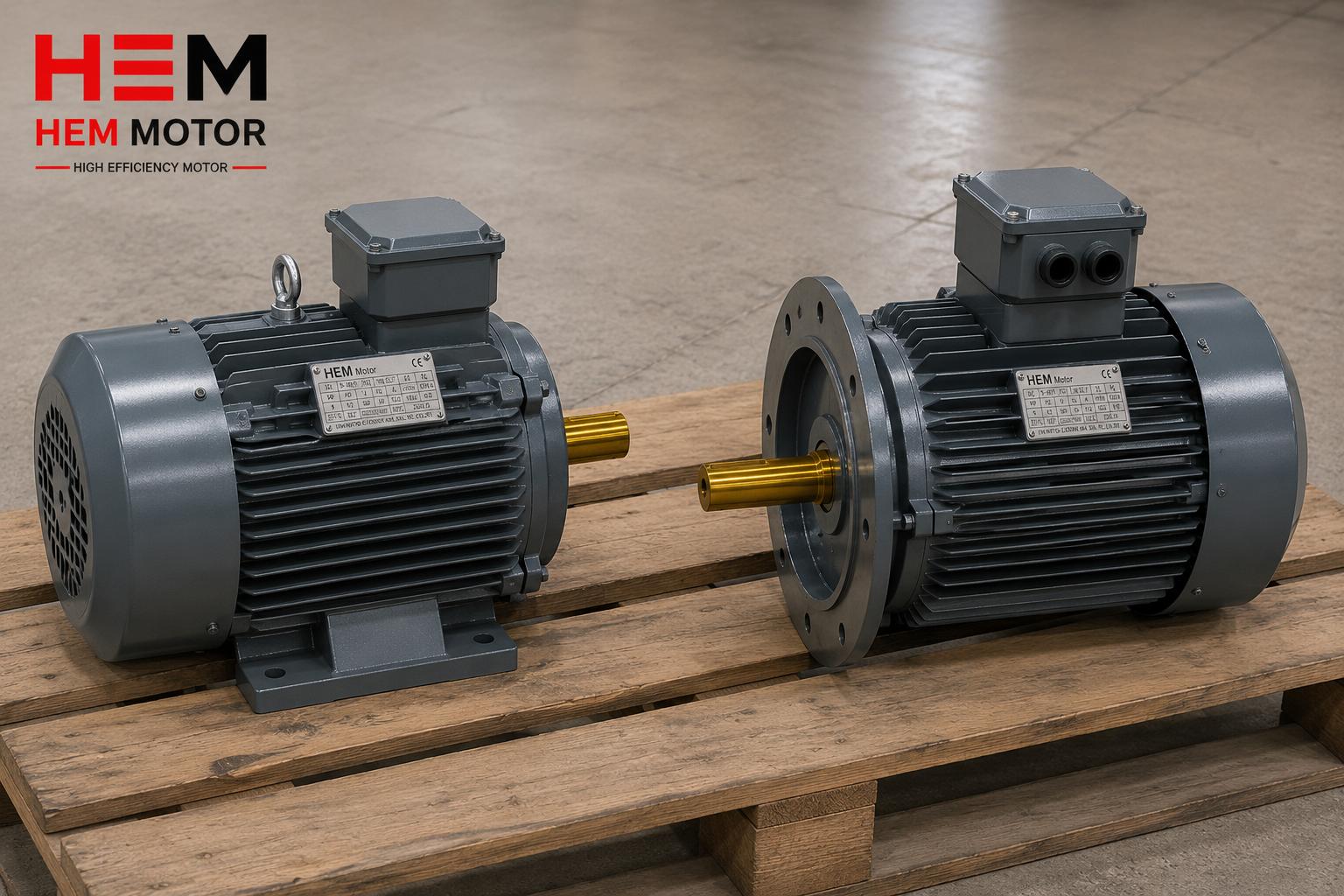

The plastic or metal bladed fan spinning at the rear of a cast iron electric motor is a part that most buyers overlook, yet it directly determines how long the motor will last. This is the axial cooling fan: it is mounted on the shaft and turns at the same speed as the motor, blowing air across the cooling fins on the frame to carry heat away from the windings. The most common confusion in the field starts right here: does this fan push air in one direction or both, does cooling weaken if the motor's rotation direction changes, and which direction should you specify when ordering? In this guide we explain the relationship between the axial cooling fan and single-direction rotation on cast iron motors from an engineering standpoint, compare bidirectional and unidirectional fan options in terms of cooling efficiency, and give you a practical procurement framework so you get the right motor the first time.
At HEM Motor, one of the most frequent complaints we hear from the field is that a motor "runs hotter than it should." A significant share of these cases are not winding faults at all, but simply motors running in the wrong direction or fitted with the wrong fan design. With the right information, this problem is solved at the order stage; solving it after delivery is costly and time-consuming.
How Does the Axial Cooling Fan Work?
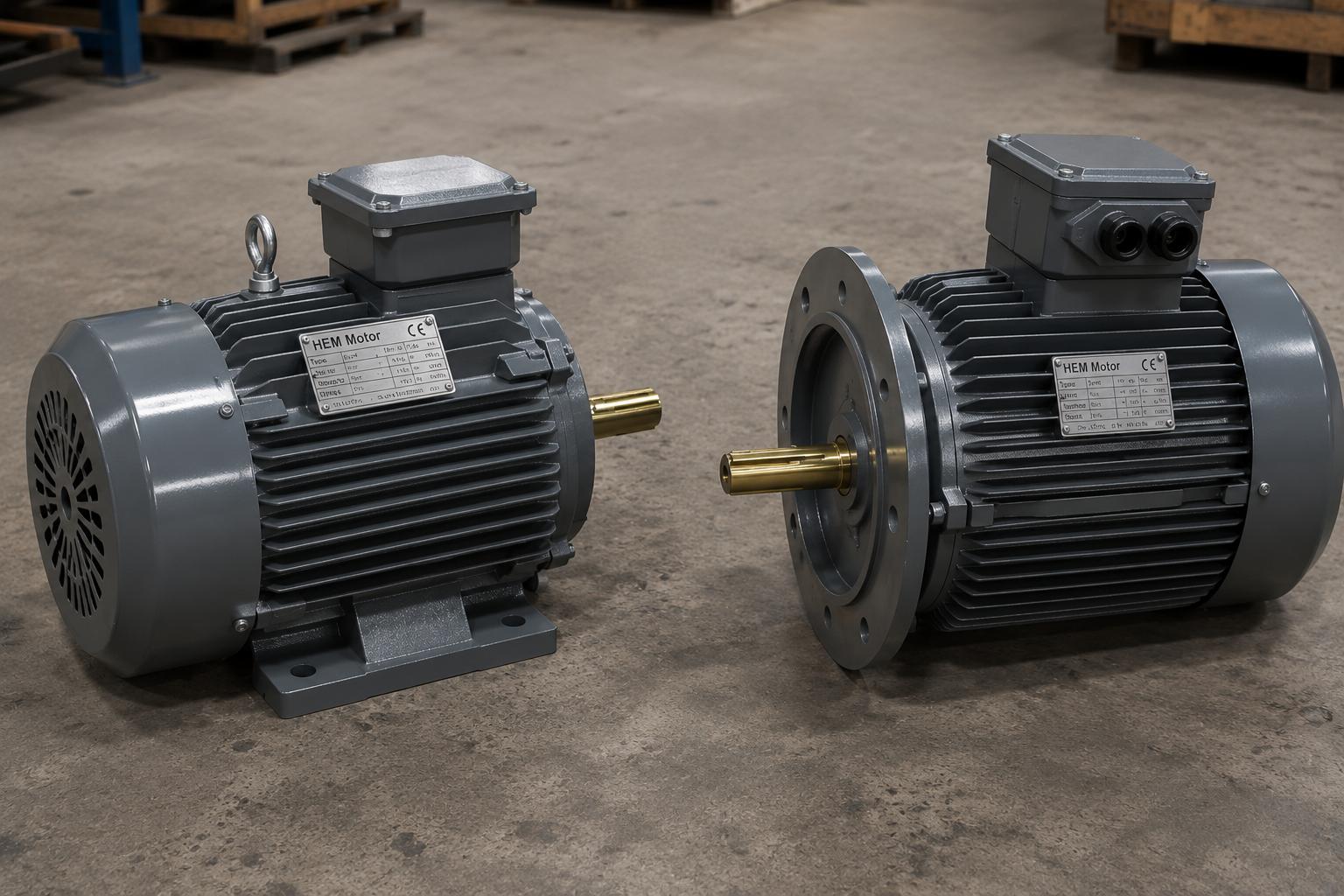
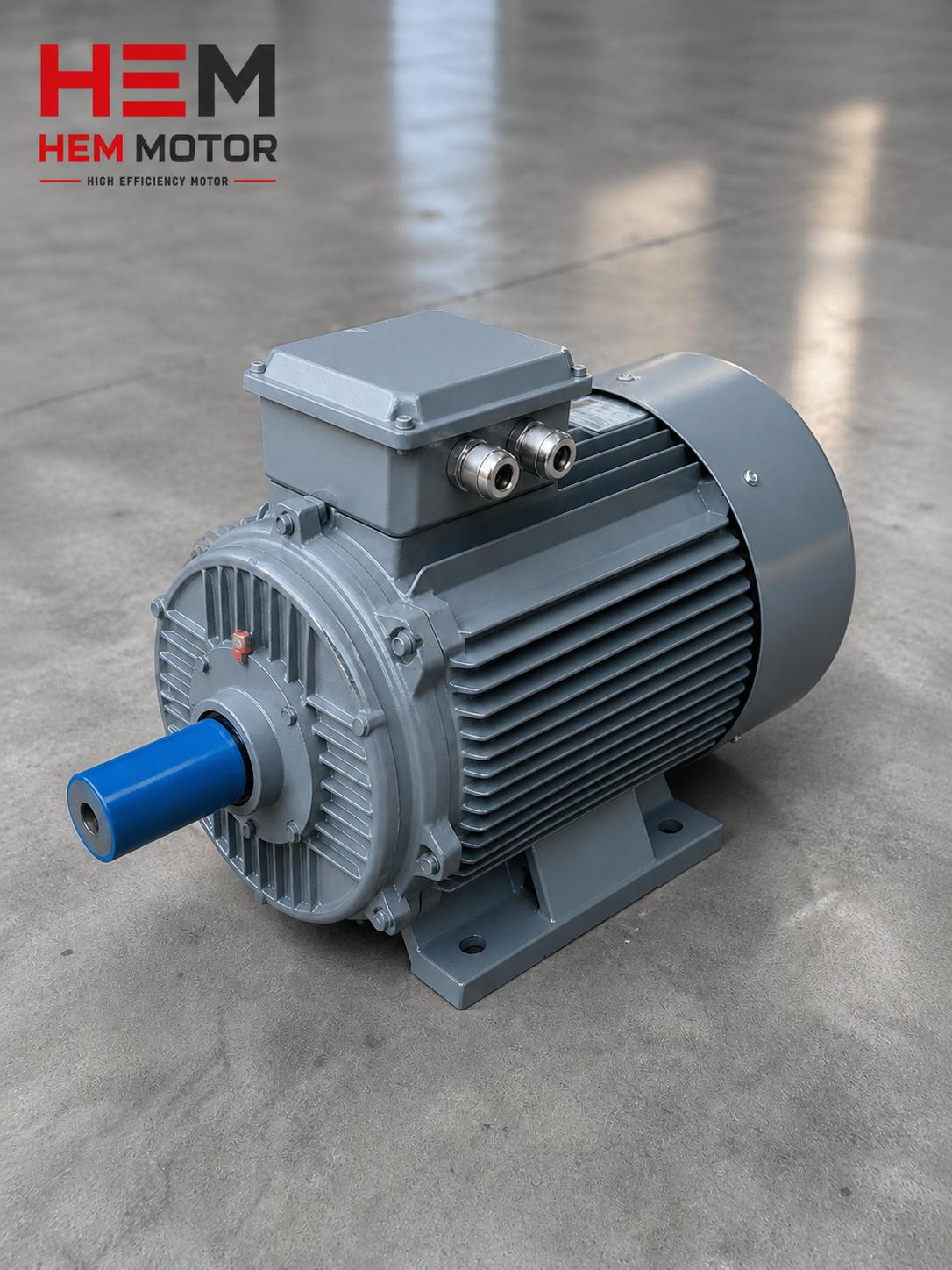
In a standard asynchronous motor the cooling method is usually defined as IC411: the fan on the motor's own shaft draws air from outside and blows it along the fins on the frame surface, carrying away the heat that passes into the body. The fan is called "axial" because it moves air along the shaft axis. It sits inside the fan cover (cowl) at the rear of the motor; the cowl channels the air directly onto the frame fins.
The critical point here is whether the fan is symmetrical (straight radial blades) or asymmetrical (curved/profiled blades). This distinction determines whether the motor can be safely cooled in one direction only or in both.
Symmetrical Fan: Bidirectional Cooling
A fan with flat, radial blades pushes a similar amount of air in both directions of rotation. These fans are usually chosen for reversible applications. In cranes, hoists, some conveyors and agitators the motor often runs forward and reverse, so the fan must not depend on direction. The price of a symmetrical fan is slightly more noise and a small efficiency penalty for the same airflow, because a direction-independent design cannot move air as efficiently as a fan optimized for a single direction.
Asymmetrical Fan: High Efficiency in One Direction
Fans with curved or profiled blades deliver maximum airflow only in the direction they were designed for. In applications that run continuously in one direction, such as pumps, fans and compressors, this fan type runs quieter and provides the same cooling with lower friction loss. However, if the motor is turned in the wrong direction the airflow drops dramatically, the frame is not cooled enough and the winding temperature can rise to dangerous levels. That is why rotation direction is vital on motors optimized for single-direction rotation.
The Role of the Cast Iron Frame in Cooling
Cooling is not done by the fan alone; the frame material is an important part of heat transfer. The cast iron frame has higher mass and thermal inertia than aluminium. This means temperature rises more slowly under sudden load shocks and the thermal behaviour is more stable. The longitudinal fins on the frame enlarge the contact surface of the air the fan pushes, increasing heat dissipation. In dusty environments, clogging of these fin gaps is one of the most common causes of overheating in the field; periodic cleaning is therefore the cheapest way to preserve cooling efficiency.
The cast iron frame also lets the fan cowl seat more firmly thanks to better vibration damping and mechanical strength. In harsh environments such as open sites, quarries and crushing-screening plants the cast iron frame is the preferred choice. To decide based on environmental conditions, our guide comparing cast iron versus aluminium frame motors makes the choice easier.
Why Is Specifying the Rotation Direction Important?
In a three-phase asynchronous motor the rotation direction is set by the phase sequence; swapping two phases reverses the motor. If a motor fitted with a unidirectional (asymmetrical) fan is wired in reverse, it still turns but does not cool adequately. This is often unnoticed in the first minutes; the temperature creeps up and shortens insulation life over weeks. For this reason, checking the rotation direction during commissioning should be a standard step. Our guide on motor rotation direction and phase sequence walks you through it step by step.
What Information Should You Provide When Ordering?
- Rotation direction: Looking from the shaft side, clockwise (CW) or counter-clockwise (CCW)? If it will run in both directions, state this clearly.
- Application type: Specify the load type such as pump, fan, compressor, conveyor, agitator or crane; this determines whether single or dual direction is needed.
- Duty cycle: Continuous (S1), frequent start-stop, or forward-reverse? This affects fan type and the need for external cooling.
- Environment: Dusty, hot, open site? This guides cast iron frame and IP protection selection.
- Variable frequency drive (VFD) use: If it will run at low speed for long periods, the shaft fan may not be enough.
The Low-Speed Cooling Problem with a VFD
Because the shaft-mounted axial fan turns at the same speed as the motor, when the motor is driven at low speed through a frequency drive the fan also slows and airflow drops. In a constant-torque application where the motor draws near full-load current at low speed, its own fan may not be enough to cool it. In this case an external forced cooling fan (separately powered, running at constant speed) is the solution. To plan ahead for low-speed, high-torque scenarios, see our guide on the external forced cooling fan and VFD. Our content on cooling and fan design in IE4 motors is also complementary for drive-fed systems.
The Fan Cover (Cowl) and Directing Airflow
The fan's performance alone is not enough; the design of the fan cover (cowl) surrounding it ensures the pushed air is distributed evenly along the frame fins. If the cross-section of the air inlet grille, the orientation of the blades and the distance to the frame are not set up correctly, the air will not reach the intended surface no matter how good the fan is. One of the most common mistakes in field installations is placing the rear of the motor too close to a wall, panel or another piece of equipment. In that case the fan cannot draw the air it needs and the cooling airflow drops. As a general rule, leave a free air-intake clearance at the rear of the motor of at least one quarter of the cowl diameter. This simple placement rule is the easiest way to preserve cooling efficiency at no extra cost.
Fan Behaviour in High-Speed, Dual-Speed and Low-Speed Motors
The airflow the fan delivers is directly related to rotational speed; as speed rises so does airflow, but so do noise and windage loss. That is why on 3000 rpm (2-pole) high-speed motors the fan design is selected carefully to keep noise under control while providing adequate cooling. On low-speed 1000 and 750 rpm (6- and 8-pole) motors the fan pushes less air, so frame size and fin surface become more decisive in cooling. To assess the speed-cooling relationship and the correct pole choice, our guide on 2, 4, 6 pole asynchronous motor selection clarifies the decision.
Field Symptoms of Overheating and Their Link to Cooling
Inadequate cooling usually shows itself gradually rather than suddenly. The first sign is often a frame too hot to touch; however, because cast iron feels different from aluminium, hand assessment can be misleading. A more reliable method is monitoring the winding temperature with sensors such as PT100 or PTC thermistors. On critical motors that run continuously, these sensors provide both protection and early warning; when the temperature threshold is exceeded the motor is stopped to prevent insulation damage. Other signs include the motor tripping its thermal protection sooner than normal, oil seals drying out early and bearing grease life shortening. To catch these problems early, our guide on motor winding temperature monitoring offers an applicable framework.
Cooling Efficiency and Its Relationship with Energy
While the fan provides cooling, it also consumes some energy; this is part of the motor's friction and windage loss. In high-efficiency IE4 and IE5 motors the fan design is optimized to deliver adequate cooling with minimal loss. An overly aggressive fan creates unnecessary noise and energy loss, while an inadequate fan leads to overheating. A motor that strikes the right balance runs both quietly and efficiently. To see how the efficiency class relates to cooling and total cost, our article on quiet, low-vibration operation in IE4 motors is useful.
To evaluate the frame, cooling and efficiency class best suited to your needs and to get fast-delivery solutions from stock, request a quote from our current electric motor prices page. You can reach our IE4 range for pump, fan and compressor applications via the IE4 electric motors page.
Summary Decision Steps for the Right Choice
- Does the application run continuously in one direction? An asymmetrical (unidirectional) fan, high-efficiency and quiet motor is suitable.
- Does the motor frequently run forward-reverse? A symmetrical (bidirectional) fan motor is essential; otherwise cooling weakens in one direction.
- Is there long-duration full load at low speed with a frequency drive? Add an external forced cooling fan to the order.
- Is the environment dusty and hot? Choose a cast iron frame, suitable IP protection and a regular fin cleaning plan.
- Always check rotation direction at commissioning; the wrong direction silently consumes winding life.
Frequently Asked Questions
What happens if a unidirectional-fan motor is run in reverse?
The motor turns and appears to run fine, but because the asymmetrical blade fan pushes far less air in reverse, the frame is not cooled adequately. The winding temperature rises over time, insulation life shortens and the long-term risk of premature failure increases. That is why rotation direction must be stated on the order and verified at commissioning for unidirectional-fan motors.
Which fan should I choose for a bidirectional application?
For forward-reverse cranes, some agitators and conveyor applications, a motor with a symmetrical (straight radial blade) fan should be selected. This fan provides similar cooling in both directions. Stating your application as "bidirectional" at the order stage ensures the correct fan type is selected at the factory.
Does the cast iron frame really affect cooling?
Yes. The high thermal mass of the cast iron frame softens temperature rises under sudden load shocks, while the frame fins increase heat dissipation with the air the fan pushes. To preserve this advantage, however, the fin gaps must be kept free of dust; clogged fins cause overheating even in the best frame.