English
 Türkçe


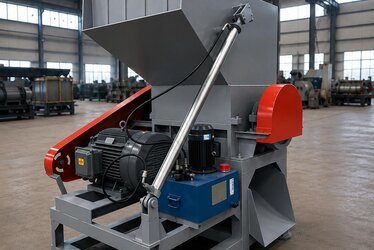
Twin-shaft shredders sit at the heart of many heavy-industry applications, from waste management to recycling, from woodworking to the pre-preparation stage of plastic granulation. These machines are designed to grab and tear bulky, resistant materials; tires, wooden pallets, plastic drums, metal barrels, and electronic waste are torn apart by these shredders. However, the most common mistake made when selecting a motor for twin-shaft shredder applications is treating power as a criterion on its own. In fact, what is decisive here is not raw power but torque, jamming resistance, and a heavy-duty rating. In this article we explain why twin-shaft shredder motor selection is essentially an engineering exercise in torque and durability, why the motor is used not alone but together with a high-reduction gearbox, and what you should consider when building the right drive system.
At HEM Motor, we know that selecting the right motor in heavy-duty applications directly determines the efficiency, life, and operational safety of the machine. A shredder encounters hard material many times a day, jams, stops, and restarts. In this demanding regime, the motor must be not only powerful but also durable, with high starting torque and thermal robustness. Building the right drive system safeguards the efficiency not only of the machine but of the entire process line.
How a Twin-Shaft Shredder Works
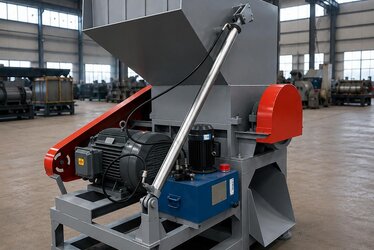
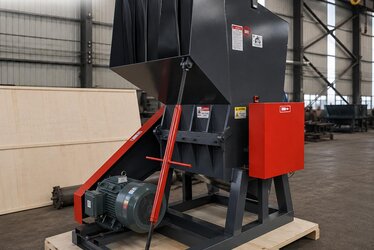
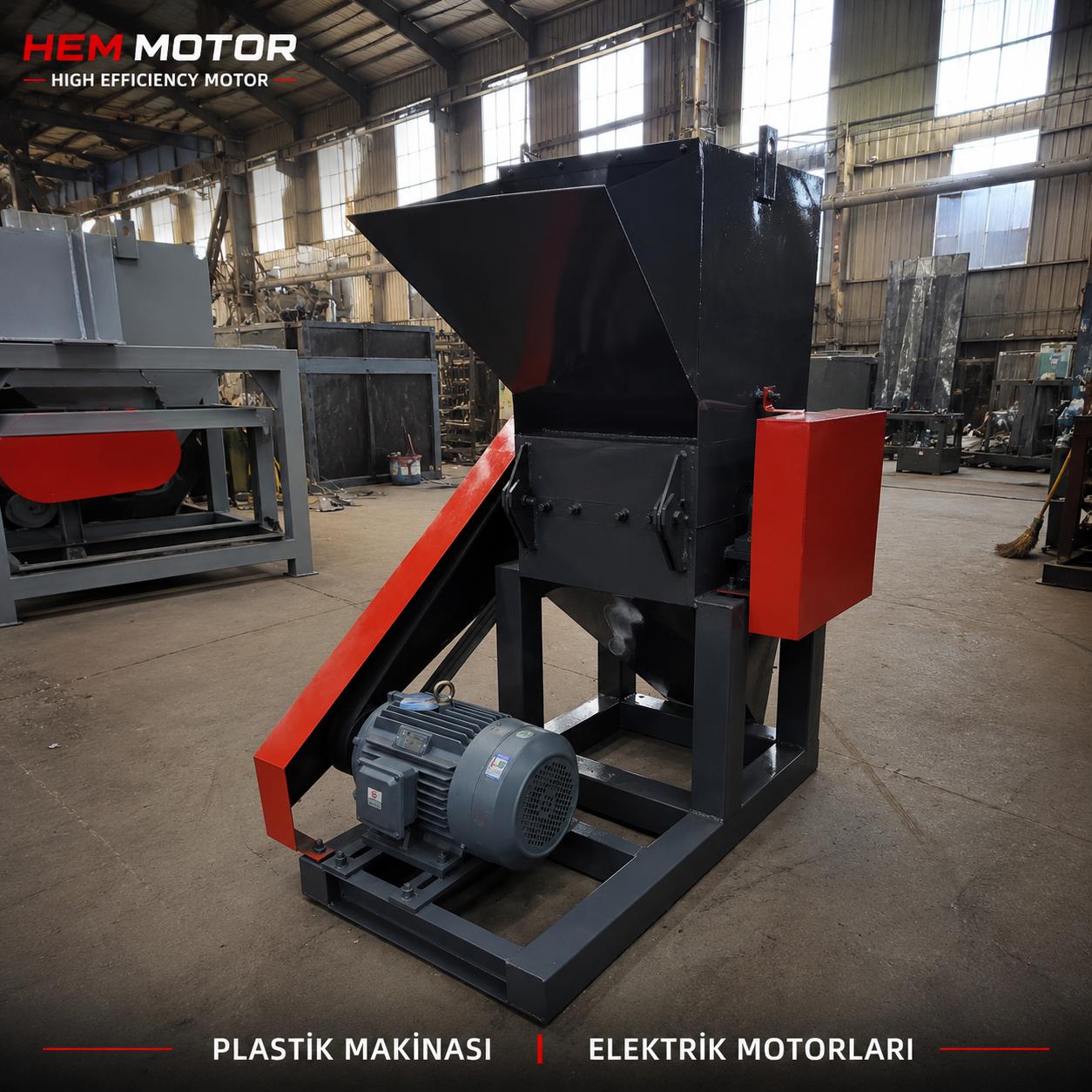
The operating logic of a twin-shaft shredder, while seemingly simple at first glance, is mechanically extremely demanding. Within the machine body are two parallel shafts fitted with sharp blades or teeth. These two shafts counter-rotate; while one shaft rotates clockwise, the other rotates counterclockwise. Material fed from the top is drawn between these two shafts. The blades grab the material, pull it inward, and tear it by a shearing action. This shearing principle is the fundamental feature that distinguishes twin-shaft shredders from other shredding methods.
The shearing action relies on tearing the material rather than cutting it cleanly. Material caught between two blades is pulled and torn apart by the opposite rotational motion of the shafts. This method is extremely effective in shredding irregular and resistant materials, because shearing targets not so much the hardness of the material as its resistance to shearing force. It is precisely at this point that the most critical engineering reality of twin-shaft shredders emerges: these machines run at low speed but must produce very high torque.
Low speed is necessary for the material to be caught by the shafts and torn apart in a controlled manner. A shredder rotating at high speed slips over resistant material without grabbing it, remaining both ineffective and overstressing the blades. By contrast, a system that rotates at low speed but produces high torque locks the material into its teeth and tears it slowly but steadily. This fundamental requirement makes the use of a high-reduction gearbox together with the motor mandatory.
Why Is Torque Decisive, Not Power?
Many people regard power as the sole measure of success in machine selection. Yet power is a quantity derived from multiplying torque by rotational speed. Two motors of the same power can have very different torque and speed combinations. A motor that rotates at high speed and produces low torque is completely inadequate for a twin-shaft shredder, whereas a drive system that rotates at low speed and produces high torque gives excellent results. For this reason, the right question in a shredder application is not "how many kilowatts?" but "how much torque can I produce at the cutting point?"
The reason torque is decisive in a twin-shaft shredder is that the force required to tear the material depends directly on torque. As the blades shear the material, a resistance is created against the force trying to turn the shaft. Sufficient torque must be produced to overcome this resistance. If torque is insufficient, the shaft stalls within the material and the machine jams. This is why torque is a far higher priority parameter than power in twin-shaft shredder design.
- Torque: The turning force trying to rotate the shaft; the quantity that directly determines the ability to tear material in a shredding application.
- Speed: The number of shaft revolutions per minute; deliberately kept low in a shredder to strengthen the grabbing and shearing effect.
- Power: The product of torque and speed; not a selection criterion on its own, but a result of the torque-speed combination.
This conceptual distinction also explains why a gearbox is used in motor selection. A standard asynchronous motor rotates at a relatively high speed, and the torque it produces at that speed is insufficient for shredding. However, when a high-reduction gearbox is added to the motor's output, the speed is reduced while the torque increases by the same factor. This way, high torque is obtained at low speed, which is exactly what a twin-shaft shredder needs.
Motor and Gearbox: An Inseparable Pair
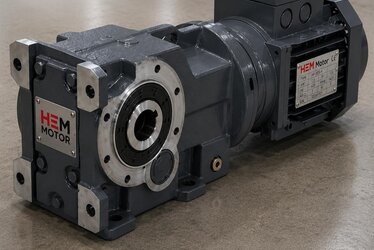
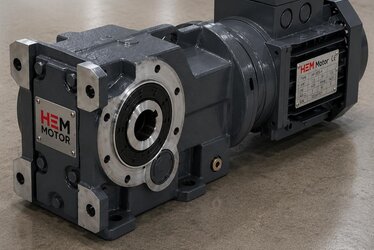
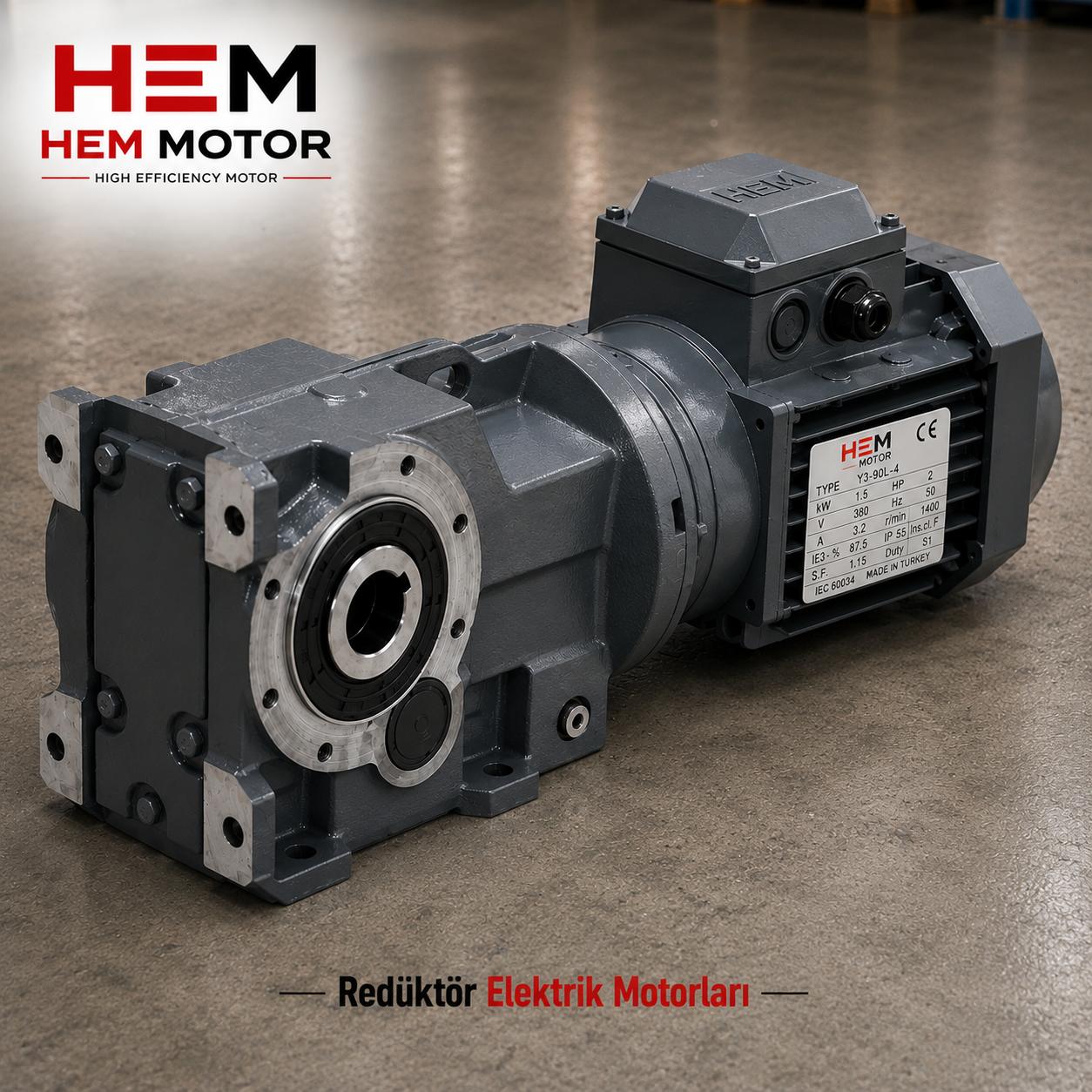
In twin-shaft shredders, the motor is never used alone. The motor is used together with a high-reduction gearbox to produce high torque at low speed. The gearbox is a mechanical converter that transforms the motor's high-speed, low-torque output into a low-speed, high-torque output. As the reduction ratio increases, the output speed drops and the output torque rises by the same factor. Thanks to this, even a relatively low-power motor can produce the enormous torque required for shredding.
Correct gearbox selection is at least as critical as motor selection. The service factor of the gearbox must suit the heavy-duty and impact-load character of the shredder. Sudden load surges and jams create high stresses in the gearbox gears; therefore the gearbox must be selected with a safety margin capable of withstanding momentary loads far above the continuous operating load. The motor and gearbox should be sized together as a complementary system.
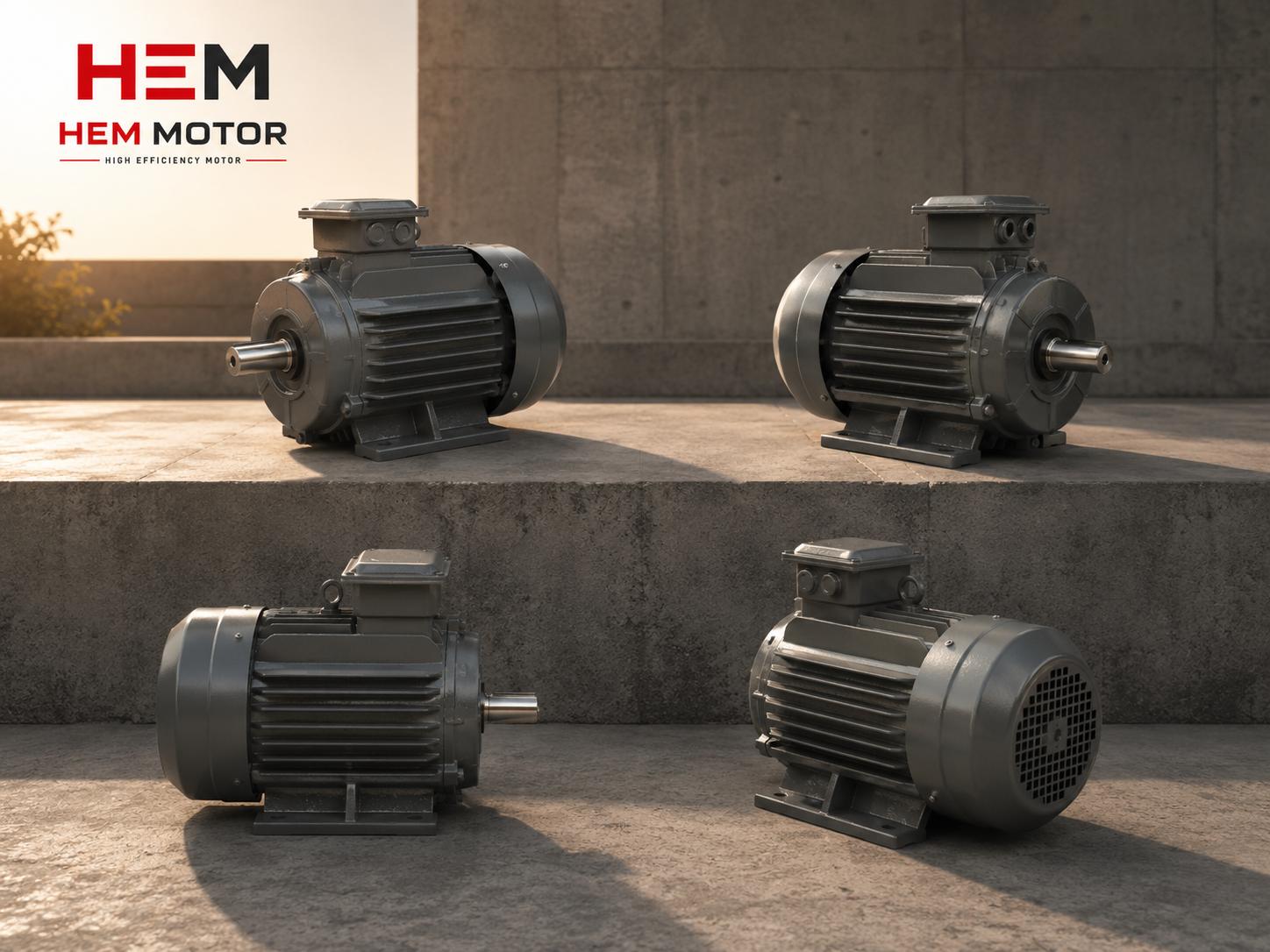
At this point, the motor itself must also be suitable for heavy duty. A motor that produces high starting torque, withstands frequent starts, and is thermally robust forms a reliable shredding system when combined with a gearbox. The heavy-duty motors in HEM Motor's stock are offered in a wide range of power ratings and features to meet the needs of demanding applications such as shredders.
Resistance to Jamming and Sudden Load Surges
One of the most demanding realities of twin-shaft shredders is that they are frequently subject to jamming during operation. An unexpectedly hard material, an object that resists shredding caught between the blades, or overfeeding can cause the shaft to stop suddenly. At this moment, as the motor tries to keep rotating, the load increases by a large factor; current rises and great stress is placed on the system. This is why sudden load surges are frequent in a twin-shaft shredder and the motor must withstand them.
Modern shredders are protected by intelligent control strategies that come into play during jamming. When a jam is detected, the system can reverse the rotation direction of the shafts to push the material back, and then attempt shredding again. This reverse function both resolves the jam and protects the blades against overload. This strategy is only possible in systems where the motor is suitable for bidirectional operation and frequent direction changes.
- Jam detection: Monitoring the rise in current or torque to detect the risk of the shaft stalling in advance.
- Reverse function: Reversing the shafts during a jam to release the material and attempt again.
- Overload protection: Monitoring the load limit and stopping when necessary to prevent damage to the motor and gearbox.
In a shredder system that changes direction frequently and encounters sudden loads, driving the motor with a frequency drive provides a great advantage. A VFD frequency drive limits the starting current, provides soft starting, refines speed and torque control, and enables rapid direction changes during a jam. The drive also protects the motor during overload, safeguarding both the winding and the gearbox. For this reason, designing the motor-gearbox-drive trio as a harmonious whole is highly important in heavy-duty shredding systems.
Heavy-Duty Rating and the Motor's Thermal Resistance
Shredders typically operate in a heavy-duty regime. This means the motor works for long periods under high load, with frequent starts and sudden load fluctuations. Such a regime tests the motor's thermal resistance. Every jam and every reverse creates additional heating in the motor. If the motor cannot dissipate this heat adequately, the winding temperature rises and the insulation life shortens.
For this reason, heavy-duty shredder motors require a high insulation class, robust cooling, and a wide thermal reserve. Motors with class F or H insulation withstand high winding temperatures and offer safe operation in demanding regimes. In addition, the motor's service factor indicates its capacity to withstand momentary overloads; a motor with a high service factor can withstand short-term loads above its nominal power without damage. In impact-load applications such as shredders, this feature is extremely valuable.
The motor's bearing selection is also critical in heavy-duty applications. Sudden loads and vibrations apply high radial and axial forces to the bearings. For this reason, durable bearing types with appropriate preload should be preferred in shredder motors. Correct bearing selection directly determines the motor's life under these demanding conditions.
The Path to Follow When Building the Right Drive System
Building the right drive system for a twin-shaft shredder requires a systematic approach. The following steps will help you determine the motor and gearbox suited to your needs:
- Define the material to be shredded: Determine the required torque level by clarifying the type, hardness, size, and cutting resistance of the material.
- Determine the target speed: Calculate the reduction ratio by selecting the appropriate low output speed for the grabbing and shearing effect.
- Evaluate the duty type: Determine whether the machine will operate continuously or intermittently, the start frequency, and the average load level.
- Leave a safety margin: Select the service factor of the motor and gearbox with a sufficient reserve against sudden load surges and jams.
- Set up the control strategy: Complete the system by planning the use of a frequency drive for reverse and overload protection.
By following these steps, the drive system you build will keep your shredder running reliably and efficiently for years. If you have any hesitation in determining the right product, you can review our wide portfolio of heavy-duty motors and benefit from our guide on VFD frequency drive with asynchronous motor applications to manage the system with a drive. To understand the motor's capacity to withstand overloads, our content on service factor and overload capacity will help you make the right decision in impact applications such as shredders. For bearing life in heavy duty, you can review our guide on asynchronous motor bearing types.
Remember that in a twin-shaft shredder the motor is used not alone but together with a high-reduction gearbox to produce high torque at low speed. At HEM Motor, we are pleased to help you find the motor with the right characteristics for your heavy-duty shredding applications. To discover our wide product range and engineering support, you can visit our homepage.
Frequently Asked Questions
Why does torque matter rather than power in a twin-shaft shredder?
In a shredding application, the force required to tear the material depends directly on torque. As the blades shear the material, if sufficient torque is not produced against the resulting resistance, the shaft stalls and the machine jams. Power is torque multiplied by speed; two motors of the same power can have very different torque-speed combinations. A shredder requires high torque at low speed, so the right question is not "how many kilowatts?" but "how much torque is produced at the cutting point?"
Why is the motor used with a gearbox rather than alone?
A standard asynchronous motor rotates at a relatively high speed, and the torque it produces at that speed is insufficient for shredding. When a high-reduction gearbox is added to the motor's output, the speed is reduced while the torque increases by the same factor. This way, high torque is obtained at low speed, which is exactly what a twin-shaft shredder needs. The motor and gearbox should be sized together as a complementary system.
How do I protect the motor during a jam?
Modern shredders are protected by a reverse function that reverses the rotation direction of the shafts when a jam is detected; this pushes the material back and resolves the jam. Driving the system with a frequency drive limits the starting current, enables rapid direction changes, and protects the winding and gearbox by stopping the motor during overload. In addition, choosing a motor with a high service factor and durable bearings increases resistance to sudden loads.