 English
 Türkçe

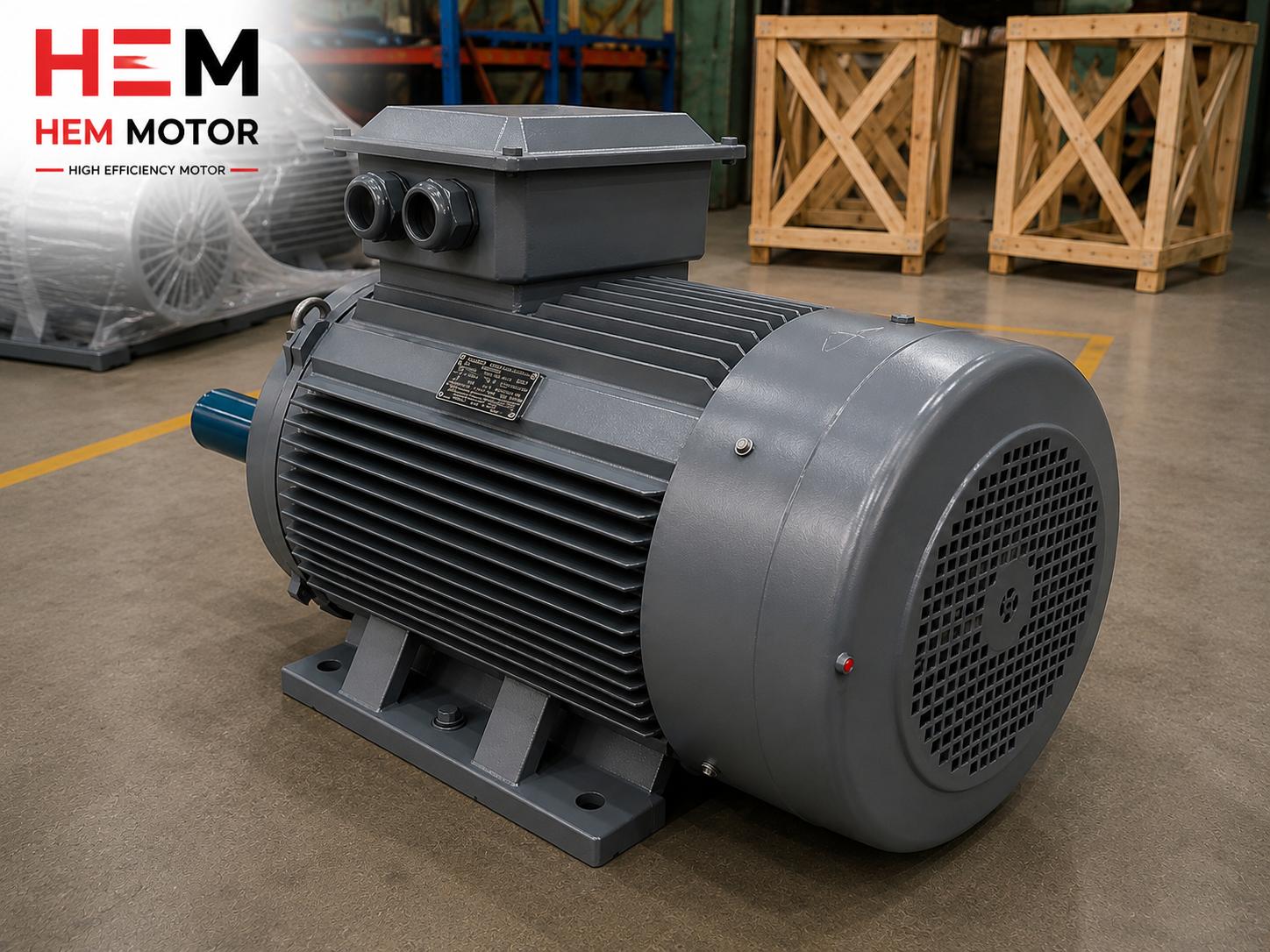
For manufacturers researching the 15 kW electric motor price and sale from the manufacturer terms, 15 kW is one of the most strategic values of the medium-to-large power class. Corresponding to about 20 HP, this power is used as the main drive motor across a wide field: from centrifugal pumps to large fans and exhausters, from conveyor drives to compressors and mixers. HEM Motor supplies the 15 kW power directly from its own production in a 160 frame size, with 2/4/6-pole speed options and IE3/IE4 efficiency classes. This removes intermediate supply layers and offers a lean electric motor prices and fast quote process.
The most concrete advantage of selling from the manufacturer is that the product both ships fast from stock and that need-specific options (mounting type, terminal orientation, thermal protection) can be met at factory output. On this page we cover the speed options of 15 kW, the mechanical advantages of the 160 frame, the logic of choosing between IE3 and IE4, and the fast delivery from the manufacturer process in a sales-focused tone.
The 15 kW Electric Motor: Backbone of the Medium-to-Large Power Class
In many facilities 15 kW sits as the main process motor. In applications where 11 kW falls short but 18.5 kW is not yet required, 15 kW strikes the ideal balance. That is why it is the standard choice in pump stations, air handling units, granule and dust conveying lines, beaters and mixers. The prevalence of the power makes it possible for the manufacturer to keep it constantly in stock; as a result you secure supply without waiting through sale from the manufacturer.
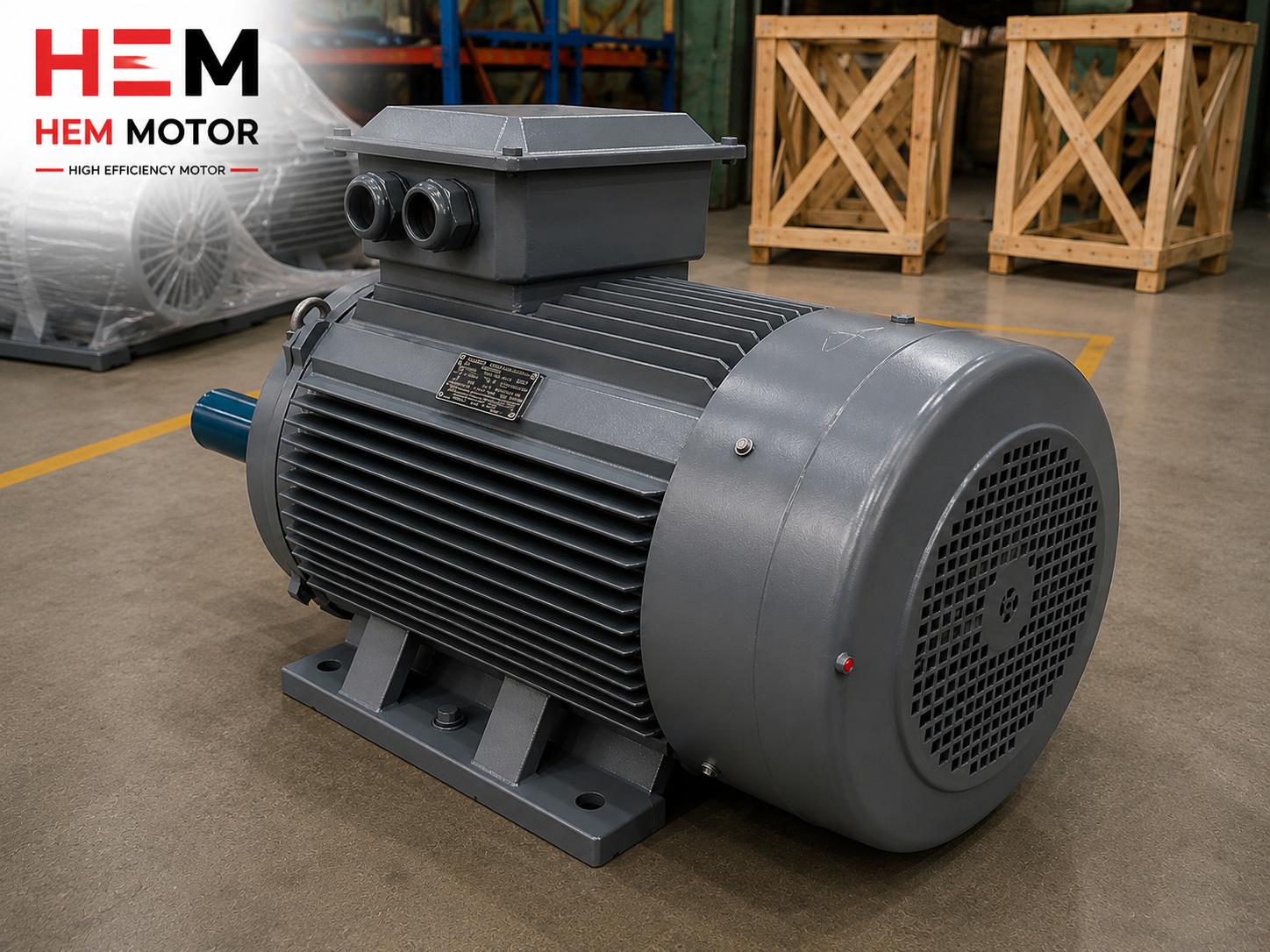
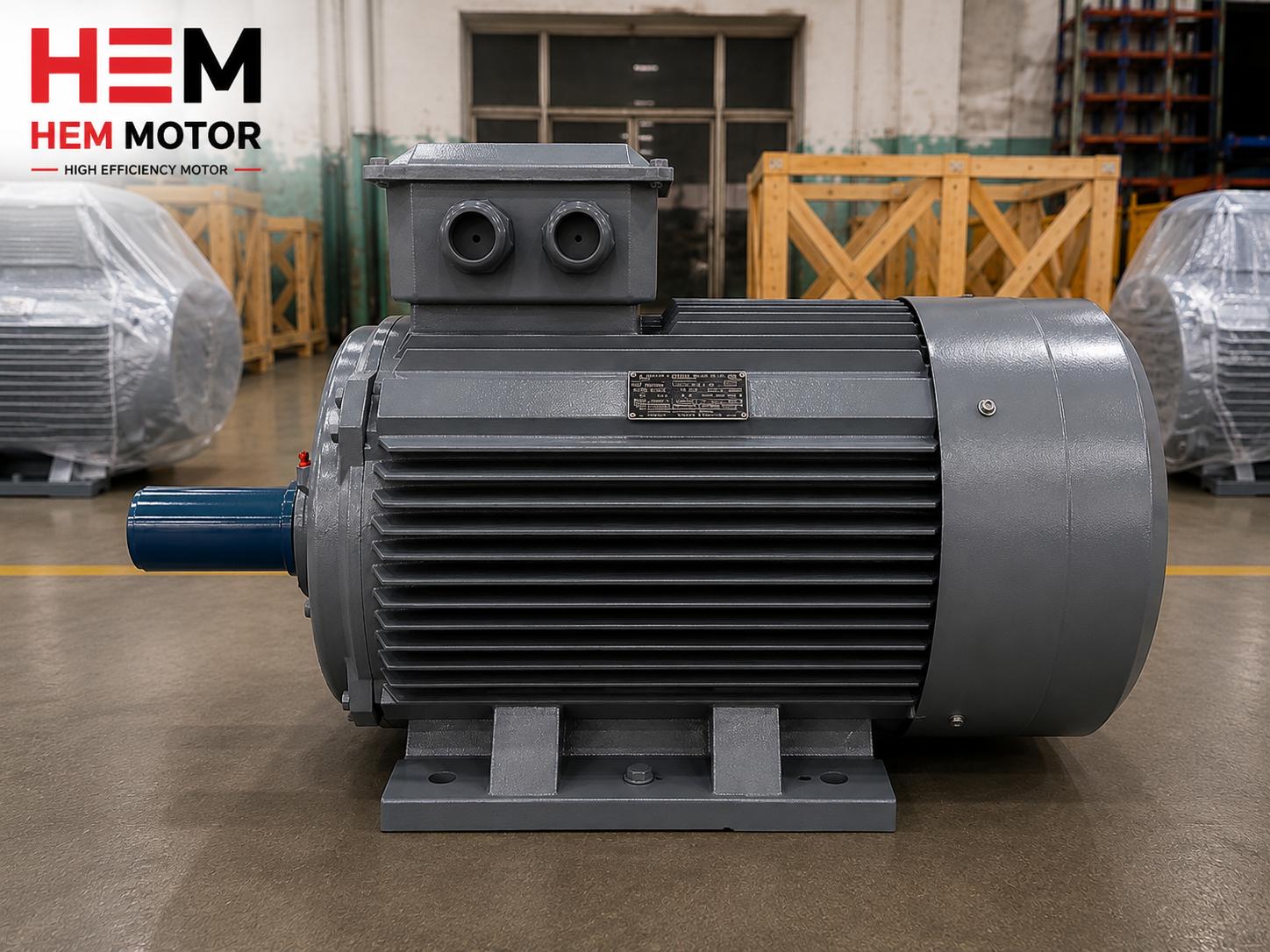
HEM Motor builds the 15 kW body in a 160M/160L frame. This frame class offers larger bearing seats, a thicker shaft and a wider cooling surface, improving heat management in continuous (S1) duty. To understand how the motor performs under continuous load, our guide on duty type (S1-S6) selection is a good start.
2, 4 and 6 Poles: The Speed Option Defines the Application
The 15 kW power is offered in three main speeds. The 2-pole (~2950 rpm) version is for high-speed pumps and blowers; the 4-pole (~1465 rpm) version for conveyors, gearbox inputs and general drives; the 6-pole (~975 rpm) version is preferred for mixers and mill-like applications needing low speed and high torque. The speed choice affects body weight and therefore the price-performance balance. To clarify the right speed decision, our article on low-speed high-pole motors and gearless direct drive shows the way.
IE3 and IE4 Efficiency Class: The Energy Cost Decision at 15 kW
At 15 kW the motor usually runs long hours and its annual energy consumption is high. This ties the efficiency class choice directly to operating cost. While IE3 efficient electric motors are the best seller thanks to broad use and favourable supply terms, in continuous processes IE4 high-efficiency electric motors deliver fast payback with lower losses. Our article on whether to move to IE4 or stay with IE3 explains the power-runtime-payback relationship with a clear table.
15 kW is usually used in the same facility alongside large powers in the 90-200 kW range, so the total impact of the efficiency investment is large. To learn the total cost of ownership of high-efficiency motors, our article on TCO calculation for high-efficiency motors is useful.
| Speed Class | Typical Speed | Featured Application |
|---|---|---|
| 2-pole | ~2950 rpm | High-speed pump, blower, compressor |
| 4-pole | ~1465 rpm | Conveyor, gearbox input, general drive |
| 6-pole | ~975 rpm | Mixer, mill, low-speed load |
Mechanical Advantages of the 160 Frame and Mounting Options
The 160 frame offers a solid mechanical foundation for 15 kW. Larger bearings carry radial and axial loads more comfortably, which extends bearing life in belt-pulley drives and direct coupled connections. On the mounting side, B3 foot-mounted electric motors are supplied for foot floor connection, B5 flange electric motors for flange connection, and the B35 version for heavy-duty applications needing both.
- 160M/160L frame: High durability with larger bearing and shaft
- Cast iron body: Vibration damping and mechanical shock resistance
- Class F insulation: Thermal margin in hot environments
- IP55 and above protection: Suited to dusty and humid industrial environments
- Copper winding: Low heating and long life under continuous load
Sale From the Manufacturer: From Winding Control to Shipment
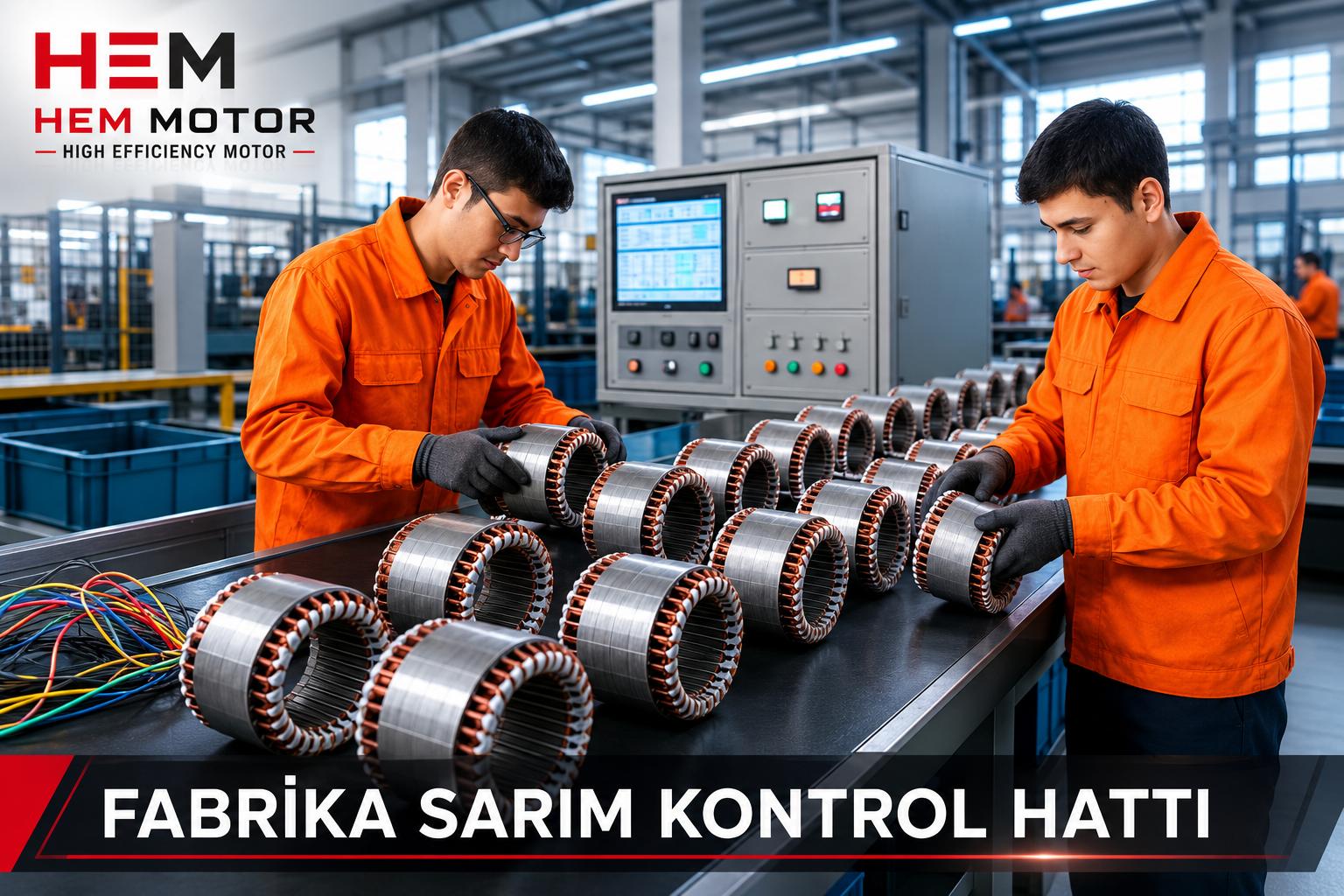
HEM Motor's greatest strength is producing critical powers such as 15 kW in its own factory. Windings are tested on the winding control line; every motor that passes insulation resistance and rotation direction checks is prepared for shipment with its nameplate data. Sale from the manufacturer means for you not only a price-performance advantage but also quality assurance and the flexibility of need-specific options.
At medium-to-large powers like 15 kW, delivery and acceptance inspection require care. Insulation (megger), rotation direction and vibration checks at stock entry prevent future surprises. On this our article on electric motor delivery and acceptance inspection offers a practical checklist.
| Manufacturer Advantage | Contribution to the Facility |
|---|---|
| Winding control line | Tested, quality winding |
| Shipment from stock | Fast delivery without waiting |
| Option flexibility | Terminal orientation, thermal protection, custom shaft |
| Direct supply | Lean price-performance balance |
Sectoral Uses of the 15 kW Motor
The areas where 15 kW is used most intensively are pump-blower sets in water and wastewater plants, fan drives in HVAC units, mixers and conveying lines in food and beverage plants, woodworking and plastics processing machines and compressor units. Depending on your application, you can identify the right family from pump electric motors, compressor electric motors and conveyor belt electric motors.
Since 11 and 15 kW are a pair often evaluated together, for those wanting to compare speed-pole-stock combinations our article on 11 and 15 kW motor selection: speed, pole and stock draws the roadmap of the right purchase.
Starting and Inrush Current Management at 15 kW
At medium-to-large powers like 15 kW, the inrush current drawn in direct-on-line (DOL) starting can strain the grid and especially generator-fed facilities. That is why star-delta, soft starter or drive (VFD) starting is often preferred. The right starting method protects both the motor and the panel and reduces mechanical shock load. We covered the inrush current issue and its solutions for generator-fed facilities in our article on motor selection on a generator-fed site.
Matching the generator to the motor power is also critical; the high current drawn at start may require oversizing the generator. To learn how many kVA of generator carries how many kW of motor, our guide on generator kVA - motor kW matching offers a practical calculation. The HEM Motor sales team confirms the motor configuration suited to your starting method together with your 15 kW order.
Rated Current, Cable and Protection Device Selection
Knowing the rated current of a 15 kW motor is the basis for selecting cable cross-section, fuse and contactor. A wrong cross-section cable or an undersized protection device is both a safety risk and a cause of early failure. To make the correct calculation, our article on rated current, cable cross-section, fuse and contactor selection guides step by step. These choices affect facility safety as directly as motor life.
- DOL (direct on line): Simple solution for small facilities and strong grids
- Star-delta: Classic method that lowers inrush current
- Soft starter: Smooth start and reduced mechanical shock
- VFD (drive): Variable speed and energy saving
Like-for-Like Replacement and New Purchase Decision
15 kW motors run in a facility for years and over time failure or renewal comes up. To procure a like-for-like replacement for the existing motor, sharing the nameplate data (frame, pole, mounting, shaft diameter) is enough; because the 160 frame is built to IEC standard dimensions, the swap is seamless. Buying a new IE3/IE4 instead of rewinding the faulty motor is often more sensible at a continuously running 15 kW, because post-rewind efficiency loss reflects on energy cost over time. We examined the topic in our article on rewinding an IE3 motor: efficiency loss versus new purchase.
In the supply of large powers, lead time and shipping planning also matter. For those curious about the supply plan of motors above 90 kW, our article on high-power motor supply above 90 kW shows the planning logic in moving from 15 kW to larger.
Frequently Asked Questions
How many HP is a 15 kW electric motor?
15 kW corresponds to about 20 HP. When replacing a motor on imported machinery defined in HP, confirming this match is necessary for correct frame selection.
What frame size is the 15 kW motor produced in?
15 kW is produced as standard in a 160M or 160L frame. Frame length may vary by speed and efficiency class; clarifying it before ordering ensures an exact match.
What is the advantage of buying from the manufacturer?
Sale from the manufacturer removes intermediate supply layers and offers a leaner price-performance balance; options such as terminal orientation, thermal protection and custom shaft are met at factory output.
When is 6-pole preferred at 15 kW?
6-pole is preferred in mixers, mills and some conveyor applications needing low speed (~975 rpm) and high torque. It provides a cost advantage for loads wanting gearless direct drive.
How quickly can I procure a 15 kW motor from stock?
Because the most sought-after speed and efficiency combinations are kept in stock, fast shipment is possible after order confirmation. When you send your request, the stock status and a fast quote are presented together.
To procure the right 15 kW motor from the manufacturer, confirm the speed, efficiency class and mounting type and request a fast quote through HEM Motor. With the sale-from-manufacturer advantage, your order passes quality control and ships without delay.