 English
 Türkçe

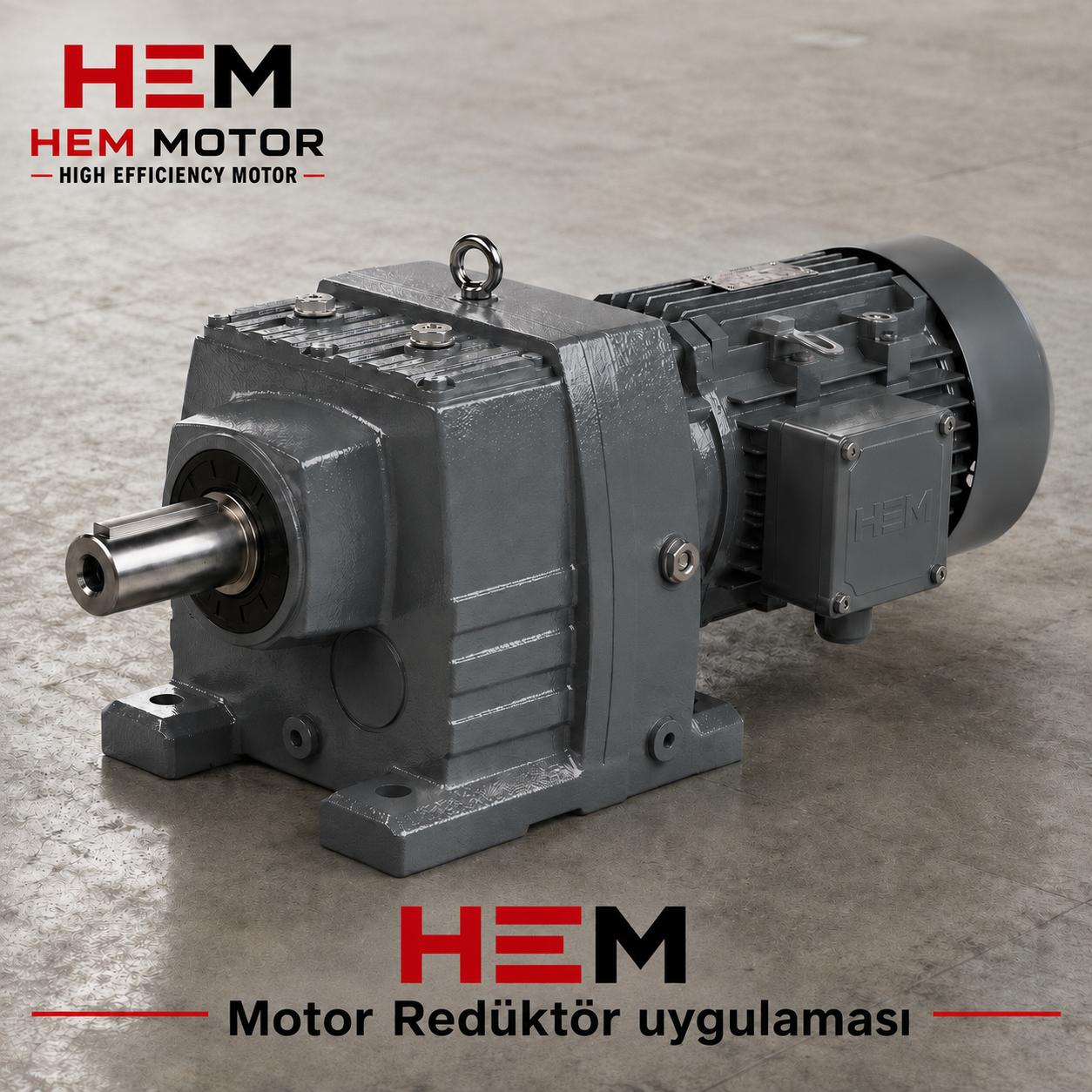
The electric motor you connect to your reducer determines the efficiency, quietness and lifespan of your entire drive system. A wrong flange, an incompatible shaft or an insufficient efficiency class weakens the system from the start, even if you choose the reducer and the motor correctly on their own. As HEM Motor, we offer a single-source, manufacturer-assured and high price-performance solution for electric motors for reducers: we match the motor and the reducer compatibly and prepare a fast quotation for you.
With IE3 and IE4 efficient motors in B5 and B14 flange formats and shaft-flange dimensions suited to worm and helical reducers, we meet your gearmotor supply needs from stock. On this page we clearly explain how to select a motor suited to a reducer, which flange and shaft details to watch, and the advantages of single-source supply.
The Essential of a Reducer-Ready Motor: Flange and Shaft Compatibility
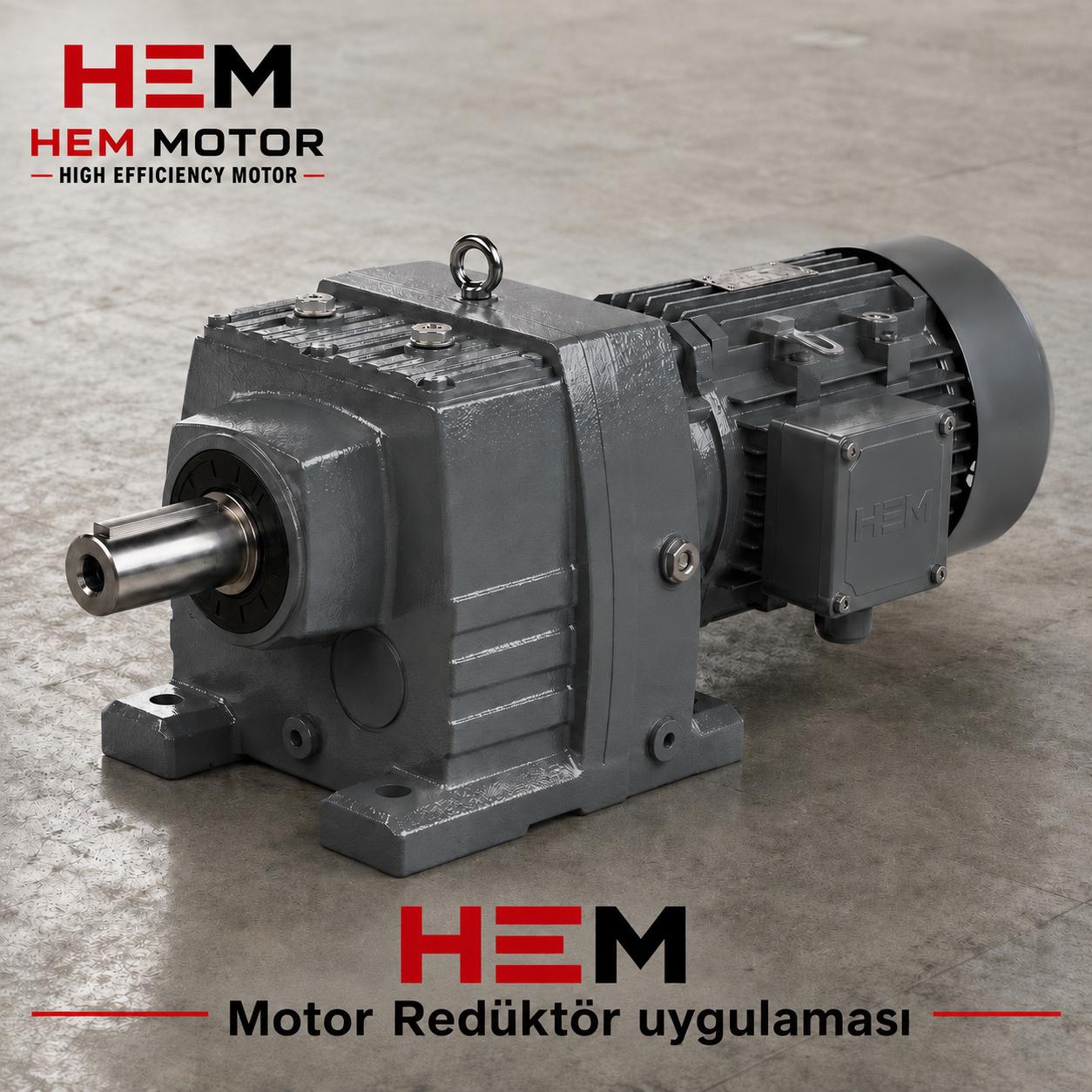
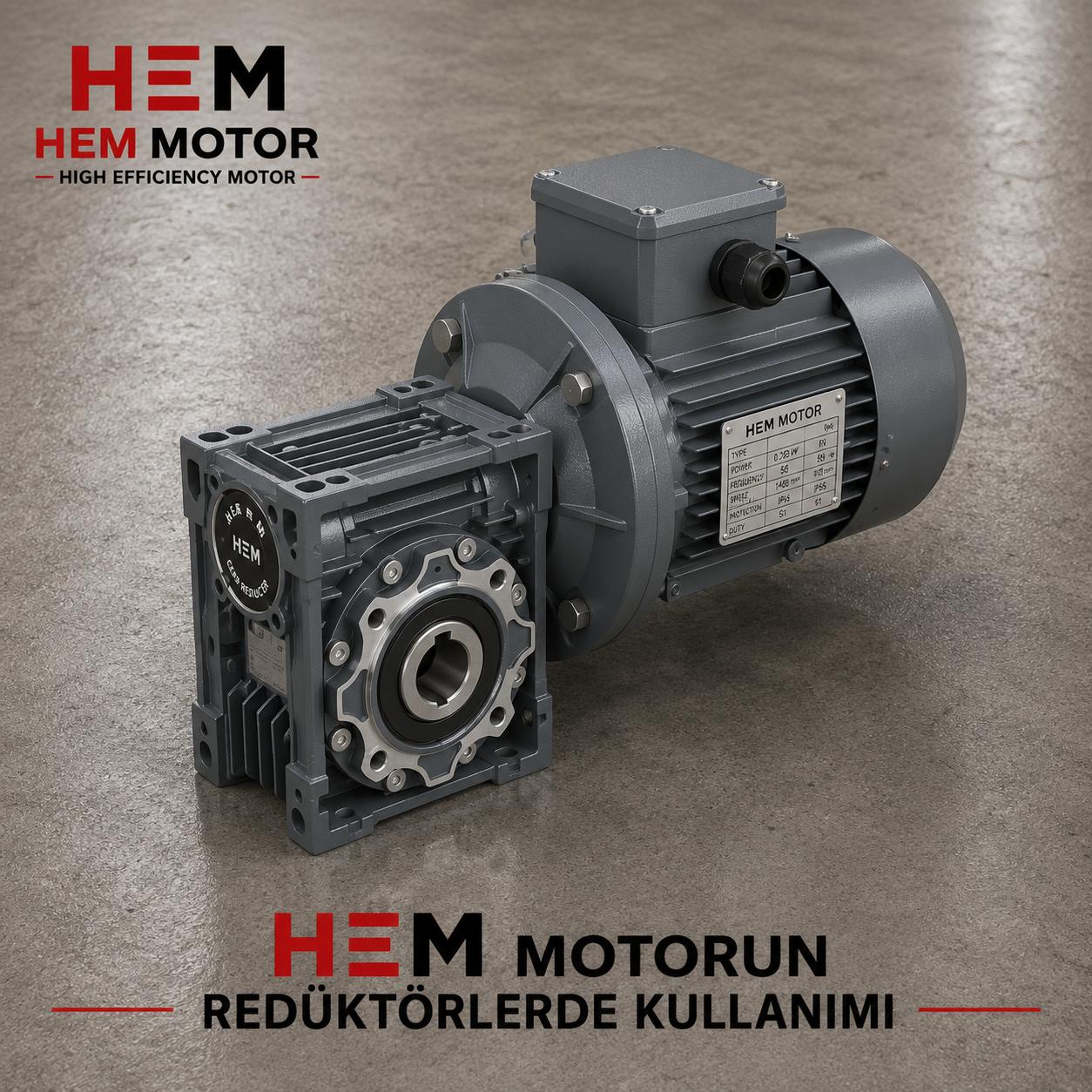
The basis of connecting a motor to a reducer is that the flange and shaft dimensions on the motor's output side match the reducer's input side exactly. IEC standards make this easier: there are standard B5 (large flange) and B14 (small flange, tapped holes) dimensions corresponding to specific frame sizes. Worm (NMRV-type) reducers generally require B14 or a special input flange, whereas helical reducers are mostly fed with a B5 flange.
Shaft diameter, shaft length and key size matter at least as much as the flange. A wrong shaft diameter means a motor that cannot be fitted to the reducer. To get this matching right, the motor and reducer must be handled together. Our article on which electric motor suits a worm and NMRV reducer and how to match IEC frame and flange is a comprehensive starting point.
Worm or Helical Reducer? Effect on Motor Selection
The reducer type affects both the motor's flange choice and the power-efficiency balance you will need. Worm reducers are compact, quiet and suited to self-locking; however, since their efficiency is lower than helical units, the motor power must be chosen accordingly. Helical and bevel-helical reducers, with their high efficiency, transfer the savings of an IE3/IE4 motor to the system more fully.
| Reducer Type | Typical Motor Flange | Key Feature |
|---|---|---|
| Worm (NMRV) | B14 / special flange | Compact, quiet, self-locking; low-to-medium efficiency. |
| Helical | B5 | High efficiency, high torque, continuous heavy duty. |
| Bevel-helical | B5 | Right-angle drive, high efficiency, durable. |
If you wonder which reducer type is more economical for your job, our article answering whether a K-series bevel-helical or a worm reducer fits better will be spot on. For our reducer range, see our worm gear reducers category and our bevel-helical gear reducers category.
Why Do IE3 and IE4 Efficiency Classes Matter in Geared Drives?
A geared drive system usually runs for hours, even across shifts, without interruption. This makes the motor's efficiency class critical from a price-performance standpoint. A premium-efficiency IE3 motor delivers daily energy savings in geared conveyors, agitators, mixers and feeding lines. In heavier, continuous applications, an IE4 super-premium motor can shorten the payback period even further.
Our article addressing the gain of combining an efficient motor with a reducer, using an IE4 motor with a gearbox, deepens this topic. On the product side, our IE3 electric motors and IE4 electric motors categories are ready with reducer-ready frame options.
The Advantage of Single-Source Motor and Reducer Supply
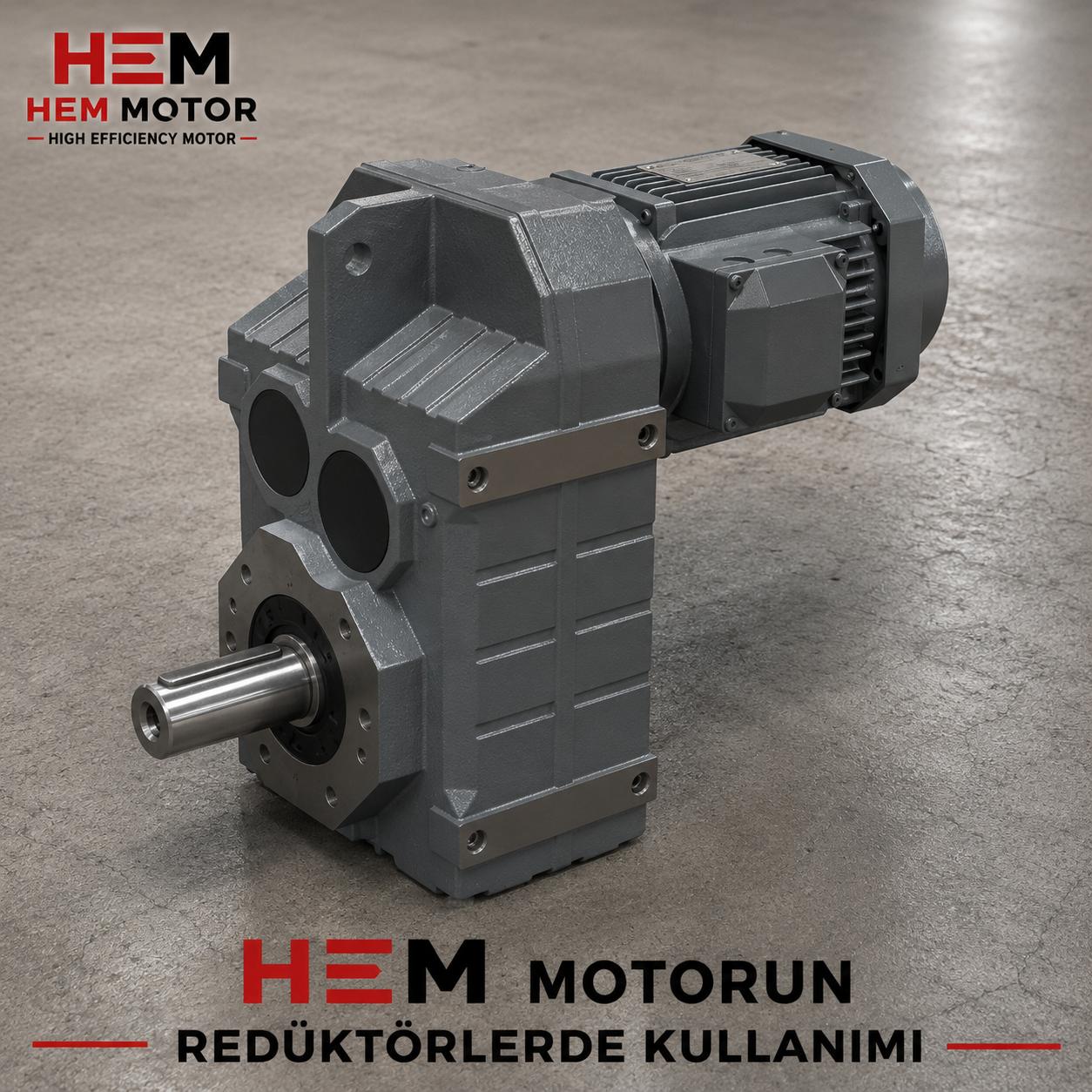
Buying the motor from one place and the reducer from another means mismatch, delay and divided responsibility. Single-source supply, by contrast, delivers a package whose motor and reducer were chosen compatibly from the start, combined under a single quotation and delivered under the responsibility of a single contact. As HEM Motor, we both manufacture the motor and match it with the reducer, delivering a high price-performance solution on a single invoice.
- Compatibility guarantee: Flange, shaft and key dimensions are matched from the start; no surprises in the field.
- Fast quotation: One list, one contact; the quotation and delivery process is shorter.
- Stock advantage: The most sought-after motor and reducer combinations wait ready.
- Technical support: We calculate output speed and torque together.
Our article comparing, from purchasing and maintenance angles, whether a geared motor or a separate motor plus reducer is more sensible guides your decision stage. To select the right reducer by output torque and speed, our reducer selection guide is a full reference.
Output Speed and Torque: The Two Values That Define the Right Motor
In a geared system your real need is the output speed (rpm) and output torque (Nm) at the machine end. Working backwards from these two values, the correct reduction ratio is set, and then the motor power and speed that will feed that ratio. A high-ratio reducer that keeps the output speed low lets you produce high torque with a smaller motor, which can be sensible in terms of both energy and initial investment.
Setting this calculation up correctly directly affects price-performance. Our monoblock geared motor purchasing guide explaining the right choice by output speed and torque, and our article on reduction ratio, reducer type and frame size as price factors, clarify this topic.
Reducer Mounting Position and the Importance of Motor Orientation
In a geared drive system, how the motor is positioned is not only about space usage; it directly affects lubrication, cooling and seal life. In horizontal, vertical or side-mount positions the reducer's oil level and venting change; the motor's terminal box orientation and cable entry must be selected accordingly. A wrongly positioned gearmotor can lead to both oil leakage and premature wear.
Planning the right mounting position and lubrication from the start prevents loss of time and money in the field. Our guide on reducer mounting positions (M1-M6) and lubrication is a carefully prepared resource on this topic. To select the motor's terminal box orientation correctly relative to the panel side, we recommend clarifying this detail with us before mounting; that way you set up your electric motor for reducer order correctly in a single step.
Applications Requiring Self-Locking and Safety
In some applications it is a critical safety requirement that the load does not run back when the motor stops; in systems such as hoists, inclined conveyors and barriers this feature is vital. Worm reducers can offer self-locking at high reduction ratios; however, this feature relates to ratio and efficiency and should not always be considered sufficient on its own. In such cases a brake-motor option should also be evaluated.
Our article addressing in which application self-locking can be used safely, self-locking in worm gear reducers, clarifies this decision. For your motor needs for conveyor and handling systems, our conveyor belt electric motors page and handling systems electric motors page are the right starting points.
Frequently Asked Questions
How do you determine the motor suited to my reducer?
Simply send us your reducer's input flange (B5/B14), input shaft diameter and the desired output speed/torque. With this data we match a compatible IE3 or IE4 motor and prepare a tailored fast quotation. If you are replacing an existing motor, the nameplate data speeds up our work too.
Should I buy a B5 or B14 flange?
This depends on your reducer's input side. Helical and bevel-helical reducers generally require B5, whereas worm (NMRV) reducers often require B14 or a special flange. We determine the right flange together according to your reducer type.
Is buying the motor and reducer separately cheaper?
It may seem so at first glance; however, mismatch, extra labour and delay risk raise the total cost. A single-source, compatibly matched package usually offers higher price-performance and consolidates responsibility in one hand.
Does the efficiency class matter for a geared motor?
Absolutely. In continuously running geared drives, the energy savings from an IE3 and especially an IE4 motor accumulate as running hours rise. An efficient motor lowers operating cost throughout the reducer's life.
What should I send for a fast quotation?
Simply send the reducer type and flange, input shaft diameter, the desired output speed and torque, and the operating regime. The HEM Motor team quotes a compatible motor-reducer package with a price-performance focus.
To source the right electric motor to feed your reducer, single-source from the manufacturer and on the best terms, get in touch with us. For electric motor supply for reducers with a compatible flange, the right shaft and premium efficiency, hemmotor.com is by your side.