 English
 Türkçe

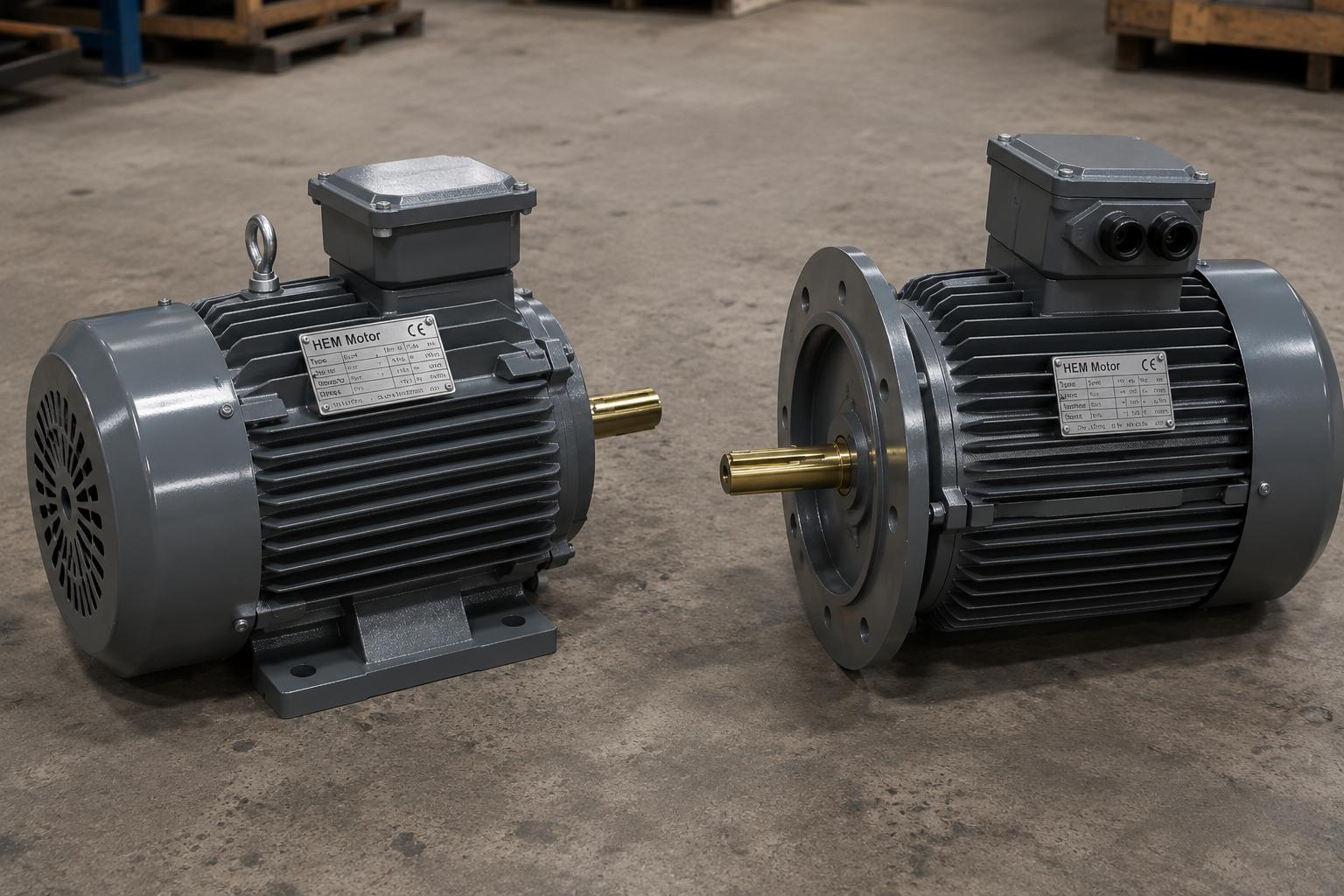
The way an electric motor connects to a machine is often a decision that comes before its power: whether you choose a B5 flange, a B14 flange or a B3 foot mounting type determines how the motor seats on your reducer, pump or machine. The wrong mounting type makes even a correctly powered motor fail to fit on site. As HEM Motor we offer all three main mounting types from stock with a wide power range, set the right flange dimension together and deliver a clear price with a fast quote. This page explains in plain language which mounting fits where.
The Difference Between B3, B5 and B14 Mounting Types
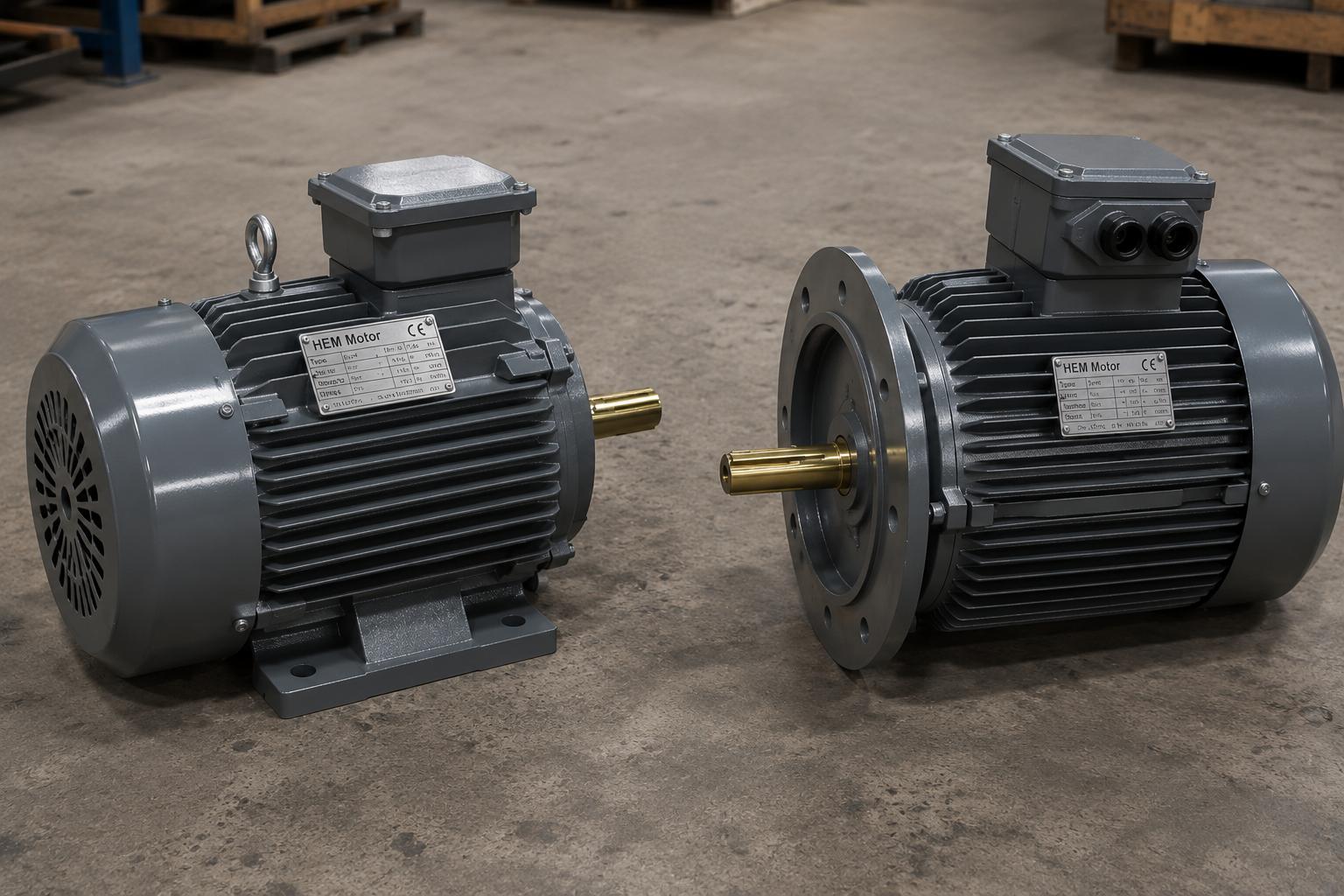
The three mounting types differ by how they hold the motor. A B3 foot motor is bolted to a floor or base by the feet under its body; it is the most common solution for belt-pulley drives and free-standing machines. A B5 flange motor is bolted directly to a reducer or pump body by the large-diameter holed flange on its front cover. A B14 flange motor connects to compact machines from the front by a smaller threaded-hole face flange. The choice depends on what the motor drives and the connection surface on the machine.
In practice a motor can be both foot and flange mounted; this is called B35 (foot-and-flange) and is used where it must seat on the floor and connect to the machine by a flange. Choosing the right mounting type removes the later need for an adapter and provides a vibration-free, aligned connection. Similarly B34 means a small face flange added to a foot motor, offering both floor seating and a B14-type connection.
Flange Dimensions and Correct Hole Matching
In a flange motor the real issue is that the flange diameter and hole pattern exactly match the machine. A B5 flange's outer diameter, bolt-hole circle and pilot (spigot) diameter are set by a standard table; if these do not match, the motor does not seat. FF type means a clearance-holed flange, FT type a threaded-hole flange, and B5 usually comes with the FF and B14 with the FT hole layout. For a correct order the motor frame size and flange dimension must be compatible.
| Mounting Type | Connection | Typical Use |
|---|---|---|
| B3 foot | Body-bottom feet, bolt | Belt-pulley, free-standing machine |
| B5 flange | Large flange, clearance hole (FF) | Reducer, pump body |
| B14 flange | Small face flange, threaded hole (FT) | Compact machines |
| B35 foot-and-flange | Both foot and flange | Where floor + flange are needed |
If you are unsure which mounting type to choose, review our electric motor mounting types category, and when deciding between B5 and B14 use our B5 vs B14 connection type selection guide.
Use Areas by Mounting Type
The mounting type also largely determines the sector and machine the motor will run on. B5 flange motors are standard in reducer-driven systems, centrifugal pumps and conveyor systems. B14 flange motors stand out in space-limited applications such as compact machines, small fans, and packaging lines. B3 foot motors are the most common solution in crushers, mills, blowers and general-purpose industrial drives that turn a pulley with a belt.
- Reducer drive: B5 flange motor close-coupled directly to the reducer input.
- Pump sets: B5 motor seating on the centrifugal pump body by a flange.
- Compact machines: B14 face flange in packaging and small fan drives.
- Belt-pulley: Floor-fixed B3 foot motor for crushers, mills and blowers.
- Mixed application: B35 foot-and-flange motor that both seats on the floor and connects by a flange.
The right mounting type ensures not only that the motor seats on the machine but also a vibration-free, aligned drive. A wrong choice creates adapter cost and can lead to early bearing and coupling wear.
Which Mounting Is Used Where?
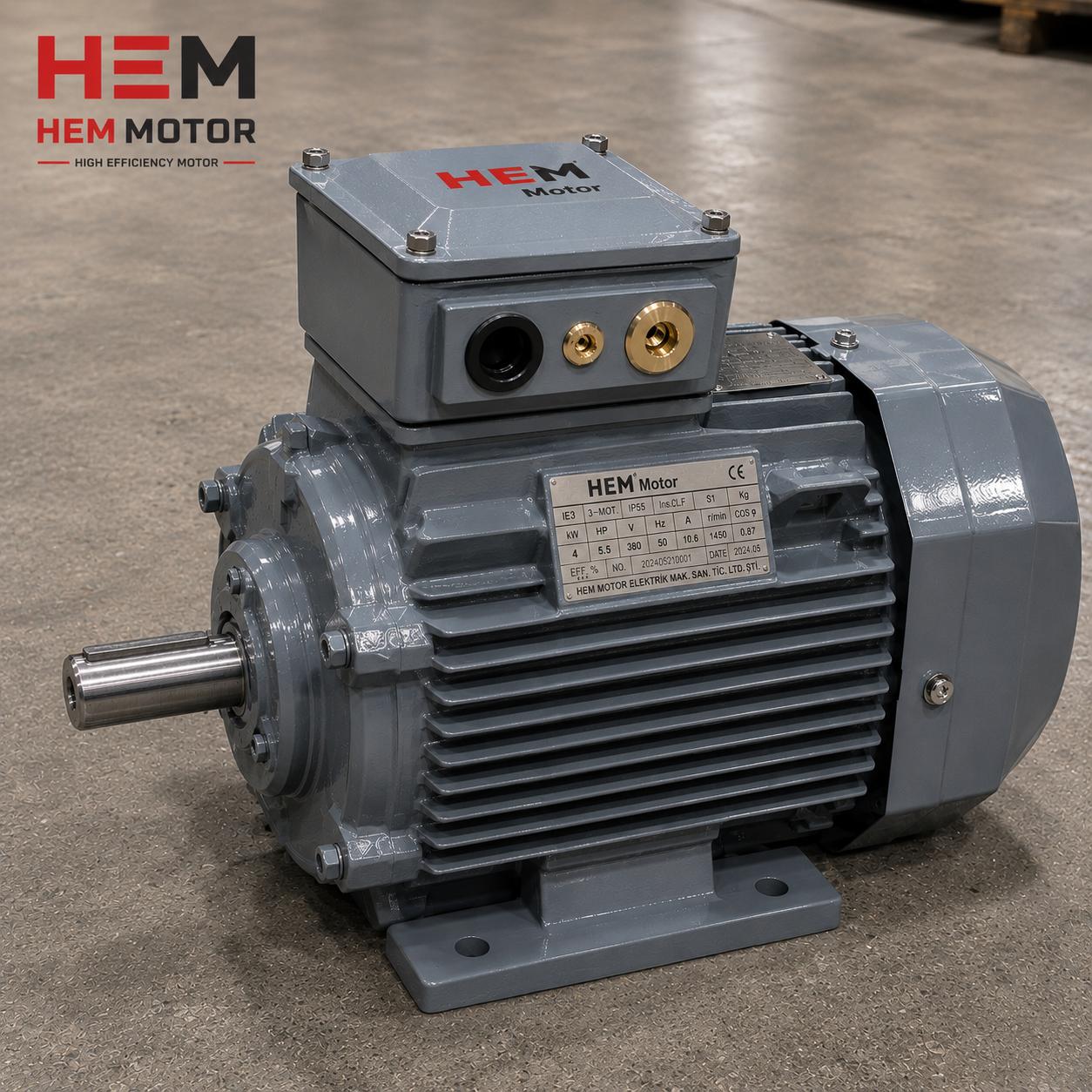
Mounting type selection starts with the machine design. A motor that runs close-coupled to a reducer is almost always B5 flange, because the reducer input is designed for a flange connection. In centrifugal pumps the motor usually seats on the pump body by a flange too. In a compact machine, a small fan or a drive inside an enclosed cabinet, the B14 face flange is preferred. Floor-fixed motors that turn a pulley with a belt are the classic B3 foot solution.
When seeking the right motor for a reducer connection, review our electric motors for reducers product page, learn to read the mounting code from the nameplate in our IM mounting code reading guide, and for an overview see our full mounting type guide.
A Step-by-Step Road Map for Correct Mounting Selection
Choosing the right mounting type is finalised with a few clear steps and removes the risk of not fitting on site:
- 1. Determine the connection surface: Will the motor bolt to the floor or directly to the machine/reducer?
- 2. Identify the drive type: Belt-pulley or direct close-coupling?
- 3. Select the flange type: Large clearance-hole B5 (FF) or small threaded-hole B14 (FT)?
- 4. Verify dimensions: Confirm the flange outer diameter, bolt circle and pilot diameter.
- 5. Frame size match: Match the frame size for the motor power with the flange dimension.
- 6. Shaft dimension: Check the shaft diameter and length on which the coupling or pulley sits.
When you share these with us we make the right flange electric motor or foot electric motor selection together and quickly confirm the suitable body from stock.
Factors That Determine Price and the Manufacturer Advantage
The price of a flange or foot motor cannot be explained with a single item. The most decisive is the power and speed class, followed by mounting type, body material (aluminium or cast iron), efficiency class, protection class and special shaft/flange requests. A standard B3 foot motor and a special-shaft B5 flange motor of the same power carry different items. Our manufacturer identity removes the intermediaries and lets us set the price-performance balance in your favour.
Buying from Stock and the Fast Quote
For machine builders and maintenance teams, having the right mounting type ready means not delaying the project. That is why we keep B3, B5 and B14 motors in stock in the most requested powers and frame sizes and ship them fast once the quote is approved. Our manufacturer identity gives flexibility in special flange and shaft requests alongside rapid dispatch in the standard range, setting the price-performance balance in your favour.
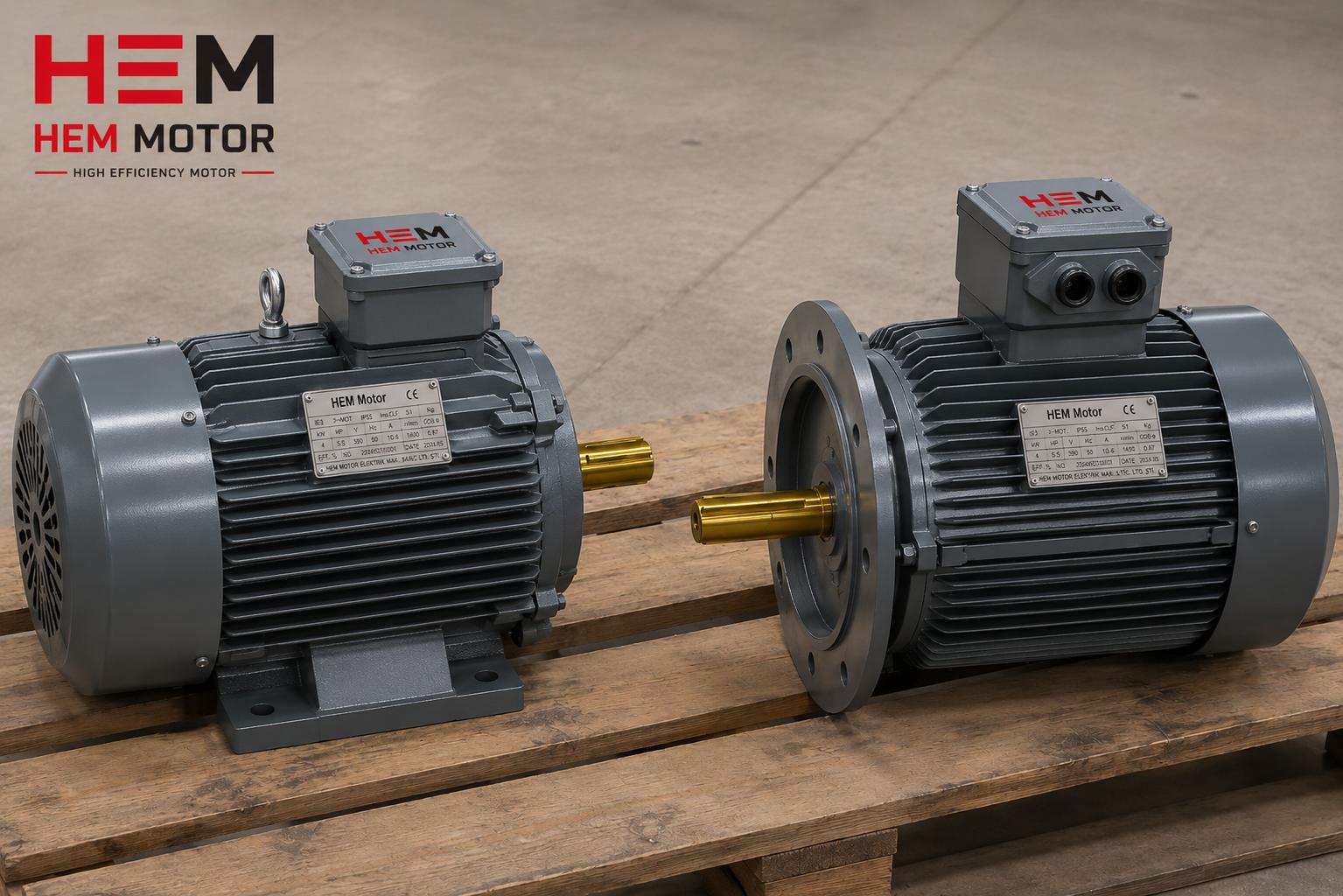
- B3 foot: Bolted to the floor, belt-pulley drive.
- B5 flange: Close-coupled directly to reducer and pump.
- B14 flange: Front connection to compact machines.
- B35: Application needing both foot and flange.
- Right dimension: Flange diameter and hole pattern match.
Share the mounting type, the motor power and the machine it will connect to; we will confirm the right flange and check stock. Send a fast quote request to the HEM Motor sales team for same-day price-performance information. For B5 flange bodies you can also review B5 flange electric motors and for foot bodies B3 connected electric motors.
Mounting, Alignment and Vibration-Free Operation
As much as choosing the right mounting type, mounting the motor correctly determines long life. In B3 foot motors the floor flatness, soft-foot check and anchor tightening torque are the basis of vibration-free operation. In B5 and B14 flange motors the pilot diameter seating fully on the machine and the bolts being tightened to equal torque provide alignment. In directly coupled systems, shaft alignment directly affects coupling life and bearing endurance.
As HEM Motor we offer the flange and foot electric motors we produce under warranty and provide technical guidance on mounting and alignment. A correctly chosen and correctly mounted motor fits the first time and runs vibration-free for years.
What is the difference between B5 and B14?
Both are flange connections, but B5 connects to reducers and pumps by a large clearance-hole (FF) flange, while B14 connects to compact machines by a smaller threaded-hole (FT) face flange. We select whichever the machine's connection surface requires.
Can a motor be both foot and flange mounted?
Yes, this is called B35 (foot-and-flange). It is used where the motor must seat on the floor and connect to the machine by a flange, offering two connections in one motor.
What do FF and FT flange mean?
FF means a clearance (through) hole flange and FT a threaded-hole flange. B5 usually comes with FF and B14 with FT; for a correct order you should state the machine's hole type.
What happens if the wrong mounting type is chosen?
Even a correctly powered motor will not seat on site; an adapter is needed, raising the risk of misalignment, vibration and early bearing wear. That is why we clarify the mounting type from the start.
What dimensions should I give before buying?
The mounting type (B3/B5/B14), the motor power and, if available, the flange diameter and hole pattern are enough. If you also state the machine it connects to, we confirm the right dimension and send a fast quote.
In B5, B14 and B3 mounting types, the right choice ensures the motor seats on the machine cleanly and runs vibration-free. Tell us the mounting type and your machine; we will quickly present the right stock motor and a clear quote, so your connection fits the first time.