English
 Türkçe

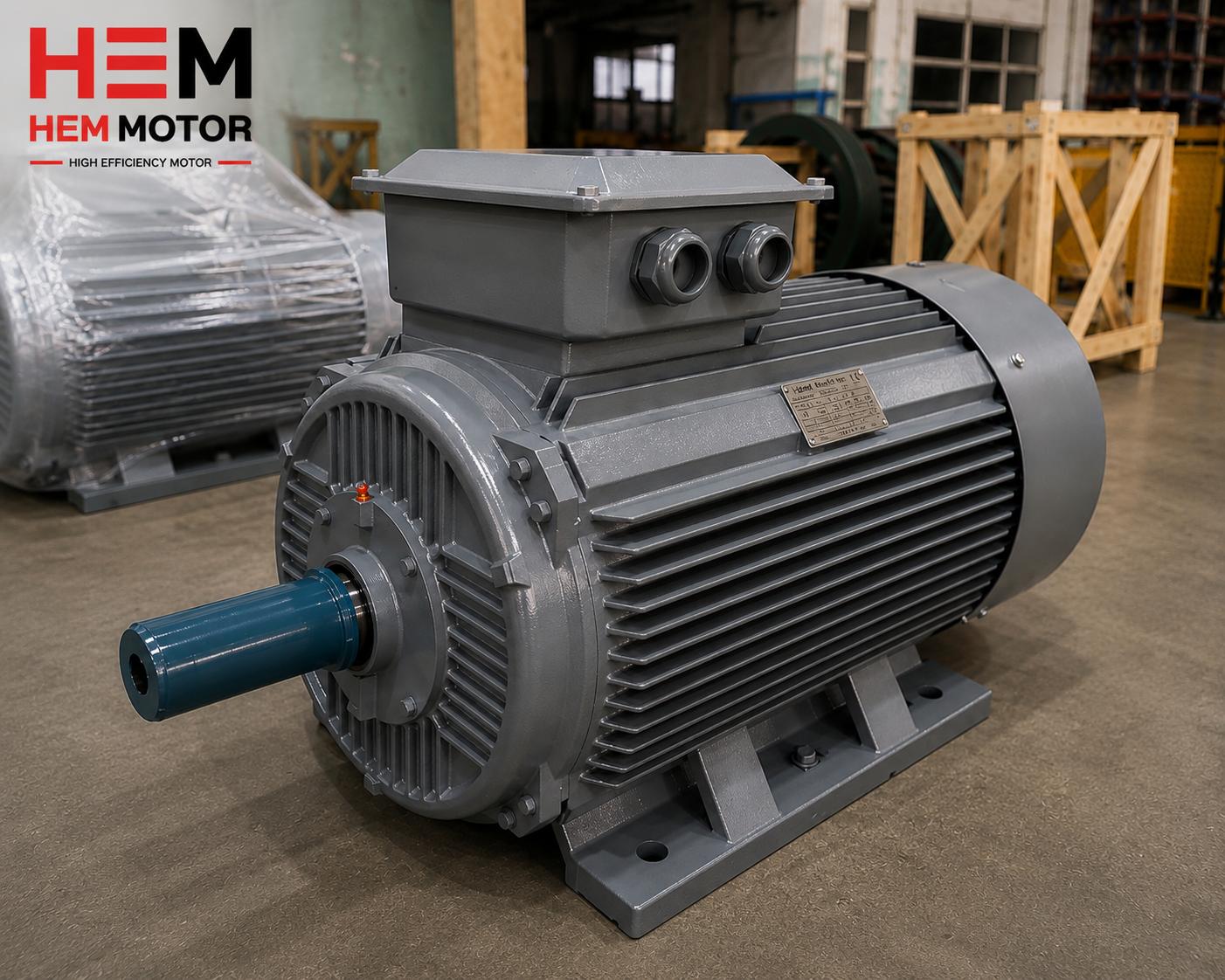

Thermoforming and vacuum packaging machines are complex pieces of equipment found on the most critical production lines in the food and medical sectors, combining multiple independent yet synchronized drive systems within a single frame. Film feeding and indexing, the forming station, the vacuum pump, heating and sealing, cutting and the conveyor each demand their own distinct drive characteristics. For this reason, selecting the right thermoforming packaging machine motor is not merely a technical preference but a strategic decision that directly determines line efficiency, hygiene standards and production continuity. In this article we examine which motor type suits each function of thermoforming and vacuum packaging machines, hygiene and washdown requirements, reducer matching, and why supply continuity matters for OEM machine builders. By reviewing current elektrik motoru fiyatları and technical options, you can determine the most suitable solution for your line.
Drive Architecture in Thermoforming and Vacuum Packaging Machines
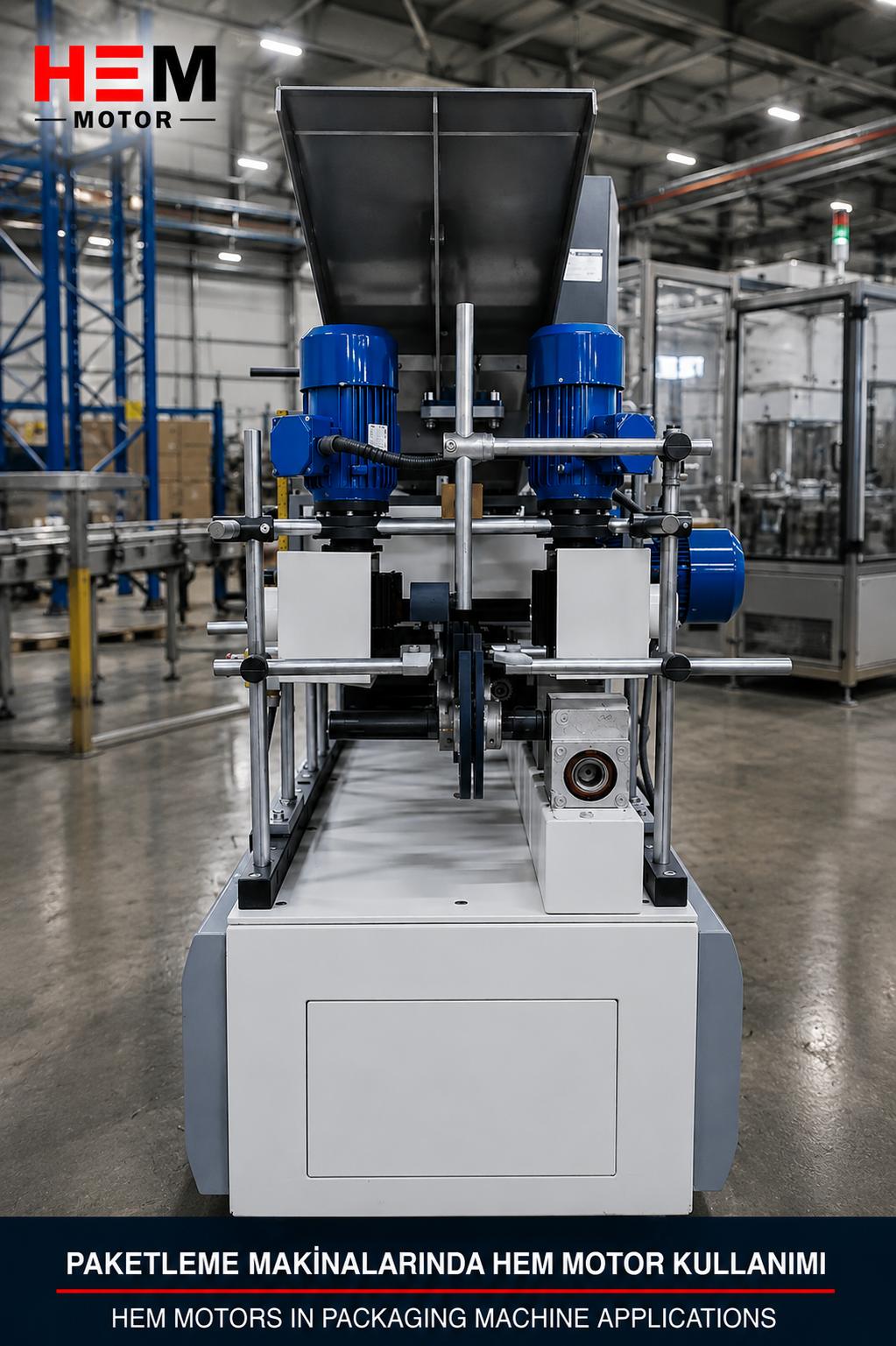
A modern thermoforming packaging machine unwinds the bottom film from a roll, heats and forms it, places the product, seals the top film with vacuum and, where required, modified atmosphere (MAP), and finally cuts the packs and transfers them to a conveyor. Each stage of this cycle requires a different motor and speed profile. Some stations call for continuously rotating drives, while steps such as film indexing demand high-precision, start-stop servo or geared drives. In vacuum packaging machines, the vacuum pump motor is usually the highest power-consuming and longest continuously running component on the line.
To plan the drive architecture correctly, the load type, speed range, duty cycle and environmental conditions of each function must be evaluated separately. A single poorly chosen motor can become the bottleneck of the entire line; because hygiene and continuity are non-negotiable in the food sector in particular, the selection of the packaging machine electric motor for each component must be done meticulously.
Vacuum Pump Motor: Continuous Duty and High Efficiency
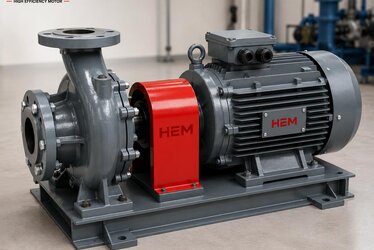
The heart of vacuum packaging machines is the vacuum pump that evacuates air. The vacuum pump motor driving this pump is the component under load the longest, and it must therefore be selected in the S1 continuous duty class. Because heat management is critical in a continuously running motor, F-class insulation and suitable thermal protection are essential.
The main criteria to consider in vacuum pump motors are:
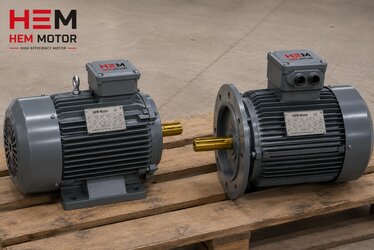
- Mounting type: A B5 or B35 foot-flange combination is preferred for direct-coupled or flange mounting to the pump, ensuring an aligned and vibration-free connection to the pump body.
- Efficiency class: On a continuously running pump, annual energy cost reaches significant figures, so IE3 or IE4 efficiency class motors deliver substantial long-term savings.
- Duty type: S1 continuous duty, designed for uninterrupted vacuum generation.
- Low vibration: Vibration values must be kept low to keep vacuum performance stable and extend pump bearing life.
- 100% copper winding: Copper winding should be preferred for winding durability and efficiency under high heat.
Depending on power requirements, motor selection is possible across a wide range from small tabletop solutions around 0.55 kW up to the 355 kW class. As line capacity grows, the vacuum pump motor power increases accordingly.
Film Feeding and Indexing: Geared Drives for Precision
In thermoforming machines, advancing the bottom and top film along the machine with exact step precision (indexing) forms the foundation of pack quality. In each cycle the film must advance a specific distance with millimetric accuracy; otherwise print misalignment, faulty cutting and waste occur. This motion profile demands high torque and precise positioning of a start-stop nature.
There are two common approaches for this function: closed-loop servo motor systems or geared asynchronous motor solutions. Reducer selection reduces the motor nominal speed to the desired film advance speed while raising output torque, making precise indexing possible. Helical or helical-bevel reducers are preferred in low-speed, high-torque applications. For guidance on when an integrated geared motor versus a separate motor and reducer combination is the right solution, the comparison geared motor or separate motor plus reducer will help.
Reducer Matching for Indexing
When matching a reducer, the gear ratio (i), output torque, radial/axial load capacity and service factor are considered. In start-stop indexing applications, choosing a generous service factor compensates for the fatigue that frequent acceleration-deceleration cycles place on reducer gears. Since backlash directly determines precision, low-backlash reducers are preferred on high-precision lines.
Forming, Sealing, Cutting and Conveyor Drives
At the forming station, mould movements and top-film closing mechanisms are driven by cam mechanisms, servo or geared motors depending on machine design. Heating and sealing stations generally use resistive heating, but the pressing and motion mechanisms are still motor-driven. At the cutting station, servo or controlled asynchronous motors frequently handle precise and repeatable motion.
In conveyor drives, packs must be transported smoothly at low speed. As this is not suited to the high speed of a direct asynchronous motor, worm or helical-bevel geared motors that reduce speed and increase torque are used. Conveyor motors usually operate in continuous or semi-continuous duty and must withstand hygienic environment conditions.
- Forming station: Servo or geared asynchronous motor for precise mould movement.
- Sealing/heating: Medium torque, controlled motion for the pressing mechanism.
- Cutting: Servo or controlled asynchronous drive for repeatability.
- Conveyor: Worm or helical-bevel geared motor for low speed.
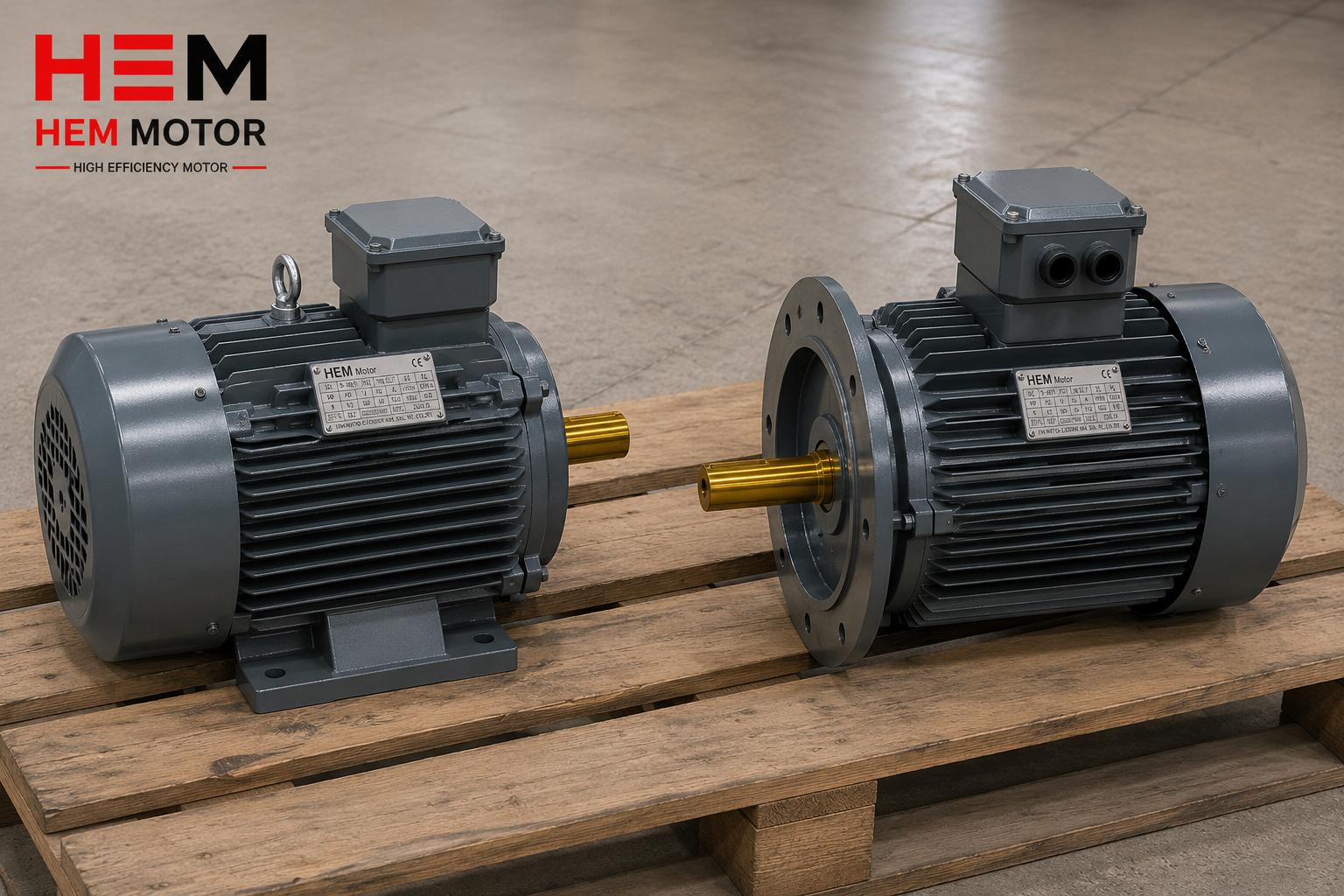
Hygiene, Washdown and Protection Class
Food and medical packaging lines are exposed to regular washing and disinfection processes. Motors used in these environments must therefore withstand water, steam and chemical cleaning agents. While IP55 protection class is standard and sufficient for many packaging applications, higher protection classes should be selected on request at stations subjected to direct pressurized water spray (washdown).
Key considerations in hygienic design include smooth surfaces, body geometry that does not trap water, corrosion-resistant coating and the quality of sealing gaskets. F-class insulation provides resistance against the heat caused by frequent cleaning cycles and continuous operation. For more detail on the hygiene and protection strategy in food lines, the content on hygiene and IP protection in food factory motors is a comprehensive resource. To determine the right class for the environment, the guide on selecting the IP protection class of an electric motor can also be reviewed.
Body Material: Aluminium or Cast Iron?
The choice of body material in packaging machines varies by application. Aluminium-bodied motors stand out at moving and space-constrained stations thanks to their light weight, good heat dissipation and relative corrosion resistance. Cast iron-bodied motors are preferred for high mechanical strength, vibration damping and heavy-duty conditions; cast iron bodies in particular provide long life in drives running continuously and under high load, such as vacuum pumps.
Supply Continuity for OEM Machine Builders
One of the most critical issues for thermoforming and vacuum packaging machine manufacturers is that motor supply must be uninterrupted and standardized. Since multiple different motors operate on a single line, sourcing these motors from the same supplier, at consistent quality and with fast availability, simplifies production planning. The inability to quickly replace a failed motor can bring the entire packaging line to a halt and lead to product loss in the food sector.
For this reason, fast supply from stock, a wide range of power and mounting options, and manufacturer assurance are decisive factors for OEM customers. Companies that build serial machines generally prefer to work with annual supply agreements; for the advantages of this approach, the content on OEM machine builder motor supply agreements can be reviewed. For a broad product range and technical specifications for the packaging sector, the packaging and wrapping machine electric motors category is the reference point.
- Minimizing line downtime with fast supply from stock.
- Wide power range from 0.55 kW to 355 kW.
- IE3 and IE4 efficiency class, 100% copper winding.
- Aluminium and cast iron body options.
- Continuous duty, low vibration and suitability for hygienic environments.
Energy Efficiency and Use of Frequency Inverters
On packaging lines, the bulk of energy cost stems from the continuously running vacuum pump and conveyor motors. For this reason, choosing IE3 and IE4 efficiency class motors makes a tangible difference to the annual energy bill. As the efficiency class rises, motor losses decrease, heating drops, and consequently the cooling load and maintenance frequency are reduced as well. On a continuously running drive, even a few percentage points of difference between efficiency classes can deliver savings far exceeding the purchase cost over the economic life of the motor.
In many packaging applications, motors are used together with a frequency inverter (drive). The inverter offers advantages such as adjusting the film feed speed according to product size, synchronizing the conveyor speed to the line tempo, and reducing mechanical shocks through soft starting. For motors driven by an inverter, the winding insulation must be resistant to voltage spikes, and forced cooling or a separate fan should be considered where necessary. Correct motor-drive matching provides both energy savings and process flexibility.
Maintenance, Spare Parts and Life Management
The uninterrupted operation of a packaging line depends not only on correct motor selection but also on a well-planned maintenance and spare parts strategy. Regular inspection of wearing parts such as bearings, seals and fans prevents unexpected failures. Particularly for critical components such as the vacuum pump motor, keeping a critical spare motor in stock ensures that, in the event of a possible failure, the line can be brought back online within minutes rather than hours. Motors using standard frame sizes, mounting types and flange dimensions greatly simplify spare parts management, because a common stock pool can be created among motors at different stations.
Quick Checklist for Motor Selection
When selecting a motor for each function in thermoforming and vacuum packaging machines, following these steps yields the right result: first define the load type and motion profile of the function, then calculate the required speed and torque, determine the duty cycle (S1, S3, etc.), clarify the environmental protection class (IP) and hygiene requirement, and finally choose the efficiency class and body material. For functions requiring a reducer, calculating the gear ratio and service factor correctly safeguards both precision and long life. This systematic approach ensures every station is equipped with the most suitable drive and that balanced, reliable performance is achieved across the entire line.
Frequently Asked Questions
Which duty type should a vacuum pump motor be selected in?
Since the vacuum pump is the component under load the longest on the line, its motor should be selected in the S1 continuous duty class. F-class insulation, IE3/IE4 efficiency class and a B5 or B35 flange combination for aligned connection to the pump are recommended.
Is a servo or a geared motor more suitable for film indexing?
Servo drives are preferred on lines requiring very high precision and complex motion profiles. For more standard stepping applications, geared asynchronous motor solutions are an economical and durable alternative; the choice is made according to the required positioning precision and machine design.
Which IP protection class is needed on a food packaging line?
IP55 is sufficient in most cases for standard packaging applications. However, at stations washed directly with pressurized water, a higher protection class, smooth hygienic surfaces and a corrosion-resistant body should be selected on request.