English
 Türkçe

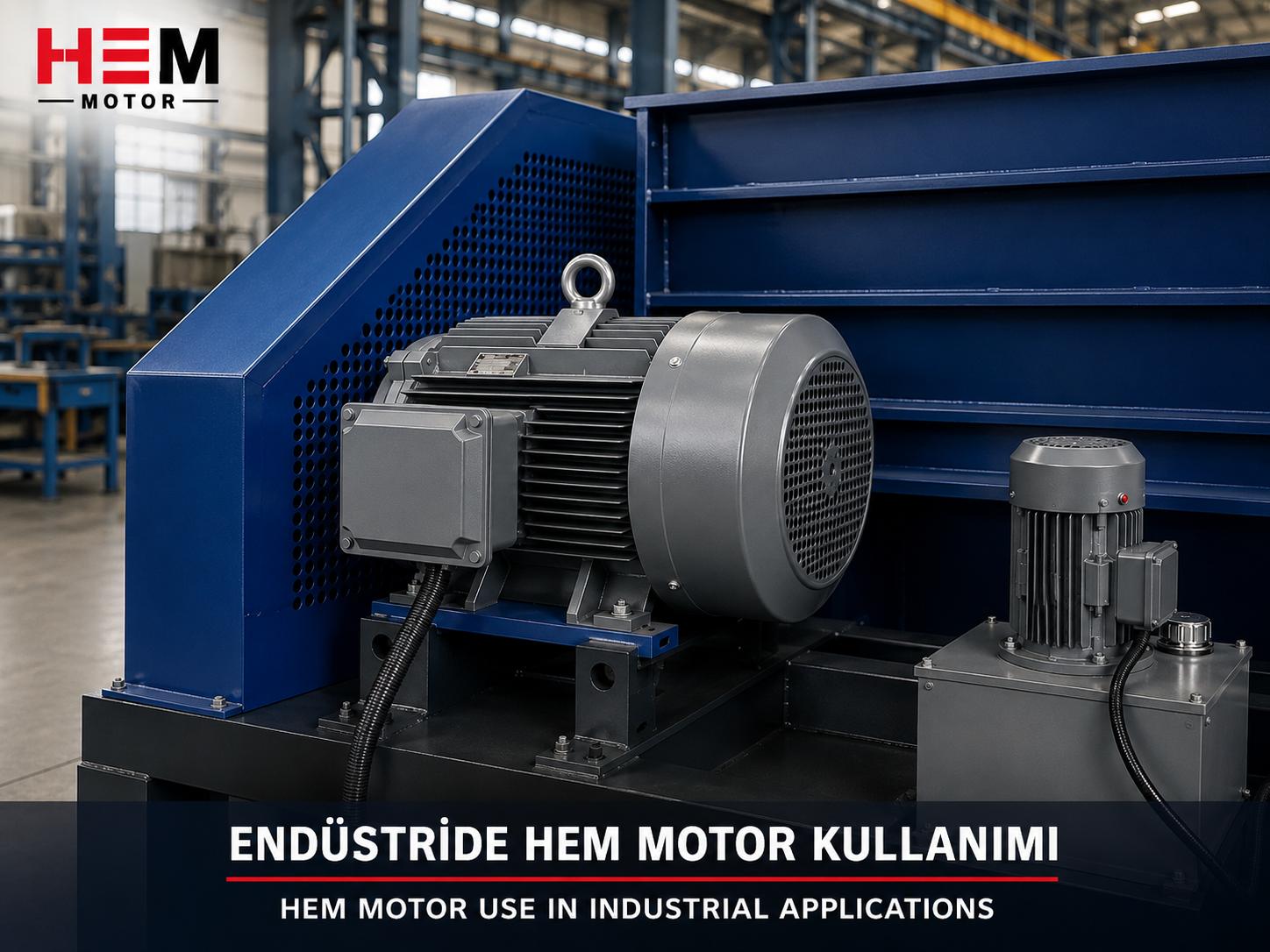

Sugar production is one of Türkiye's most established agricultural industries, and the entire journey from harvesting beet in the field to producing crystal sugar is built upon electric motors. A sugar factory contains hundreds of drive points, from beet washing and slicing to diffusion, centrifuging, lime milling and boiler fans, and all of them run around the clock, for weeks without interruption. This is exactly why selecting sugar factory motors is not a simple purchasing decision; it is a strategic engineering choice that directly determines production continuity, energy cost and maintenance burden.
The sugar production season, known as the campaign period, usually starts in autumn and continues without interruption until the beet stock is exhausted. During this period, the failure of a single motor can halt the entire line and prevent thousands of tons of beet from being processed each day. Because downtime is extremely costly, motors at critical points must be both high efficiency and backed up with spares. In this article we examine the equipment groups in beet processing plants one by one, explaining how the correct motor should be selected for each and what HEM Motor offers.
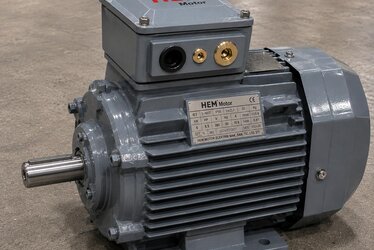
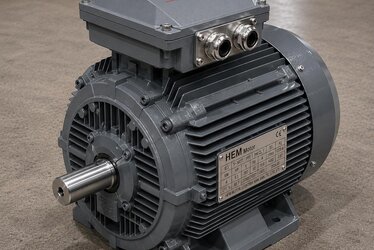
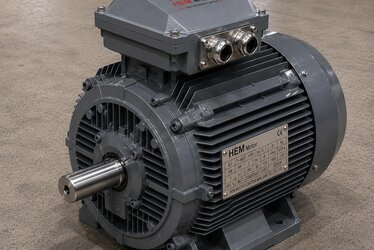
At HEM Motor, we offer a wide product range built for heavy industrial conditions, in IE3/IE4 motor efficiency classes and with a cast iron frame. By supplying motors suited to the hot, humid, dusty and at times corrosive (lime, vapor) environment of sugar factories directly from stock, we support the uninterrupted completion of the campaign period.
Motor Requirements of the Sugar Production Line
A sugar factory consists of many process steps arranged in sequence, and each step carries its own drive characteristic. On the journey from the arrival of the beet to the packaging of crystal sugar, motors sometimes run at low speed with high torque, sometimes at high speed under continuous load, and sometimes under a frequent start-stop regime. To choose the correct motor, the load profile, operating environment and speed requirement of every piece of equipment must be evaluated separately.
The environmental conditions found in sugar factories are far more demanding than in standard industrial plants. The high humidity arising during beet washing and processing, the vapor rising from the diffuser, the corrosive dust in lime preparation units and the high temperature of the boiler house all place serious stress on the motor frame and insulation. Therefore, instead of using the same type of motor throughout the plant, the protection class (IP55, IP65 where required), the insulation class (F or H) and the frame material must be selected to suit each point.
- Operating time: Weeks of uninterrupted operation during the campaign period demand high thermal stability and low vibration.
- Environment: Humidity, vapor, dust and corrosion call for IP55+ protection and a cast iron frame.
- Spares: Critical motors should have stocked spares that can be matched quickly by nameplate.
- Efficiency: Because of continuous operation, IE3/IE4 efficiency classes deliver clear savings in energy cost.
Motor Selection by Equipment
Let us examine the main equipment groups in a sugar factory and their motor requirements in detail. The torque characteristic, speed range, protection class and backup priority differ for each group.
Beet Washing and Slicer Motors
When beet arrives at the factory it is first cleaned of heavy soil, stones and foreign matter. Washing drums and conveying systems rotate under heavy loads that constantly contain water and mud. At this point motors require high starting torque at low speed; they must withstand sudden load changes and overloads caused by blockages. The washed beet is then transferred to slicers where it is cut into thin slices (cossettes). Smooth, vibration-free rotation of the slicer blades is the foundation of diffuser efficiency, so low vibration and a balanced rotor are critical in these motors. Due to the water and humidity, at least IP55 protection and a cast iron frame are essential.
Diffuser Motor Selection
The diffuser is the heart of sugar production. The extraction of sugar (raw juice) from sliced beet with the help of hot water takes place in this unit. The conveying screws, mixers and drive mechanisms in horizontal or tower-type diffusers turn at very low speed with constant, high torque. In diffuser motor selection, high torque capacity for operation with a gearbox, a thermal design suited to long continuous operation, and insulation resistant to a vapor-humidity environment are sought. Since the stoppage of the diffuser drive would instantly halt all production, these motors belong to the group with the highest backup priority. F or H class insulation and 100% copper winding are decisive for long life at this point.
Centrifuge Motor Selection
Centrifuges are used to separate crystal sugar from the sugar-syrup mixture obtained after crystallization. Centrifuges are one of the most demanding drive applications in a sugar factory because they reach very high speeds, are frequently started and stopped, and face severe inertia loads in every cycle. In centrifuge motor selection, high starting torque, a rotor design suited to frequent starting, heavy-duty bearings and excellent balancing stand out. Because the frequent start-stop regime heats the motor, F/H class insulation and good cooling are essential. These applications generally favor motors suited to a wide speed range, working together with a frequency inverter.
Mill and Lime Mill Motors
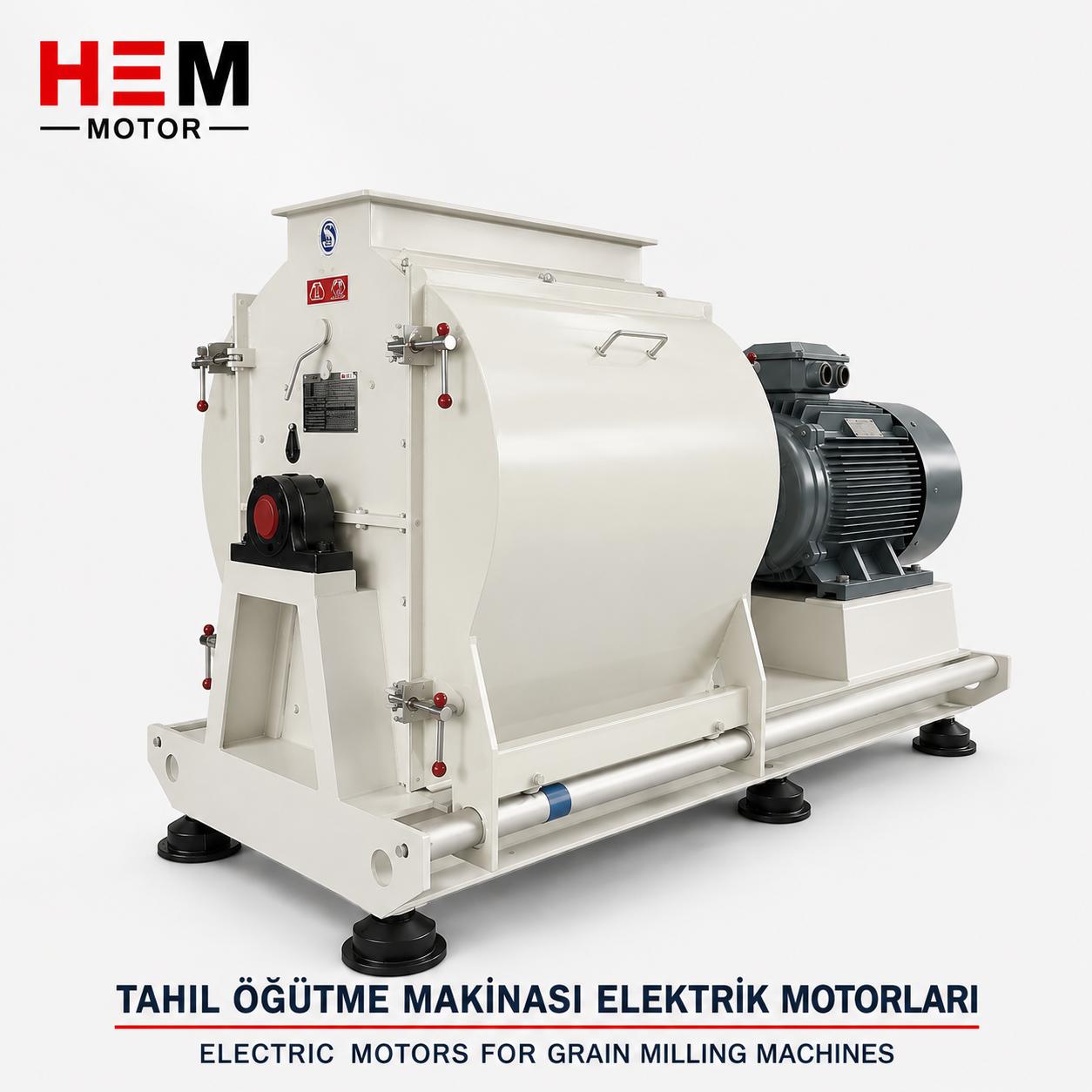
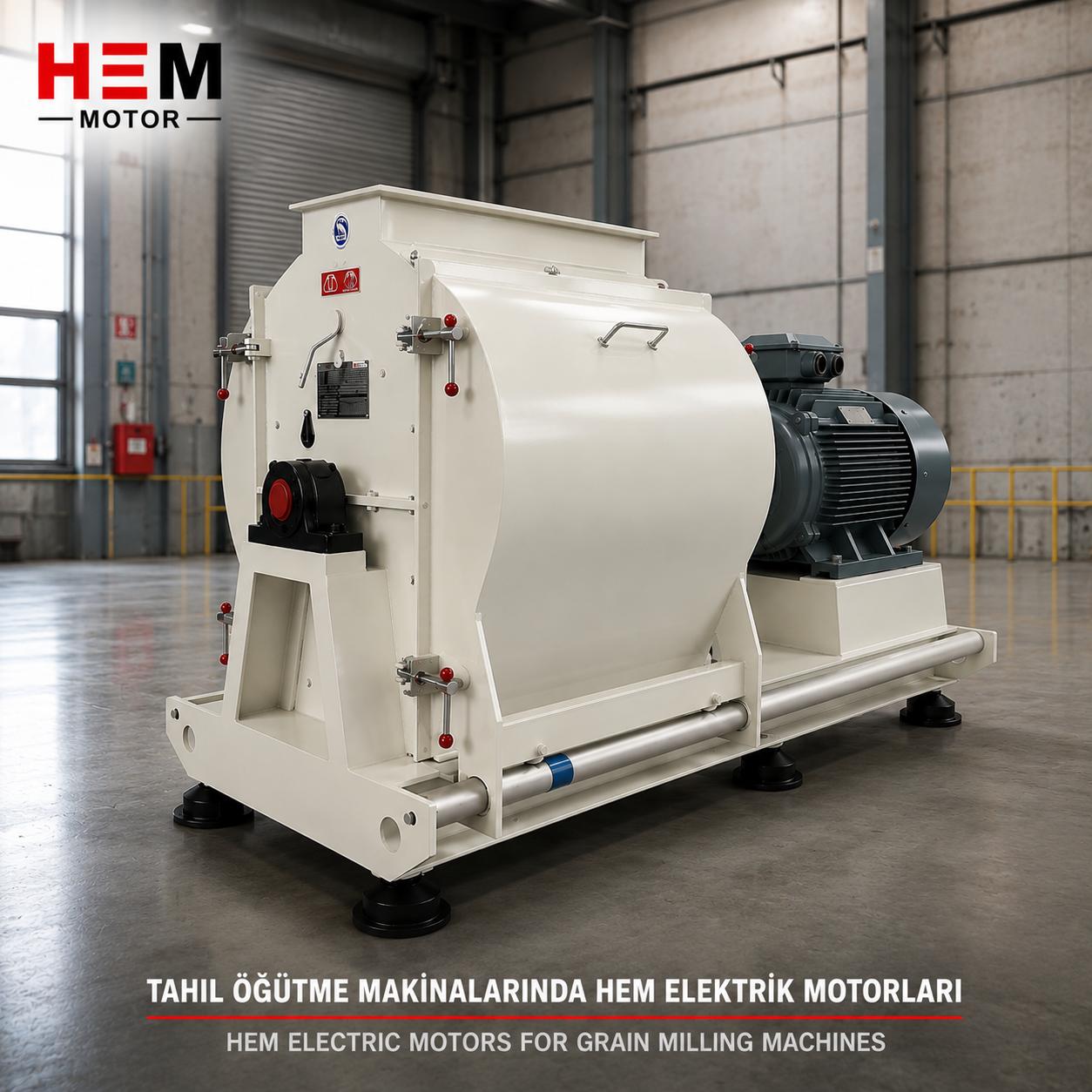
Lime and carbon dioxide are used in sugar purification, so the plant contains lime preparation and lime milling units. The mills where limestone is ground operate at low speed under heavy and continuous load. In mill motor selection, high torque, mechanical strength and overload tolerance come first. The corrosive and abrasive dust generated during grinding is a serious threat to the motor frame, so a cast iron frame, sealing and IP55/IP65 protection class are vital at these points. If you would like to see similar grinding principles in a different sector, our content on feed factory and mill motors offers complementary information.
Fan, Blower and Boiler Draft Motors
Sugar factories have boilers for steam and energy production, dryers for drying, and many fans for process ventilation. Boiler combustion air fans, flue gas blowers and sugar drying fans run continuously and at high flow. In fan and blower motor selection, efficiency suited to continuous operation, low vibration and resistance to hot environments are important. In flue gas blowers, H class insulation may be preferred due to high temperature and corrosive gases. Since fan applications carry a cubic load characteristic, adjusting the flow with a frequency inverter delivers serious energy savings; combined with IE3/IE4 efficiency, this clearly lowers operating cost.
Juice/Syrup Pumps and Conveyor-Elevator Motors
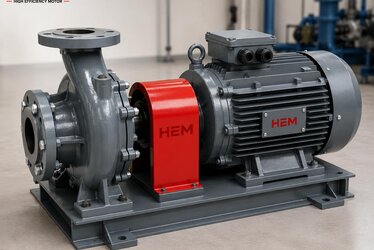
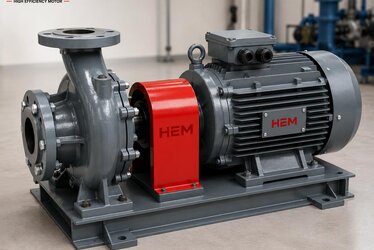
The juice drawn from the diffuser is carried between purification and evaporation stations by many centrifugal pumps. Pump motors run continuously, and maintaining the flow directly affects production speed. Those who wish to go deeper into pumps can review our centrifugal pump motor selection guide. In addition, the conveyor belts, bucket elevators and screw conveyors that carry beet, pulp and crystal sugar are also driven by continuously running motors. At these points, geared drive, high starting torque and a protection class suited to a dusty environment are required.
Environmental Conditions and Protection Class
A sugar factory is virtually an endurance test for motors. Different areas of the plant present very different challenges, and a single solution does not fit every point. Selecting the correct protection and insulation class is a precondition for the motor to run without failure throughout the campaign period.
- Humidity and vapor: In diffuser, washing and evaporation areas, IP55 and above protection and F/H insulation classes are required due to high humidity.
- Dust and corrosion: In lime mills and dry product lines, protection up to IP65 and a sealed cast iron frame are preferred.
- Temperature: Around boilers and dryers, H class insulation and adequate cooling capacity should be selected for the high ambient temperature.
- Continuous load: Low vibration, heavy-duty bearings and thermal stability are essential across the whole line.
For those curious about cement production, another sector governed by similarly heavy industrial conditions, our content on cement factory electric motors offers a different perspective on motor selection against dust and wear.
HEM Motor Product Range and Technical Features
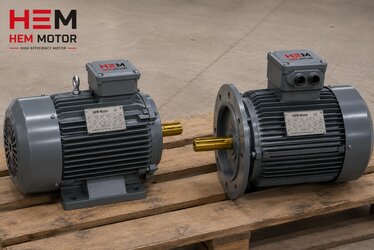
HEM Motor manufactures and supplies from stock a wide range of motors suited to every equipment group in a sugar factory. Our product range covers a power span from 0.55 kW to 355 kW and speed options of 1000, 1500 and 3000 rpm. This makes it possible to offer a single-source solution for every drive point, from beet washing to centrifuge, from lime mill to boiler fan.
- Efficiency class: IE3 and IE4 high-efficiency motors for energy savings in continuous operation.
- Frame: Cast iron frame for high mechanical strength and long life.
- Protection: IP55 standard, with higher protection class where required.
- Insulation: F class insulation with 100% copper winding for thermal safety.
- Mounting: B3, B5 and B35 mounting options for compatibility with every piece of equipment.
- Mechanical: Heavy-duty bearings and low vibration for long maintenance intervals.
All these features provide the reliability that plants seek during the intense pace of the campaign period. For standard industrial applications, our general purpose industrial motors family offers a wide range of stock options that can be supplied quickly. You can request a quote for current electric motor prices and suitable model recommendations.
Spare Motor Stock and Supply Assurance
Production in sugar factories is uninterrupted, and the cost of downtime is very high. For this reason, keeping spares of motors at critical drive points ready on site is a fundamental principle of modern maintenance management. At points such as the diffuser drive, centrifuge and boiler fan, where a stoppage would instantly affect production, keeping spare motors that match exactly by nameplate in stock makes commissioning possible within hours of a failure.
As HEM Motor, we support plants' spare motor strategy by offering fast delivery with manufacturer assurance. By sharing the nameplate details of your existing motor (power, speed, mounting type, protection class), you can request an exact equivalent product and complete your spare stock before the campaign period. As a manufacturer with a wide product range, we provide single-source supply convenience for both new plant projects and the revision and backup needs of existing facilities. Continuity throughout the campaign period is made possible not only by correct motor selection but also by a sound backup plan.
Frequently Asked Questions
Which motor efficiency class should be preferred in a sugar factory?
Because motors in sugar factories run uninterrupted for weeks during the campaign period, their annual operating hours are very high. For this reason, IE3 and especially IE4 efficiency class motors should be preferred. High-efficiency motors clearly reduce energy consumption under continuous operation, pay for themselves in a short time and lower the total operating cost.
Why do diffuser and centrifuge motors have different requirements?
The diffuser drive runs continuously at very low speed with constant, high torque, while centrifuges reach very high speeds, are frequently started and stopped, and face high inertia loads in every cycle. Therefore diffuser motors emphasize long-term thermal stability and high torque, whereas centrifuge motors emphasize a rotor design suited to frequent starting, heavy-duty bearings and excellent balancing. Both applications require F/H class insulation.
Why should spare motors be kept in stock?
During the campaign period, the failure of a single motor can halt the entire line and prevent thousands of tons of beet from being processed each day. Because downtime is very costly, spares that match by nameplate for motors at critical points such as the diffuser, centrifuge and boiler fan should be kept ready on site. HEM Motor supports this backup strategy by offering fast delivery with manufacturer assurance.