English
 Türkçe


Summary (TL;DR)
- RDF/SRF waste-derived fuel preparation plants contain machines with very different load profiles — shredders, screens, separators, fans and conveyors — and each machine requires a different motor selection.
- The primary (pre-)shredder needs a generously sized, cast-iron, S6/S4 duty, thermally protected motor with high starting torque because of shock loads and frequent jams; fans and exhausters deliver major energy savings when driven by a variable frequency drive (VFD).
- The environment is dusty, abrasive and humid, so a minimum of IP55 — often IP65/IP66 — with F/H insulation, sealed bearings and ATEX/dust-Ex motors in explosion-risk zones must be considered.
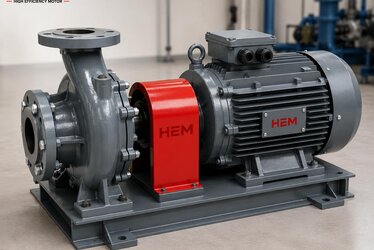
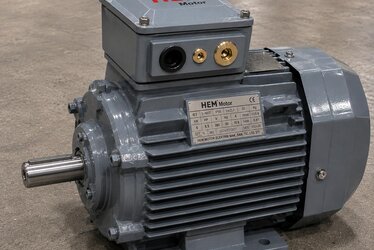
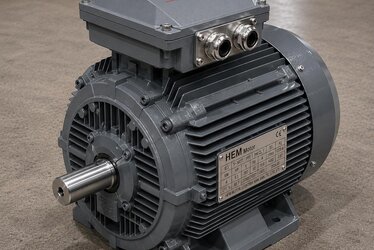
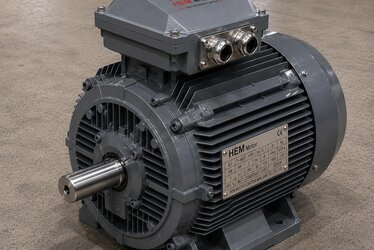
- HEM Motor supplies IE3/IE4 cast-iron motors from 0.55 to 355 kW with 100% copper windings and IP55 protection, plus matched gearbox packages, all available from stock.
- Correct duty-type and efficiency-class selection reduces unplanned downtime, lowers energy cost and gives you fast quotes and supply with manufacturer assurance.
RDF (Refuse-Derived Fuel) and SRF (Solid Recovered Fuel) plants convert non-hazardous municipal, commercial and industrial waste into a homogeneous fuel that can be burned in cement kilns and power plants. This conversion relies on the uninterrupted operation of energy-intensive steps such as shredding, screening, magnetic and air separation, drying and pneumatic conveying. At the heart of every one of these steps are electric motors. In this article we explain — in a technical and practical way — how to select the right motor for each machine group in an RDF/SRF preparation line, which duty type and protection class are required, and what HEM Motor offers from stock as a manufacturer. Let us choose the right product group together to obtain current electric motor prices and a quote.
What Are RDF and SRF? What Standardizes SRF?
RDF is a general definition of fuel produced from sorted waste with an increased calorific value. SRF is a higher-grade, standardized solid recovered fuel classified according to the EN 15359 standard based on parameters such as calorific value, chlorine content and mercury content. This standardization ensures the fuel reaches the end user — a cement kiln or power plant — with a stable, consistent quality. Producing a standardized fuel means homogeneous particle size, removal of metals and inert materials, and reduced moisture. That in turn requires correctly sized, reliable motors capable of continuous operation at every stage. The higher the target fuel quality, the more shredding and screening steps are required and the more variable the motor loads become.
A Typical RDF/SRF Preparation Line and Its Machine Groups
An RDF/SRF line consists of many machines in sequence as the waste travels from the reception area to homogeneous fuel. Each machine group has a different load profile, and that difference directly determines the motor selection:
- Primary (pre-)shredder: A low-speed, high-torque machine performing coarse shredding.
- Secondary / fine shredder or granulator: Reduces particle size to the fuel specification.
- Magnetic and eddy-current separators: Units that remove ferrous and non-ferrous metals.
- Trommel, disc and star screens: Screens separating fractions by size.
- Air classifiers, zig-zag and ballistic separators: Units separating light and heavy fractions.
- Conveyors: Belt, chain and screw (auger) conveyors.
- Baghouse fans, cyclone fans and pneumatic conveying exhausters: Dedusting and air-conveying units.
Because all of these machines run in continuous coordination, the weakest link in the chain stops the entire line. Motor selection is therefore not just about power (kW); it is the combination of decisions on duty type, protection class, starting torque and thermal protection.
Primary Shredder Motor Selection: The Most Critical Link
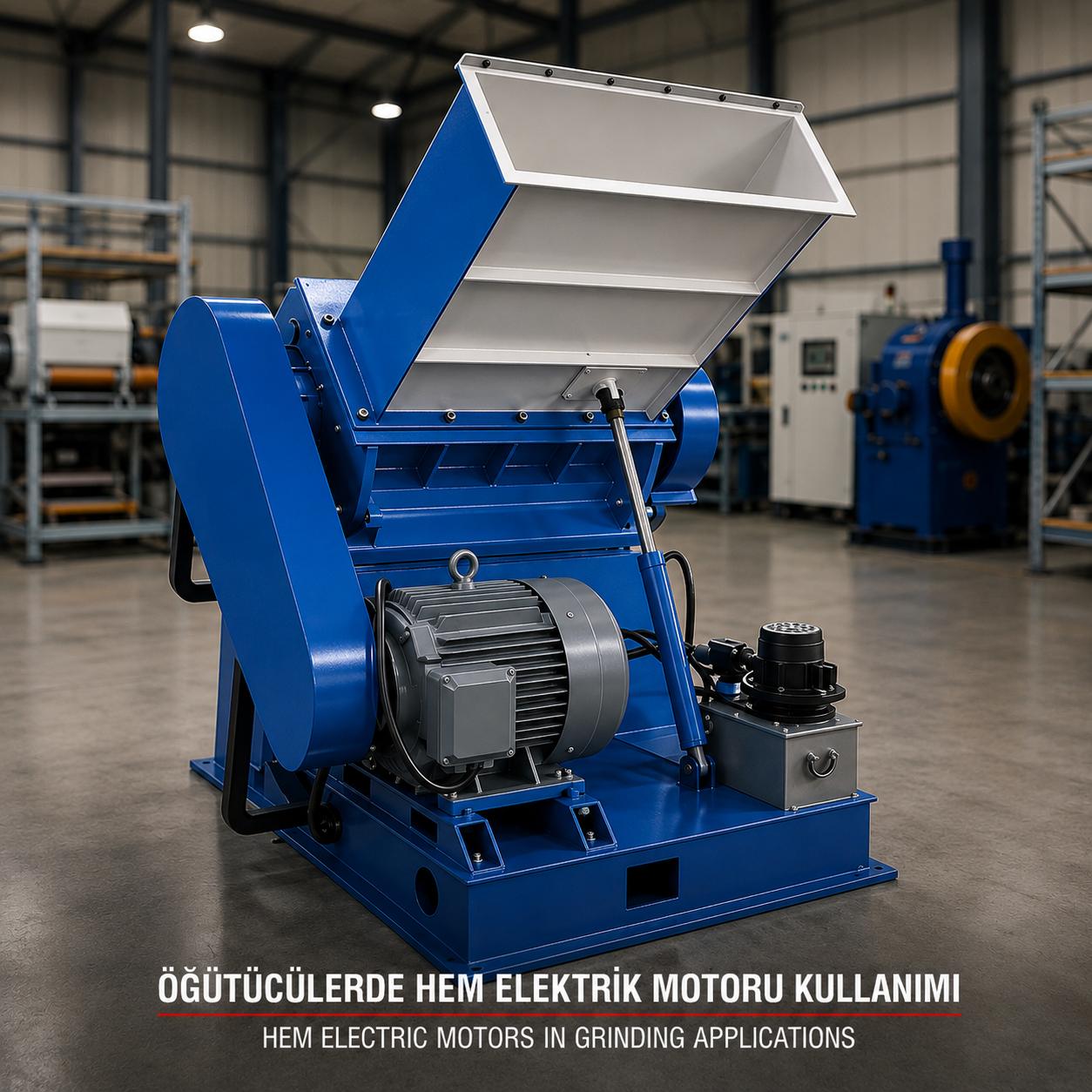
The primary shredder (pre-shredder) houses the most demanding motor on the line. The incoming waste is mixed and unpredictable; it may contain items that cause jamming, sudden shock loads and even the need to reverse to clear a blockage. The following characteristics are therefore critical for the primary shredder motor:
- High starting / breakaway torque: A high starting torque is essential for loaded starts and restarts after a jam.
- Generous sizing: The motor is never selected by tight calculation; it is generously sized to leave a margin for shock and jamming loads. Undersizing the primary shredder motor is the most common and most expensive mistake.
- Robust cast-iron frame: A cast-iron frame is preferred against vibration and mechanical stress.
- Duty type S6 / S4: Frequent starts and stops with variable load place operation close to intermittent periodic duty types. Because duty-type selection is critical, review the electric motor duty type S1-S6 selection article.
- VFD or fluid coupling: A variable frequency drive or a hydraulic fluid coupling is used for soft starting, controlled torque and jam management.
- Pole count for torque: Due to the high torque demand, a 6-pole (1000 rpm) motor is often preferred.
- Thermal protection: A PTC thermistor or PT100 sensor embedded in the winding prevents overheating from jams and protects the motor.
Because of this demanding load profile, the primary shredder motor is selected with the same philosophy as crusher motors in stone-crushing plants. For comparable strength and torque needs, the stone crushing and screening plant electric motors product page is also a suitable reference for RDF shredder applications.
Secondary and Fine Shredder Motor
The secondary or fine shredder (granulator) reduces particle size to the SRF specification. The speed at this stage is usually higher, but shock loads from foreign objects are still possible. Reinforced bearings, a balanced rotor and good cooling become important here. The duty type may be more stable than the primary shredder; nevertheless, thermal protection and generous sizing should be maintained.
Screen and Separator Motors: Stable but Continuous Load
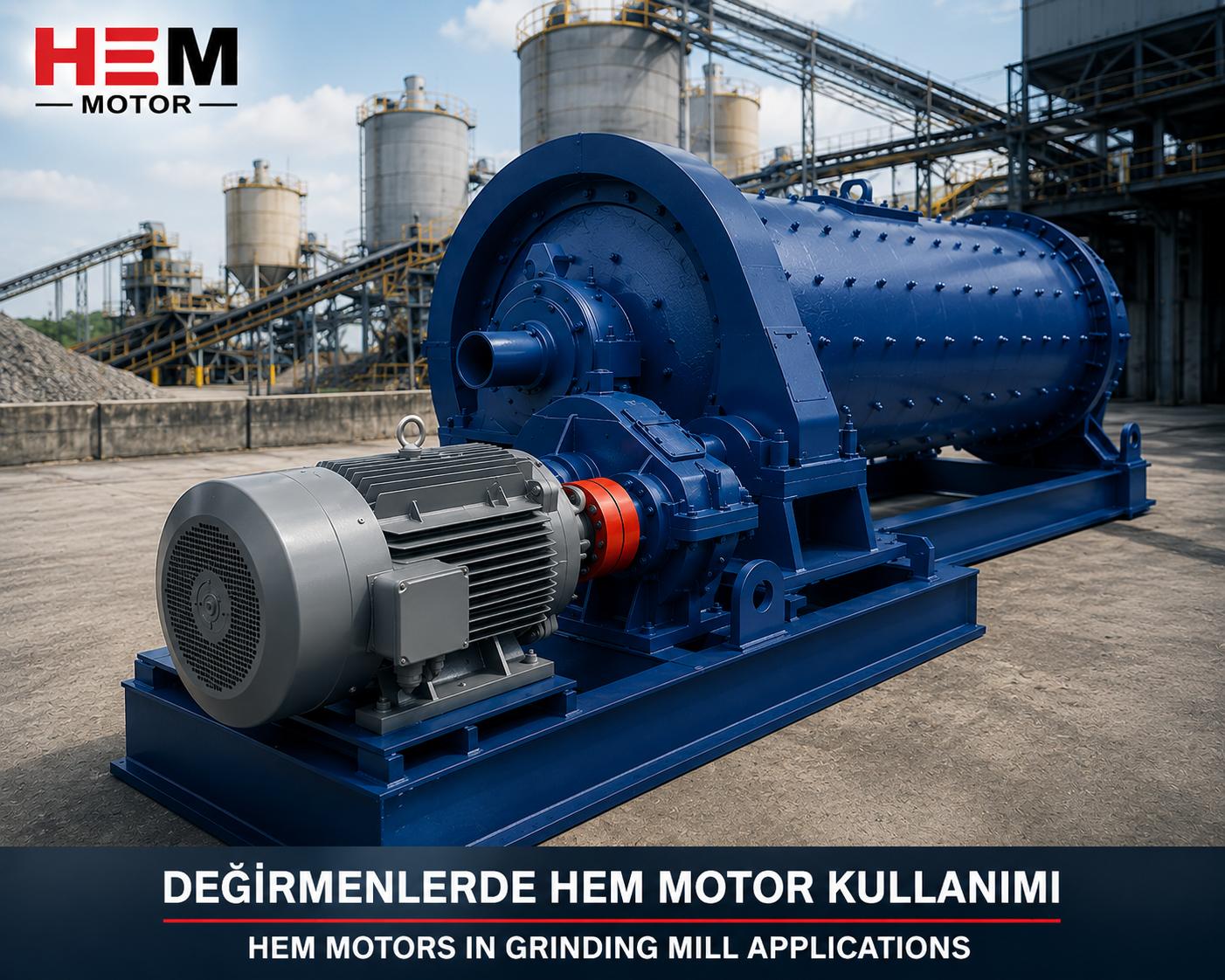
Trommel, disc and star screens, along with magnetic, eddy-current and air separators, have a far more stable load profile than shredders. They typically run in S1 continuous duty, with moderate torque and constant speed. However, because most screens rotate at a low output speed, the motor is usually used together with a gearbox:
- Trommel and disc screens: A worm or helical-bevel gearbox provides low speed and high torque.
- Star screens: Continuous rotation at constant, low speed; a helical gearbox is common.
- Magnetic and eddy-current separators: Continuous S1 duty; an enclosed, dust-protected motor.
- Air classifier drums: Continuous, balanced load.
For screen and conveyor drives, HEM Motor can match motors with worm gear (HEM30–130) and helical-bevel (K series) reducers, offering a compatible motor + gearbox package from a single supplier. This simplifies installation and keeps the warranty under one roof.
Fan and Exhauster Motors: The Key to Energy Savings with VFD
Baghouse fans, cyclone fans, air classifier blowers and pneumatic conveying exhausters are among the longest-running and most energy-consuming motors in an RDF/SRF plant. A centrifugal fan load has an important property: torque varies with the square of speed, while power varies with the cube of speed. For this reason, speed control with a variable frequency drive (VFD) on fan motors — adjusting airflow by speed rather than by damper — delivers significant energy savings.
- Pole selection: Fans usually run on 2-pole (3000 rpm) or 4-pole (1500 rpm) motors.
- VFD advantage: Soft starting, flow control and energy savings of 20–40% are possible.
- IE4 payback: Because of long running hours, the initial cost premium of a high-efficiency (IE4) motor is recovered quickly through energy savings.
- Dust load: A high protection class is essential due to the dusty air in the aspiration line.
Those who want to make the right efficiency and pole selection for fan and ventilation applications can review the suitable series on the ventilation and fan electric motors product page.
Conveyor Motors: The Invisible Backbone of the Line
Belt, chain and screw (auger) conveyors move material between machines and generally run in S1 continuous duty at constant torque. Conveyor drives are almost always geared; a helical or helical-bevel gearbox provides low output speed and high torque. If loaded starting is required, the motor starting torque and soft starting with a VFD are taken into account. Although conveyors appear simple, there are many of them across the plant, so keeping spare motors in stock minimizes downtime.
Dusty, Abrasive and Explosion-Risk Environment: Protection Class and ATEX
RDF/SRF plants are a harsh environment for motors. The dust is both combustible and abrasive, the ambient temperature can be high, and moisture poses a risk to bearings and windings. Therefore:
- Minimum IP55: The standard minimum protection class is IP55; IP65/IP66 should be considered in heavily dusty areas.
- F / H insulation class: F insulation, or H where necessary, is preferred for high temperatures and variable loads.
- Anti-condensation heater: Prevents winding moisture in motors that sit idle.
- Sealed / regreasable bearings: Prevent dust ingress and extend maintenance life.
- ATEX / dust-Ex consideration: Enclosed areas with fine dust carry a dust explosion risk; dust-ignition-protected motors may be required in these zones. Zone classification must be determined by an engineering study.
Because protection-class and insulation decisions directly affect motor life and unplanned-downtime risk, each machine zone should be evaluated separately in the plant design.
Reliability, Sizing and Stock: Total Cost of Ownership
Unplanned downtime is expensive in RDF/SRF plants; the stoppage of a single shredder can halt the entire line. To reduce total cost of ownership:
- Never undersize shredder motors; determine the duty type correctly.
- Lower energy cost by choosing IE4 efficiency on continuously running fans and separators.
- Protect the motor from overload and jams with thermal protection (PTC/PT100).
- Keep spares in stock for critical motors; shorten lead time with single-source supply.
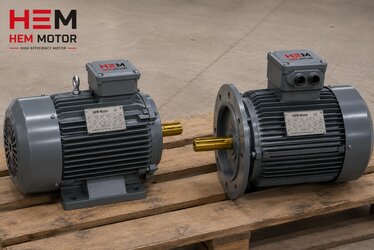
As a manufacturer, HEM Motor supplies IE3/IE4 cast-iron motors from 0.55 to 355 kW with 100% copper windings, IP55 protection, F insulation and reinforced bearings — from stock, with 1000/1500/3000 rpm options and B3/B5/B35 mounting types. Thanks to motor packages matched with worm and helical-bevel gearboxes, we provide a single-supplier solution for screen and conveyor drives. This way we help you select the right motor for each machine, obtain a fast quote and procure with manufacturer assurance.
Motor Selection Summary for an RDF/SRF Plant
- Primary shredder: Generous sizing, high torque, cast iron, S6/S4, VFD/fluid coupling, 6-pole, PTC/PT100.
- Secondary shredder: Reinforced bearings, balanced rotor, thermal protection.
- Screens: S1, geared, moderate torque, enclosed motor.
- Separators: Continuous S1, dust-protected.
- Fans: 2/4-pole, VFD, IE4 efficiency, high protection.
- Conveyors: S1, geared, constant torque, spares in stock.
Frequently Asked Questions
Which duty type should I choose for an RDF shredder motor?
Because primary shredders are exposed to frequent starts and stops, variable load and jam-induced shock loads, they are usually selected close to intermittent periodic duty types such as S6 or S4. Determining the duty type correctly is critical for the motor to run safely without overheating; therefore the motor should not be sized by tight calculation but generously, leaving a margin for shock loads, and it should be fitted with thermal protection.
Does using a variable frequency drive (VFD) on fan motors really save energy?
Yes. Because power varies with the cube of speed in centrifugal fans, adjusting airflow with motor speed instead of a damper provides large energy savings. On baghouse and pneumatic conveying fans with long running hours, savings of 20–40% are possible; when an IE4 efficiency class is chosen for these motors, the initial cost premium is recovered quickly.
What protection class and features are needed for a dusty RDF/SRF environment?
A minimum IP55 protection class is essential; IP65/IP66, F or H insulation class, sealed bearings and an anti-condensation heater for idle motors are recommended in heavily dusty areas. In enclosed areas with fine dust, ATEX / dust-ignition-protected motors should be considered due to the dust explosion risk. HEM Motor supplies motors with these features from stock and provides selection support according to your application.