English
 Türkçe

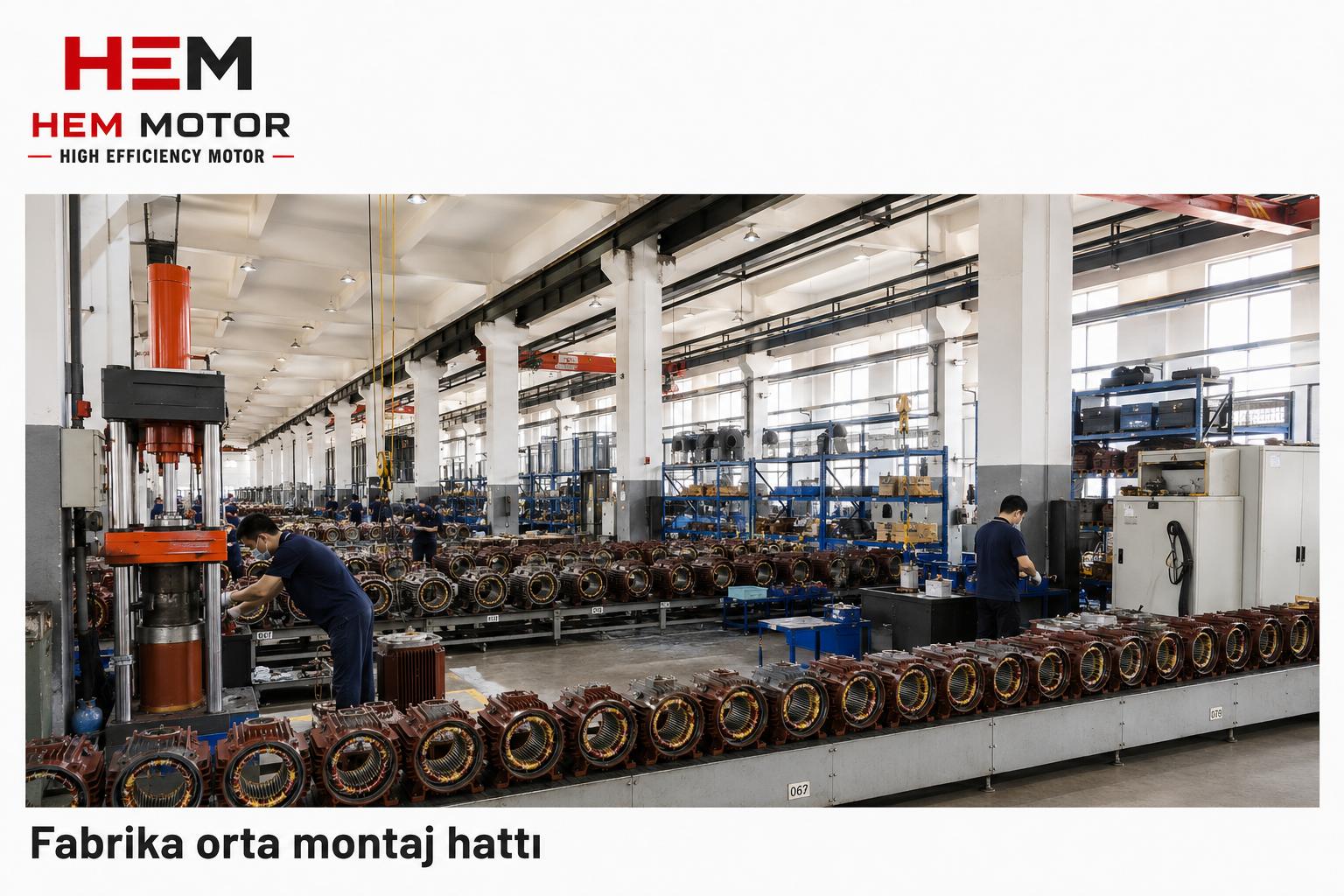

Pharmaceutical and drug production is among the most strictly regulated manufacturing environments in the world. Every piece of equipment used in a room where an antibiotic tablet, a sterile injectable solution or an inhalation powder is produced directly affects product safety and patient health. For this reason, a mixer motor turning inside a GMP tesisi (Good Manufacturing Practice facility), the drive unit of a granulation line, or the main motor of a tablet press cannot be an ordinary industrial motor. You need motors that do not shed particles, withstand high-pressure washing, and have a stainless, hygienic body. In this article we examine temiz oda (cleanroom) classes, paslanmaz stainless hygienic body design, the yıkanabilir motor (washdown) concept, IP65/IP66 and IP69K protection levels, CIP/SIP cleaning compatibility, and correct motor selection from a manufacturer's perspective.
At HEM Motor we have closely followed the needs of the pharmaceutical sector for years, supplying hygienic motors suited to cleanroom and washdown conditions both from stock and to special order. Our goal is to deliver a technically correct, documented and long-lasting solution for every drive point in your project. Below you will find which motor belongs where, which protection class answers which cleaning regime, and what to watch for during the quotation stage.
Why a Motor in a GMP Facility Is Not an Ordinary Component
GMP requires that every batch of product be manufactured at consistent quality, free of contamination, and in a traceable manner. Inside a GMP tesisi the role of an electric motor is not only to generate mechanical power; it is also to avoid contaminating the environment, to be cleanable, and to be documentable during audits. A standard cast-iron motor is rejected in a pharmaceutical room because its paint flakes, dust accumulates between its cooling fins, its seals can leak water, and it can rust.
Contamination risk in drug production is twofold. First, the motor itself releasing particles, oil vapor or rust into the environment; second, the motor surface trapping product residue and microorganisms because it cannot be cleaned. Hygienic motor design therefore targets both low particle emission and easy cleanability at the same time. Smooth surfaces, covers that leave no visible bolt pockets, sloped bodies that do not pool water, and food-pharma compatible coatings are all part of this philosophy.
Cleanroom Classes and Motor Placement
A cleanroom is a classified environment in which the airborne particle count is kept under control. Per ISO 14644, classes from ISO 5 to ISO 8 correspond to GMP grades A, B, C and D. The sterile filling Grade A zone is the most sensitive, while the packaging Grade D zone is more tolerant. The fewer particles a motor turning inside a temiz oda releases, the more easily the room's class is maintained.
- ISO 5 / GMP A-B (sterile core): Motors are moved behind the wall or into the technical corridor where possible; if they must stay in the room, a fully enclosed, particle-free, stainless hygienic body motor is selected.
- ISO 7 / GMP C (granulation, coating): Motors resistant to high-pressure washing, rated IP65/IP66, with smooth surfaces are preferred.
- ISO 8 / GMP D (packaging, storage): Less critical, yet hygienic coating and easy cleanability still provide an advantage.
- Technical areas: High-efficiency standard motors are suitable for HVAC fans, compressors and auxiliary drives; here the priority is energy efficiency and reliability.
Stainless and Hygienic Body: Design Details
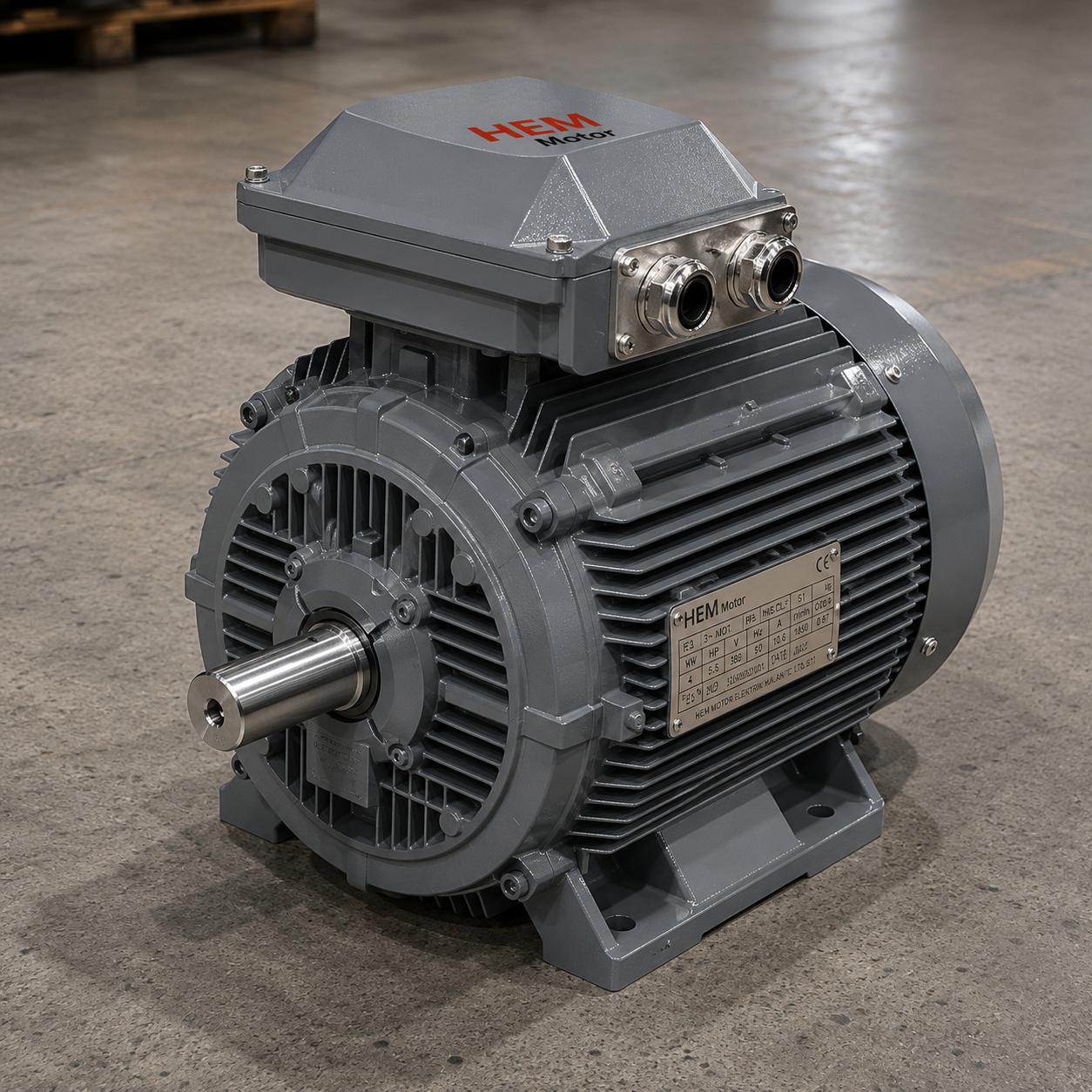
The heart of a hygienic motor is its body. Using paslanmaz stainless steel (typically AISI 304 or the more corrosion-resistant AISI 316L) instead of classic cast iron is the safest solution against the pharmaceutical environment's aggressive cleaning chemicals and constant moisture. A stainless body does not rust, does not shed paint, withstands chemical disinfectants, and minimizes microbial attachment.
The defining features of hygienic design are: removal of cooling fins (fins trap dust and water), smooth and low surface roughness (typically targeting Ra ≤ 0.8 µm), sloped surfaces that do not pool water, recessed or covered bolts, double-lip stainless shaft seals, and FDA/EHEDG-oriented coatings suitable for food-pharma contact. When a painted motor is requested, a non-flaking, chemical-resistant epoxy or special hygienic paint is preferred over standard industrial coating.
The Advantage of a Smooth, Casting-Free Design
In cast-body motors the surface is porous, so microorganisms and product residue can attach. Casting-free, drawn stainless or machined smooth bodies clean far more quickly and completely under CIP (Clean-in-Place) and SIP (Sterilize-in-Place) regimes. This both simplifies cleaning validation and shortens batch changeover time, raising productivity.
- Low surface roughness makes bacterial biofilm formation difficult.
- Water and disinfectant do not pool on the surface and dry quickly.
- Visual inspection is easy; soil buildup is noticed immediately.
- When the terminal box is also hygienically designed, the whole motor can be washed as one unit.
Washdown Motors and IP Protection Classes
In drug production, equipment is intensively washed at the end of every shift or batch change. The motor being a yıkanabilir motor (washdown duty) is therefore critical. Washability is measured directly by the IP (Ingress Protection) class. To choose the right class you must define your cleaning regime.
- IP65: Full dust protection and resistance to low-pressure water jets from any direction. Suitable for light washing and humid environments.
- IP66: Protection against powerful water jets; a common choice for Grade C process equipment that is regularly hosed down.
- IP67: Resistance to temporary immersion; preferred at specific flood-risk points.
- IP69K: Resistance to high-pressure, high-temperature steam washing. It is the gold standard for the toughest hygienic applications with CIP/SIP and aggressive disinfection.
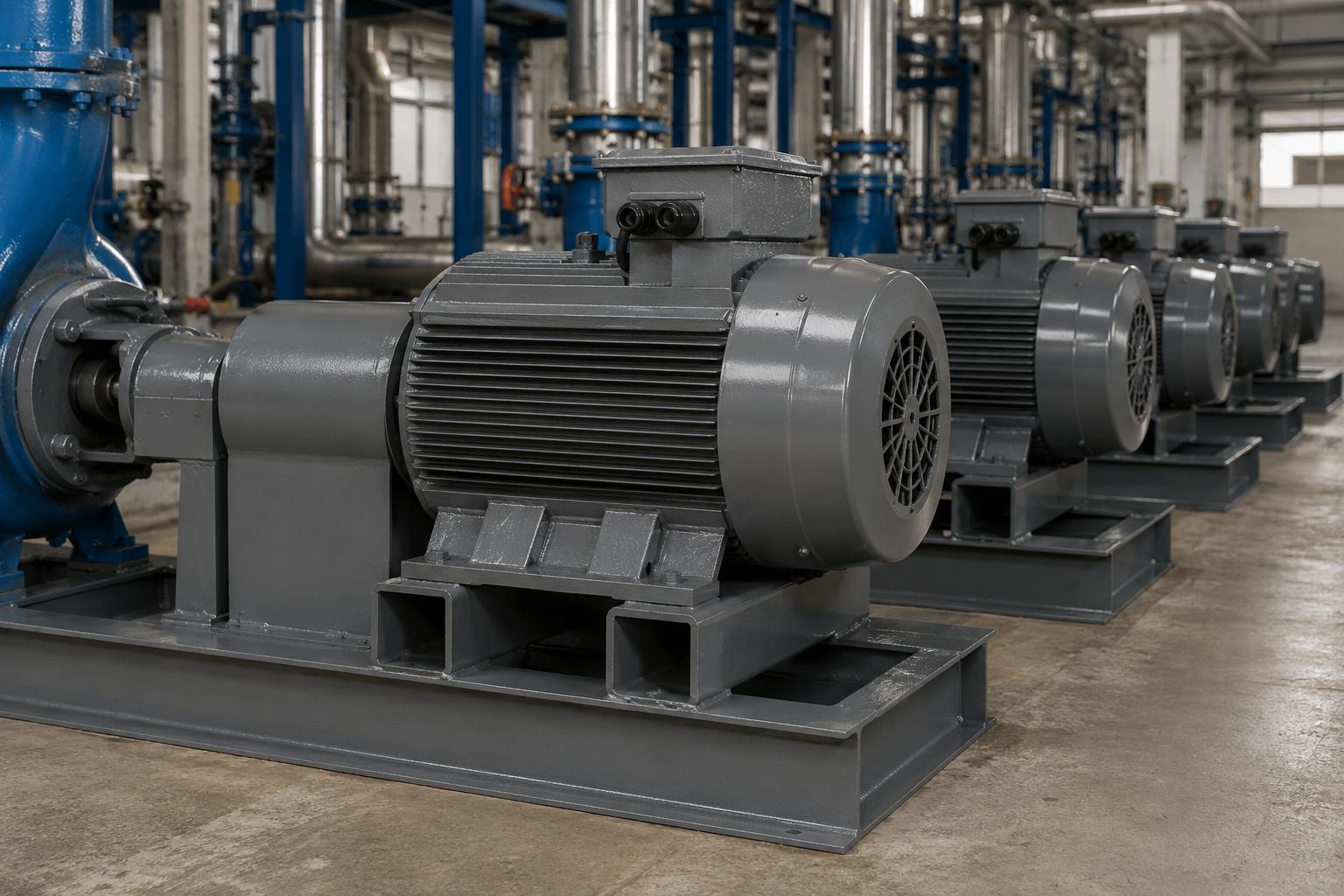
An IP69K rated washdown motor withstands close-range washing even at temperatures up to 80°C and pressures around 80-100 bar without leaking. This level is preferred in direct contact zones of pharmaceutical processes, especially on lines handling liquid and powder products. For a detailed guide on protection-class selection see our electric motor IP protection class selection guide, and for high-pressure cleaning read our IP69K washdown and high-pressure cleaning article.
Selecting a Motor Suited to the CIP/SIP Cleaning Regime
CIP (clean-in-place) and SIP (sterilize-in-place) clean pharmaceutical equipment without disassembly, by circulating detergents, acid/base solutions and steam. Under these regimes the motor is exposed to caustic disinfectants, hot water and steam. The selected motor's seals, gaskets and coating must therefore resist these chemicals and temperatures.
Because steam temperature during SIP can rise to 121°C, high-temperature-resistant grease and suitable seal materials must be used in the motor bearings. Furthermore, where the motor needs to breathe, drain plugs and special pressure-equalizing elements come into play to prevent condensate being drawn inside. These details ensure the motor runs for years without becoming a contamination source.
Achieving Efficiency and Hygiene Together
You do not have to sacrifice energy efficiency when choosing a hygienic motor. Motors in the IE3 and IE4 efficiency classes can be supplied with stainless and washdown bodies. On continuously running HVAC, cooling and process drives, high efficiency significantly lowers operating cost. For those who want to upgrade the protection class in dusty or wet environments, our IP65/IP66 protection upgrade article for IE3 motors will be a useful guide. You can compare suitable efficiency classes on our efficient electric motors and IE4 electric motor product pages.
Typical Drive Points in a Pharmaceutical Facility
Motor needs in a pharmaceutical facility are highly varied, and each point demands a different hygiene level:
- Granulation and mixing: Dusty and humid environment; stainless hygienic body and IP66 recommended.
- Tablet press and coating pan: Low particle emission is critical; smooth, cleanable motors.
- Sterile filling and lyophilization: Highest hygiene; motor outside the room if possible, otherwise IP69K stainless.
- Conveyor and packaging: Washable gear motors; washdown body for regular cleaning.
- Purified and water-for-injection systems: Stainless, corrosion-resistant motors on pump drives.
Defining the right motor for each drive point lets you pass GMP audits smoothly and lowers your maintenance costs. The HEM Motor engineering team provides point-by-point motor recommendations based on your facility layout and cleaning procedures.
Documentation, Traceability and Correct Sourcing
In GMP audits it is not enough for equipment merely to be suitable; the suitability must be documented. For a motor, material certificates (stainless steel quality document), coating conformity declaration, IP protection test report, efficiency class certificate, and where required EHEDG/FDA contact conformity documents may be requested. The right supplier is the one who provides these documents completely and traceably.
As a manufacturer, our advantage is being able to configure the motor to the project and supply the required documents on a batch basis. We offer fast delivery on stock items and engineering-supported quotations on special hygienic configurations. While planning your investment, you can contact our technical team for current electric motor prices and lead times.
What to Watch for During Purchase
When buying a hygienic motor, evaluate not only power and speed but the whole environment. The checklist below clarifies the quotation stage:
- In which GMP grade and which cleanroom class will it operate?
- What is the cleaning regime? Hose washing, CIP/SIP, or dry cleaning?
- What IP class is required (IP65, IP66, IP69K)?
- Should the body be stainless or hygienically painted?
- What efficiency class (IE3/IE4) and energy targets apply?
- Which documents and certificates are requested?
Once the answers to these questions are clear, choosing the right motor on the first attempt becomes possible. At HEM Motor we are at your side with both fast delivery from stock and manufacturer assurance for special hygienic projects.
Frequently Asked Questions
Is a stainless body motor always required in a pharmaceutical facility?
Not at every point. In the sterile core, wet process and direct product-contact zones, a paslanmaz stainless hygienic body is strongly recommended. In less critical technical areas, hygienically painted, high-protection standard motors may suffice. The right choice depends on the zone's cleanroom class and cleaning regime.
Is IP66 enough, or is IP69K essential?
This depends entirely on the cleaning method. On lines regularly hosed down, IP66 is often sufficient. However, in high-pressure, hot-steam CIP/SIP applications an IP69K rated yıkanabilir motor should be chosen; otherwise leakage and early failure risk arises.
Do I have to give up energy efficiency when choosing a hygienic motor?
No. IE3 and IE4 efficiency class motors can be supplied with stainless and washdown bodies. This way you meet both GMP hygiene requirements and low energy cost at the same time. On continuously running drives, high efficiency accelerates return on investment.