English
 Türkçe

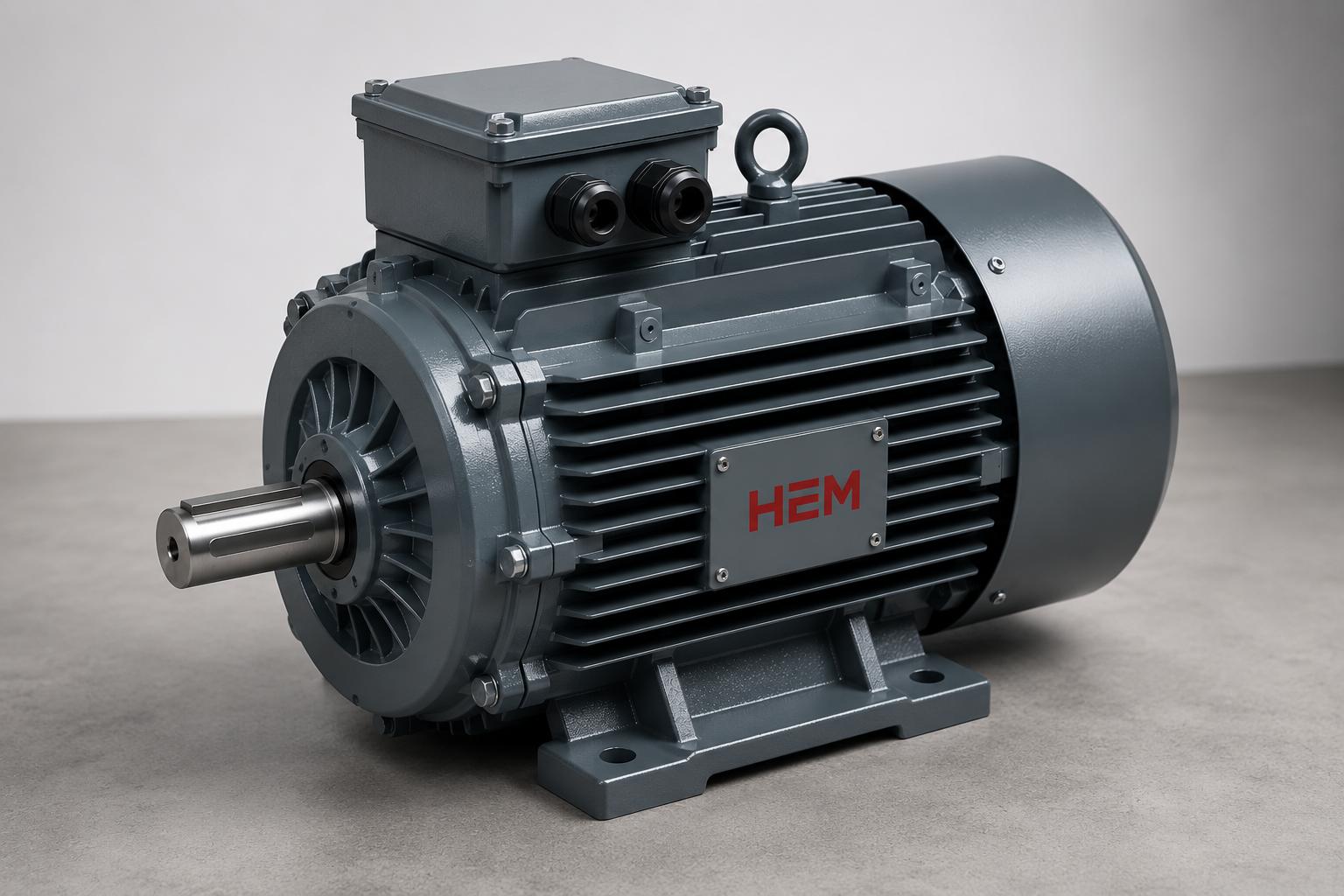

The efficiency class printed on a motor nameplate tells only half the story of how much energy that motor will actually save in the field. The other half depends on how the shaft power leaving the motor is transmitted to the load. The choice between belt-and-pulley drives, gearboxes and direct drive solutions frequently makes a bigger difference than the motor's efficiency class itself. Buying a high-efficiency IE3 asynchronous motor and then wasting that gain through a slack, misaligned or wrongly sized belt is one of the most common and most overlooked losses in industry.
As a manufacturer and supplier shipping motors from stock, the point we constantly remind our customers of is this: motor selection and transmission selection must be considered together. In this article we examine the difference between belt loss and direct drive from a technical standpoint, explain how to boost real energy savings by preserving transmission efficiency, which solution makes sense in which application, and how to request the right motor.
Why Transmission Efficiency Matters as Much as Motor Efficiency
The electrical energy a motor draws from the grid is first converted to mechanical shaft power, then transferred to the load through transmission elements. Even if motor efficiency exceeds 90 percent, every stage in the transmission chain adds losses. V-belt systems typically deliver 95-98 percent efficiency, but that figure applies to a new, correctly tensioned and aligned system. In the field, belts that loosen, wear, or run on the wrong pulley diameter can drop efficiency to 88-90 percent.
Most of these losses turn into heat. Belt slip, bending losses and increased bearing load all raise energy consumption and maintenance costs. In direct drive solutions the motor shaft connects straight to the load, so these intermediate losses are nearly eliminated and transmission efficiency can exceed 99 percent.
Typical Loss Sources in Belt Drive
- Slip loss: The belt slipping on the pulley under insufficient tension or excessive load.
- Bending and hysteresis loss: Continuous flexing of the belt as it wraps and unwraps around the pulley.
- Misalignment: Parallel or angular misalignment shortens bearing life and increases friction.
- Wrong pulley ratio: Speed mismatch forces the motor to operate outside its efficiency curve.
When Does Direct Drive Make Sense?
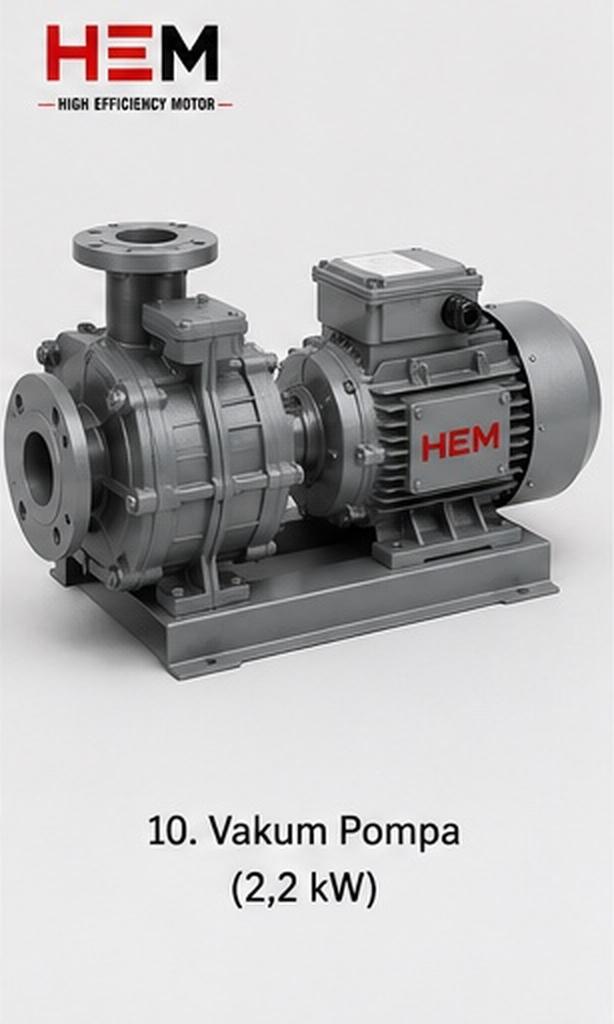
Direct drive is the ideal solution where running the motor shaft at the same speed as the load is acceptable or desired. Pumps, fans and some compressors fall into this category. If your application needs a specific speed, choosing the motor with the right pole count from the start is far more efficient than adjusting speed through a pulley ratio. For a centrifugal pump requiring 1500 rpm, coupling a 4-pole motor directly is both quieter and more economical than slowing a 2-pole motor with pulleys.
This is where 2/4/6 pole motor selection becomes critical. When you select a motor with the right pole count from our stock range, you achieve speed matching without a mechanical intermediate element. Our 2.2 and 3 kW power-speed guide is a useful starting point for understanding the speed and power relationship.
Advantages of Direct Drive
- Near elimination of transmission loss and a lower energy bill.
- Fewer moving parts, less maintenance and reduced spare-part inventory.
- Removal of failure modes like loose belts, snapping and pulley wear.
- A more compact and quieter drive assembly.
Cases Where Belt Drive Is Still Right
Direct drive is not always superior. Belt-and-pulley still has value where you need to flexibly change the speed ratio, mechanically isolate the motor from vibration and shock, or drive multiple loads from one motor. Machine tools, some conveyors and crushers fall into this class. The key is choosing the right belt, tensioning it correctly and inspecting it regularly.
Modern timing belts and poly-V belts offer significantly higher efficiency than classic V-belts. If you cannot abandon belts, at least upgrading the transmission technology is a practical way to boost real savings. Under heavy shock loads, for example in coal crusher and mill motor applications, the belt's elasticity protects the motor; we covered this in a separate article.
Calculating Total System Efficiency
To see real savings you must multiply the whole chain. Suppose motor efficiency is 91 percent, belt efficiency is 94 percent and bearing/seal losses are 1 percent. Total system efficiency drops to about 85 percent. Using the same motor with direct drive raises transmission efficiency to 99 percent and the total approaches 90 percent. On a motor running thousands of hours a year, this five-point difference is a substantial line item on the electricity bill.
A Simple Decision Framework
- Does the load run at constant speed? If yes, seriously consider direct drive.
- Must the speed ratio be adjustable? If so, a variable frequency drive plus direct drive usually beats a belt.
- Is mechanical isolation essential? A quality belt may be reasonable under shock loads.
- Is your maintenance capacity limited? Direct drive lowers the maintenance burden.
Efficiency Class and Oversizing
As important as transmission choice is correct motor sizing. A very common mistake is choosing a motor one size larger "to be safe." An oversized motor runs outside the efficiency curve at the load point, at a poor power factor, and eats up the advantage of the efficient motor. We covered correct sizing and fixing oversizing through downsizing in a separate guide; evaluated together with transmission efficiency, the real savings compound.
As a manufacturer, the high-efficiency asynchronous motors we ship from stock come with shaft and flange options suited to direct drive alongside the right pole and power selection. Share your application's speed, torque and mounting requirements with us and we will quickly identify the right motor to eliminate belt loss and provide a quote. For more models and application examples, see our homepage.
Practical Application Recommendations
- If you are building a new line, design the drive around direct drive from the start.
- If you seek savings on an existing belted system, first check alignment and tension.
- Replace the V-belt with a poly-V or timing belt for quick gains.
- If speed change is needed, use a VFD plus a correctly poled motor instead of a pulley ratio.
- When selecting a motor, pick a power that keeps the load point near the peak of the efficiency curve.
The Effect of Maintenance on Belt Drive Efficiency
The most common situation we encounter in the field is the assumption that belt-driven systems keep running at the efficiency they had on installation day. Yet a belt is a consumable; over time it stretches, hardens, cracks and seats poorly in the pulley groove. Tension drops within a few months and slip loss quietly increases. The invisibility of this loss is its most dangerous aspect: the motor still runs, the load still turns, but the electricity bill climbs unnoticed.
A regular maintenance program is the cheapest way to recover this loss. Quarterly tension checks, annual inspection with laser alignment and observation of wear in the pulley grooves often deliver significant savings without replacing the motor. When a pulley groove wears, the belt sinks to the bottom of the groove and the friction grip surface shrinks; this accelerates both slip and premature belt wear. Renewing a worn pulley often brings more gain than a new belt.
Practical Steps of Maintenance Discipline
- Keep tension at the manufacturer's recommended value and measure it regularly.
- Verify parallel and angular alignment with a laser alignment tool.
- Check groove wear with a groove gauge.
- On systems with multiple belts, replace the set together.
- Monitor belt temperature; overheating is a sign of slip and misalignment.
The Role of the Variable Frequency Drive in Transmission Efficiency
In modern drive design, the variable frequency drive (VFD) provides speed adjustment far more efficiently than a mechanical pulley ratio. If you need to run a pump or fan at half flow, lowering the speed with a VFD instead of changing the pulley ratio both eliminates transmission loss and, by the affinity laws, reduces power consumption in proportion to the cube of the speed. This delivers the highest system efficiency at the point where direct drive meets the VFD.
The VFD also provides soft starting; by limiting inrush current it protects both the grid and the mechanical transmission components. While hard starts fatigue belts in belt drive, this wear is nearly eliminated in the direct drive plus VFD combination. In variable-load applications, this combination is a solution that pays back the investment quickly. In pump and fan applications, surge arrester protection against overvoltage should also not be neglected.
Calculating the Payback Period
When deciding whether switching to direct drive or upgrading belt technology makes sense, a simple payback calculation is needed. If annual operating hours, motor power, current transmission efficiency and target efficiency are known, the energy to be gained and its monetary value are easily found. On a medium-power motor running 6000 hours a year, a five-point efficiency gain often covers the conversion cost in one to two years. In continuously running facilities, this period shortens further.
When deciding, you should account not only for energy savings but also for reduced maintenance and downtime costs. The cost of unexpected stoppages due to belt snapping is often higher than the energy savings. Direct drive largely eliminates this downtime risk. As a manufacturer, we can review your existing drive arrangement and evaluate together which solution gives the fastest return in your duty regime.
Frequently Asked Questions
How much energy does a belt-and-pulley system really lose?
A new, correctly tensioned and aligned V-belt system produces roughly 2-5 percent loss. However, on belts that loosen, wear and run misaligned in the field, this loss can climb to 10-12 percent. On a motor running thousands of hours a year, this represents a significant amount of energy that could be recovered by switching to direct drive.
If I need to change the speed ratio, is direct drive still possible?
Yes. Instead of adjusting the speed ratio with a mechanical pulley, you can connect a motor with the right pole count directly together with a variable frequency drive. This solution eliminates transmission losses and makes speed adjustment far more precise and efficient. We can help you select the motor suited to your application.
Can I save energy without replacing my existing motor?
Partly, yes. Correcting alignment, tensioning the belt properly and replacing a classic V-belt with a high-efficiency poly-V or timing belt provide quick gains. But real and lasting savings come from switching to direct drive with a correctly sized motor where possible. Share your needs with us and we will offer a quote for the most suitable solution.