English
 Türkçe

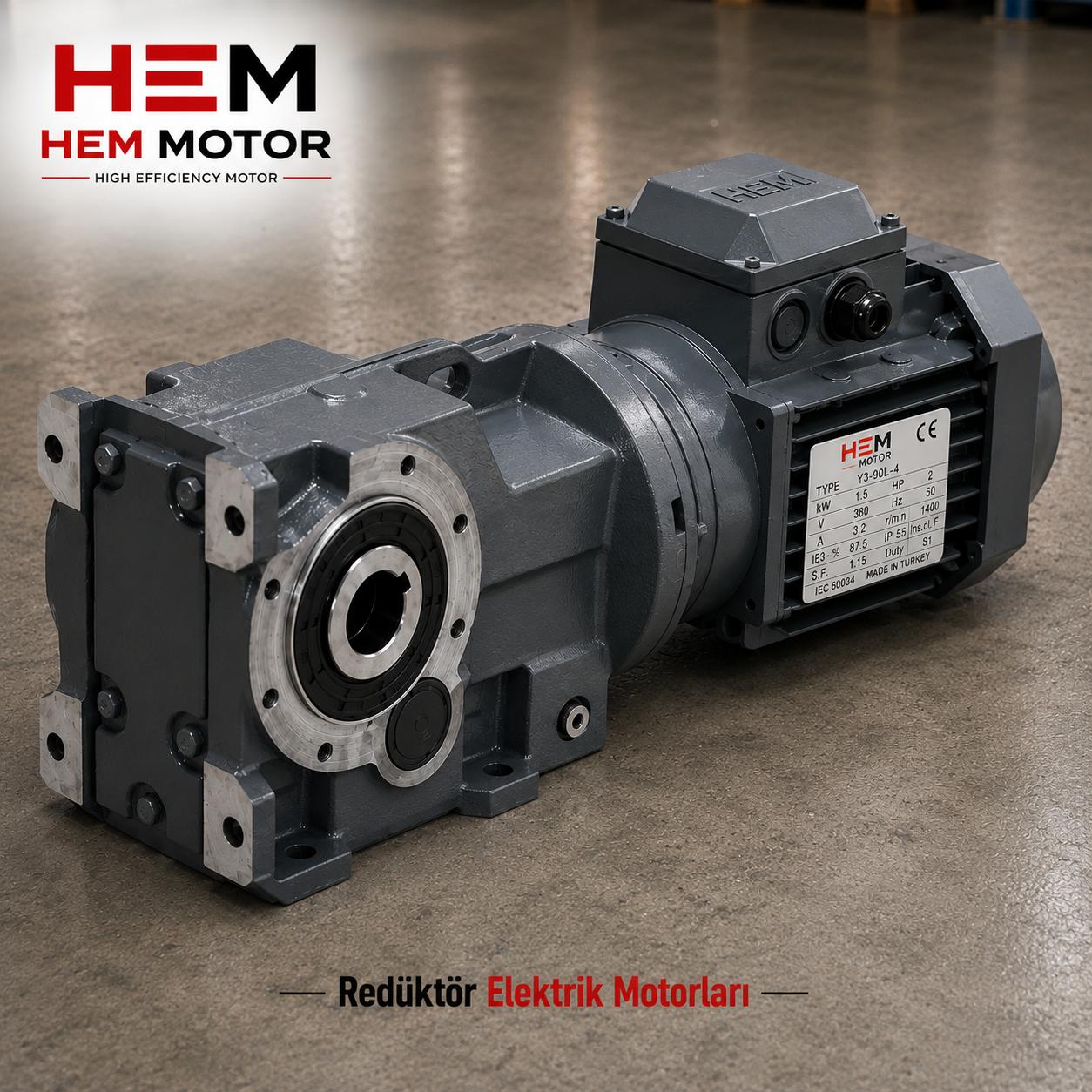

In stone quarries, crushing-screening plants and crusher lines, dust is not merely a comfort issue; it is a serious engineering problem that directly threatens worker health, visibility on site, and equipment life. Fine dust containing respirable crystalline silica causes respiratory diseases over the years; the same dust enters conveyor bearings, motor cooling channels and electrical panels, producing unexpected failures. This is why, in modern quarries, dust is suppressed at the source, and at the heart of this task sits a pump motor feeding a water spray/misting system. In this guide we go step by step through the technical criteria that will help you correctly select a dust suppression pump motor that must run non-stop through the shift in a dusty yet wet environment.
Our goal is not to recommend a fixed model, but to enable you to evaluate flow, pressure, protection class and continuous duty together, starting from the real conditions of your site, and to produce a clear technical specification to hand to your supplier. A correctly selected centrifugal pump motor means both keeping dust emissions below legal limits and a system that runs fault-free for years, is energy efficient and has available spare parts.
Why Is Dust So Critical in a Quarry?
At the crusher jaw, the impact crusher, over the screens and at transfer points, every time material is crushed and dropped a cloud of fine dust is released. With the help of wind, this dust spreads across the entire site. The most effective method is to wet and weigh down the dust at its source — the point where material is crushed or discharged — and bring it back to the ground. This requires pressurized water; the motor-pump unit that provides the pressure is the lifeblood of the system.
- Health: Respirable silica dust carries a long-term silicosis risk; dust suppression is a legal obligation.
- Visibility and safety: Dense dust reduces visibility in truck and machinery traffic, raising accident risk.
- Equipment life: Abrasive dust enters bearings, gearboxes and electrical equipment, shortening their life.
- Environment and regulation: Dust crossing the site boundary creates problems with neighbouring areas and inspections.
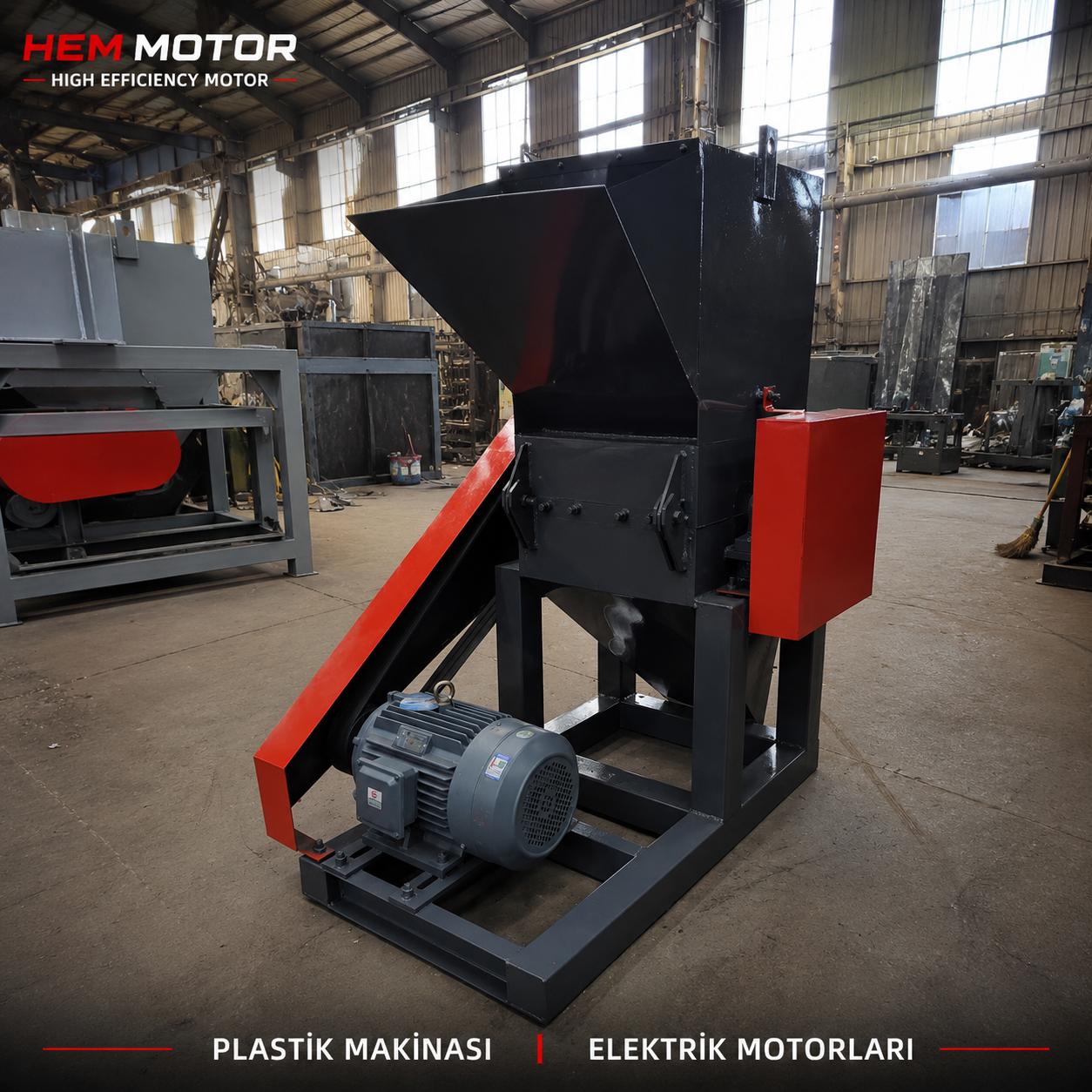
Three Challenges That Set the Spray Pump Motor Apart
A dust suppression pump motor must meet three demanding conditions at once, unlike an ordinary water pump motor. No selection made without considering all three will last long in the field.
1. Extremely Dusty Environment
The motor runs right inside the dense dust cloud. This dust enters between the cooling fins and, in a poorly protected body, even into the windings. The dust layer acts like a blanket, blocking heat dissipation; the motor overheats even when running at nominal load. Therefore body sealing and a regularly cleanable cooling design are critical.
2. Constant Wetness and Corrosion
Because the spray system sprays water, the motor's surroundings are constantly damp, even wet. When dust and moisture combine, corrosion begins on the motor body and terminal box. A body without corrosion protection rusts within a few seasons, creating both an aesthetic and a sealing problem.
3. Non-Stop Operation Through the Shift
Dust suppression must continue uninterrupted as long as production runs. This requires the motor to be selected for S1 continuous duty — that is, running at full load without stopping through an 8-12 hour shift. Since it is a continuously running application rather than a frequent stop-start one, the motor's thermal design must match.
IP Protection Class: The Most Critical Decision
In this environment where dust and water are present at the same time, the motor's IP (Ingress Protection) class is the most decisive selection parameter. The first digit of the IP code denotes protection against solid objects/dust ingress, the second against water ingress. Choosing a low-protection motor on a dusty-wet site may look like a short-term saving, but leads to the most expensive outcome through early motor burnout.
- IP55: Dust-protected (dust ingress not fully prevented but kept harmless) and protected against water jets from any direction. The minimum acceptable level for moderately dusty sites.
- IP65: Dust ingress fully prevented (dust-tight) and resistant to low-pressure water jets. The recommended class for heavy dust.
- IP66 protection: Fully dust-tight and protected against powerful/high-pressure water jets. The ideal choice at demanding points near the crusher where spray mist reaches the motor directly.
On a site that is both extremely dusty and constantly wet, like a stone quarry, the practical recommendation is to start at least with IP55 and step up to IP66 protection at critical points. Relative to the whole investment, the cost difference of upgrading the IP class is small, while the freedom from failure it provides is large.
Corrosion Protection and Material Selection
The IP class prevents water from getting in; corrosion protection prevents external water and moisture from wearing down the body. The two measures complement each other.
- Body coating: Epoxy-based protective paint or a special corrosion-protection coating shields the cast body from moisture and abrasive dust.
- Stainless fasteners: Stainless bolts, nuts and terminal box screws make assembly-disassembly possible even years later.
- Sealed terminal box: Watertight gaskets and cable glands protect the terminal box, the most common source of failure.
- Tropicalized winding: An extra-impregnated (tropicalized) winding for humid environments extends insulation life.
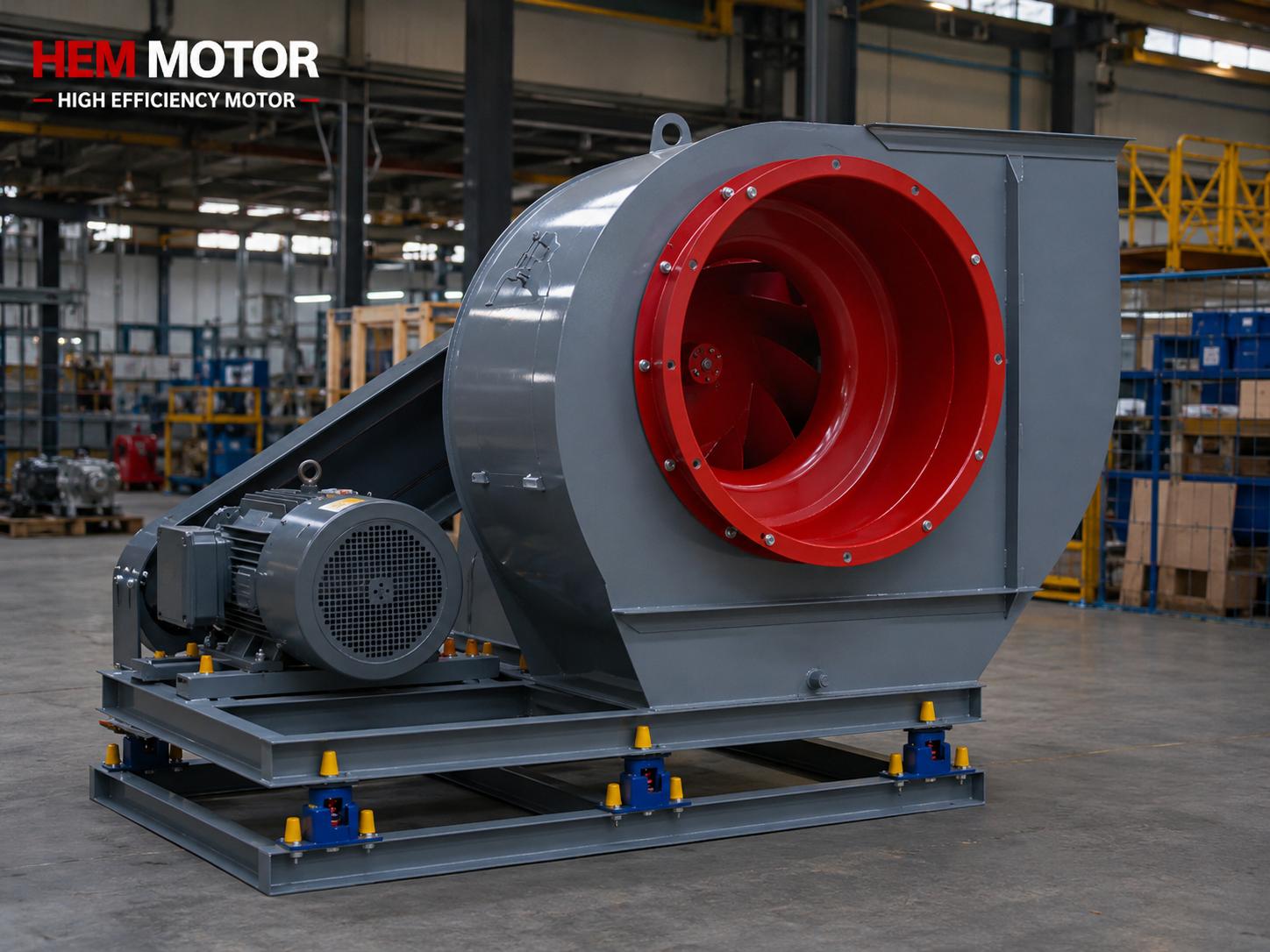
Centrifugal Pump Drive: Selecting Flow and Pressure Together
The vast majority of dust suppression systems run with centrifugal pumps that generate the pressure to carry water to the nozzles. The motor drives this pump, and the selection is made according to the flow-pressure point the pump needs.
Flow (Q): How Many Nozzles Will You Feed?
Flow is determined by the total number of spray/misting nozzles in the system and the amount of water each consumes. Adding up the nozzles of all suppression zones — transfer points, crusher mouth and over the screens — gives the required total flow (m³/h or L/min). If the flow is insufficient, dust cannot be suppressed at some points.
Pressure (Hm): Misting or Wetting?
Pressure varies with nozzle type. While medium pressure is enough for coarse wetting, misting nozzles that produce fine water droplets — suppressing more effectively with less water — demand high pressure. In addition, pipe friction losses and height difference from the water tank to the furthest nozzle add to the pressure.
The theoretical shaft power of a centrifugal pump motor is calculated with this fundamental formula:
P (kW) = (Q × Hm × ρ × g) / (3,600,000 × η)
Here Q is flow (m³/h), Hm is total head (m), ρ is water density (1000 kg/m³), g is gravitational acceleration (9.81 m/s²) and η is the combined pump-motor efficiency (typically 0.55-0.70). A safety margin of 15-20% must always be added, and the result is rounded up to the next standard motor power.
Example Scenario 1: Medium-Scale Crusher Line
Suppose 12 m³/h water flow and 50 m total head (pressure + friction + height) are required. Assuming an efficiency of 0.60: P = (12 × 50 × 1000 × 9.81) / (3,600,000 × 0.60) ≈ 2.7 kW. With the safety margin, a 3 kW (4 HP) motor is suitable.
Example Scenario 2: High-Pressure Misting System
Assume fine misting requires 8 m³/h flow but 90 m head. P = (8 × 90 × 1000 × 9.81) / (3,600,000 × 0.60) ≈ 3.3 kW; with the safety margin a 4 kW motor is a safe choice. As you can see, even with low flow, high pressure demands a powerful motor.
Cooling in a Dusty Environment
A standard motor cools by passing air over the ribs around its body and through the cooling fan in the rear fan cover. On a dusty site these channels clog, the fan cover fills with dust and cooling collapses. Therefore, when selecting and operating a motor in a dusty environment, these measures are critical:
- The fan cover and cooling fins must be accessible and regularly cleanable.
- If needed, selecting one power class up so the motor runs with reserve (cooler) under load.
- In very dirty environments, preferring PTC thermistor protection that monitors winding temperature.
- Locating the motor as far as possible from the dust source, where spray mist does not blow directly onto it.
Protection and Commissioning
The main causes of early failure in dust suppression motors are dry running, phase loss and overheating. When the water tank empties, the pump running dry quickly burns the mechanical seal and the motor; therefore dry-run protection (level float or current relay) is mandatory. In three-phase motors, a phase protection relay stops the motor instantly on phase loss, preventing winding burnout. A soft starter, while not needed for stop-start cycles, is useful for reducing water hammer in long pipe runs.
In terms of stock and supply, determining the correct IP class and powered motor at the start of the season enables fast commissioning without halting production. A request prepared with the right technical specification enables your supplier to give you a fast and clear quotation. For up-to-date electric motor prices and stock availability, the healthiest approach is to clarify your technical specifications and request a quote.
Spare Parts and Supply Continuity
In a quarry, a stopped dust suppression system means both halted production and dust emissions exceeding the legal limit. For this reason, choosing a standard, widely available power and body class during motor selection provides a major advantage for fast supply when needed. A standard motor held in stock is supplied much faster than a model requiring custom manufacturing. Planning the supply of a spare motor and consumables such as seals and gaskets before the seasonal peak is a wise investment. For a wider range you may evaluate the centrifugal pump motor options and high-protection three-phase electric motor models.
Technical Specification for Your Supplier
After all evaluations, the request you send to your supplier should include: required total flow (m³/h), total head/pressure (m or bar), motor power (kW/HP), IP protection class (IP55/IP65/IP66), corrosion protection/body material, duty type (S1 continuous), phase type, voltage and frequency, efficiency class and, if applicable, the need for thermistor protection. A request with this clarity both guarantees the right product arrives and speeds up the supply process.
Frequently Asked Questions
Which IP class is sufficient on a dusty site?
If both dust and water are present, IP55 is the minimum recommendation; at critical points such as near the crusher where spray mist reaches the motor directly, IP65 or IP66 should be preferred. The cost difference of upgrading the IP class is small, while the failure-free uptime it provides is large.
Why should a water spray pump motor be selected for continuous (S1) duty?
Dust suppression continues uninterrupted as long as production runs; the motor operates at full load through the shift without stopping. A motor not selected for S1 continuous duty falls thermally short and shortens its life by overheating.
Does the motor or the pump determine the selection?
Both together. First the flow and pressure point the system needs is found, a suitable centrifugal pump is selected for it; the motor is then chosen with the power, correct IP and corrosion protection to drive that pump in S1 duty. Pump-motor matching is the key to efficiency and life.